

France announced on Monday 9 November 2026 the launch of a network of 14 ports against drug trafficking. The G7+ initiative involves G7 countries, Brazil and South Korea to better share information and coordinate controls. It accompanies the G7 Foreign Ministers meeting held in Paris on 9 and 10 November under the French presidency.
Foreign Minister Jean-Noël Barrot and Interior Minister Laurent Nuñez presented the French international action plan against drug trafficking. The port network is one of its instruments. Its creation was announced at the G7 Leaders’ Summit in Evian in June.
Fourteen ports against drug trafficking
Marseille, Le Havre and Dunkirk are among the ports concerned, alongside Hamburg, Genoa, Busan and Houston. The device shall permit a faster flow of information on suspicious cargoes. It also aims to bring the administrations that control the goods together with those responsible for port security.
The network seeks to improve the detection of containers used by criminal organizations, the identification of drug routes and coordination between maritime, customs and police services. The target announced covers production countries, transit points and destination markets.
The government file provides for the participation of the foreign affairs, interior and customs administrations, as well as ports and the private sector. Interpol, the United Nations Office on Drugs and Crime, the International Maritime Organisation and the World Customs Organisation are also associated.
A plan started in early 2026
The launch of the network does not mean that the whole strategy starts this Monday. Wharf Orsay states that the international plan has been implemented since the beginning of the year. It combines cooperation with countries of origin or transit, combating physical and financial flows and preventing consumption.
The Ministry reported on over 20 bilateral agreements concluded since November 2025 in Latin America and the Caribbean. The number of specialized staff mobilized in the region increased by more than 30 per cent in one year, according to the Government’s performance. These measures therefore precede the opening of the port network.
A Middle East component
In the Middle East, the French plan envisages a regional programme aimed at dismantling synthetic drug laboratories and strengthening judicial and criminal cooperation. Along with the Maghreb countries, Paris is also seeking to facilitate extradition or prosecution of wanted traffickers.
The Ministry is also planning to further mobilize international cooperation against the laundering of trafficking income. The health component aims at prevention, access to care and risk reduction. France also intends to support coca substitution crops in Latin America.
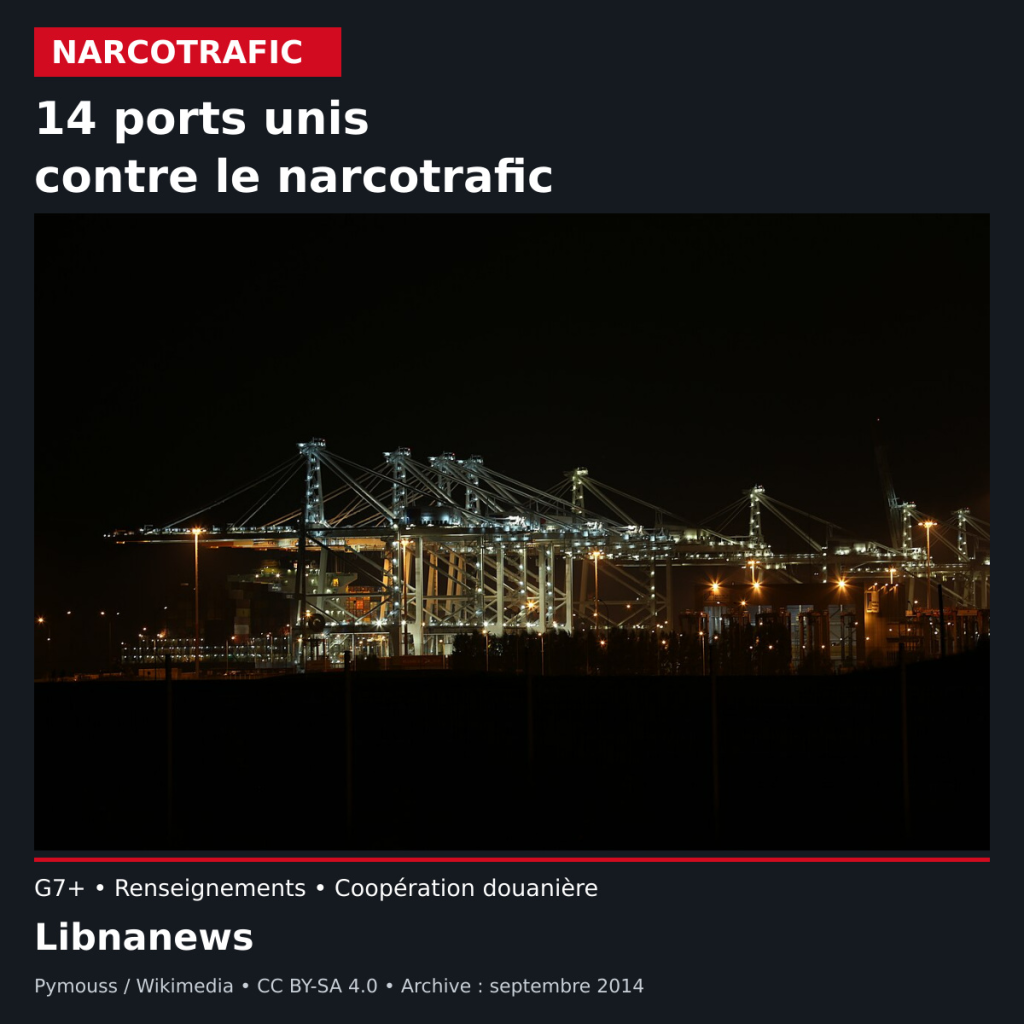
Photo of illustration: the container terminal of Port 2000, Le Havre, September 13, 2014. This archive does not represent an anti-drug operation. Pymuss / Wikimedia Commons. Whole photo, resized proportionally and surrounded by a Libnanews dressing. Original photo and credits. Photo and visual adaptation under cC BY-SA 4.0 license.






Comments