

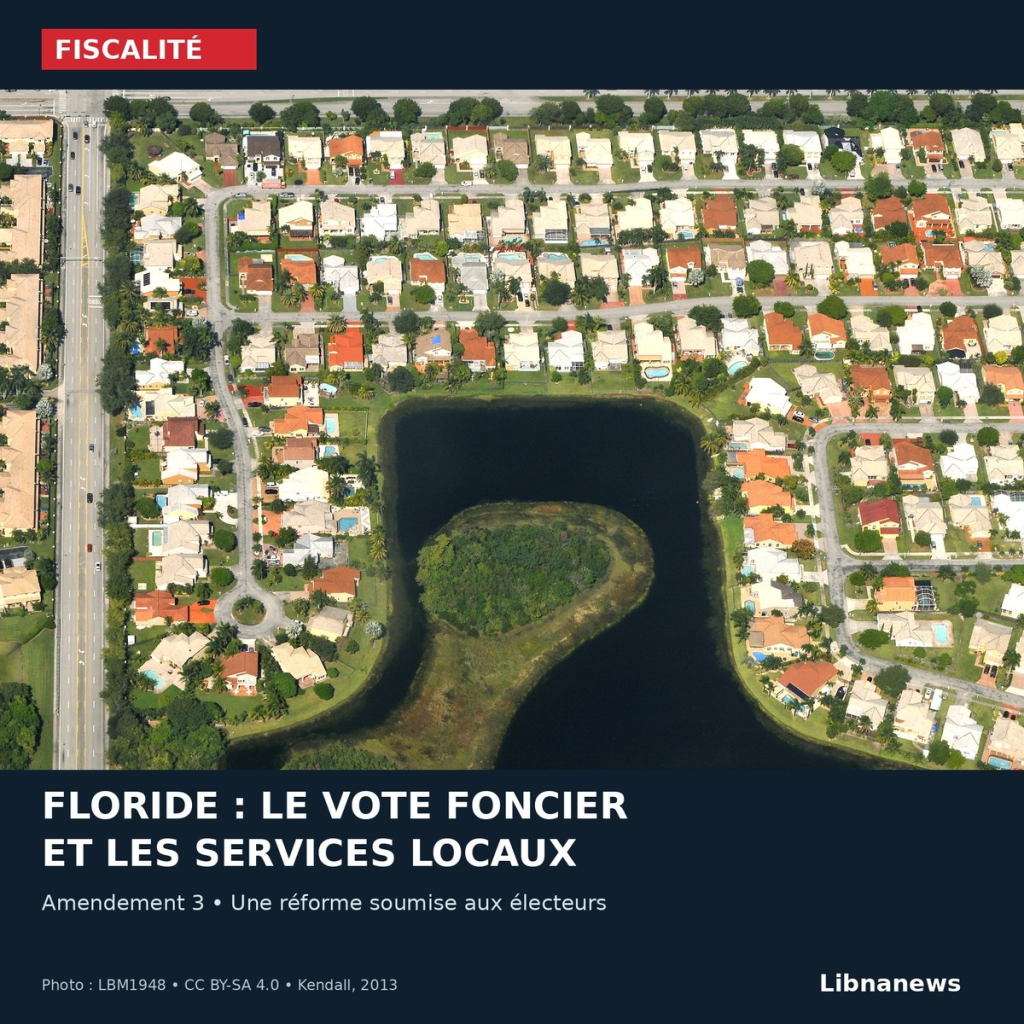
On November 3, 2026, Florida voters voted on Amendment 3, which would increase the exemption from principal residences. In Miami-Dade, the authorities anticipate a significant decrease in local service revenues. The text remains subject to the vote: it does not automatically abolish any property tax.
According to the Hillsborough County Perceptor, consulted on November 3, the proposal must obtain at least 60% of the state-wide vote. Its possible adoption would have no effect on taxes due by 2026. The first deadline would be 1 January 2027.
An extended exemption, excluding school fees
The Miami-Dade official ballot for the November 3 election provided an exemption of $150,000 in 2027 and $250,000 in 2028 for non-school fees. This is a fraction of the value of the property exempt from tax, not a payment to the owner. Inflation indexation would follow.
This measure applies to housing eligible for permanent principal residence status, known as « homestead ». It does not apply to secondary residences and rented housing.
The bulletin also distinguishes persons who do not reside in Florida as of December 31, 2026. Once eligible, they would benefit from the existing exemption and then the increased amount from their fifth year of exemption, within the limits permitted by the Federal Constitution.
Miami-Dade figures the budgetary consequences
In its official presentation consulted on 3 November, Miami-Dade County estimates that it would receive $385.8 million less land revenue from October 2027 and $696.7 million from October 2028. These projections imply adoption of the text and maintenance of current rates.
The second figure represents an annual decrease following the implementation of the $250,000 exemption. It does not add to the first to calculate an annual loss. These amounts concern this county, not all of Florida.
Land receipts include funding for firefighters, libraries, parks, transportation and services to the elderly. The estimated loss of profits is not a list of already decided cuts. Its effect on the inhabitants would depend on future budgetary arbitrations.
Invoices would remain different depending on housing
The Hillsborough collector pointed out that earnings would vary with taxable value, exemptions and local rates. The separate property value charges, particularly for waste or stormwater, would remain. An increased exemption would therefore not remove any invoice.
The Parliamentary Resolution CS/HJR 1F also provides for a reduction from 10% to 5% of the annual ceiling for the assessment of certain property other than principal residences, excluding school fees. This could include rental housing and commercial premises. It limits a tax assessment, not an increase in any amount claimed from the owner.
Communities would retain decisions to make
The parliamentary system provides for a procedure allowing counties and municipalities to further extend the exemption for their respective levies up to the total value assessed. Special districts would have a comparable possibility, subject to a referendum.
The bulletin also regulates the use of land revenues, while allowing local officials to approve other expenses if the state law does not prohibit them. This does not imply an automatic ban on all services not listed. The outcome of the election and subsequent decisions will determine the effective scope of the reform.





Comments