

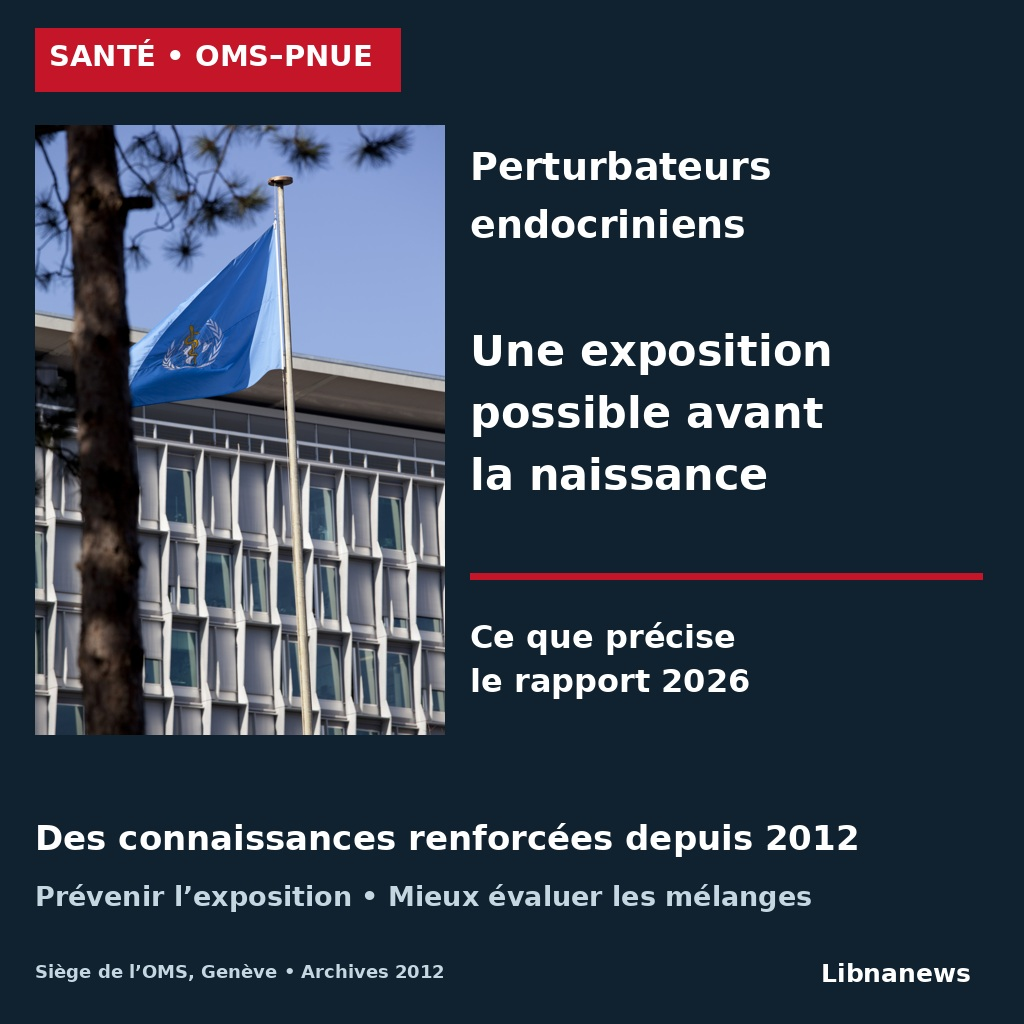
The World Health Organisation and the United Nations Environment Programme presented a new evaluation of endocrine disruptors on 17 November 2026 in Geneva. These substances can alter hormonal function and cause harmful effects. Exposure may begin before birth.
Newness is not the discovery of this phenomenon. The document updates the 2012 global assessment, based on research accumulated since then. It expands the areas studied and examines ways to reduce exposure.
Endocrine disruptors: Evidence to be distinguished
Scientific synthesis is an enhanced knowledge of brain development, reproduction, thyroid and metabolism. She stressed the importance of sensitive periods, including fetal development and puberty. Some effects may occur long after exposure.
However, not all of the identified effects are attributed to all substances. Human data on some cancers remain heterogeneous, despite disturbing experimental results. This distinction prohibits the transformation of a collective finding into a prediction of illness for a person.
The health chapter draws on a review of scientific journals. It does not purport to exhaustively analyze each study published since 2012. Much of the data comes from high-income countries: geographic gaps also limit conclusions.
Mixtures, not just isolated substances
The press release mentions over 350,000 substances and mixtures registered for production and use worldwide. This figure is not a count of proven endocrine disruptors. Only a small fraction was assessed for these properties.
The products and uses concerned are various: food packaging, cosmetics, textiles, pesticides or certain medical devices. The UNEP practical synthesis describes several routes of exposure through food, water, air or skin contact. It highlights differences in work, living environment and stages of development.
Organisms meet with mixtures, while regulatory assessments often remain substance-centred. For authors, better consideration of these combined exhibitions is a priority.
Acting on products and their manufacturing lines
The second document concerns public authorities and enterprises. It proposes to improve information on product composition, testing and choice of alternatives. Substitute one substance for another not adequately assessed may displace the problem.
These publications provide guidance, not a new global ban. Their launch accompanies the international conference on the Global Chemicals Framework, held in Geneva from 16 to 20 November.
Documents: WHO-UNEP Communiqué of 17 November 2026;scientific assessment 2026(executive summary and methodology, section 2.2);uNEP synthesis on sectoral actions.
Illustration:wHO headquarters, Geneva, February 2012 archive. United States Mission Geneva,Wikimedia Commons,CC BY 2.0. Integer photo preserved, composition Libnanews, without implied institutional approval.






Comments