

The rail accident in Egypt on Sunday in Al-Ayyat resulted in seven deaths and 125 injuries, according to the updated report of the Ministry of Health. On Monday, November 9, the railways announced the resumption of traffic on the Cairo–High Dam line. The investigators still have to determine why one train hit another convoy from the rear, then at the stop.
The recirculation took place in the aftermath of the shock in Giza Governorate, south of Cairo. The technical teams removed the damaged cars and restored the track. The National Railway Authority apologized to passengers for the delays caused by the accident.
The health record of seven dead and 125 injured was published on Sunday evening. It replaces the first figures of four dead and 88 wounded announced in the afternoon. The ministry then recorded 71 people leaving the hospital after receiving the necessary care.
Rail accident in Egypt: the hospital record specified
In total, the three hospitals involved received 132 victims, including the seven dead. Al-Wasta received 87 people, including three dead. The establishment of Al-Ayyat hosted 34. Atfih received eleven victims, including four dead. The relief team mobilized 72 ambulances for transport and evacuation.
The trips announced on Sunday night involved 61 wounded in Al-Wasta and ten in Al-Ayyat. Eleven other patients were transferred to Beni Souef University Hospital and the city’s specialized hospital. They had to continue their treatment there.
The communiqué also reported 43 injuries still in hospital in the three initial facilities: 23 in Al-Ayyat, 13 in Al-Wasta and seven in Atfih. This figure does not include the eleven patients transferred to Beni Souef. He describes the health situation on Sunday night, not a new count of hospitalizations on Monday morning.
Among other things, doctors treated bruises, abrasions, fractures and wounds. Minister of Health Khaled Abdel Ghaffar instructed his deputy Amr Qandil to visit the wounded. Health authorities have announced continued medical follow-up.
A convoy at a stop struck by the rear
The collision involved two passenger trains engaged in the same direction. Number 134 was the link between Giza and Fayoum. The 2010 issue linked Cairo to Aswan. The shock occurred between Kafr Ammar and Al-Raqqa stations in the Al-Ayyat area.
According to the preliminary findings of the prosecution, the Giza–Fayoum train hit the last car of the Cairo–Aswan convoy. The latter was stationary on the same track, in the same direction of traffic. Several cars have left the rails. The driver of train number 134 is one of the deceased.
These findings describe the course of the shock. They do not yet establish the cause of the accident. The evidence made available to the public does not make it possible to conclude that the equipment, the signalling or the conduct has failed.
The Public Prosecutor ‘ s Office examines security procedures and channels
The prosecution opened an investigation and sent a team to the scene. Another team visited hospitals in Atfih, Al-Ayyat and Al-Wasta. Judges must collect the testimony of the wounded and make the findings concerning the deceased.
A technical commission was commissioned to examine the site, damaged cars and rails. She must look for the causes of shock and derailment. Its mandate also includes monitoring operating procedures and safety requirements.
In particular, investigators must determine whether deficiencies contributed to the accident. No final result of this expertise was made public in the press releases consulted on Monday morning. The death of the driver alone does not give him responsibility.
The line to Upper Egypt reopens on Monday
The railways had sent emergency crews and cranes to clear the tracks after the collision. Their Monday press release announces the end of the withdrawal of damaged cars and the resumption of traffic on the Cairo–High Dam axis. This line serves Upper Egypt and extends to the Aswan region.
The operator acknowledges delays on several journeys following the accident. Its announcement confirms the reopening of the line. It does not detail train-by-train transit times or residual delays. Resumption of traffic occurs while judicial investigations continue.
President Abdel Fattah al-Sissi asked the State to provide the necessary care for the wounded on Sunday. He also called for a prompt investigation and requested that any person whose breach was established be held accountable. The conclusions of the Technical Committee are expected to clarify the causes of the collision and possible responsibilities.
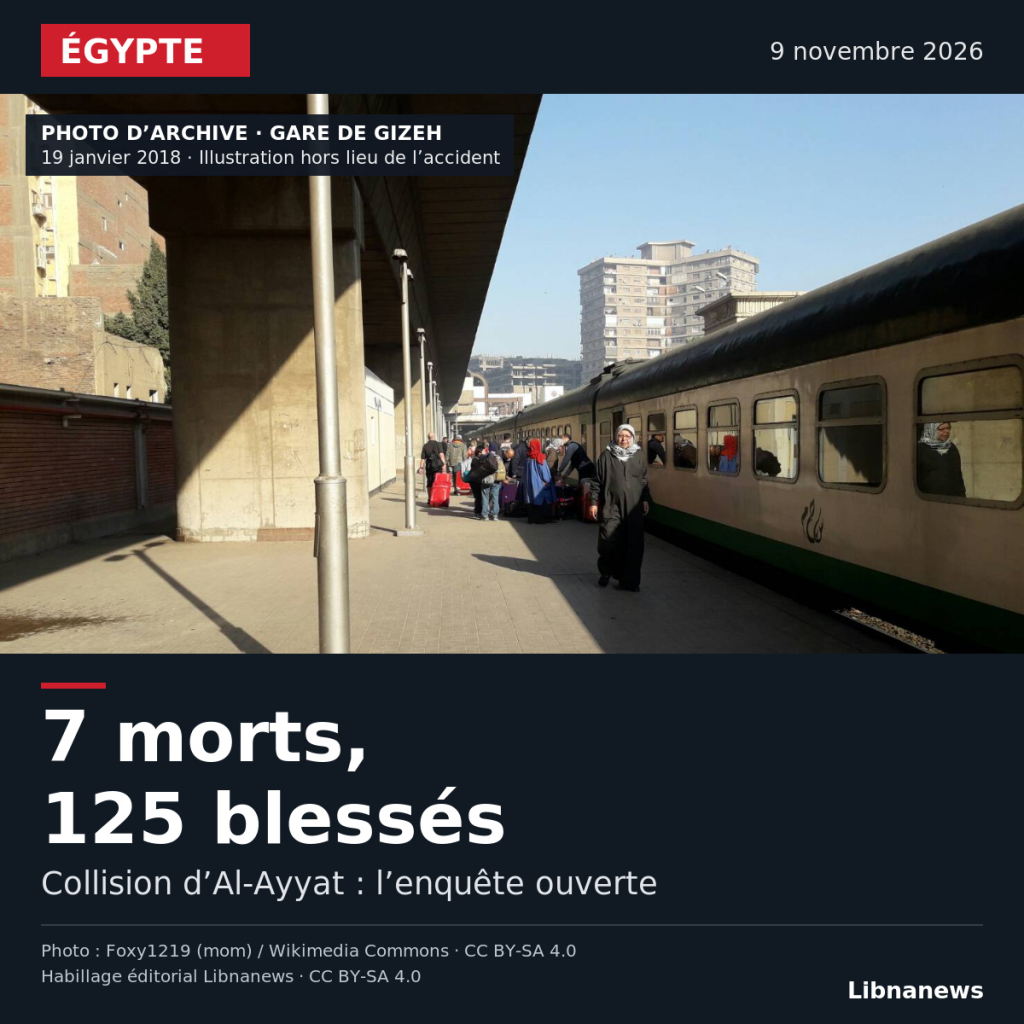
Illustration: photo of the Giza station, taken on January 19, 2018. This image does not show the Al-Ayyat accident. Photo:Foxy1219 (mom) / Wikimedia Commons,CC BY-SA 4.0. Cadrage and editorial dressing Libnanews, under CC BY-SA 4.0.






Comments