

Electricity in Lebanon holds three hundred US dollars per kilowatt hour for its electricity purchases from the Litani Authority’s power plants in its cost recovery plan. This is a purchase assumption, not the cost of electricity delivered to the household. In between, we must count the rest of the production, the network and the electricity that is never billed or cashed.
In the December 2025 addendum, Electricity of Lebanon (EDL) details what it plans to produce, buy and spend over several years. For the Markaba, Awali and Joun power stations, the purchasing table takes the same value: $0.03 per kilowatt hour. This gives $30,000 per one million kilowatt hours at the price chosen in the model. This calculation alone does not indicate the full cost of the plants, the expenses necessary for their rehabilitation or the amount finally paid by EDL.
A cheap kilowatt hour doesn’t make all the electric mix
In 2026, the same scenario recorded about 574 million kilowatthours of hydraulic origin on 7,446 billion kilowatthours of all means of production of the model combined. Hydraulics therefore accounts for about 7.7% of the total projected. This perimeter exceeds the Litani Office alone. Although water can produce part of the current without burning fuel, the total expenditure remains very sensitive to the cost of the remaining power plants.
The economic question is what production an additional kilowatt hour would replace. If it avoids operating a more expensive fuel plant at the same time, the economy depends on the cost of that plant, not on a national average. If it is used to deliver a demand that was not met, the service will improve without the same fuel economy necessarily being achieved. The plan does not allow for the measurement of this effect hour by hour, nor does it allow for the estimation of savings in 2026.
The network has its own cost
For 2026, the financial component of the plan projects approximately $46 million in transportation costs and 61 million in distribution costs. These items include operation and maintenance, as well as equipment depreciation. These are accounting estimates of the scenario, not expenditures already paid, and they concern the network as a whole. Cheaper hydraulic power purchases do not remove the cost of lines, posts and distribution to the meter.
Finally, we must distinguish what is injected, what is delivered and what is paid. Part of the energy is physically lost in the network. Consumption may also remain unmeasured or unbilled, while an invoice may remain unpaid. The cost of producing or buying a kilowatt hour and the revenue that EDL recovers from its sale are therefore not two ways of measuring the same thing.
Production also depends on available water
The Litani Office reports about 250.4 million kilowatthours produced by its own plants between January and the end of October 2026. This result covers ten months and only one producer: it does not compare directly with 574 million in the annual scenario, which covers a set of plants. In August, the Agency indicated that it had mainly drawn from the Qaraoun Lake reserves while the river’s contribution to the hold was stationary. He announced a reprogramming of water volumes for production for the following months. The purchase price gives a benchmark; the amount of electricity that the grid can actually get from it depends on the water available and when it can be used.
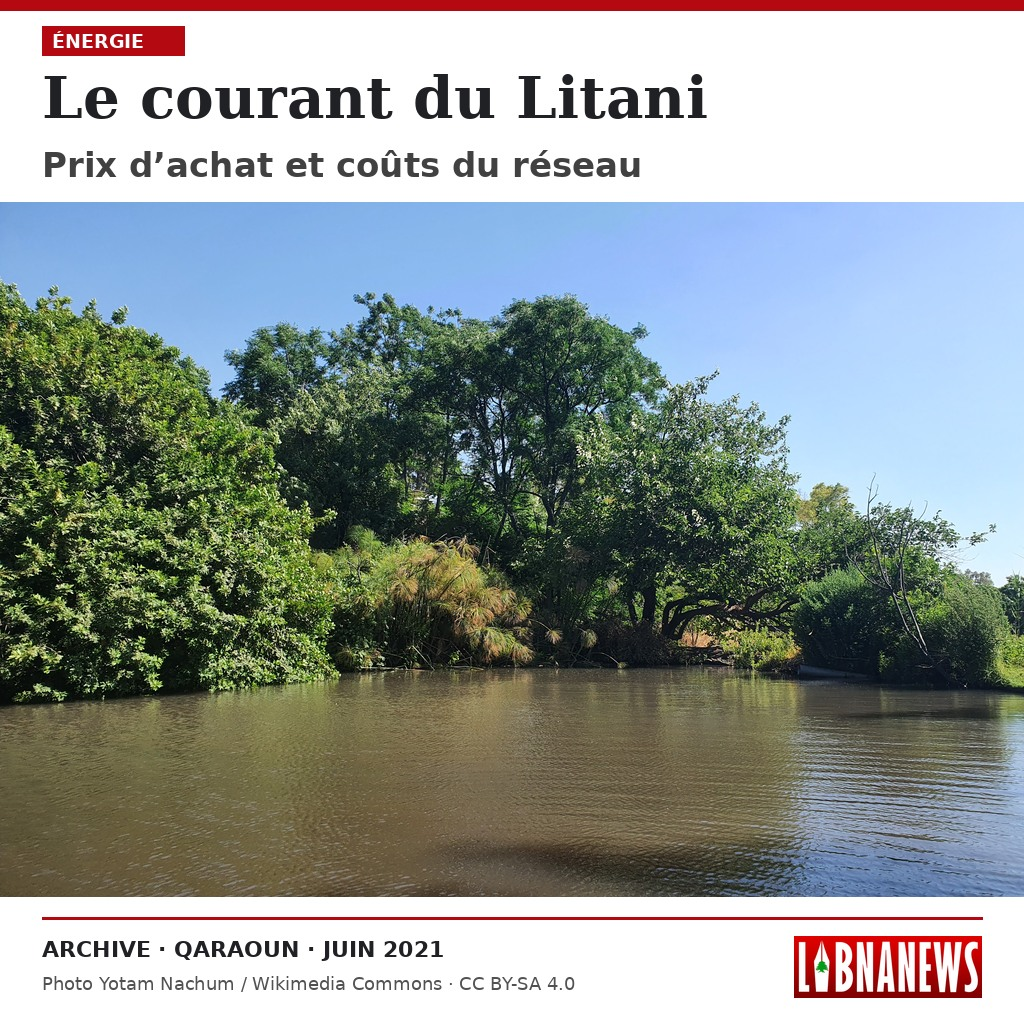
Archive photo: Lake Qaraoun, June 2021, without any indication of the current level of restraint. Yotam Nachum, Wikimedia Commons, CC BY-SA 4.0; cropped photo for cover.





Comments