

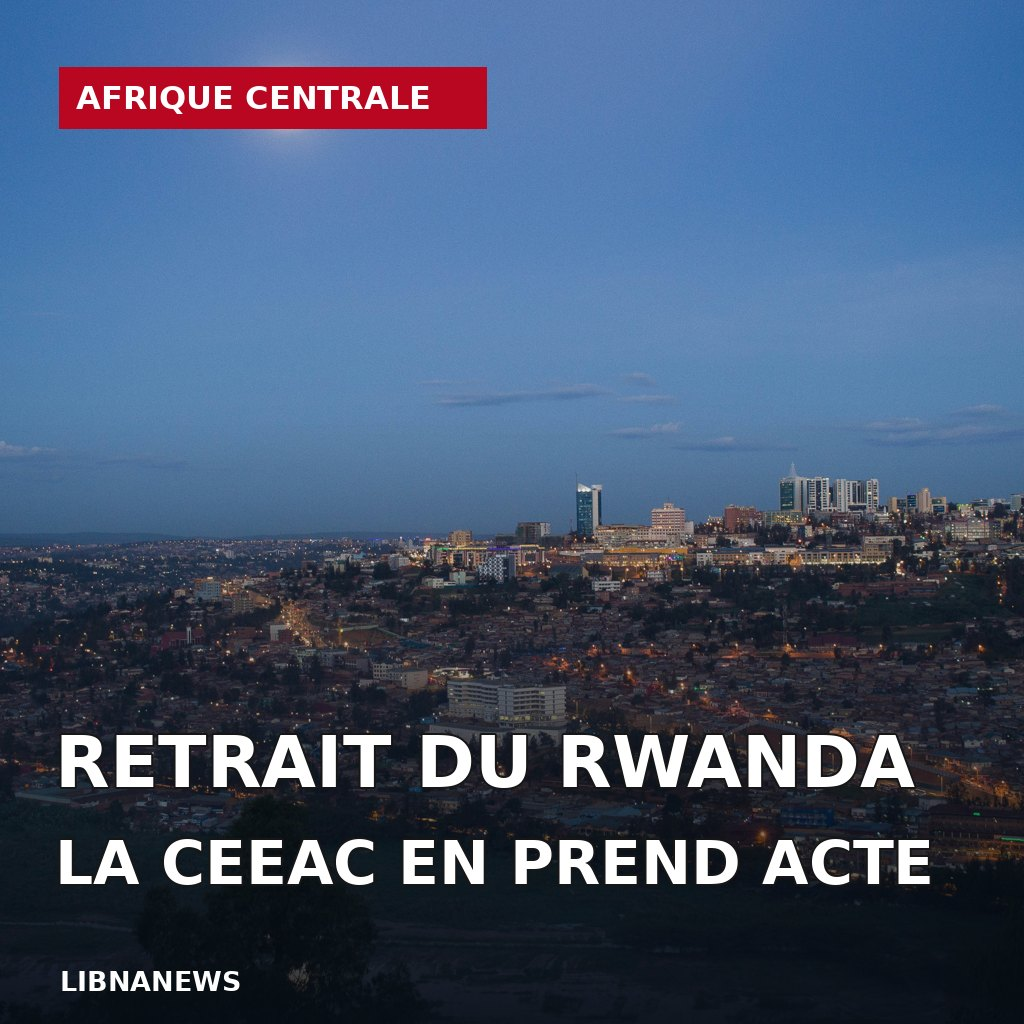
The Economic Community of Central African States (ECCAS) took note of the withdrawal from Rwanda at its summit on Friday 27 November in Sipopo, Equatorial Guinea. Kigali had announced his departure in June 2025. The Heads of State instructed the Commission to continue the legal, administrative, technical and financial steps resulting from the withdrawal.
The decision is contained in the communiqué of the 27th regular session. It is neither a new announcement of Kigali’s departure nor an exclusion decided by other governments. She clarified the follow-up to a previous decision by regional institutions, following discussions with Rwanda.
The Treaty distinguishes between the announcement of withdrawal and the end of accession
Article 110 of the revised ECCAS Treaty provides that a State shall send a written notification to the current President of the Conference one year in advance. The receipt of this notification opens negotiations on the consequences of departure. During the notice, the State remains bound to respect the treaty and its obligations. He then ceases to be a member at the expiry of the period, unless he has renounced to withdraw.
The Rwandan government statement of 9 June 2025 confirms that the cabinet had reiterated the decision announced two days earlier. However, the date of this public announcement is not sufficient to establish the date of receipt of the written notification provided for in the Treaty. The Sipopo communiqué instructs the Commission to settle the institutional follow-up without specifying the details of the financial measures to be taken.
Disagreement arose around the rotating presidency
In June 2025, Kigali challenged the failure to hold the rotating presidency at the end of the previous summit. In particular, the Rwandan government accused the Democratic Republic of the Congo of using the organization against it. On Friday, Chadian President Mahamat Idriss Déby Itno succeeded Equatorial Guinea’s President Teodoro Obiang Nguema Mbasogo at the head of the Conference.
After the withdrawal of Rwanda, ECCAS has ten States: Angola, Burundi, Cameroon, the Central African Republic, Gabon, Equatorial Guinea, the Republic of the Congo, Sao Tome and Principe and Chad. Created in 1983, it covers both economic integration and political and security cooperation. Its treaty states that the departure of a member does not dissolve the organisation.
Eastern DRC remains on the agenda
Leaders meeting in Sipopo also expressed concern about the security and humanitarian situation in eastern DRC. They called for de-escalation and called on the African Union and international partners to increase their support to the country. This part of the summit concerns the conflict in the eastern Congo; It is separate from the ECCAS withdrawal procedure.
In February 2025, the Security Council requested M23 to cease its offensives and Rwanda to cease its support for the group and withdraw its forces from Congolese territory. He also called on Congolese forces to cease their support for the Forces démocratiques de libération du Rwanda. The execution of these requests does not fall within the administrative procedure entrusted to the Commission in Sipopo.





Comments