

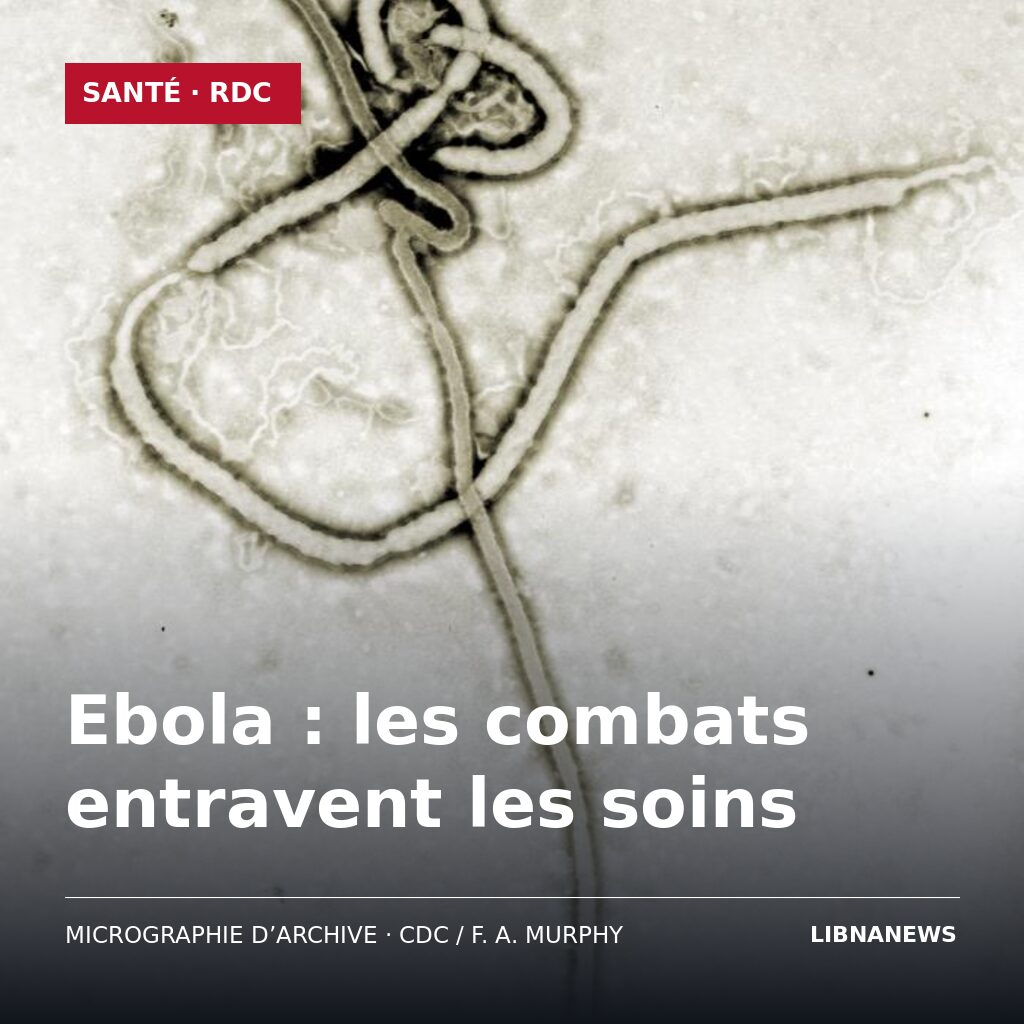
Teams engaged against Ebola were evacuated to Bunia, in the eastern part of the Democratic Republic of the Congo, after fighting in Ituri. The World Health Organization reports difficulties in reaching certain localities, transferring patients and following their contacts. Africa CDC recorded 5,678 deaths as at 17 November.
The fighting between the Congolese army and armed groups in the eastern part of the Democratic Republic of the Congo disrupts the care of Ebola patients. On Wednesday, 25 November, Catherine Smallwood, in charge of the response to the World Health Organization (WHO), reported two retreats to Bunia, capital of Ituri Province: an evacuation from an Akwe hospital and a temporary displacement of the Mongbwalu teams, where the epidemic had been detected in May.
Staff blocked three days in hospital
In Akwe, north-east of Bunia, a dozen people, including two WHO staff and Congolese health officials, remained trapped three days in the hospital in the midst of the fighting, according to Smallwood. They were evacuated Tuesday to Bunia. In the Mongbwalu area, northwest of the provincial capital, road access difficulties have led WHO and its partners to temporarily move their teams.
The consequences are not limited to evacuated sites. According to WHO, some treatment centres operate with fewer staff, while communities are no longer accessible to teams monitoring exposed people. Cut roads also complicate the delivery of medical supplies, the transfer of patients between institutions and the movement of burial teams. In neighbouring North Kivu, WHO also reports that it lost track of people following further attacks that displaced more than 20,000 people.
More than eight out of ten new infections out of contact lists
In its assessment published on 25 November, WHO estimates that more than 80% of newly reported infections continue to be detected in people who were not on known contact lists. As a result, teams cannot rely solely on the follow-up of individuals already identified to quickly identify new cases. WHO also notes shortages of protective equipment, funding difficulties and lack of trust in teams in some communities.
The same assessment, which was completed as at 8 November, included 10,990 confirmed cases and 5,354 deaths in eight provinces. Nearly seven out of ten confirmed infections were recorded in Ituri. In a more recent assessment, as at 17 November, the African Centers for Disease Control and Prevention (Africa CDC) reported 11,613 confirmed cases, including 5,678 deaths, in 68 health zones. These figures correspond to different collection dates, even though both documents were released on 25 November.
The risk remains very high in the DRC according to WHO
WHO ranks the risk as very high in DRC. She judges him raised in Kenya and Nigeria, where cases were reported without Community transmission documented in this evaluation. For other countries, it distinguishes between the degree of connection with affected areas and the ability of health services to respond, rather than applying a uniform level of risk.
The plan published by Africa CDC covers the period from November 2026 to May 2027. It plans to strengthen case reporting and follow-up with local organizations, while maintaining other health services in affected areas. As at 25 November, WHO had not announced a return date for its teams to Mongbwalu.





Comments