

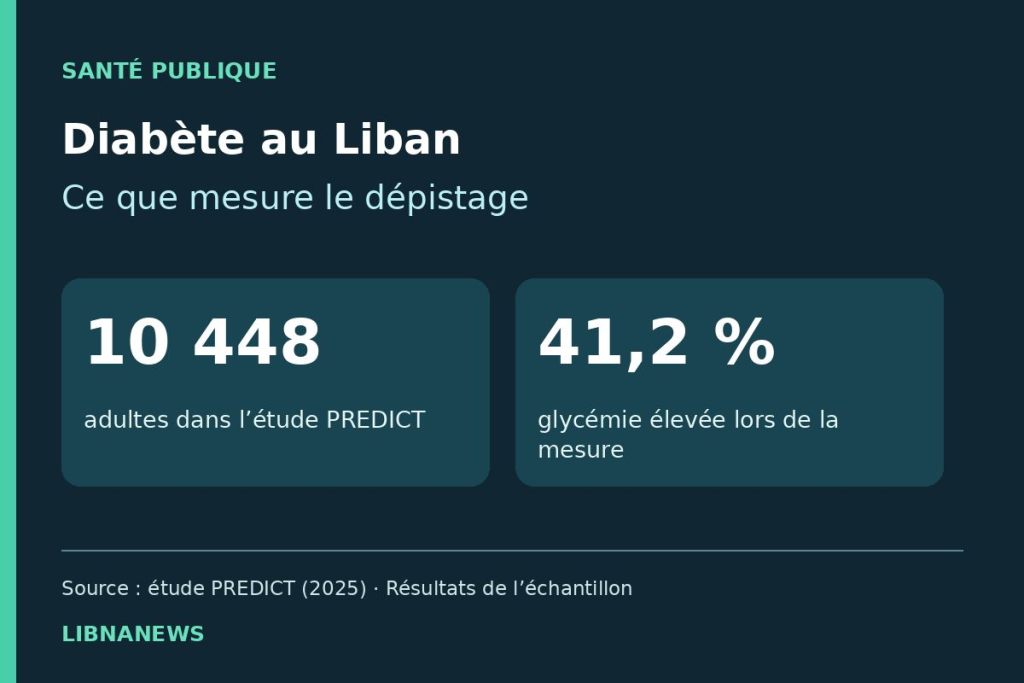
On 19 November, the Ministry of Health relaunched its national diabetes campaign after three years of interruption. A study in Lebanon shows the value of screening, but its most striking figure does not correspond to the proportion of the population with the disease: 41.2 per cent of participants had high blood sugar levels at the time of measurement.
What was measured in 10,448 adults
The PREDICT study, published in 2025, recruited people aged 20 and over between 2021 and 2023 from 43 locations in several governorates. The teams met with participants in public places, including commercial spaces, municipalities and community centres. Those who accepted responded to a questionnaire and passed a blood glucose test by finger sampling.
Of the 10,448 participants, 4,308 had hyperglycaemia at the time of the test. In the results of this measure, 25.8% were within the study range for pre-diabetes. On the other hand, 6.1 % had not reported a previous diagnosis of type 2 diabetes but had a value in the corresponding range. Finally, 10.9% of participants reported a previous diagnosis of type 2 diabetes. This latter figure comes from the reported history, not from the on-site test.
Why is it not a national diabetes rate
The survey observed participants at a specific time. She didn’t follow them to know how many would develop diabetes. The results therefore describe a population recruited from screening sites and cannot be read as a case census in the country. A one-time blood glucose measurement, particularly based on the time of the last meal, also does not have the same scope as a diagnosis made after medical examination and appropriate analyses.
The Ministry recalls that type 2 diabetes may not cause symptoms that are visible at first. An unusual result should be discussed with a health care professional who will decide on the appropriate examinations. The Ministry’s primary care network publishes a list of centres and has integrated diabetes detection into its chronic disease program. Patients can contact their centre to verify the actual consultations, examinations and follow-up possibilities offered.





Comments