

On Friday, November 27, the Supreme Court of British Columbia dismissed an appeal against the rules that allow confessional hospitals not to provide medical assistance in dying on their premises. The judgment concerns the organization of care in the province. It does not change the Canadian eligibility criteria for assisted dying.
In Vancouver, a remedy arising from the transfer of Sam O
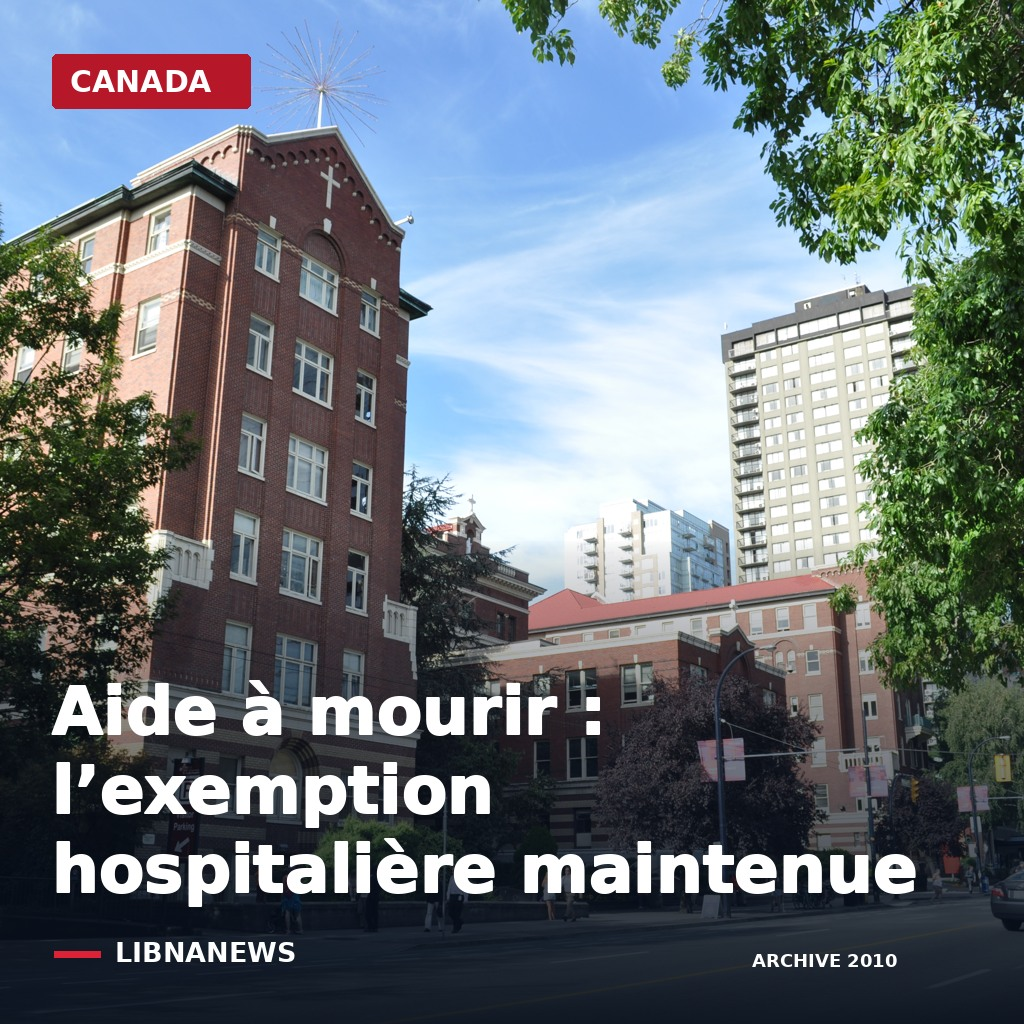
At St. Paul’s Hospital, a Vancouver Catholic facility run by Providence Health Care, patients can be evaluated on-site by outside stakeholders. Those whose request for medical assistance in dying is accepted must, however, leave the premises operated by Providence to receive the service.
In February 2023, Sam O On April 4, she was transferred to another facility in Vancouver. The team placed under sedation because of the pain she experienced. She did not regain consciousness. His relatives described a hasty departure and felt that the transfer had added to his suffering. The court did not consider this causal link to be established.
Her mother, Gaye O的Neill, filed the appeal in 2024 with palliative care physician Jyothi Jayaraman and Dying With Dignity Canada. The applicants did not demand that Catholic personnel be forced to provide assistance in dying. They suggested that outside teams could intervene on the spot, including in institutions that refused to practice it themselves.
What the judge decided on medical aid in dying
Chief Justice Ronald Skolrood reviewed the policies of the provincial Ministry of Health, the Vancouver Coastal Health Authority and Providence Health Care. Applicants invoked the freedom of conscience and religion, as well as the right of patients to life, liberty and security of person, protected by the Canadian Charter of Rights and Freedoms.
For the Court, the case differs from the judgmentCarterof 2015. The Supreme Court of Canada then invalidated a criminal prohibition that prevented access to aid in dying. The policies challenged in Vancouver define where service is provided. The judge noted that the four patients whose cases had been examined had all received medical assistance in dying on or shortly thereafter. It did not consider that the evidence produced allowed for an infringement of the rights invoked.
He also concluded that these rules did not oblige patients to adhere to Catholic beliefs. For doctors, the judge considered that freedom of conscience did not give them the right to require that they practise assisted dying in the establishment of their choice. The judgment does not resolve the question raised in the alternative by Providence of subjecting its own policy to the Charter: the rejection of grievances made this examination unnecessary.
A unit near the hospital since January 2025
The route imposed on patients in St. Paul has changed since the O-Neill case. In January 2025, Vancouver Coastal Health opened the Shoreline Unit. She joins the hospital and joins from an inner corridor. Patients can usually be taken without an ambulance. The health authority, not the Catholic hospital, operates this unit and coordinates transfers.
Based on the facts recorded by the court, all patients assessed and declared eligible for St. Paul has been served there since the opening of Shoreline. This arrangement does not remove the transfer and does not describe the situation in other denominational institutions in the province. The ruling of 27 November maintains the rule that allows these institutions not to offer medical assistance in dying on the spot.





Comments