

Several Flemish municipalities confirmed on Wednesday 25 November that an incident with a computer provider had compromised data used to manage access to waste disposal facilities. The Belgian Data Protection Authority calls on the inhabitants to be alert to fraud attempts. She referred to a potential record of 1.2 million people, without confirming that each had been affected or that the same information had been copied everywhere.
Data related to access to waste disposal
In Edegem, the municipality reports that the intermunicipal IGEAN was notified on 19 November of an incident at TWS, the software provider for its waste disposal. According to the first results of the survey cited by the municipality, data from the IGEAN area were copied. Their exact nature remains to be established. The supplier closed the access concerned and set up a new environment, according to Edegem.
In Wingene, the municipality states that the information concerned comes from reading the identity card at the entrance to the site, including the name, address and national registry number. The Data Protection Authority also reported that bank details could be involved in some cases. This does not mean that all files contained IBAN.
Different perimeter according to intermunicipality
In Laakdal, the municipality indicated that the analysis established an attack on Meerhout–Laakdal Park. Three other IOK sites use the same software, but the municipality did not announce a confirmed leak in these three parks. Courtrai and Ninove, on the other hand, stated that the data of users of their own waste disposal networks were not concerned. Courtrai states that Imog intermunicipal sites continue to function normally.
In Sint-Martens-Latem, local authorities announced that the park remained open and that the residents concerned would be informed directly once identified. The municipality states that the Centre for Cybersecurity Belgium is continuing its investigations.
Caution in the event of unexpected messages
The Belgian authority warns against emails, SMS, WhatsApp messages and calls that rely on personal information to appear authentic. She recommends that you do not click on a link received unannounced and never communicate a bank code or password. If a caller presents himself as the bank or the municipality, it is better to hang up and recall the number published on the agency’s official website.
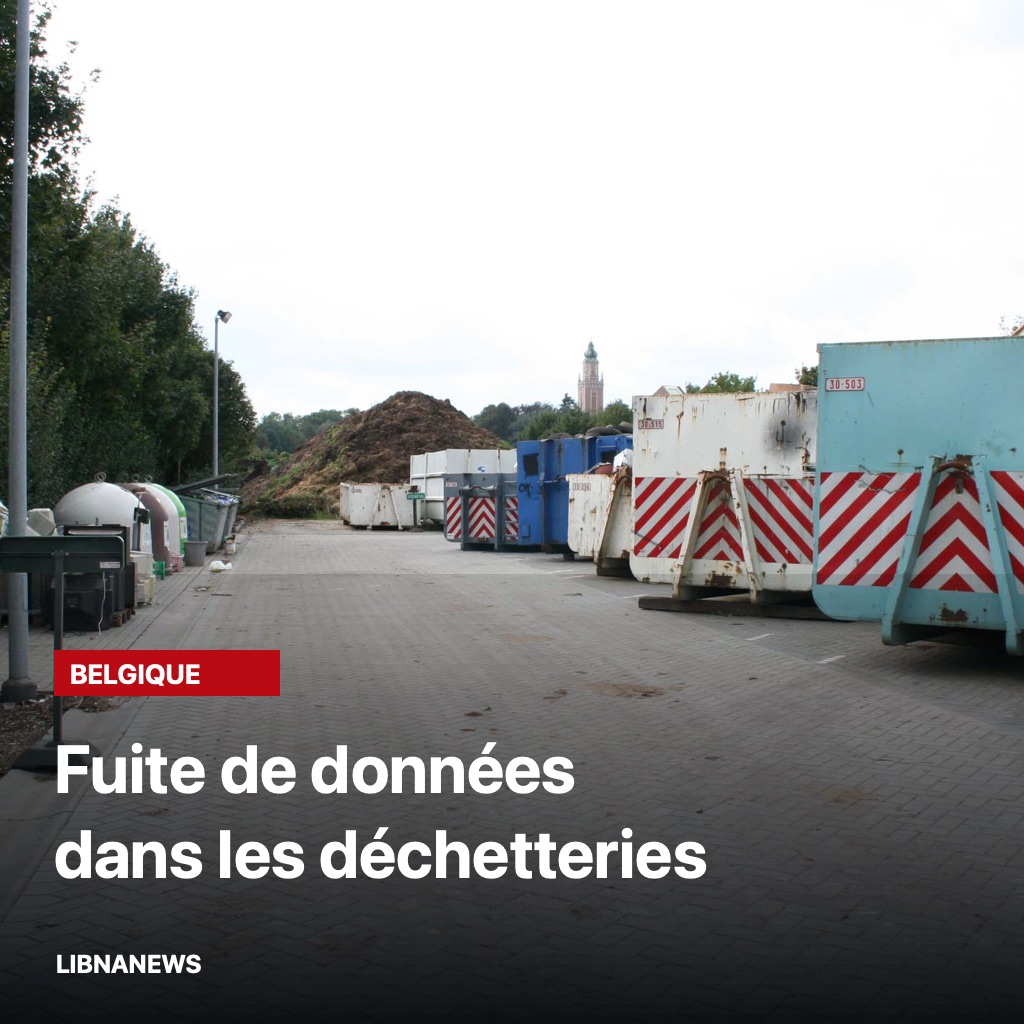
Photo archive: Bierbeek recycling park. The image does not show the place of intrusion and does not imply that Bierbeek is concerned. Photo VAT (Outematic) / Wikimedia Commons, framed and titled, undercC BY 2.5 license.





Comments