

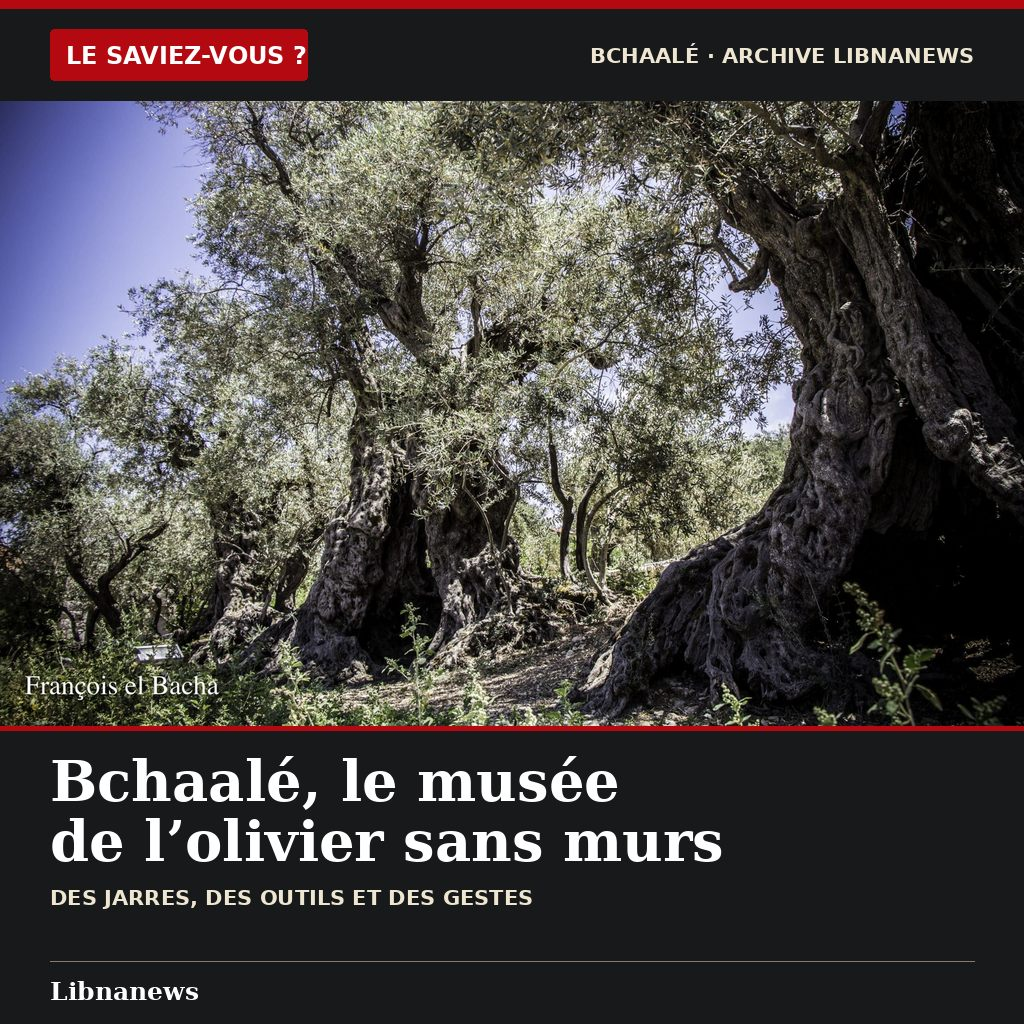
In Bchaalé, in the heights of Batrun, the olive museum has no unique address. Part of the visit is outside, between trees and alleyways; Another takes place in ancient houses. Oil jars, cultural tools and workshops tell what the view of olive trees alone does not say: how the village lives with these trees.
An oil jar as a museum piece
A cellar with oil jars is one of the steps proposed by the association Bchaaleh Trails. Another is dedicated to olive growing tools. Going from one to the other on foot, the visitor discovers two moments of the product’s life: the work of the tree and the preservation of oil. Some guided tours may also include a soap or olive wood sculpture workshop. The programme depends on the steps chosen; Each visit does not give access to all the workshops.
This museum distributed in the village was inaugurated in 2023, according to the association that manages it. The idea had taken shape after a celebration dedicated to the olive tree the previous year, with the municipality. The project leaders documented the know-how, stories and social practices surrounding the tree. A part of this memory is transmitted to the oral: a stage of the journey thus makes relive games, songs and proverbs instead of being limited to the exhibition of objects.
Trees give its name to the trail, not its age at the museum
Old olive trees are part of the proposed stages. The inhabitants call them « Noah olive trees », a name transmitted by tradition. In 2019, the American University of Beirut reported an estimate of about 1,400 years for some trees studied. This figure does not apply to the whole orchard and does not validate the much older ages that one sometimes lends to the trees of the village. The university also notes that trees studied continued to yield fruit, at an altitude of some 1,200 metres.
You can be interested in the ecomuseum without hiking. The path that bears the name of Noah’s olive trees and the cultural tour are two distinct propositions. The association describes a route of about 12 kilometres from the Baatara gulf, which it classifies as demanding. The cultural tour is organised around stages in the village. It is best to check in advance the courses and workshops offered: a stop at the orchard does not imply that houses and workshops are open with open access.





Comments