

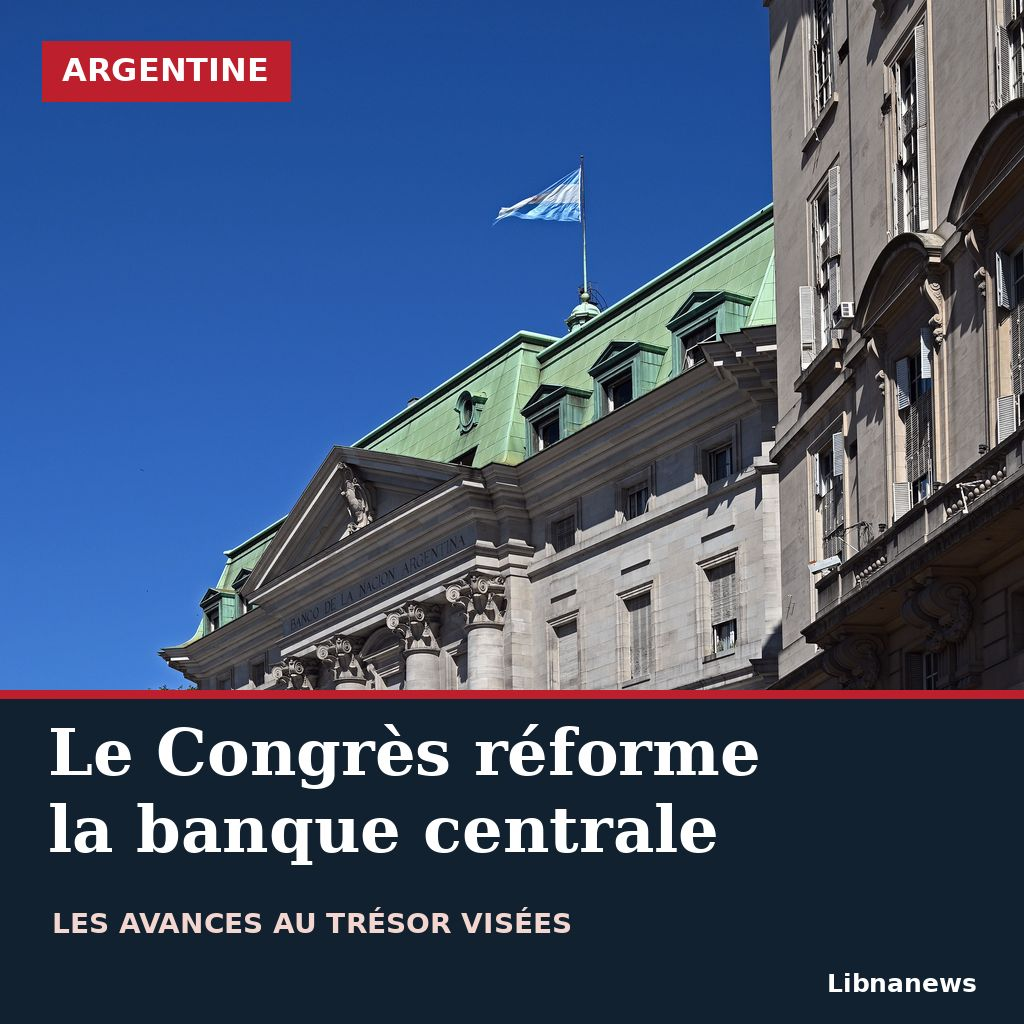
On Thursday, 26 November, the Argentine Chamber of Deputies concluded its review of the reform of the Central Bank of the Argentine Republic (BCRA), accepting the amendments of the Senate. The adopted text removes the possibility for the central bank to grant advances to the Treasury and to buy public debt directly, according to the Presidency. The vote is final in Parliament; the enactment and the effective date were not confirmed in the documents consulted.
Advances and direct purchases of securities
Transitional advances are loans from the central bank to the Treasury. The adopted reform abolishes this instrument as well as the direct purchase of public securities. It does not mean that the Treasury can no longer borrow: it aims to finance the balance sheet of the central bank, not the use of investors. The Presidency communiqué refers to direct purchases; It does not make it possible to conclude that any intervention in the secondary market is prohibited.
The text also removes the so-called free-availability reserve regime and limits transfers of profits to the Consolidated Revenue Fund to realized and liquid profits. A surplus-value recorded in the accounts but not realized is not equivalent to available resources. BCRA already included these provisions in its July monetary report when the government tabled the project.
Money stability becomes the primary mission
The lower chamber indicates that the text places the preservation of the value of the currency at the forefront of BCRA’s missions. According to the Presidency, the reform tightens the conditions for the dismissal of its leaders and removes the Minister of Economy from the meetings of the Board of Directors. The Senate had changed the appointment and revocation arrangements before the last vote of the deputies.
The text also provides, according to the Presidency, a mechanism for reducing reciprocal debts and debts between the Treasury and the central bank. A distinction must be made between the settlement of outstanding amounts and the new financing rules. The vote alone does not specify the date of the balance sheet transactions or the amount of the bonds that will emerge from them.
Archive photo: P. Hughes /Wikimedia Commons,CC BY 4.0; cropping and dressing Libnanews.






Comments