

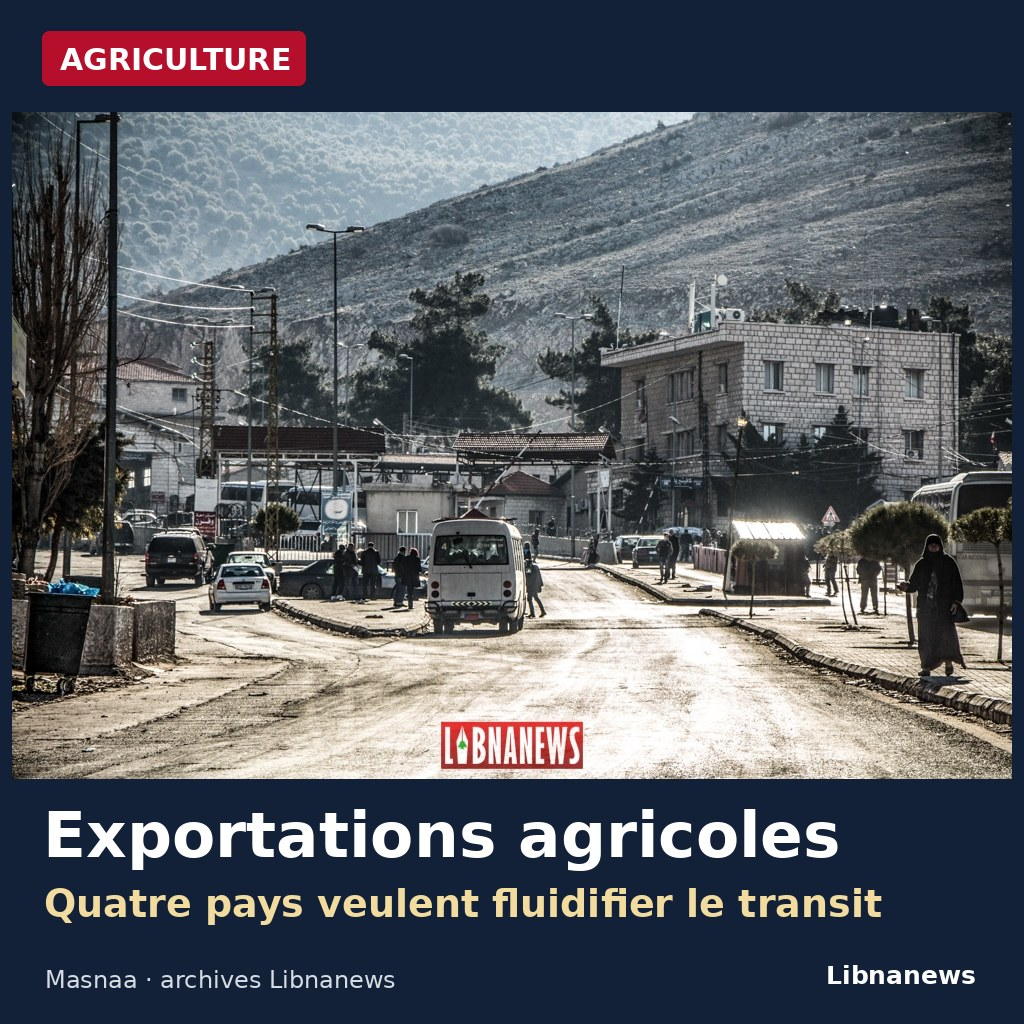
Lebanon, Syria, Jordan and Iraq want to simplify the shift from one market to another. Meeting on 19 November in Beirut, their Agriculture Ministers worked on health certificates, controls and transit. For Lebanese producers, the challenge is to spend less time at the border without interrupting the cold chain. However, no new formality was announced as applicable.
The meeting, chaired by Lebanese Minister Nizar Hani, extended a cooperation framework concluded in Damascus in 2023. The Lebanese Ministry of Agriculture states that technical interlocutors must be appointed in all four countries to prepare and follow a joint work plan. According to the Syrian Ministry of Agriculture, the first stage announced is the formation of a steering committee within a month. Specialized groups must then work on crops, livestock and trade.
The fate of a cargo is also played before the border
For a shipper of fresh vegetables or fruit, access to a market does not depend solely on the authorization to sell it. It also depends on the evidence accepted by the authorities, the checks at each stage and the time spent en route. The Lebanese Ministry cites clear lines of action: bringing technical standards closer to products for export, improving health control and certification procedures and better coordinating packaging, cooling, storage and transport.
A certificate stating that a lot meets the phytosanitary requirements of the country of destination is not a general movement permit. Transit and admission to the destination market are two distinct issues. For a Lebanese shipment that passes through Syria before reaching Jordan or Iraq, simplifying a document is therefore not sufficient if the remaining controls extend the waiting period or if the conditions of entry of the purchasing country are not fulfilled.
Delays particularly affect perishable produce. Refrigerated transport reduces quality losses, but storage and waiting costs. For a cooperative that groups crops from several farms, predictable procedures would also facilitate the organisation of packaging and the setting of a delivery date. The report does not reflect current deadlines or expected savings.
Committees announced, no new regime at border crossings
The meeting is part of discussions already underway. In September, the Lebanese Ministry of Agriculture announced discussions with Jordan on production schedules and difficulties encountered at crossing points. The four-fold dossier goes beyond these bilateral exchanges: it includes the movement of goods between several territories and the monitoring of common risks, such as animal diseases and crop pests.
The Food and Agriculture Organization of the United Nations participated in the meeting and presented ways forward for the common plan. However, the next step for exporters will be administrative: published rules on recognized documents, controls and their date of application. The reports of 19 November do not mention the opening of border posts, the immediate reduction of duties or the abolition of certificates. The announced schedule sets out stages of work for administrations, not new dates for shipping to businesses.





Comments