

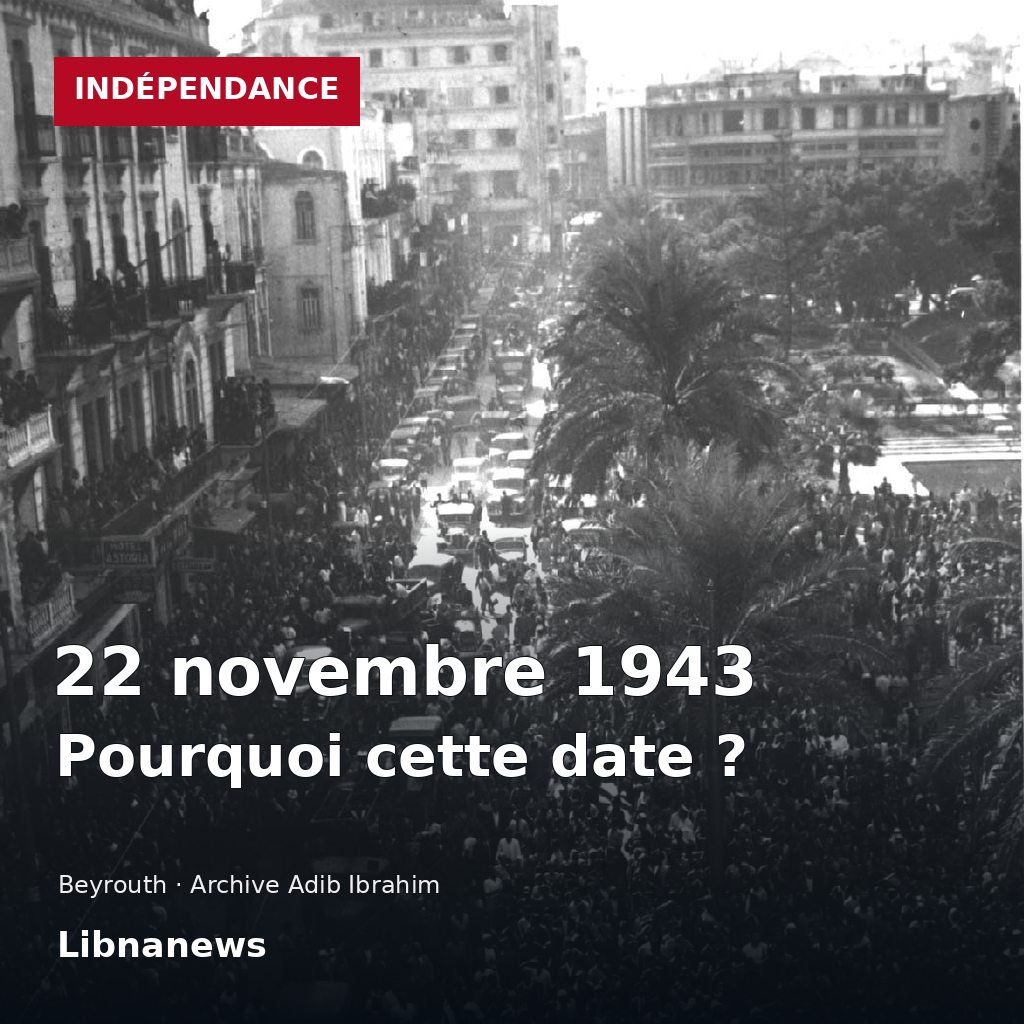
On 22 November 1943, Becharah al-Khury, Riad al-Solh and their companions returned to freedom after their detention in Rashaya. On the same morning, MEPs proposed that the date should become Independence Day if Lebanese institutions were restored. The diplomatic dispatches of the time show why the release from prison and the return of the government to business are not confused.
In Beirut, a decision taken before the return of detainees
On Monday 22 November, the leaders arrested by the French authorities have not yet returned home when the crowd is reforming in Beirut. According to the telegram sent to Washington that day by the American Consul General George Wadsworth, MPs gathered at the head of government’s home won Parliament, accompanied by several thousand people. The French troops let them pass and the Lebanese gendarmerie welcomes them.
The MPs make a provisional decision: if their cause prevails, November 22 will be commemorated as Independence Day. The telegram makes neither a law enacted that morning nor the announcement of an agreement with the French authorities. On the other hand, it shows that the date is chosen in Beirut, while the Lebanese institutions are still challenging the conditions for their restoration.
The night before, radio stations broadcast in Arabic had announced that Algiers was preparing to release the detainees. The news had brought the crowd out into the streets. The enthusiasm had then receded: the initial information intended to restore only the president, while the mobilization also demanded the return of the government of Riad al-Solh. The continuation of the strike then reflects a concrete demand: opening the gates of Rachaya is not enough if the head of government and ministers remain excluded.
A French decree that does not close the dispute
According to the American telegram, the crowd welcomes the former detainees to the president’s residence around noon. General Georges Catroux then met with Béchara el-Khoury. In the report sent to the consul by the Presidency, Catroux attributed the suspension and arrest measures to Jean Helleu and announced a decree reversing his decisions.
The next day, Wadsworth said that the acting delegate general, Yves Chataigneau, had signed this decree on the evening of 22. It repeals most of Helleu’s measures, but leaves the article declaring the constitutional vote of 8 November invalid. In other words, France retreats from the eviction of the leaders while maintaining, on paper, its objection to the Lebanese Parliament’s right to amend the Constitution without it. El-Khoury and its ministers do not consider this reservation to be a concession on their part.
Cabinet resumes its functions after release
On 23 November, Catroux again conveyed to the President the opinion of Algiers that the immediate return of Riad al-Solh and his ministers was not possible. Becharah al-Khury refuses to rule them out. The cabinet went to Serail, where the Prime Minister announced that he had resumed his duties and called for a return to normal life. The following telegram refers to a new Algiers decision accepting the immediate resumption of power by this government.
On 26 November, the US State Department welcomed the release of the leaders and their recovery. However, it considers that negotiations on the independence of the Levant States remain necessary. The 22nd of November marks the return of Rachaya and the date that the deputies chose to commemorate. The restoration of the firm took place within the following hours; The departure of the last foreign troops belonged to him in 1946.





Comments