

Lebanon was in a crisis in November 2026 at several levels: Israeli strikes and occupation persisted in the South, reconstruction remained incomplete and the banking system did not return to normal functioning. The country maintains its institutions and economic life, but daily conditions differ greatly from one region to another.
To understand the current situation in Lebanon, a distinction must be made between security, the functioning of the State and the means of living. A resumption of shops in a city does not mean that border villages can rebuild. A stabilized exchange rate does not automatically return their savings to depositors. These realities coexist, instead of succeeding each other as the stages of a uniform return to normal.
Remarks updated November 17, 2026. This synthesis distinguishes the events reported today from the economic and social data previously published.
The South remains the main source of insecurity
On 17 November, the correspondents of the national news agency reported an Israeli air strike in the night on Houla, machine gun fire in Khiam and, at dawn, artillery fire at Wadi Slouqi and the mountains around Shaqra and Qabrikha. The dispatches consulted do not give any human results. These reports illustrate the continuation of military activities, without allowing an exhaustive assessment of the day.
The Blue Line was drawn by the United Nations in 2000 to verify the Israeli withdrawal. It is a withdrawal line, not a peace treaty. The continuation of Israeli forces on the Lebanese side, overflights and destruction are at the heart of Lebanese demands for withdrawal and respect for sovereignty.
A drop in fighting is not a return to normal
UNIFIL reports a significant decrease in violence since the June 2026 framework agreement between Lebanon, Israel and the United States. However, it notes daily violations. In villages where residents return, finding their home does not always mean finding a home, a usable road or an income.
In its November presentation, the United Nations highlighted the difficulties faced by families trying to resume their activities, including agricultural activities. Returning to the village is thus a material process as much as a personal decision: it depends on security, the state of housing and services. The presence of returning families does not prove that all displaced families can follow.
State deployment and post-FINUL
Two questions structure the discussions: how to allow Lebanese institutions to exercise military authority on their territory alone, and how to obtain Israeli withdrawal? The framework negotiated in June provided for a reciprocal and sequenced process, linking, inter alia, verified disarmament of non-State groups to the progressive redeployment of Israeli forces outside Lebanon. Its implementation remains a major challenge.
Another calendar is approaching. Security Council resolution 2790 provides for the termination of UNIFIL operations on 31 December 2026, followed by an orderly and secure withdrawal for up to one year. This does not mean that all peacekeepers will leave the country on the same day. The post-term monitoring, liaison and security support functions are separate from the downsizing.
On 17 November, after meeting with President Joseph Aoun, MP Simon Abi Ramia stated that no final formula had yet been found to maintain an international presence in the South after UNIFIL. He called for further action with France and international partners under the aegis of the United Nations. This is his presentation of the state of play, not the announcement of an agreement already reached.
An economy once again weakened by war
The World Bank forecasted a contraction in gross domestic product in August of 6.4 per cent in 2026, after an estimated growth of 4.2 per cent in 2025. These are dated estimates, not a final year balance. They illustrate the reversal caused by the renewed conflict in March: property damage, displacement, disruption of supplies and decline in tourism.
The institution distinguished the relative stability of the exchange rate from the fragility of the economic whole. A stable monetary price is not enough to measure purchasing power, income or access to care. The destruction of housing, the loss of a clientele and the interruption of schooling have effects that exceed the month in which the attack occurs.
Why do banks remain at the centre of the crisis?
The banking problem inherited from the 2019 crisis is not solved solely by the circulation of cash dollars. It concerns losses, the viability of institutions and the conditions for returning deposits. In its communiqué of 18 September, the IMF welcomed changes to the banking resolution framework, while calling for legislation on financial stabilization and deposit recovery to meet international standards.
In particular, the Fund insists on the order of absorption of losses: depositors must not bear such losses before shareholders and lower-ranking creditors. It also calls for repayment promises to remain compatible with the future soundness of banks and the sustainability of public finances. An announced reform is therefore not synonymous with immediately restored access to all assets.
The IMF mission completed on 13 November confirms that this project remains open. In his closing statement, his head, Ernesto Ramirez Rigo, reported on progress in clarifying the options discussed by the Bank of Lebanon and the Government, but felt that further work was needed to achieve a sustainable restructuring strategy. The text on financial stabilization and deposit recovery remains presented as a draft before Parliament, not as a solution already applied.
School and services are part of reconstruction
UNICEF conducted a study on the impact of the escalation of 2026 on education, based on a Ministry of Education survey of 1,089 schools. The needs are not limited to the walls: continuity of courses, remedial learning, psychosocial support and child protection are part of the same project.
Lebanon of November 2026 cannot therefore be described as either a fully paralyzed country or a country that has returned to normal. The decisive criterion for the inhabitants remains concrete: to be able to live in safety, to have access to housing, to income, to school and to care, without having to circumvent every day the shortcomings of the services or the consequences of the war.
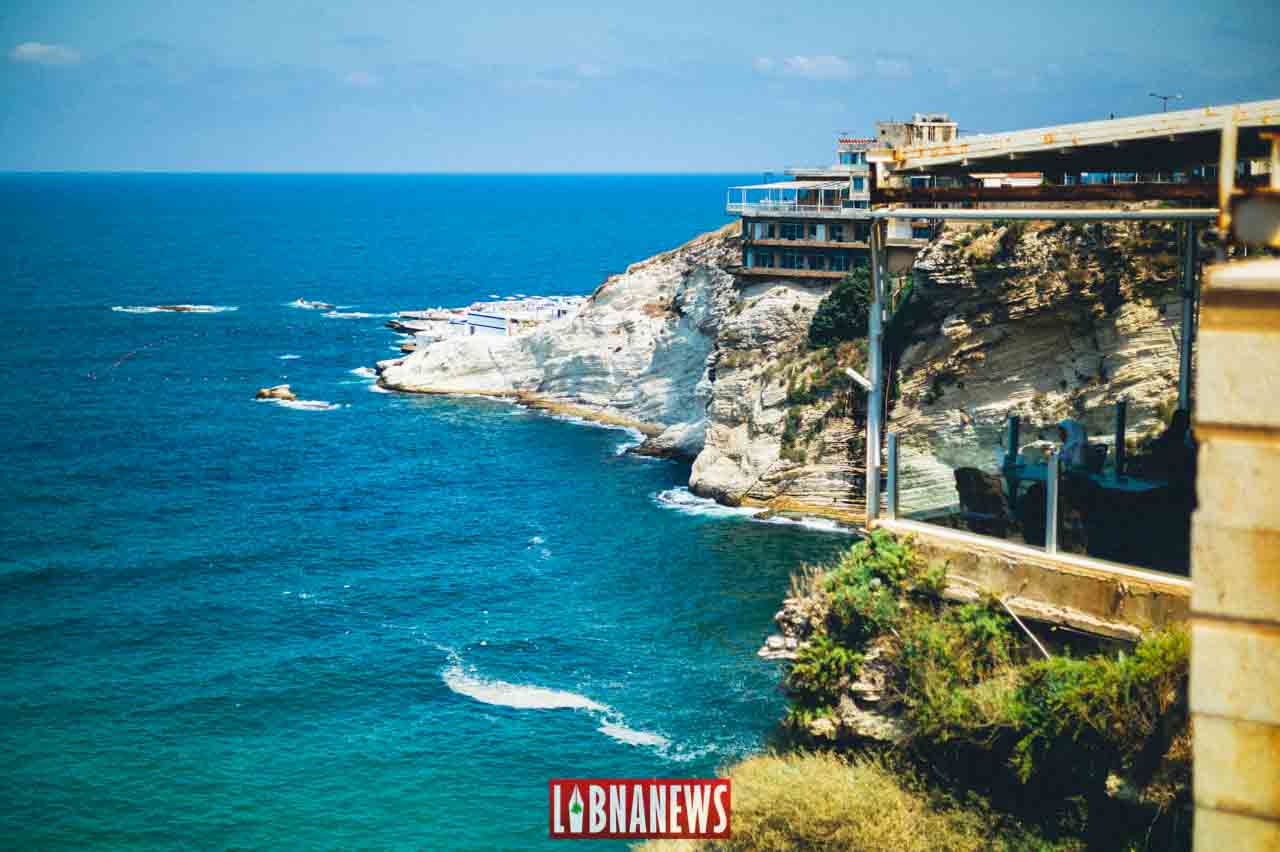
Cover photo: the cornice of Raouché in Beirut. Photographic archives, François el Bacha for Libnanews; It does not represent the events of 17 November.





Comments