

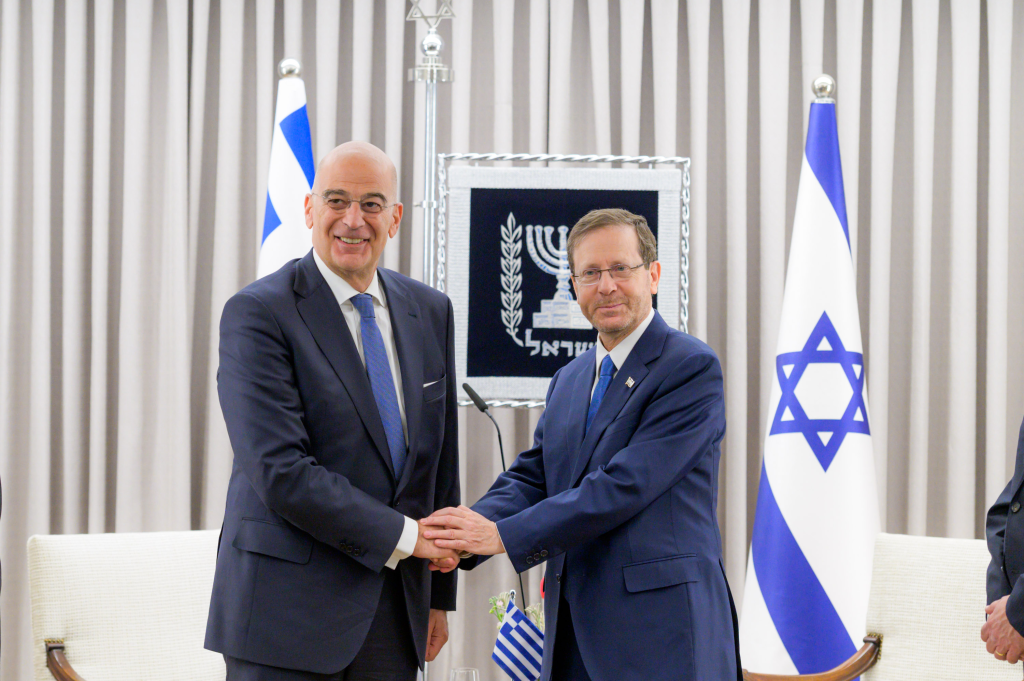
In a letter dated 8 October 2026, which was revealed by the Israeli press on 4 November, Isaac Herzog warned Benjamin Netanyahu of the risk of further violence in the occupied West Bank. The President called for a coordinated response to violent groups, while the United Nations documented a record level of attacks.
Herzog and settler violence: a revealed mail
Two Israeli media outlets published excerpts of the document on 4 November. They said they had access to the mail. The full letter was not published by the Presidency in the documents consulted. The alert to the authorities therefore precedes its public disclosure by almost one month.
One of these media outlets cites Prime Minister Benjamin Netanyahu, Defence Minister Israel Katz, Chief of Staff Eyal Zamir and Legal Adviser to the Gali Baharav-Miara Government. Herzog reports a lack of personnel and tools described by military, police and Shin Bet members who met in the field.
The President referred to a « high explosive and dangerous » situation. He fears the impact on security, the functioning of the state, its economy, its international position and the Jewish communities in the diaspora. It also underlines the moral fault of violence against innocent Palestinians. These consequences are risks formulated by Herzog, not the finding that they would all have occurred.
Organized groups and the risk of confrontation with the army
According to Israeli press reports, Herzog refuses to reduce the facts to isolated incidents. He described organized criminal activity and called for the groups involved to be treated as such. However, it wishes to distinguish these groups from all settlers, and to involve settlement leaders in the response of the authorities.
An Israeli media also reported a warning related to the late September clashes in Jalud, where Israeli forces intervened, inter alia, to allow a Palestinian family to return to their homes. Herzog believes that the episode could have resulted in the firing of soldiers against Israeli citizens or the death of a member of the border police. It envisages, from this scenario, an escalation that can lead to a civil war. This is a conditional alert, not the announcement of such a conflict.
The requested programme includes reinforcements, arrests and investigations, as well as the dismantling of violent groups. Herzog also advocates administrative detention and coordination with social services, education and communities. These proposals are contained in the letter; they do not prove their adoption by the government.
A conviction already made publicly in September
An official presidency publication of 30 September confirms the visit which preceded the letter. At the West Bank division headquarters, Herzog had already denounced nationalist crime and called on political leaders to empower the security forces to arrest him.
His speech then associated the defence of the rule of law, Israel’s reputation and the protection of settlements. The political scope of the letter should be read in this context. Herzog calls for action against the perpetrators of violence without defending the dismantling of the settlement system in public evidence. His criticism of inaction and his support for settlements coexisted in his statements.
This distinction does not remove the gravity of the warning. However, it avoids presenting the mail as a change of position on the status of the territory or as a general break with Israeli policy in the West Bank.
October, a record level documented by the UN
Humanitarian observations provide a separate measure from the presidential alert. In its report of 29 October, the United Nations Office for the Coordination of Humanitarian Affairs, OCHA, recorded 397 attacks on settlers causing victims or material damage between 1 and 26 October. Even before the end of the month, this total exceeded all the monthly balance sheets recorded since the start of the follow-up in 2006.
The count records incidents that have caused or have caused damage; therefore does not identify all forms of harassment. For the week 20-26 October alone, the agency has 62 attacks in 49 communities, including 38 related to the olive harvest.
The previous report, dated 22 October, had already recorded 2,159 attacks since the beginning of 2026 in more than 300 communities. He also reported the burning of a mosque in Mikhmas and the attack on participants in a harvesting activity in Taybeh, including diplomatic and municipal representatives. These events are after the letter: they shed light on the deterioration of the situation, but cannot have motivated a letter sent on 8 October.
The harvest focuses on economic and protection issues
Harvesting makes access to land particularly visible. According to the OCHA report of 15 October, the olive sector provides housing for between 80,000 and 100,000 Palestinian families. The agency had already documented 199 harvest-related attacks between September 1 and October 12, before the official start of the campaign.
Losses exceed stolen olives or destroyed trees. A parcel whose access is interrupted may also not be harvested in time. For farmers, protection must therefore cover the possibility of joining the land and working there, not just the response to aggression.
In a statement issued on 27 October, the Israeli army claims to have deployed reinforcements and protected approximately 100 coordinated harvesting sites. It ensures that the vast majority of these operations take place without unusual incidents. This presentation focuses on coordinated activities under military protection. It does not respond individually to the attacks identified by the United Nations or to restrictions on access to certain parcels.
Law enforcement, without removing the framework of occupation
The debate on police and military means does not resolve the broader legal issue. In its advisory opinion of 19 July 2024, the International Court of Justice found Israel’s continued presence in the Occupied Palestinian Territory unlawful. In particular, it stated that Israel should cease any new settlement activity and evacuate settlers from the occupied territory. This advisory opinion is not a criminal judgment.
Herzog’s letter is on another ground: preventing escalation and imposing a state response on violent groups. The effectiveness of such a response will be measured by verifiable facts: Palestinian access to their land, prevention of attacks, investigations and judicial follow-up. The publication of a presidential warning alone is not sufficient to establish that a change has taken place on the ground.





Comments