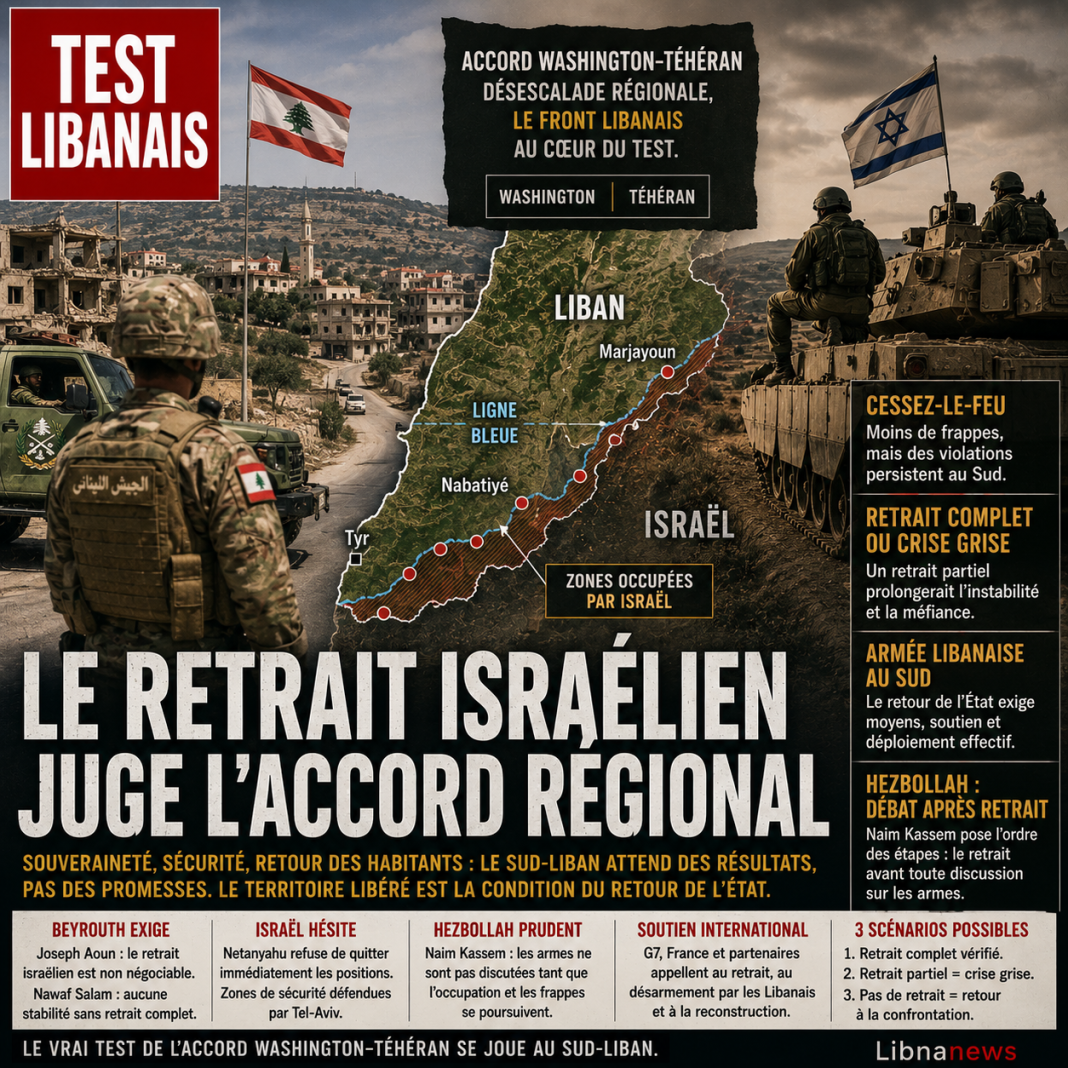






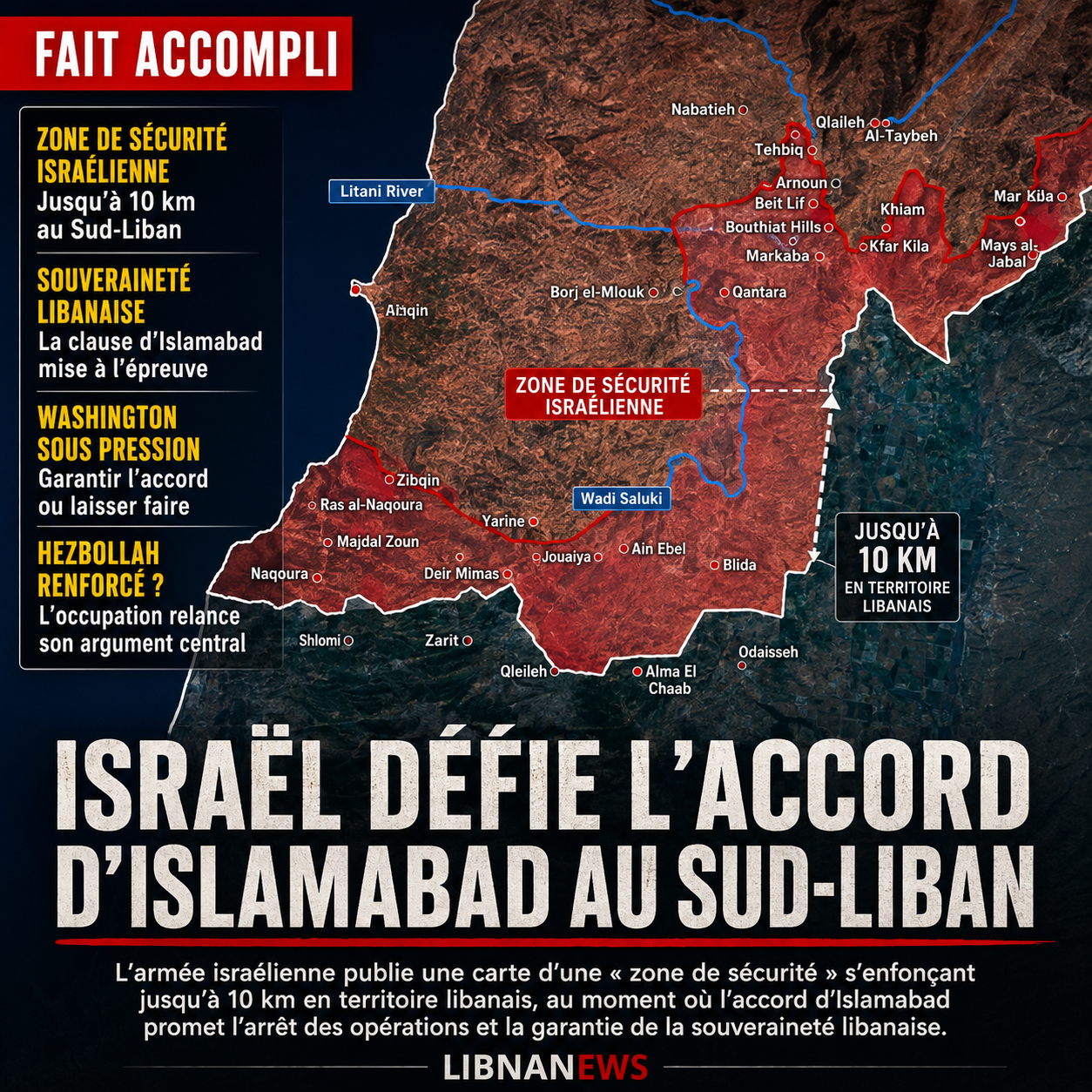
The announcement fell at the worst time for regional diplomacy. While the Islamabad agreement had just been signed and its sponsors were displaying the goal of a general de-escalation, the Israeli army circulated a map of a « security zone » in southern Lebanon. The document states that Israeli soldiers operate for « operational needs » in a band that sinks up to about ten kilometres into Lebanese territory. The wording is not neutral. She does not describe a one-time incursion. It installs into Israeli military vocabulary the idea of designated, durable and de facto controlled space.
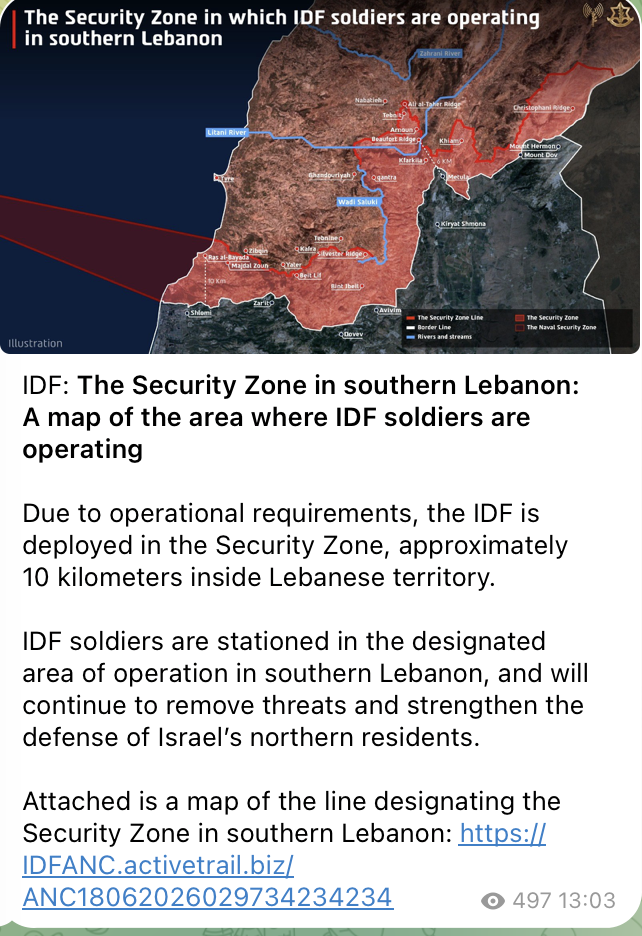
This publication is both a political provocation and a military signal. It comes at a time when the text negotiated between Washington and Tehran explicitly mentions the cessation of operations on all fronts, including in Lebanon, as well as the guarantee of Lebanese territorial integrity and sovereignty. By posting a deployment map, Israel is trying to set a reality on the ground that is contrary to the spirit of this commitment. The message to Beirut, Washington, Tehran and Hezbollah is clear: the Israeli army does not consider that the agreement automatically imposes its withdrawal.
The term « security zone » refers to a heavy memory in Lebanon. It recalls the Israeli occupation of the South until May 2000, the supplantive militias, the displacement of population, the military posts and the suspended life of border villages. The expression may appear technical in a military statement. It sounds differently in the localities of Bint Jubeil, Marjayun, Shiam, Aitah al-Sha`b, Meiss al-Jabal, Yarun or Naqurah. It means the establishment of competing sovereignty, even though Israel presents it as temporary and defensive.
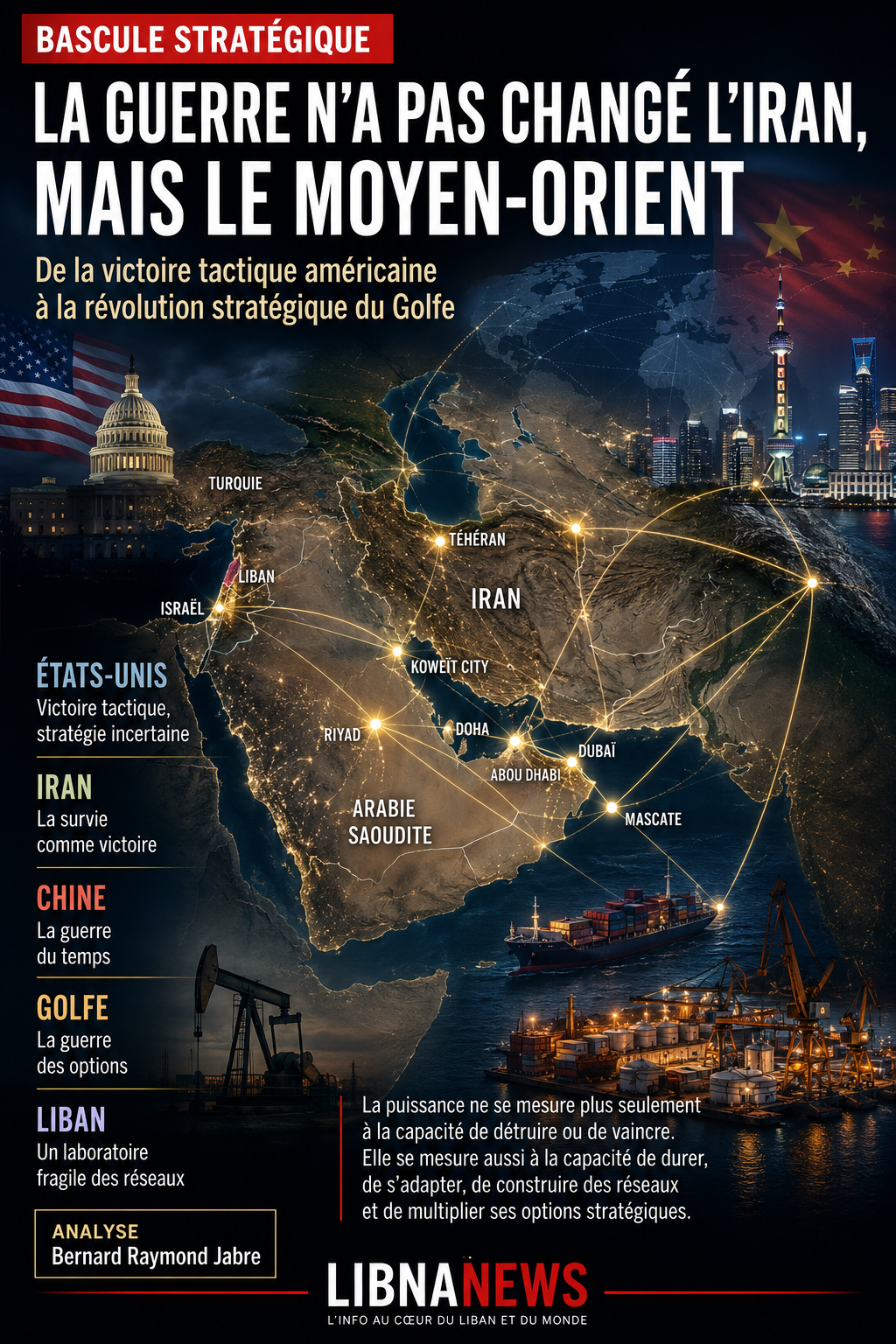
The stakes therefore go beyond a map. It touches the heart of the balance of power born of regional war. The Islamabad agreement opened a 60-day window to transform a political ceasefire into a more comprehensive compromise. Lebanon appears to be an immediate test. If Israel maintains its forces in a band of five to ten kilometres, the text loses some of its credibility. If Washington allows, the guarantees given to Lebanese sovereignty will become declarative. If Tehran turns the case into evidence of Israeli bad faith, Hezbollah will be able to claim a renewed justification to retain its weapons in the South.
The map published by the Israeli army also seeks to speak to Israeli opinion. For months, the Tel Aviv authorities have promised to protect the inhabitants of northern Israel from Hezbollah’s fire, infiltration, drones and anti-tank missiles. An advanced area in Lebanese territory serves this narrative. It allows the Netanyahu government to say that it is not content with a distant agreement negotiated by the United States and Iran. It shows that the army remains in contact and destroys, according to its version, the Hezbollah infrastructure.
But this demonstration has a price. The more Israel gives a cartographic form to its occupation, the more it weakens Lebanese actors who advocate for a solution by the State, the army and international mechanisms. The Lebanese government can demand the deployment of its forces to the border. It may seek the support of the United Nations and the United States. It may invoke international law. As long as Israeli tanks remain on the ground, Hezbollah retains the simplest and most effective argument: part of the national territory is occupied.
A map to transform the incursion into reality
The publication of a map is never an annoyance in a territorial conflict. It gives a normal appearance to a military situation. It transforms advanced positions, logistics axes and designated online shooting zones. It suggests that a command controls space, that limits exist and that the operation responds to an orderly logic. In the case of southern Lebanon, this communication aims to make acceptable the idea of an extended Israeli presence beyond the international border.
Depending on the available evidence, the mentioned line extends from west to east, with a varying depth of five to ten kilometres from the border. The Israeli army speaks of the withdrawal of threats and the defence of the inhabitants of northern Israel. She does not give a withdrawal schedule in her public message. Nor does it specify the conditions that would put an end to this area. It is precisely this absence that worries. An operation without deadlines quickly becomes a de facto occupation.
The ten-kilometre band is not just an abstraction. In the relief of South Lebanon, this depth may include villages, roads, heights, valleys and farmland. It can cut people off from their homes, prevent crops, make reconstruction impossible and block the return of displaced persons. It can also place the Lebanese army in an untenable situation: present on paper, but prevented from fully resuming its role in key areas.
Israel justifies this doctrine with the threat of Hezbollah. The movement has missiles, drones, tunnels, experienced fighters and accumulated military experience in Syria and Lebanon. Attacks on northern Israel have displaced Israelis and affected the economic life of border communities. This security reality exists. However, it does not remove another principle: the security of one State cannot be built on a sustainable basis by occupation of another.
The buffer zone doctrine is not new. Israel also uses it in other theatres, including Gaza and Syria, where it controls or monitors spaces presented as necessary for its defence. South Lebanon is now part of the same grammar. The logic is simple: to remove the threat from Israeli territory by moving the contact line to neighbouring territory. But this logic often produces the opposite of the desired effect. It creates an occupation, nourishes armed resistance and makes political stabilization more difficult.
The Islamabad agreement places Lebanon at the centre of the test
The Islamabad agreement, signed in the Versailles diplomatic sequence, does not resolve all the files. It opens a transition phase. It aims to stop military operations, to frame further discussions and to avoid a general resumption of hostilities. But his first interest in Beirut lies in a precise formula: the cessation of operations on all fronts, including Lebanon, and the guarantee of Lebanese sovereignty.
This statement changes the scope of the text. Lebanon is not treated as a secondary theatre. It becomes a verification element. Washington and Tehran can announce a de-escalation. The reality will be measured at Khiam, Kfar Tebnit, Nabatiyah, Bint Jbeil, Marjayoun, Naqurah and along the Israeli-held axes. If the strikes continue and the safety zone settles down, the agreement will appear incomplete from the very beginning.
Israel is clearly trying to preserve its freedom of action. Israeli officials reported, according to a news agency, that discussions were under way with the United States to maintain the deployment in southern Lebanon. An official close to the Prime Minister said Tel Aviv was conducting firm negotiations with Washington on this point. This approach reveals a major political fact: Israel knows that the American-Iranian agreement creates new pressure, but seeks a Lebanese exception.
This exception would be explosive. It would be tantamount to recognizing that Lebanese sovereignty could be proclaimed in a text and suspended in practice. It would also give Hezbollah a diplomatic and domestic argument. The movement could affirm that international safeguards are worth nothing without an armed power relationship. It could present its continuation in the South as a response to the occupation, not as a challenge to the State.
For the Lebanese government, the equation is dangerous. It must defend national sovereignty without allowing Hezbollah to monopolize this discourse. It must demand a clear, verifiable and complete Israeli withdrawal. It must also prepare for the deployment of the Lebanese army, the security of villages and the return of displaced persons. This requires resources, international coordination and internal political decision-making. But the Israeli occupation complicates every step.
The precedent from 1978 to 2000 haunts the South
The term « safe zone » reactivates a known history. Israel had already installed a military and political mechanism in southern Lebanon as a shield against attacks from Lebanon. This presence was prolonged for more than two decades. It had relied on posts, allied militias, controlled roads, detentions, bombardments and daily life under surveillance. It ended in May 2000 with a unilateral withdrawal, experienced in Lebanon as a major rupture.
The comparison must not be mechanical. The current context differs. The Israeli army today uses drones, sensors, precision strikes, air superiority and much more sophisticated command systems. Hezbollah also became a more powerful military actor than it was in the 1990s. The Lebanese army, UNIFIL, the United States, France and Iran have different roles in the diplomatic landscape.
But the political memory remains the same. In Lebanon, an Israeli security zone will not be seen as an interim measure. It will be read as a return from occupation. Even critical Hizbullah actors will find it difficult to defend a disarmament logic if Israel retains positions in Lebanese territory. Sovereignty cannot be divided into two: demanded against Hezbollah, relativized against Israel.
This precedent also explains the expected reaction of the inhabitants. Villages in the South have already suffered destruction, evacuation, bombing and fear of impossible return. A military card issued from Israel does not address the right of return. It says nothing about destroyed houses, mined land, closed roads, closed schools and damaged water or electricity systems. It imposes a strategic logic on a civil geography.
The safety zone is therefore likely to become an accelerator of anger. The longer it lasts, the more it will move the Lebanese debate. The priority will no longer be the disarmament of Hezbollah or reconstruction. It will become the Israeli withdrawal. This inversion serves Hezbollah, which can place its legitimacy on the national ground. It serves the Lebanese state, which wanted to make the army the only legitimate force in the South.
Calibrated provocation against Washington
The Israeli map also targets the United States. It comes after an agreement that Washington has signed with Iran, which includes commitments concerning Lebanon. Israel thus means that it does not consider itself bound automatically by an architecture negotiated without it or against its preferences. The message is all the more strong as the Netanyahu government had already expressed its refusal to withdraw from areas conquered or controlled during the war.
This attitude places the US administration before a choice. Either it requires Israel to respect the Lebanese clause. Either it tolerates an Israeli security zone and weakens the agreement from the start. The first option requires real pressure: suspension of certain deliveries, conditioning of military aid, diplomatic blockade or political threat. The second option exposes Washington to the charge of signing guarantees that it does not enforce.
The American problem is wider. The United States wants to stabilize the Iranian front, reopen energy roads, reassure markets and avoid prolonged regional war. But they remain linked to Israel through a deep military, political and institutional alliance. Every compromise with Tehran provokes resistance in Tel Aviv and Washington. Lebanon then becomes the ground where the American ability to coerce its own ally is measured.
For Israel, the card is therefore a form of test. She’s checking up on Washington. She also talks to the toughest ministers of the Israeli coalition, who refuse to accept any perception of hindrance. It allows the Prime Minister to show that he does not give in to Iran. But this tactic involves a risk. If the United States decides to defend the Islamabad agreement, Israel can be isolated on a case where its security argument is no longer sufficient to convince.
Timing reinforces the idea of provocation. To publish such a map at the very moment when the agreement is presented as a mechanism of de-escalation amounts to opposing a military fact with a diplomatic text. Israel is not content to say that it has concerns. He draws a new line inside Lebanon. In a region where maps often produce more tension than speeches, this gesture weighs heavy.
Hezbollah finds a central argument
Israel’s continued presence in southern Lebanon offers Hezbollah an immediate political resource. The movement emerged from the war with heavy casualties, destroyed areas and a proven Shiite population. It must justify the human and material cost of the conflict. It must also respond to internal criticisms of having led the country into a regional confrontation. An Israeli security zone gives it a simple answer: the war is not over because the territory remains occupied.
This argument does not erase Hezbollah’s responsibilities in climbing. The movement opened or intensified the front in connection with regional war and support for Iran. It imposed a national risk on Lebanon without a State mandate. It maintains an arsenal that challenges the monopoly of the police. These realities remain. But the Israeli presence makes their political treatment much more difficult.
An Israeli withdrawal, on the contrary, would reduce Hezbollah’s rhetorical margin. It would enable Beirut to say that security in the South must now go through the army, international institutions and mechanisms. It would open a clearer debate on the weapons of the movement. It would give the sovereign forces a more favourable ground. Therefore, the maintenance of the security zone can, paradoxically, become one of Hezbollah’s best arguments.
Tehran understood. Iran wants to make Lebanon the credibility test of the agreement. He can tell Washington that Lebanese sovereignty appears in the text and that its non-compliance invalidates the entire sequence. He can also speak to Arab opinions by presenting Israel as an actor who refuses de-escalation. This strategy protects Hezbollah without forcing Iran to immediately restart a direct war.
Hezbollah can therefore play on two registers. If Israel withdraws, it will claim a political victory achieved through the regional balance of power. If Israel remains, it will justify its continued armed presence by occupation. In both cases, the Israeli map gives him the opportunity to reconstruct a story. This is one of the most important paradoxes of this sequence: a measure presented as anti-Hezbollah can strengthen its political weight.
The Lebanese army facing an impossible mission
The role of the Lebanese army is at the centre of the post-crisis situation. In theory, it must become the main force again in the South. It must secure the roads, accompany the return of the inhabitants, coordinate with UNIFIL, prevent non-State armed groups from resuming their positions and reassure the international community. This mission requires Israeli withdrawal, logistical means, financial support and internal political consensus.
The Israeli security zone makes this mission almost impossible. The Lebanese army cannot fully deploy in areas controlled by a foreign force. It cannot guarantee the safety of the inhabitants if drones, armoured vehicles or Israeli units operate nearby. It cannot impose its authority on all actors if the State itself does not recover its territory.
This situation also weakens the image of the institution. The Lebanese soldiers are expected by the inhabitants, but they lack resources and are caught between the Israeli army, Hezbollah, internal political pressure and international demands. Every local withdrawal, every Israeli advance, every drone strike and every incident can place them in a defensive position. The army must avoid direct confrontation with Israel while not giving the impression of accepting occupation.
The return of displaced persons depends on this equation. Families will not return for long if the villages remain in a military zone. Farmers will not return to exposed fields. Schools will not normally reopen if roads are cut or monitored. Municipalities will not be able to repair the infrastructure if the construction teams are at risk of strike or fire. Sovereignty is then measured by ordinary gestures: reopening a road, giving water back, rebuilding a house, allowing a child to return to school.
A credible plan should therefore include several verifiable steps: freezing of Israeli positions, stopping strikes, gradual withdrawal from Lebanese territory, deployment of the Lebanese army, strengthening of UNIFIL, return of inhabitants, and political treatment of Hezbollah weapons. Order is essential. Require the last point by leaving the first one open is to block the whole process.
A vocabulary battle: security or occupation
The battle is also played in words. Israel speaks of « security », « advanced defence », « removal of threats » and protection of its inhabitants. Lebanon speaks of the sovereignty, occupation, withdrawal and return of internally displaced persons. The two lexicons do not describe the same world. The first part of the Israeli vulnerability. The second part of Lebanese territorial integrity.
Israeli vocabulary seeks to avoid occupation. He stressed the threat of Hezbollah and the operational nature of the deployment. It presents the card as a protection tool, not as an annexation. But international law and regional policy are not limited to declared intent. A foreign army that controls a part of a territory without the consent of the State concerned creates a de facto occupation even if it claims to act for its security.
Nuance is decisive for diplomats. If the area is described as a mere security device, it may be negotiated, tolerated or arranged. If she is classified as an occupation, she calls for a withdrawal. The Lebanese Government therefore had an interest in quickly setting its vocabulary and bringing it to international fora. It’s not just about denouncing. The aim is to create a legal and political framework that prevents the normalization of the Israeli map.
UNIFIL and the Security Council will also be observed. Their role will depend on the will of the great powers. A resolution or presidential statement may recall the principles. But the ground will change only if the United States agrees to transform the formula of sovereignty into a real constraint. France can play a diplomatic role, especially after the setting of Versailles. However, it should avoid remaining in the symbol.
The risk of two-speed de-escalation
The current sequence can produce uneven de-escalation. The Strait of Ormuz can reopen. Oil markets can calm down. Nuclear discussions can resume. The large capitals can welcome the agreement. Meanwhile, South Lebanon can remain under tension, with point strikes, military lines, empty villages and residents suspended from outside decisions.
This scenario would be dangerous. It would give the impression that Lebanon serves as an adjustment variable. The major balances would be stabilized, but Lebanese sovereignty would remain incomplete. Such an outcome would fuel distrust of international agreements. It would strengthen armed actors who claim that only weapons impose respect. It would further weaken a Lebanese state already weakened by the economic crisis, institutional paralysis and social exhaustion.
The Israeli map must therefore be read as an alert. It shows that the war does not end only with the signature of a text. It ends with a change in military behaviour. It ends when soldiers leave the occupied territories, when drones cease to strike, when residents return and when the state resumes its duties. Without this, diplomacy produces a pause, not peace.
For Israel, the risk also exists. Prolonged occupation of southern Lebanon can lead to a war of wear and tear. Israeli forces can become permanent targets. The destroyed villages can become symbols. International pressure can increase. The people of northern Israel, whom the area is supposed to protect, may not find the promised lasting security. An advanced line can repel the danger for a while. It can also root.
The Islamabad agreement therefore opened a test of truth. The Israeli map published on June 18 attempts to change its terms. It says that Israeli security prevails over Lebanese sovereignty. The diplomatic text says the opposite, or at least purports to reconcile the two. Between these two readings, the terrain will decide. The next few days will say whether Washington is turning its signature into real pressure, whether Beirut is able to impose a unified position and whether Israel is willing to withdraw its forces instead of redrawing the border once again.