

The United Kingdom imposed sanctions on Slavneft on 12 November 2026. London now claims to target the top ten Russian oil producers. This announcement does not mean that ten groups have just been added simultaneously: Slavneft completes a device built over several decisions. The new package covers liquefied natural gas, coal and energy trading circuits.
The British Government announced these measures at the European Political Community Summit in Dublin. Its stated objective is to reduce Moscow’s income to finance its war against Ukraine. Restrictions come as Europeans discuss the continuation of peace negotiations.
British sanctions against Slavneft: measures
The official notice of 12 November lists PJSC Oil and Gas Company Slavneft as RUS3800. It provides for a freezing of assets, restrictions on fiduciary services, a ban on the exercise of administrator functions and penalties in transport. London motivates this designation by the Group’s activities in the energy sector, considered strategic for the Russian government.
This ground falls within the scope of the UK sanction decision. It alone is not a criminal conviction. The distinction also counts for other registered companies: the text sets out the reasons given by the authorities and the restrictions applicable.
From oil to Dubai traders
The same notice applies to LLC Vostok Oil, of which it identifies Rosneft as its parent company. She added in particular Sibur Holding, Nipigazpererabotka and the coal companies SUEK and Kuzbassrazrezugol. Forteza Trading DMCC, Patera FZCO and Novus Energy DMCC, based in Dubai, are also designated entities.
Downing Street presents Vostok Oil as a flagship Rosneft project in the Arctic. For the UK government, the whole approach is the same: to target several links in Russian energy revenues, from producers to traders and then to means of transport. This extension beyond producers alone explains the diversity of the undertakings concerned.
Vessels and their services also targeted
The package leaflet also lists ships, including LNG tankers Melicertes and Neleus, as well as tankers Apeks and Sara Sky. Maritime restrictions include access to British ports and services associated with the vessels concerned.
The UK framework distinguishes between financial sanctions against a company and the designation of a ship. For specific vessels, prohibitions may apply to chartering, operation, technical assistance, crews, brokering and financing. The obligations depend on the provisions applicable to each registration, with the exceptions and licences provided for in the regulations. An announcement of sanctions therefore does not automatically deduce the same regime for a whole fleet.
A freezing of assets is not a confiscation
For Slavneft, the scope of the freeze must be understood in the context of UK bonds. According to the rules of the Office of Financial Sanctions Implementation, the funds and economic resources concerned must be secured by those who hold or control them. They may not be used or made available to the sanctioned beneficiary, directly or indirectly, unless the exception or licence is applicable.
The freeze does not transfer their property to the British State. Nor does it mean that London takes control of the group’s facilities in Russia. The UK authority explicitly distinguishes the immobilization of assets from their confiscation. Companies subject to these rules must also report the assets concerned to OFSI.
Controls are not limited to comparing a name with a list. The plan may also reach entities owned or controlled by a designated person. For the banks and trading partners concerned, the identity of the contracting party and its control structure thus become decisive elements in the review of transactions.
Pressure from discussions on Ukraine
In Dublin, Andy Burnham defended continued pressure on Moscow despite the progress mentioned in the talks. The British Prime Minister calls for a complete and immediate ceasefire. His Government linked the new restrictions to this diplomatic objective, rather than announcing an agreement already reached.
The 12 November package sets out legal obligations and new targets. However, the texts consulted do not mention the revenue that Slavneft will lose or the export volumes that will be effectively prevented. The economic effect of these measures remains distinct from their official registration.
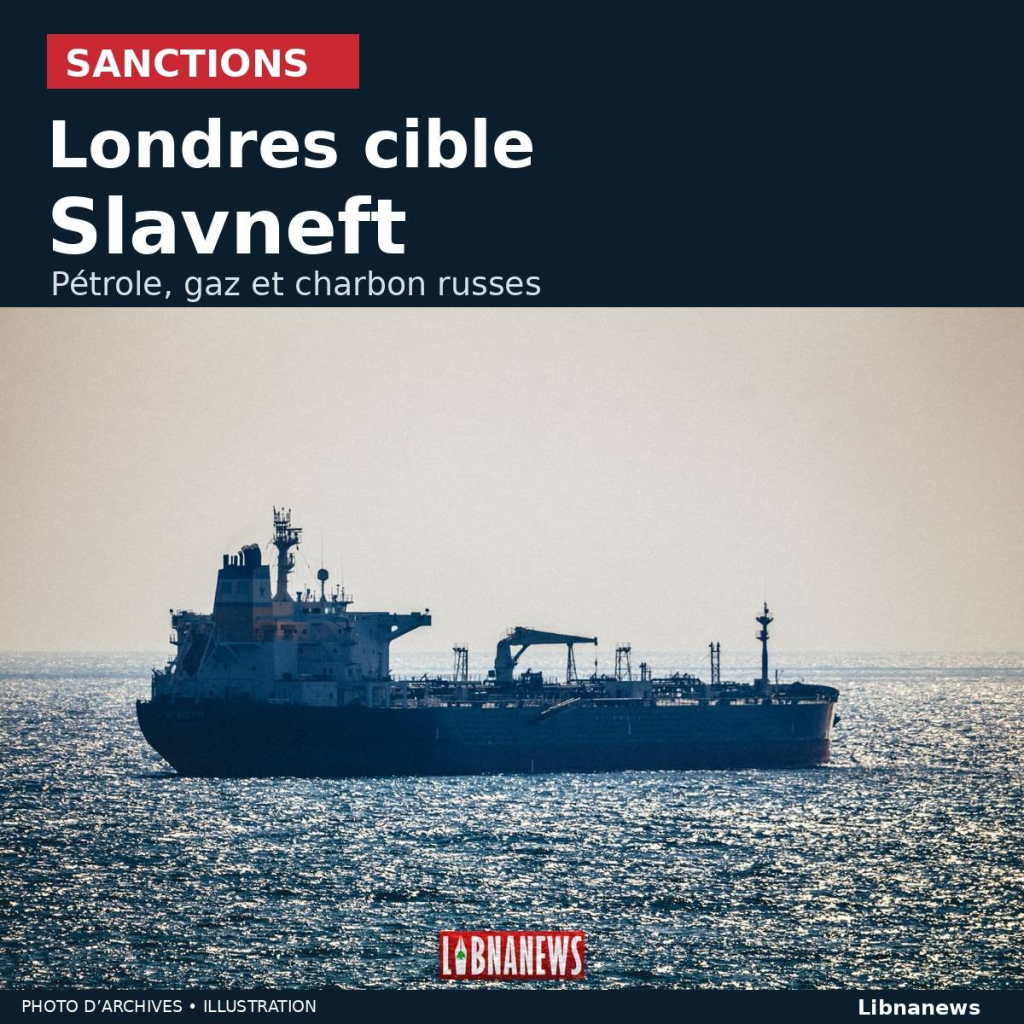
Cover: oil tanker, photographic archives of Libnanews bank. Date and place of shooting not established. Illustration of maritime transport, without identifying this vessel as subject to the penalties mentioned. Credit: Libnanews.





Comments