

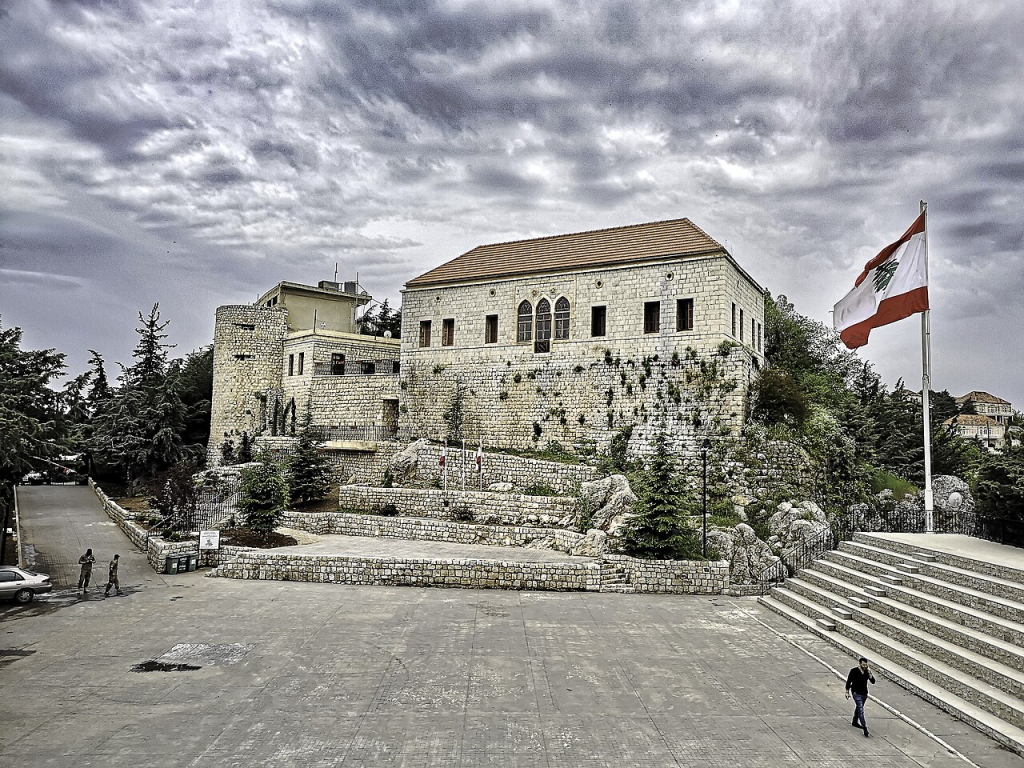
This day in the history of Lebanon. On 18 November 1943, the Mount Lebanon Society of Fall River, Massachusetts, brought the cause of Lebanese independence before the American Senate during the Rachaya crisis.
A telegram from Massachusetts
The document appears on page 9665 of the Congressional Record, in the record of the November 18 sitting. Senator David I. Walsh presented the message of the president of the Mount Lebanon Society. The telegram is referred to the Foreign Relations Committee and its impression is ordered. This is neither a resolution passed by the Senate nor a foreign policy decision.
Also dated 18 November, the telegram is signed Farris Nassif Jr., president of the association. It presents itself as an organization founded in Fall River in 1911 by American citizens of Lebanese origin to support Lebanon’s independence. Together with her auxiliary group, she appealed to President Franklin D. Roosevelt and Secretary of State Cordell Hull.
Rachaya crisis, seen from the other bank
In Lebanon, confrontation is about the effective exercise of sovereignty. After the 1943 elections, Béchara el-Khoury became president and Riad el-Solh formed the government. Parliament amends the constitutional provisions relating to the French mandate. The French authorities reply by arresting the president, the head of government and other officials, transferred to the citadel of Rachaya.
The demonstrations that begin on November 11th are taking place in several cities. In Bchamoun, Habib Abu Shahla and Majid Arslane, accompanied by the President of the Chamber Sabri Hamadé, organize the continuity of the Lebanese power outside the proxy control. On 18 November, the crisis was not over: Fall River’s appeal came during the detention, four days before the release of those responsible on 22 November, the date of Independence Day.
Summoning the Allies’ Promises
The appeal is based on the Atlantic Charter. Made public on August 14, 1941 by Roosevelt and Winston Churchill, this declaration includes the right of peoples to choose their form of government and the restoration of sovereign rights from which they were forcibly deprived.
The rapprochement is politically precise: US citizens of Lebanese origin are seeking their own government on behalf of the principles proclaimed by the Allies. They thus place a crisis of the French mandate in the debate on the international order to be built after the war. The argument is not based on a particular favour granted to Lebanon, but on the application of a general principle.
Release people, restore institutions
The distinction between individual liberation and political restoration is also reflected in American diplomatic exchanges. On 20 November, Hull asked the US Ambassador in London, John G. Winant, to immediately clarify the British position. It is concerned about a solution that would not restore the elected Lebanese government and parliament.
The Secretary of State recalls the assurance received from the British Embassy that detainees must be released as president and ministers, not as individuals. In another telegram dated the same day, Washington states that it asked the French National Liberation Committee to restore the government and implement the 1941 promises of independence.
There is nothing in the November 18 deposit to attribute to the Fall River message the decision to release the Lebanese leaders. His interest is elsewhere: he keeps track of a diaspora intervention, at the heart of the crisis, with the institutions of his host country. Independence was then defended in Beirut and Bchamoun, but it also found links to Massachusetts.
Illustration: citadel of Rachaya, May 6, 2019. Photo Hardscarf, Wikimedia Commons, CC BY-SA 4.0, resized.





Comments