

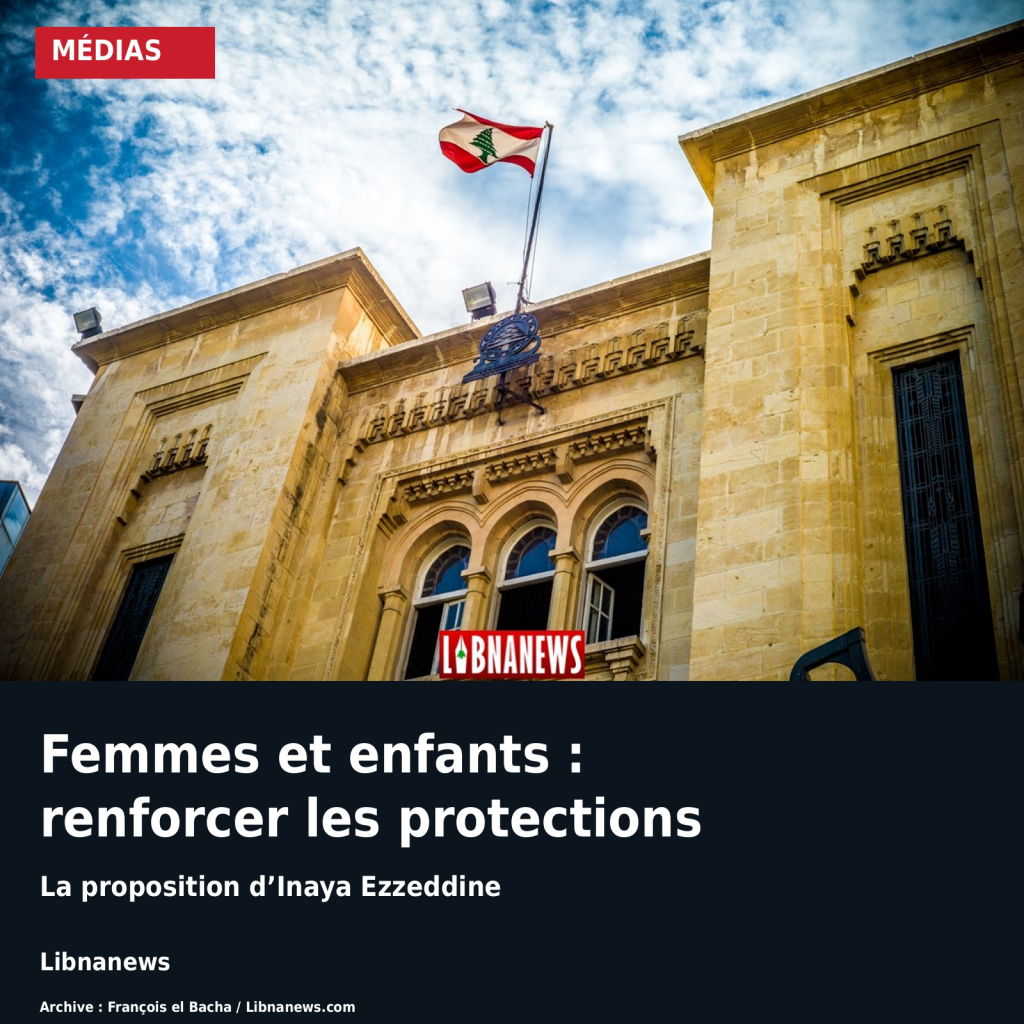
The protection of women and children in the media is the subject of a new proposal by Inaya Ezzeddine. On 2 November, the Chairperson of the Parliamentary Committee on Women and Children announced that she had tabled a text amending certain provisions of the Media Act. Its objectives include confidential complaint procedures, minimum representation of women in the national authority and responsibility for digital platforms.
Women and children in the media: the protections announced
In her statement, the MP presented a mechanism to combat discrimination, harassment, exploitation and stereotypical portrayal of women. For children, it cites the protection of privacy and the prevention of exploitation and harm, while preserving their right to expression and access to reliable and age-appropriate content.
A complaint procedure and a representation threshold
The proposal provides, according to Inaya Ezzeddine’s presentation, clear and confidential mechanisms for receiving complaints of harassment, assault, violence and risk to children. It intends to protect complainants and witnesses from threats, pressures and reprisals. The communiqué does not specify the processing times, remedies or means to be used in these proceedings.
Another component would reserve at least 30 per cent of the seats of the National Media Authority for women. This threshold would cover the composition of the authority, not the staff of each editorial staff or the guests of the broadcasts.
Platforms and websites would also be required, according to the MP, to comply with the obligations of the media law and to answer for offences committed through them. The honourable Member did not detail the scale of sanctions or the proposed liability regime.
Protecting without erasing children’s words
The debate includes issues that international bodies already address in their professional recommendations. UNICEF recalls that journalistic work must serve the public interest without compromising the rights of children. Its principles combine privacy, confidentiality, opportunity to be heard and protection from harm and reprisal.
This approach does not exclude minors from information. It requires examining the consequences of a publication: a revealed identity, a recognizable image or a detail of context can continue to circulate after the report.
The full legal content remains crucial
The proposal has yet to follow its parliamentary path. Inaya Ezzeddine did not announce a review schedule. The deposit is therefore not valid for adoption or entry into force of the new obligations.
The definition of offences, the complaints authority, guarantees of confidentiality and possibilities for challenge will be decisive. These clarifications will make it possible to assess both the protection of the persons concerned and the guarantees necessary for the exercise of journalism.





Comments