

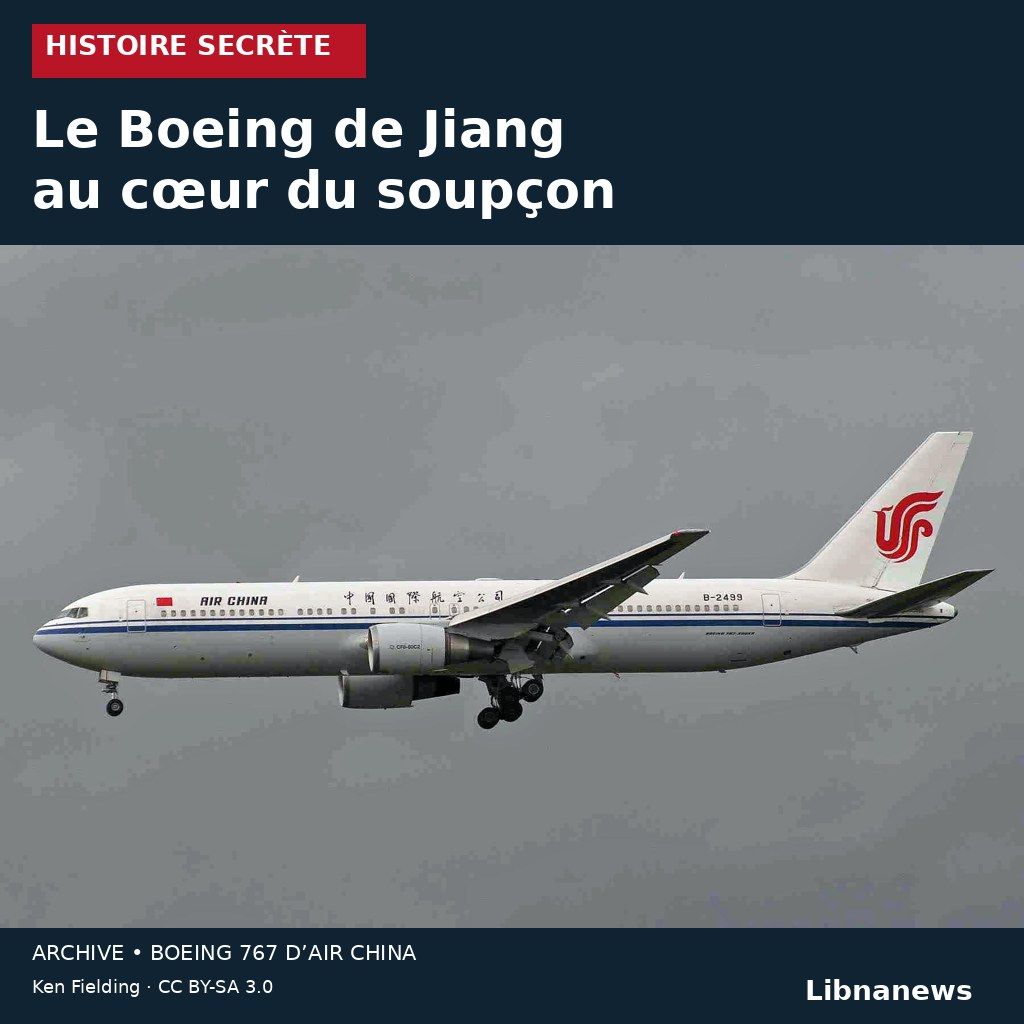
In January 2002, a month from a Chinese-American summit, there were reports of possible listening in a Boeing 767 in Texas for Chinese President Jiang Zemin. Beijing does not confirm the discovery. On February 21, Jiang received George W. Bush as scheduled.
A Boeing 767 for Jiang Zemin
At first, there is an aeronautical transaction. Debbie Heathers, Boeing spokesman quoted by a news agency in January 2002, describes a 767-300ER delivered to Delta in June 2000, then sold to China United Airlines. A Texas company would then have set up Jiang Zemin. The manufacturer and the company responsible for transforming the cab are therefore not involved at the same stage of the journey.
January 2002: suspicion exits aircraft
The case broke out in the British and American press around 19 January. The narratives point to the alleged discovery in autumn 2001. They do not agree sufficiently to set a specific date for monitoring. At this stage, there is no independent public inspection report to reconstruct the scene.
The versions are moving fast. An Australian radio report on 21 January shows 27 listening devices; other accounts speak of more than twenty. No official records published in the sources consulted are available to decide. The repetition of these figures does not transform them into certified inventories. Media coverage is largely based on the same core of allegations, relayed by anonymous interlocutors.
The distinction also counts for the alleged author of the operation. Suspicions are directed at American services in the information of the time. However, no official document consulted establishes a CIA responsibility. A refusal to comment is not a recognition. The story can follow a charge of espionage; He cannot invent a signature.
In Texas, the companies involved respond on another ground: their work and reputation. Gore Design and Dee Howard Aircraft Maintenance report that they did not receive any complaints about the aircraft, according to their press release. Jerry Gore, president of Gore Design, disclaims all responsibility. This position must be heard for what it is: the response of a designer questioned by the narratives, not a public expertise establishing what was on board.
On January 22, Beijing chooses its words
Three days after the first revelations, the Chinese Ministry of Foreign Affairs publicly takes a stand. His spokesman, Sun Yuxi, said he heard about the case, without confirming the information. It does not provide for any consequences on other matters relating to the Sino-American relationship. The statement was reported on 22 January by an international news agency.
Sun Yuxi has no expertise or material elements. Beijing does not publicly follow up suspicions before the summit.
February: the summit takes place
On 21 February 2002, Jiang Zemin received George W. Bush at the People’s Assembly Palace in Beijing. This time, the scene belongs to the official archives. The two presidents speak in front of the press. Jiang announced that he had accepted an invitation to visit the United States in October. Bush insists on their common interests, without removing their disagreements.
They refer to the fight against terrorism, trade and Taiwan. The trip coincides with the thirtieth anniversary of Richard Nixon’s visit to China. A month after the revelation of suspicions about the Boeing, the two governments therefore maintain the meeting and display the continuation of the dialogue.
This summit does not exculpate anyone and does not confirm any listening. It only establishes that the case did not prevent the presidential appointment. The U.S. report presented on the same day by Condoleezza Rice describes exchanges on cooperation, proliferation, religious freedom and regional issues. It does not provide a public resolution of the aircraft file.





Comments