

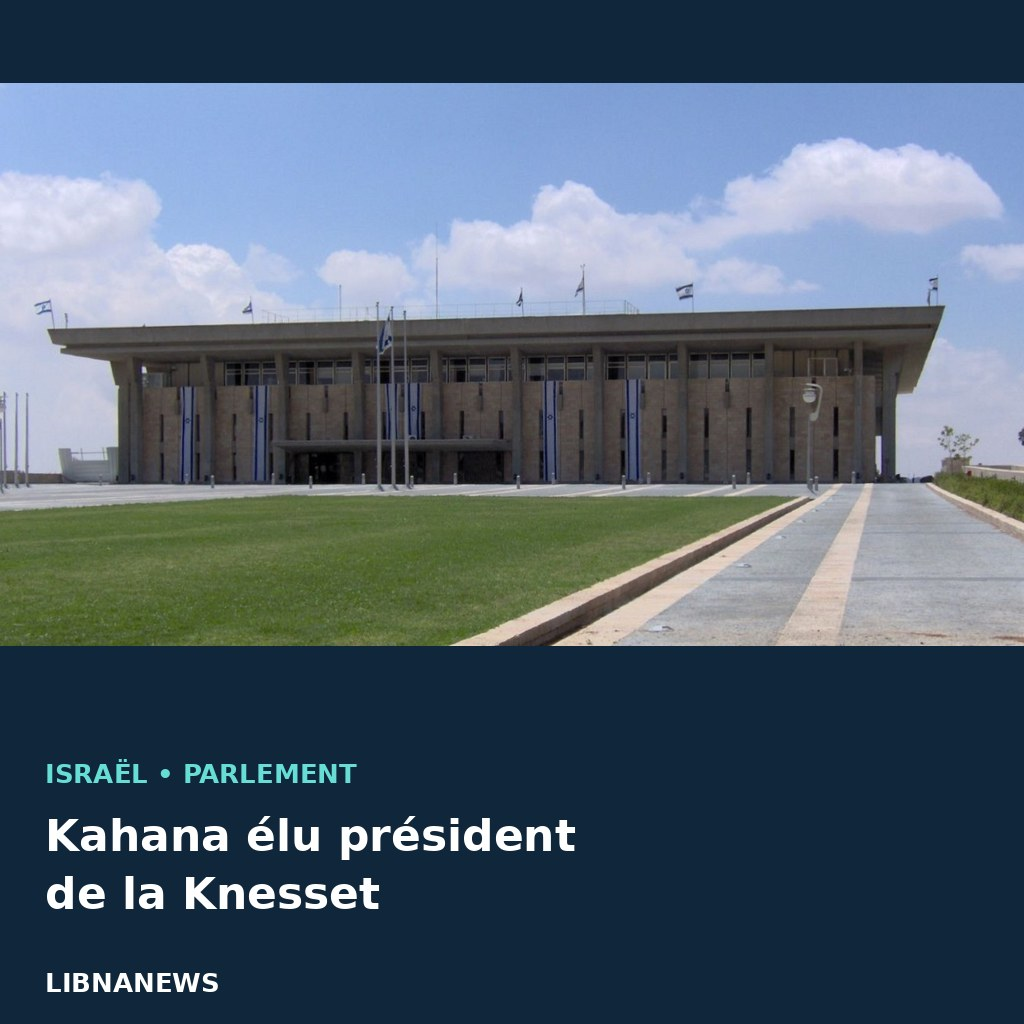
Matan Kahana was elected President of the Knesset Tuesday, November 17, 2026. The deputy of the Yashar party, an ally of Gadi Eisenkot, won 66 votes, against 52 for the candidate of the Likud, Ofir Katz. He succeeded Amir Ohana as head of the Israeli Parliament.
This result gives the camp opposed to Benjamin Netanyahu an important institutional lever, as negotiations on the formation of the next government continue. Kahana benefited from the support of the bloc led by Eisenkot and the Arab formations Rasam and Common List.
A parliamentary victory, not yet a government
The Presidency of the Knesset has an impact on the organisation of debates and the functioning of Parliament. Its change of ownership can facilitate the camp’s legislative initiatives that call for a break with the policies of the outgoing government.
The vote does not, however, designate the Prime Minister and does not constitute a government nomination. Eisenkot must always gather the necessary support for a coalition, after having received the mandate to form a government. Netanyahu remains head of the outgoing government.
Kahana promises to represent all citizens
In his first speech after the election, Kahana said she wanted to serve all citizens. He also assured that, under his presidency, the Knesset would respect court decisions, while calling for broad agreement on the balance of powers.
The Likud denounced the election and the support of the Arab parties. The disagreement over the parliamentary majority remains thus complete, despite the result now achieved for the Knesset presidency.





Comments