

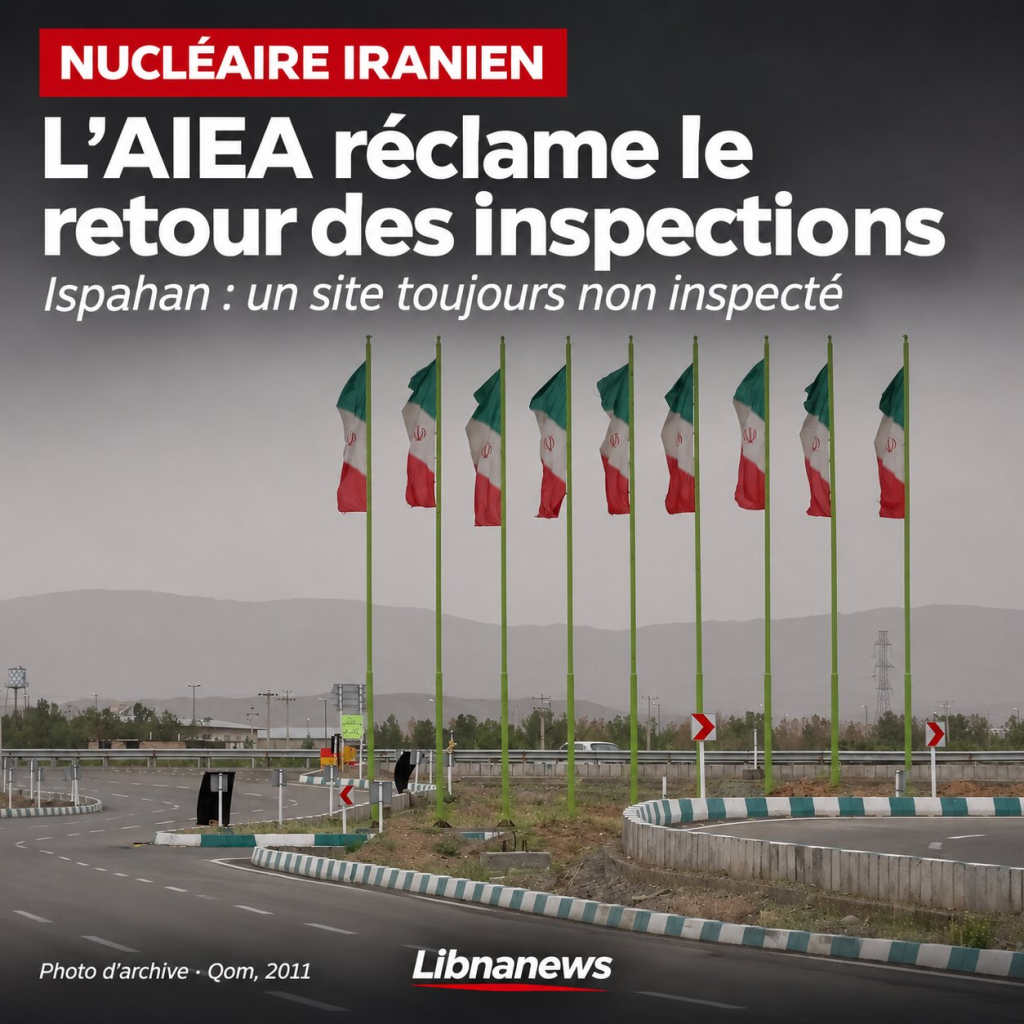
The International Atomic Energy Agency is asking Iran for progressive technical measures to allow its inspectors to return to nuclear facilities to which they no longer have access. This approach is contained in a confidential report to the Member States, of which several international agencies reported on Friday 13 November 2026. The November full text was not publicly available when preparing this article. The elements attributed to it must therefore be distinguished from the findings of the previous public report, published in September.
A step-by-step resumption, not an announced agreement
According to the passages reported, Rafael Grossi, Director General of the IAEA, proposes a technical step forward to restore controls and promote a wider agreement. The report refers to recent exchanges with Tehran. The available extracts do not provide a timetable for the return of inspectors accepted by the Iranian authorities.
The situation does not correspond to a uniform stoppage of any inspection: a visit to the Bouchr plant was possible in September. However, the Agency calls for access to other essential facilities. It recognizes the unprecedented difficulties created by military attacks on nuclear sites, while considering it urgent to resume verification.
Ispahan remains outside the scope of inspectors
The new report also expresses increased concern about the IFEP enrichment facility in Ispahan. According to the information reported, the IAEA is still unaware of its exact location, its safeguards status and the possible presence of nuclear material. Declared June 12, 2025, it was to be inspected the next day. The attacks prevented this visit. Plans and access to control remain missing.
It is therefore not a facility that would be discovered. The public report of September already pointed to the lack of access to IFEP. Without a verified location, it cannot be said that it is confused with a precise location in the tunnels of Ispahan.
A historical stock, not a current inventory
The September public report provides a dated benchmark: IAEA estimated the amount of enriched uranium up to 60% held by Iran at 440.9 kilograms as at 13 June 2025. This figure does not measure the stocks present today. The document explained that lack of information and access prevented the determination of current size, composition and locations.
Nuclear safeguards are based on several complementary transactions: receiving material accounting, reviewing facility characteristics and accessing sites to verify declarations. A political announcement does not replace any of these steps.
The inability to verify the non-diversion of materials constitutes a deficiency of international control, not evidence of diversion. Iran claims to pursue peaceful goals. The current IAEA request specifically addresses information and inspections to verify its declarations.





Comments