

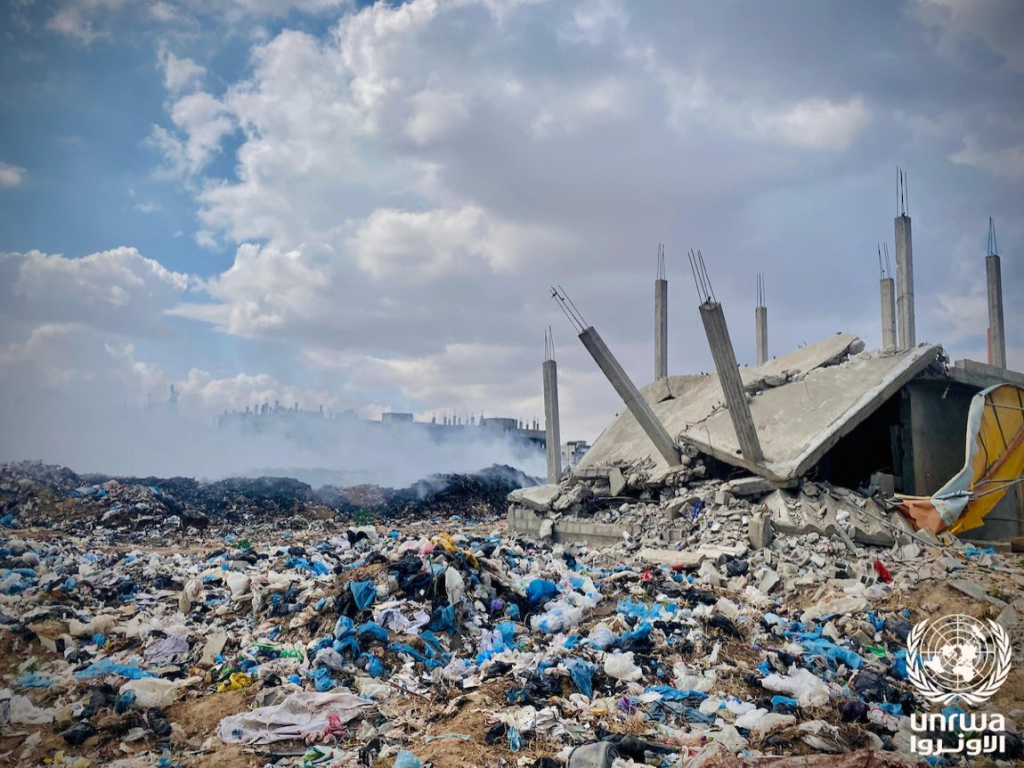
In November, less than half of the equipment used to collect solid waste is in operation in the Gaza Strip, according to the United Nations humanitarian office. Among the objects to be removed from ordinary garbage, lead batteries used to store electricity require separate handling. The public balance sheets provide information on the state of municipal services, but not on the quantities of batteries currently collected or processed.
A pre-war problem
Batteries are not only used to start vehicles. They can also store energy from solar panels and power appliances when the current is missing. By April 2020, the World Bank had estimated the number of batteries of various types in use in the Gaza Strip at about half a million, mainly leaded models, including gellified electrolyte. It was a fleet in circulation, not a stock of waste. This figure cannot be transposed by 2026.
The World Bank reported that Israeli restrictions prevented the transfer of these batteries out of the enclave. It included some 15 small workshops with inadequate working and environmental conditions. This pre-war survey does not allow us to know which workshops are still functioning, or how much they could handle today.
Picking up garbage and treating lead are two distinct tasks
According to the humanitarian record of 26 November, the lack of engine oil, parts and maintenance immobilizes part of the equipment. In Gaza City, the United Nations Development Programme began in February to move over 400,000 cubic metres of accumulated waste to the Firas market in order to make the site usable again. The operation involves solid waste in general. It does not allow to deduce how many batteries have been removed or where they have been taken up.
The World Health Organization recalls that uncontrolled treatment of lead batteries can contaminate soil and dust. Children are particularly vulnerable to this exposure, for which no levels of no harmful effects are known. This warning describes an established risk, not a measure of current contamination in Gaza.
What the European programme finances
On 23 September the European Commission announced a €6 million project with UNDP to support waste collection, transfer and recycling testing. Its announcement does not refer to leaded batteries as the target of this program. It is therefore not sufficient to establish the opening of a specialised sector.
The missing data are precise: the number of points that can receive these batteries, the quantities actually removed and the location of their processing. Until this information is made public, the number of trucks returned to service or the volume discharged from a landfill does not indicate what happens to the batteries.





Comments