

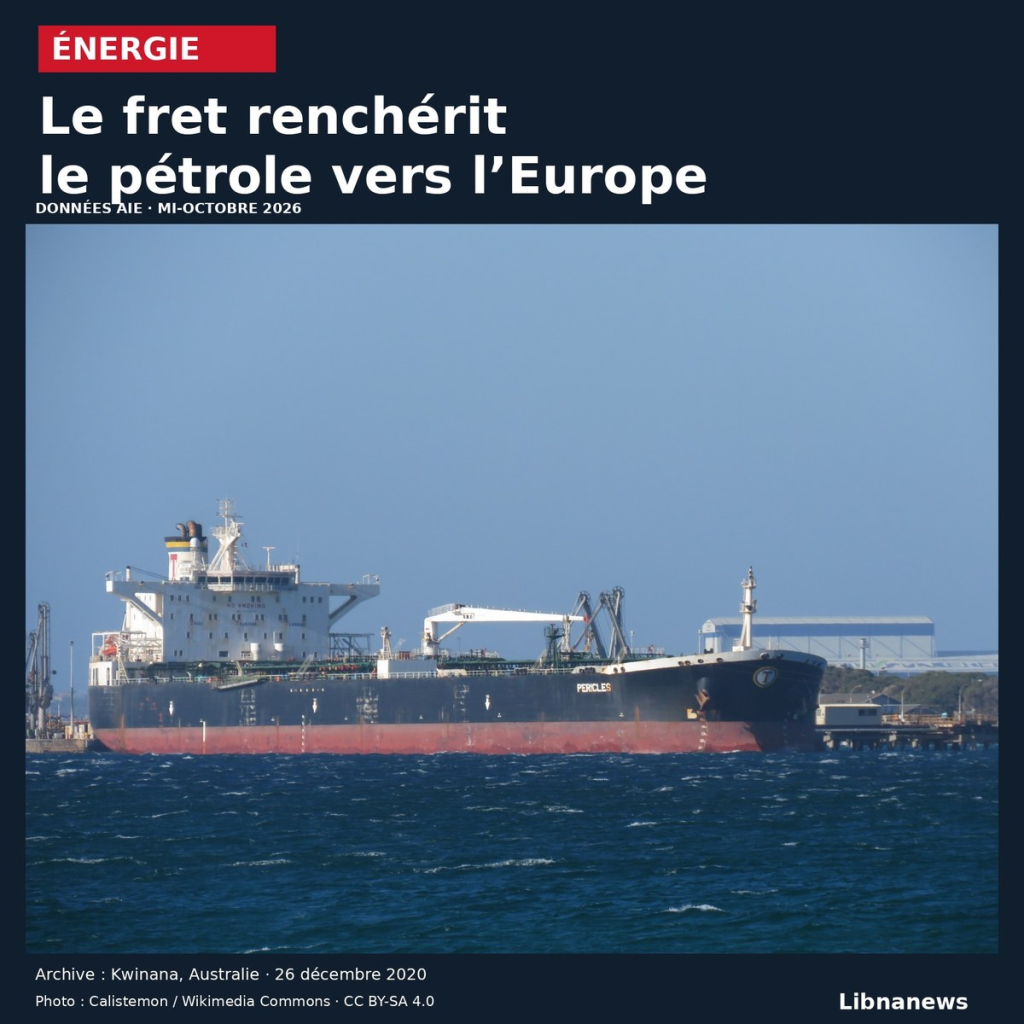
By mid-October 2026, transporting crude oil to Europe cost more than four times the pre-war levels on two major alternative routes in the Gulf. The International Energy Agency (IEA) notes this in its analysis of 21 October. From West Africa, on a Suezmax tanker, freight exceeded $22 per barrel. From the American coast of the Gulf of Mexico, it reached $24. These rates describe this period, not the November 3 quotations.
The diversification of procurement was therefore not sufficient to avoid the additional maritime costs. According to the IEA, detours, congestion and transfers between ships increased travel. The fleet carried cargo less efficiently. Some shipowners also used crude oil from large tankers usually used for refined products. This shift reduced the capacity available for fuels.
Gulf crude bounces faster than refined products
The IEA oil report, published on 14 October 2026, describes an uneven recovery in regional exports. In September, Gulf producers shipped 13.9 million barrels of crude oil per day. The increase is 4.4 million barrels a day over a month. These volumes, from all destinations, exceed three quarters of the pre-war level.
The refined products of the Middle East follow a slower trajectory. Their shipments reached 1.9 million barrels a day in September, compared with 4.7 million barrels a day before the war. They thus remain below half this level. These figures do not describe the European deliveries alone or the nominal capacity of the plants.
The report also points to persistent strain on diesel. World exports in September were 700,000 barrels per day lower than in September 2025. Thus, the recovery of crude oil does not mean a simultaneous return to normal for fuels.
Reserves mobilized to speed up deliveries
The IEA Board of Directors announced on 15 October 2026 that it would accelerate the release of the remaining stocks. About 330 million barrels were then made available as part of the collective action launched in March. Some 100 million barrels remained to be released.
Acceleration plans included over 20 million barrels of diesel. It was a delivery programme, not a full volume delivered by that date. Some members had raised their commitments, bringing the total to over 400 million barrels initially announced. The IEA also called on countries with oil and refining capacities to increase supply, particularly diesel.





Comments