

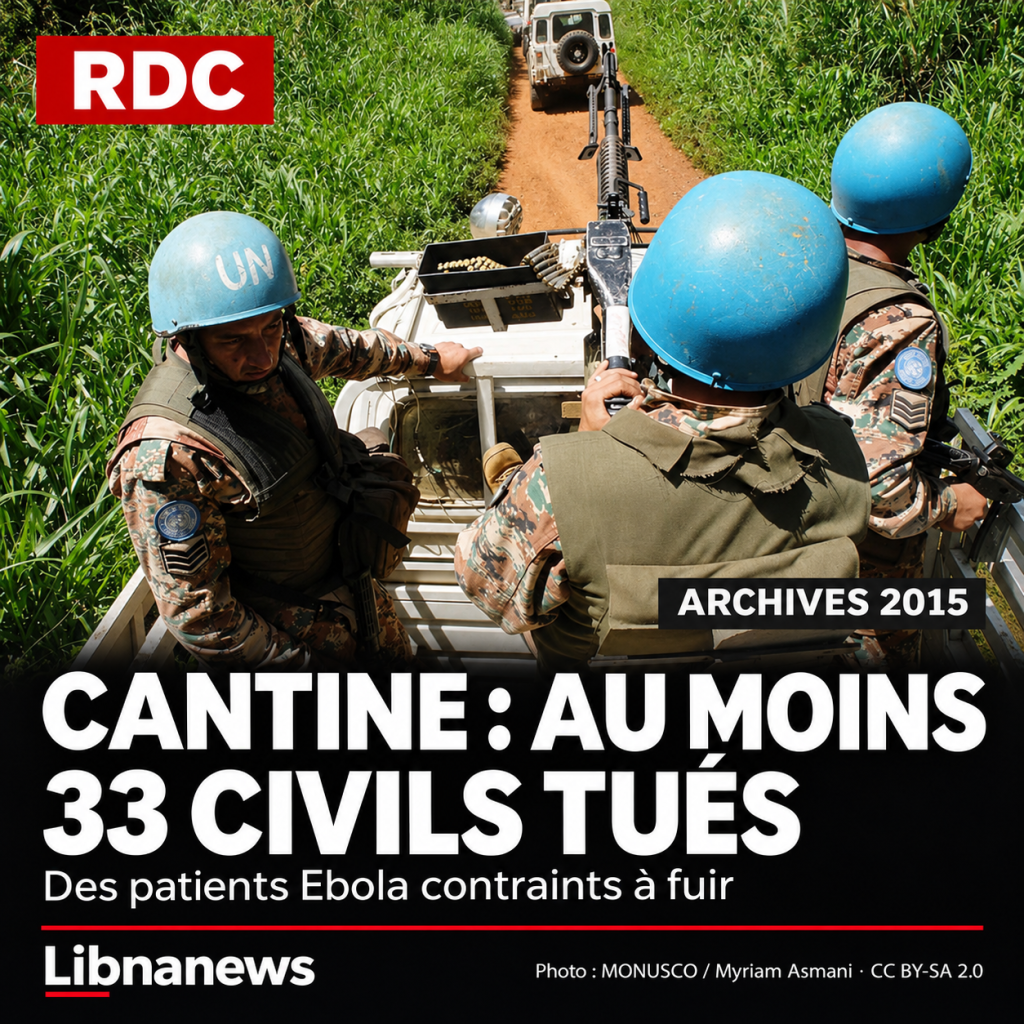
A deadly attack in Cantine, eastern Democratic Republic of the Congo, killed at least 33 civilians. This interim assessment was communicated Friday, 6 November, by civil society officials. The assault, attributed to the Allied Democratic Forces (ADF), also caused the escape of patients followed for Ebola.
The armed men struck in the night from Thursday 5 to Friday 6 November. Cantine, also known as Cantine-Aloya, is located in the territory of Beni, North Kivu. Houses and shops burned down. Residents left the community to seek refuge elsewhere in the province.
A murderous attack in Cantine on the provisional record
Justin Paluku, local civil society official, reported 33 bodies and more than 50 burned houses. Tchetche Aliamini, another representative of local living forces, also reported the discovery of 33 victims. These counts were relayed Friday by several media and news agencies.
However, the definitive number of deaths remains to be determined. Colonel Charles Omeonga, administrator of Beni territory, confirmed the killings of civilians and the fires attributed to the ADF. He noted that heavy rains complicated military operations and investigations.
The available information therefore does not allow the 33 deaths to be presented as a closed official assessment. Local sources also report victims in neighbouring neighbourhoods and sectors. Research needs to clarify the extent of human loss.
The local press reports the destruction of houses, motorcycles and a vehicle. It describes departures to Beni and Butembo. The territorial administrator went to Cantine on Friday to see the situation.
Patients leave hospital under threat
The attack hit an area facing the Ebola epidemic. Christian Kakule, medical director of the Kelekele hospital in Cantine, told a news agency that 180 patients had fled. These included suspect cases and a person whose infection had been confirmed. He reported shooting and burning houses about 50 metres from the establishment.
In another press testimony, the doctor stated that one confirmed patient and five suspected cases had left the premises. This second count concerns the people followed for Ebola, not all patients in the hospital.
The dispersal of people under surveillance worries the healthcare team. It complicates their management and the follow-up of contacts. The doctor fears further transmission. At this stage, this risk does not constitute confirmation of new contamination caused by the attack.
Displaced persons facing insecurity and Ebola
Civil society in Baswagha-Lubena on Friday appealed to the inhabitants who had fled Cantine. She called on them to respect Ebola prevention measures during their displacement. Its president, Tchetche Aliamini, deplored the conditions in which the population left the area.
Local radio stations describe an influx of people on the roads. A resident interviewed anonymously also reported variable transport prices to Beni and Butembo. These movements add immediate difficulty to families looking for a safe place.
North Kivu is one of the main outbreaks of the epidemic. The Congolese authorities have registered more than 10,000 infections and more than 5,000 deaths in the country since its declaration in May. Insecurity already hinders the work of caregivers.
In Cantine, the next expected information concerns the consolidated assessment of the attack, the location of patients leaving the hospital and the conditions for a safe return of residents.
Credit for illustration
Archive photography: MONUSCO patrol near Beni in 2015. It does not represent the November 2026 attack. Photo: MONUSCO / Myriam Asmani. Boxing and titration Libnanews, licensedCC BY-SA 2.0.Original photograph.






Comments