

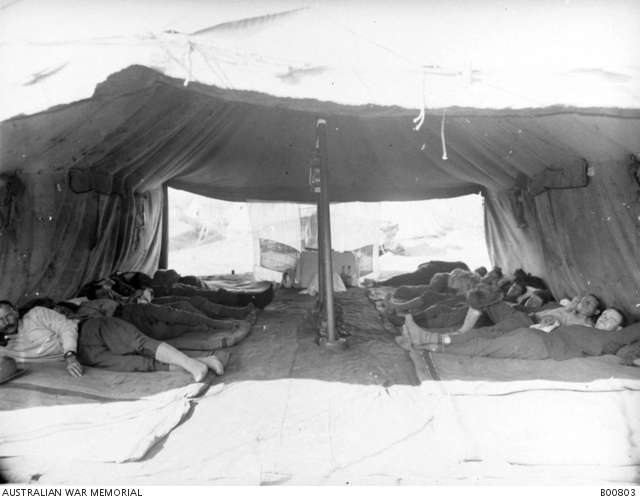
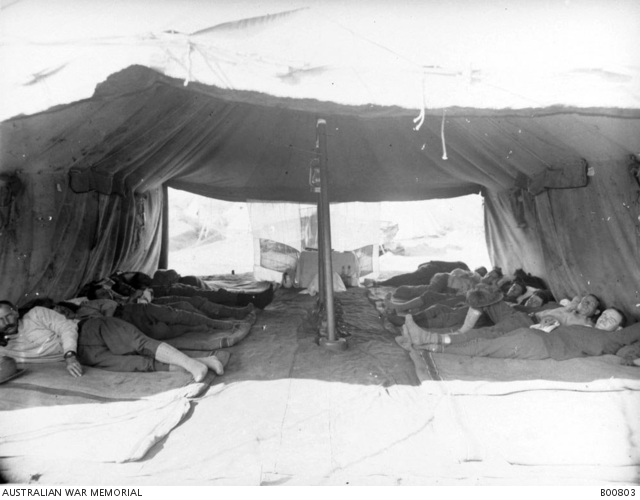
Between 1914 and 1918, diseases in Lebanon imposed another test on the inhabitants of Beirut and Mount Lebanon. Typhos threatens families, displacement promotes contagions and medical services work under pressure. Behind the food catastrophe are patients, nurses and doctors whose history is not limited to that of hunger.
War also reaches those who never see the front. It changes housing conditions, travel and access to care. In a hospital city like Beirut, it mobilizes some of the staff and weakens foreign cooperation. In villages, joining a rescue structure sometimes becomes a physical test.
However, the geography of the time must be respected. Beirut and Mount Lebanon belong to separate Ottoman administrative cadres. Their inhabitants attend institutions linked to public, religious or foreign institutions. The doctors trained in the city serve both in the neighbourhood and throughout the Empire. Their journey thus goes beyond the borders of today’s Lebanon.
Diseases in Lebanon: a war in the homes
Typhos takes a major place in the health crisis. A major outbreak occurred in the spring of 1915, before increased diffusion during the winter of 1916. The health reports of Mount Lebanon describe a widespread disease. Typhoid fever, smallpox and dysentery are also among the infections identified.
These names do not refer to a single disease. Epidemic typhus is transmitted through infected body lice. Their contaminated excreta can penetrate damaged skin. Clothing and bedding allow parasites to pass between people. Promiscuity and reduced access to regular hygiene encourage their proliferation.
The disease can cause brute fever, headache, rash and disorders of consciousness. This current medical description helps to understand the severity of infection. It does not allow the retrospective diagnosis of each patient mentioned in a war diary. The words used by the witnesses do not always correspond to a certain clinical identification.
For a family, the danger therefore exceeds the only loss of an income. He enters the laundry, sleeping and gestures of everyday life. Protecting oneself requires very concrete resources: to be able to change clothes, wash, have space and receive help. Prevention depends on the material conditions that war makes difficult to meet.
Isolating the sick without abandoning the poorest
In Beirut, health authorities provide advice in the press and seek to separate infected persons from other residents. The municipality offers free examinations and care at the Ottoman hospital. This measure includes households that cannot take care of a sick person at home.
But hospitalization has limits. Establishments have reduced capacity, while requisitions and closures complicate their operation. Some families also fear contagions in the hospital. The administration must specify the voluntary nature of admission. The existence of a service therefore does not mean that everyone can, or wants, access it.
In Rayak, a doctor facing typhus
The journey of Amin Abu Fadil gives a face to this medical mobilization. A medical graduate of Syrian Protestant College in 1907, he recounted his post-war assignment to Rayak. In a letter dated 20 August 1919, he explained that he had taken care of the hospital and the station.
His account describes a work that occupies his days and part of his nights. It reorganizes the settlement, observes the distress of the Armenians present there and reports a case of typhus among them. It requires about 40 and better sanitation facilities to limit the spread.
This testimony does not allow us to measure the entire epidemic. It shows, on the other hand, the immediate work of a practitioner: to welcome, to recognize a danger, to arrange premises and to demand protective measures. Displaced persons appear to be sick to help. Their presence should not become a simplistic explanation of contagion.
Rayak also illuminates the links between the rear and the military organization. Beirut graduates can receive assignments away from their usual clientele. Their formation becomes a resource for the Ottoman army. The doctor himself no longer has complete control of the place and conditions of his exercise.
Carers from Beirut to war hospitals
In January 1915, a medical team left Syrian Protestant College for Auja al-Hafir, Palestine. The American Red Cross organizes this mission with the support of the College. Dr. Ward and George C. Doolittle run it. Medical students and nurses from Johanniter Hospital participate.
The team takes care of wounded soldiers after the Suez Canal operations. She returned to Beirut in April. The following month, another mission left for Constantinople. It includes Jane Van Zandt, head of nursing training, and two graduates, Najla Saliba and Nezha Swayd.
These journeys recall that care is based on a diverse staff. Surgeons don’t work alone. Nurses trained in Beirut also participate in the health response, sometimes far from their establishment. Their presence in missions gives women a specific place in this history of war.
Care, a resource in dealing with power
The doctors of the Syrian Protestant College care for inhabitants, wounded and Ottoman leaders. They operate both in their hospitals and in rescue centres. Some of their consultations and interventions are free of charge. The medical reputation of the college also gives him interlocutors among the authorities.
This recognition does not remove political constraints. In 1917, the college was temporarily closed by order of the governor of Beirut, Azmi Bey. The courses then resume. US staff also leave the area with their families. The continuity of education and care thus depends on negotiations as much as on available skills.
However, the institution continues to reflect on medical training. It includes a selection at entry, a fifth year of study and a decant in the department of medicine. Preserving a school in this context also means preparing those who will have to practise after the war.
In 1917, politics broke hospital cooperation
Another example of the consequences of the conflict is the Johanniter Hospital. Inaugurated in 1867, this German institution has collaborated since 1871 with the medical teachers of Syrian Protestant College. Deaconesses from Kaiserswerth and local staff participate in the care. The organisation thus combines several sources and several functions.
The United States’ entry into war against Germany in 1917 called into question this cooperation. Howard Bliss, president of the college, wishes to maintain her. The leaders of the order of Saint John, however, chose an exclusively German administration. A letter of 25 September 1917 confirms this decision.
The breakdown therefore does not stem from a disagreement on a diagnosis or operation. It is the result of belonging of partners to now enemy powers. To understand the fragility of health services, these administrative decisions must also be followed. They change professional relationships built long before the conflict.
In Broummana, a small hospital near the rescue
In Mount Lebanon, medical devices sometimes take a more modest form. In Broummana, Arthur Dray associates a small improvised hospital with a food relief facility. Beneficiaries need support that exceeds the distribution of a meal.
A story in the college archives tells of a woman who came from Choueir with her family. After joining Broummana and receiving help, she offers her services in this hospital annex. History documents a passage from rescue to care work. It also recalls the role of individuals who are not among medical graduates.
Mountain centres continue to face a lack of resources and difficult admission decisions. In the stories of their leaders, accompanying people who are very weakened occupies a distinct place from healing. With the beds as well as in the shelters, you still have to ensure a presence, wash, monitor and relieve.





Comments