

Mobilizing the Lebanese diaspora for investment involves distinguishing two approaches: helping a family and financing a business. The accompanying tools ofIDAL and an initiative announced in Saida illustrate this passage. However, they do not constitute a fund for expatriates or evidence that new capital has already been committed.
In Saida, identify projects before investors
On 21 October 2026, the Chamber of Commerce, Industry and Agriculture of Saida and South Lebanon presented a meeting with IDAL. Mohammad Saleh, Speaker of the House, and Majed Mneimneh, CEO of the Agency, discussed the recovery of affected companies.
Mneimneh proposed joint work to identify needs, map investment opportunities and select projects to be promoted. The partners sought can be Lebanese, Arab or international. The approach is therefore not directed exclusively at the diaspora.
The proposed distribution is based on two functions. The Chamber brings its knowledge of companies and their priorities. IDAL helps to present the projects and to guide investors in approaches within its competence.
Mneimneh also specified a limit: IDAL does not replace funding, compensation or reconstruction agencies. The report does not announce any financial envelope or investor commitments. It describes a cooperation to be organised, not a programme of appropriations already allocated.
Diaspora: investment is not confused with transfers
This distinction joins that established by the United Nations Development Programme in its 2023 study on transfers. UNDP separates the remittances of expatriate workers, mainly for families, from the deposits of non-residents, associated with a logic of placement.
The study highlights the social protection role played by transfers after the financial crisis of 2019. For recipient households, they provide, inter alia, access to essential goods and services. Their usefulness therefore does not depend on a transformation into entrepreneurial capital.
At the same time, UNDP recommends a transparent framework for channelling diaspora resources towards local investment. He insists on trust, the business environment and better measurement of flows. These recommendations, published in 2023, do not describe funding actually achieved in 2026.
Administrative support, not a guarantee of financing
The Business Support Unit provides entry points for project developers. The agency provides free information, legal advice and tax advice, as well as administrative and authorisation support. External advisors are involved in support of his team.
The beneficiary page mentions start-ups with business plans in technology, telecommunications, agrotechnology, digital media and other productive sectors. The accompaniment must therefore be examined in the light of the project and the applicable conditions, not the expat status alone.
For an entrepreneur established abroad, preparing a project in Lebanon and securing its financing remain two distinct stages. Information on formalities is neither commercial validation nor loan commitment. In Saida, the next step announced remains the joint effort to move from business needs to selected projects.
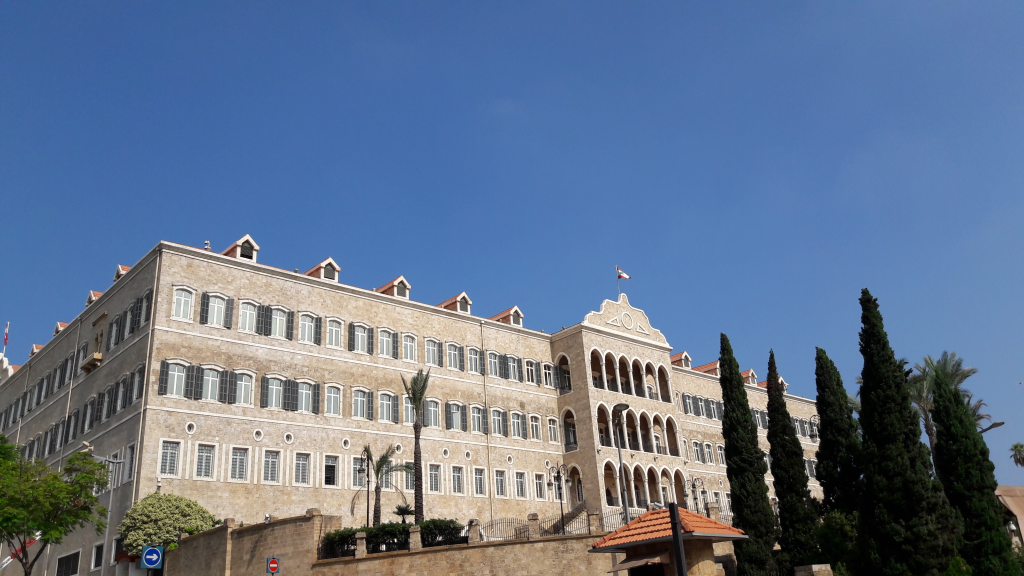
Illustration: The Grand Serail in Beirut, August 12, 2017. Institutional photography archives, unrelated to the meeting of Saida. Photo: Pjposullivan1 / Wikimedia Commons, CC BY-SA 2.0. Original.






Comments