

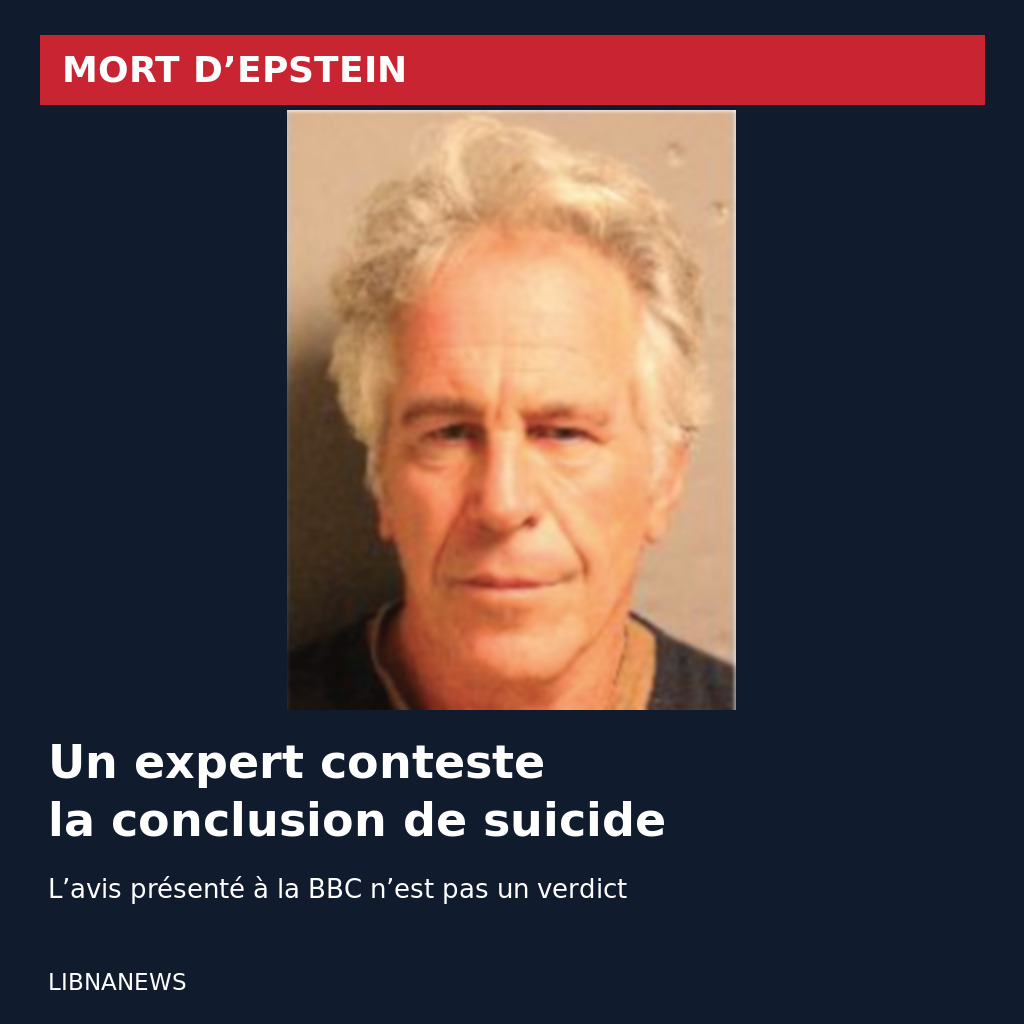
Michael Freeman, an expert in forensics, told BBC Newsnight that Jeffrey Epstein would have been the victim of a homicide. Presented on November 16, 2026, this interpretation contradicts the official conclusion of suicide. It does not constitute a new autopsy or a judicial decision.
Document analysis, not body examination
According to the BBC report, Freeman studied photographs and the forensic file transmitted by Mark Epstein, brother of the deceased. He didn’t examine the body. He says he worked independently, without family compensation. The BBC states that this research was not peer-reviewed.
The expert interprets certain injuries as evidence of aggression and bottlenecks. When asked about the possible perpetrator of a homicide, he does not designate anyone. These statements are those of the specialist interviewed by Newsnight, not a conclusion adopted by the channel.
The official conclusion remains suicide
Jeffrey Epstein died on August 10, 2019 at the Metropolitan Correctional Center in New York, where he was detained awaiting trial for sexual trafficking of minors. The city’s forensic department detained the suicide. The federal investigation did not establish any criminal intervention at the origin of his death.
The June 2023 report of the U.S. Department of Justice’s General Inspection also sets out the position of the physician who performed the autopsy: the injuries appeared to be compatible with hanging suicide, without the expected defensive lesions in a homicide stranglehold. There is therefore a divergence of interpretation, not official recognition of an error.
Barbara Sampson, then head of the forensic department, defended this conclusion. The BBC reported that it had asked again, without publishing in the article consulted a new response to Freeman.
Documented prison errors
The general inspection did not exempt the prison administration. His investigation found serious shortcomings: lack of co-prisoners despite instructions from the psychological, round and counting services not carried out as planned, lack of surveillance and problems with the operation of the cameras.
In his accompanying message, Inspector General Michael Horowitz distinguished these errors from the forensic circumstances of death. His services had found no evidence to contradict the FBI’s finding that there was no criminal act causing death. He also pointed out that the shortcomings of the prison had deprived Epstein victims of the possibility of a successful criminal trial.
A joint memorandum from the Department of Justice and the FBI, released in July 2025, reaffirmed suicide. In particular, the two institutions relied on the analysis of the images of the common area of the detention unit. According to their reading, no one had entered the courses concerned during the period under review. This document precedes the November 2026 statements: it must be read as the previous federal position, not as a response to this new analysis.
What this controversy makes it possible to affirm
The distinction is essential: finding inadequate surveillance alone does not demonstrate that an inmate was killed. Conversely, a formal conclusion can be discussed on specific elements, without each notice automatically acquiring evidence.
The new fact here is the public presentation of a contradictory analysis. To measure its scope, the documents reviewed, the proposed interpretations and their possible confrontation with other specialists will have to be distinguished. Presenting the homicide as established today would remove these steps and turn a medical-legal disagreement into a certainty that the documents consulted do not make it possible to assert.





Comments