

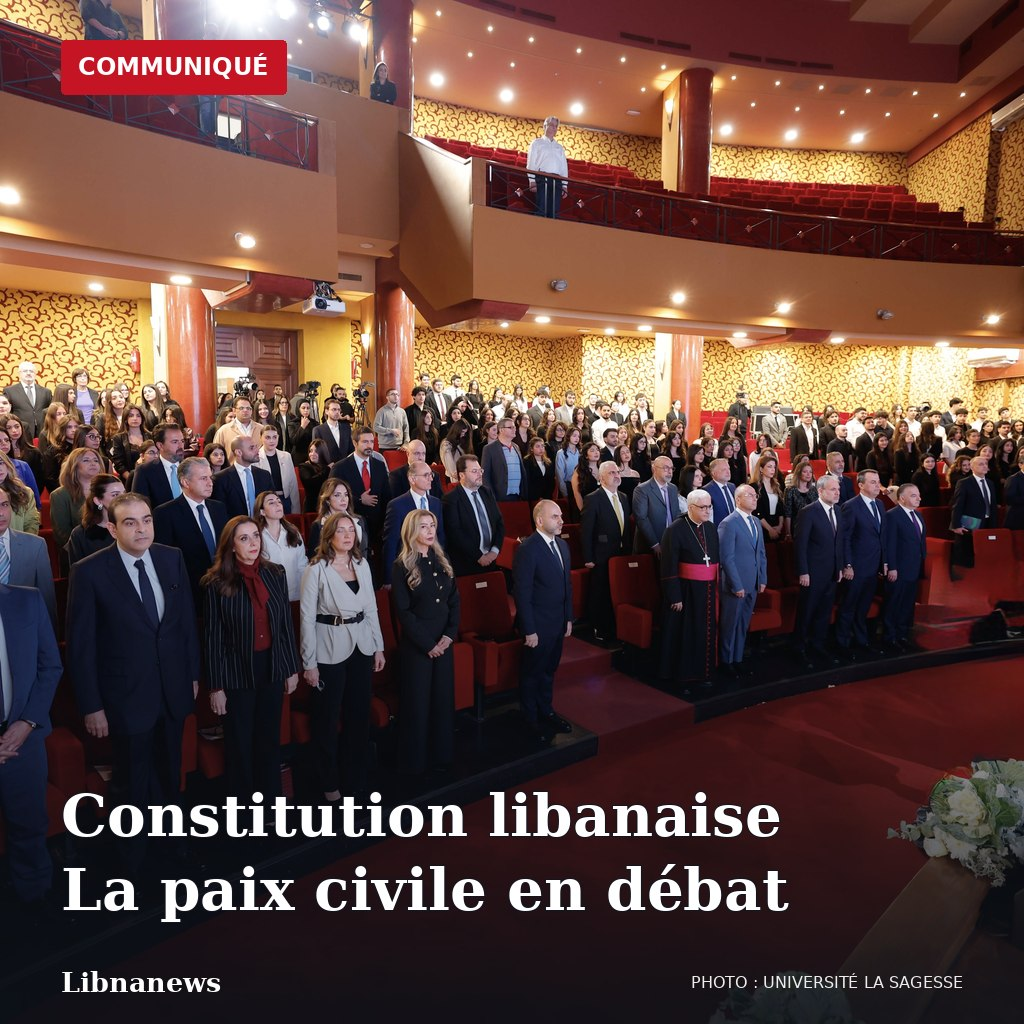
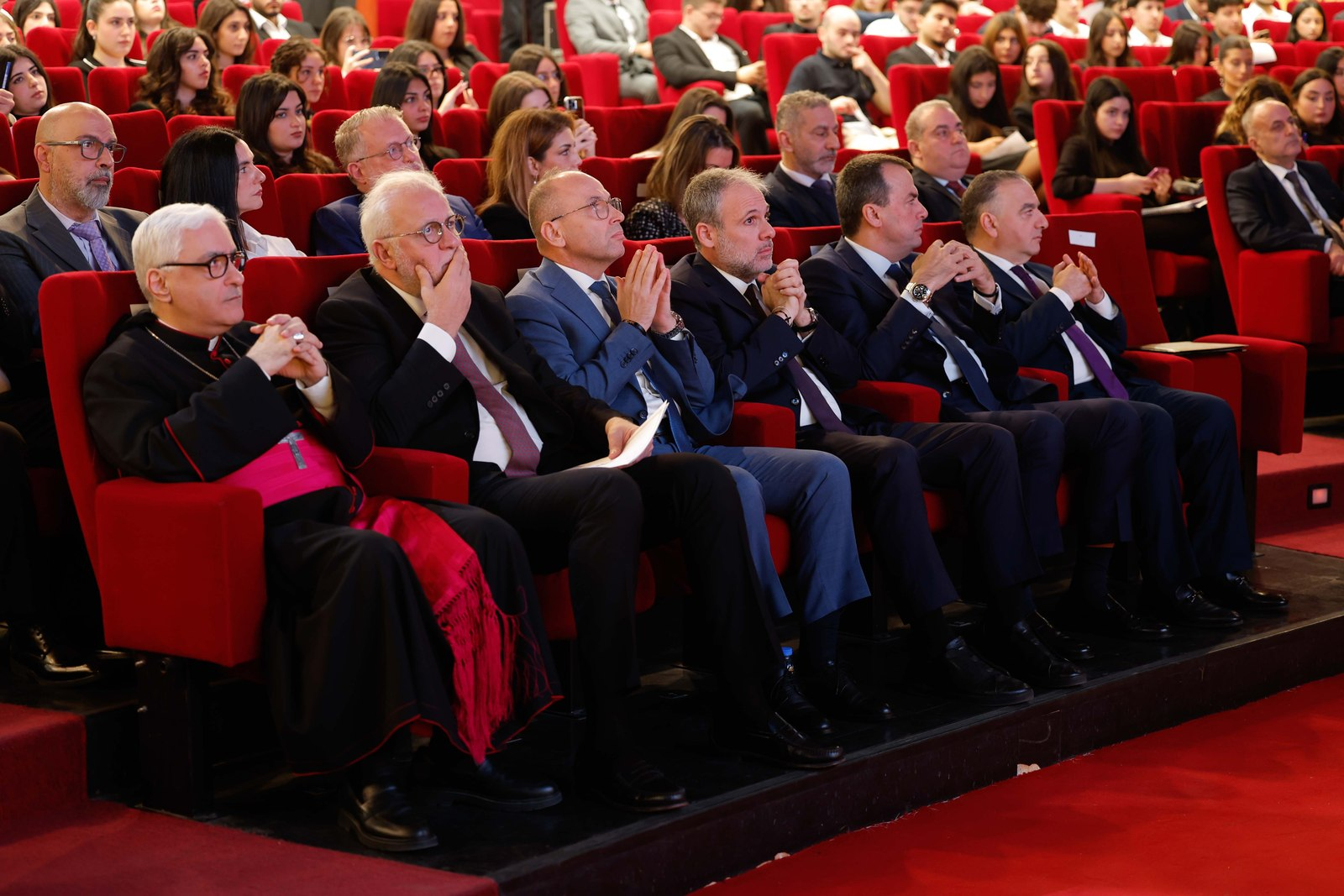
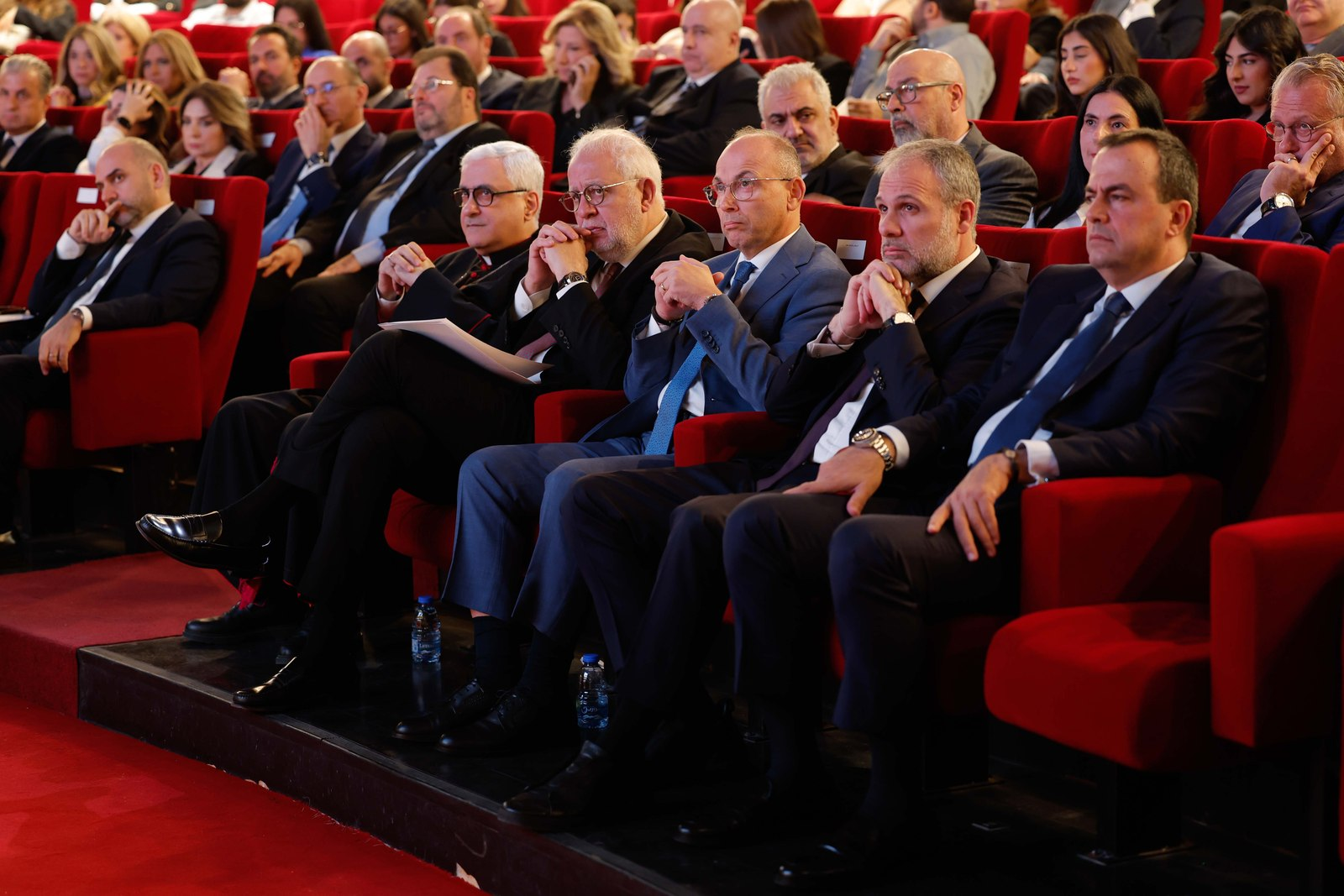
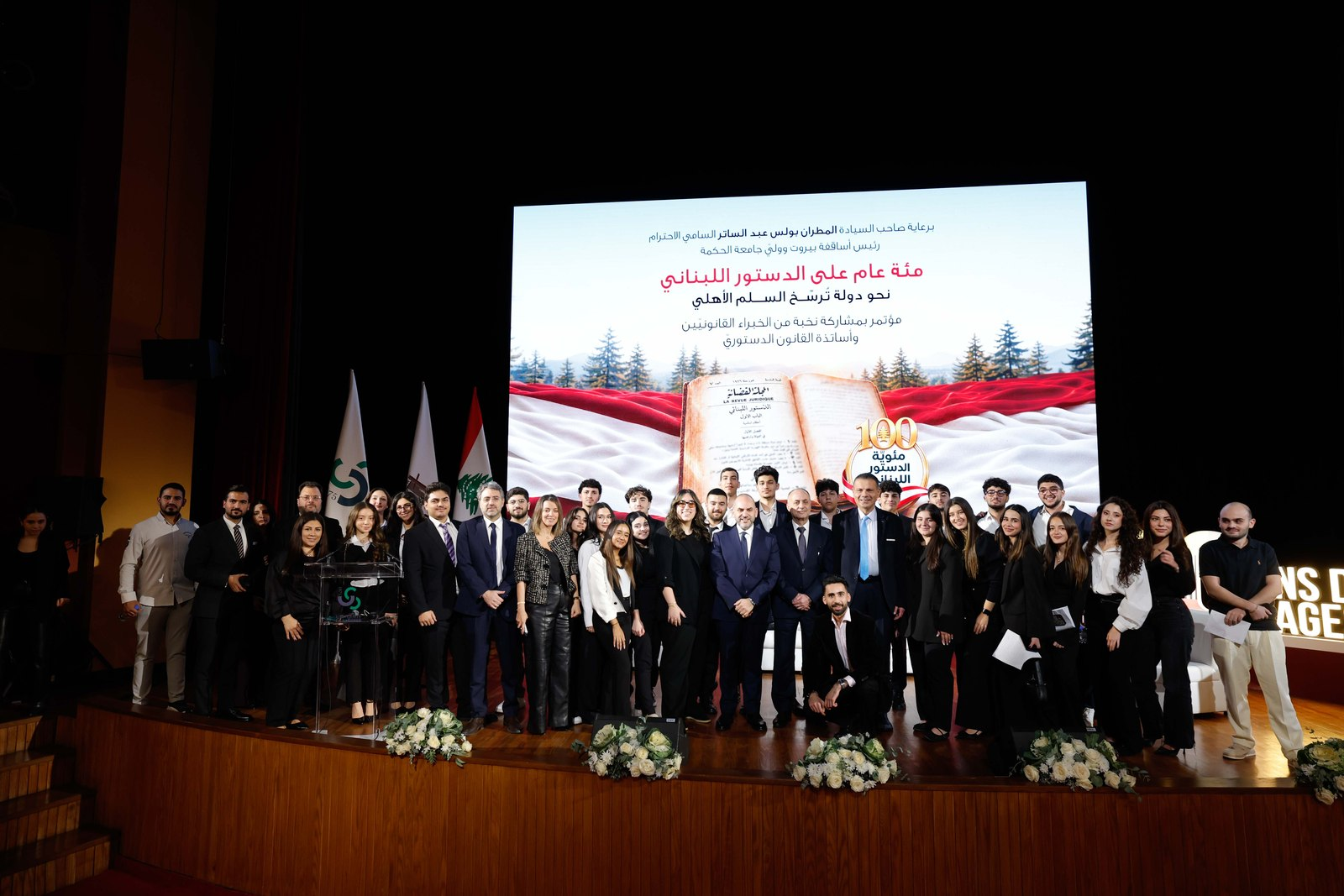
Communiqué of the University of Wisdom, translated and adapted from Arabic.On the occasion of the centenary of the Lebanese Constitution, the Faculty of Law of the University of Wisdom organized, on its main campus in Furn el-Chebbak, the symposium « One hundred years of the Lebanese Constitution: towards a State that consolidates civil peace ». The meeting, opened on 19 November under the patronage and in the presence of Archbishop Paul Abdel Sater, Maronite Archbishop of Beirut, brought together public officials, lawyers and specialists in constitutional law.
From presidential vacancy to government formation
After the anthems of Lebanon and the University of Wisdom, an institutional film made using artificial intelligence techniques traced the history of the institution since its foundation in 1875. At the opening, the Dean of the Faculty of Law, Chady Saad, asked the question that went through the exchanges: do institutional blockages stem from the constitutional text or from the way it is applied? He mentioned the repetition of the presidential holidays, the length of the formation of governments, the implementation of the provisions of the Taif Agreement and the independence of the judiciary. Antoine Sfeir, Dean of the Faculty of Political Science and International Relations, National Centennial Coordinator and Adviser to the President of the Republic, conveyed the greetings and thanks of Joseph Aoun. He called for translating the provisions of the Constitution into State practice. The president of the university, Joseph Saab, recalled La Wisdom’s role in teaching law and the contribution of its graduates to constitutional life. He stressed the equality of citizens, respect for diversity and the responsibility of the university in transmitting a culture of dialogue.
The sticks of Tripoli and the North, Marwan Daher, and Beirut, Imad Martinos, also spoke. Marwan Daher stressed the effective implementation of the Constitution and the independence of the judiciary. Imad Martinos stressed the gap between the text and political practices, and asked to complete the implementation of the Taif Agreement and strengthen the Constitutional Council. The Minister of Justice, Adel Nassar, called for a national dialogue to resolve constitutional disputes and to change the texts to protect the rights, freedoms and sovereignty of the State.
The first session, chaired by Chady Saad, dealt with the presidential election, the appointment of the President of the Council and the time frame for the formation of the Government, the enactment of laws and the adoption of decrees. Former president of La Wisdom and teacher at the Faculty of Law of Saint Joseph University, Lara Karam Boustany examined the disagreement over the two-thirds quorum in the various rounds of the presidential election. She also referred to the exceptional constitutional revisions and political compromises that took precedence over the rules of the Constitution. Rizk Zgheib, Dean of the Faculty of Law of the Holy Spirit University of Kaslik and teacher at St Joseph University, recalled that binding parliamentary consultations serve as the basis for the appointment of the President of the Council by the Head of State and do not constitute an election. He raised the possibility of setting a deadline for government formation. The lawyer and teacher Adel Yammine examined the effects of the Taif agreement on the powers of the President of the Republic and the blockages related to these delays. These interventions provided avenues for reform, not changes.
Decentralization and Senate: what skills?
The second session, chaired by Sara Rammal, judge of the Council of State, examined several projects related to the Taif agreement. Elie Maalouf, judge at the Court of Auditors and adviser to the Minister of Justice, stressed cooperation between municipalities to overcome the lack of resources. It has promoted wider administrative and financial decentralization, with the necessary skills and resources for communities. Fadi Masri, the former stickman of Beirut, distinguished respect for religious beliefs from political confessionalism. It called for the establishment of the national body provided for in the Constitution to examine ways of abolishing it. Salim Zakhour felt that the reflection on a Senate should first clarify its powers, so that it could fulfil its role in protecting denominational diversity, rather than stopping its election.
The role of the Constitutional Council
The third session, chaired by Adeline Charbel, a judge of the Council of State, focused on monitoring the constitutionality of laws, the limits of the Constitutional Council’s power of interpretation and its independence. Edgar Kabbouat defended the possibility for a person to raise the unconstitutionality of a provision on the occasion of a dispute, based on foreign experience. Issam Sleiman, former President of the Constitutional Council, distinguished the interpretation of a text from its rewriting and raised the possibility of censoring a provision when it is too imprecise to guarantee the principle of equality. Former MP and lawyer Ghassan Mukheiber called for a review of the law establishing the Council and its rules of procedure. He requested that its members be chosen for their qualifications and legal experience, rather than political quotas.
In closing, Judge Fadi Aneissi presented the draft recommendations prepared by the students of the Faculty of Law under his direction. The document reflects the difficulties identified during the sessions and suggests ways to address them. It remains under revision: the university has not announced the adoption of a final text.
The conference in images





Comments