

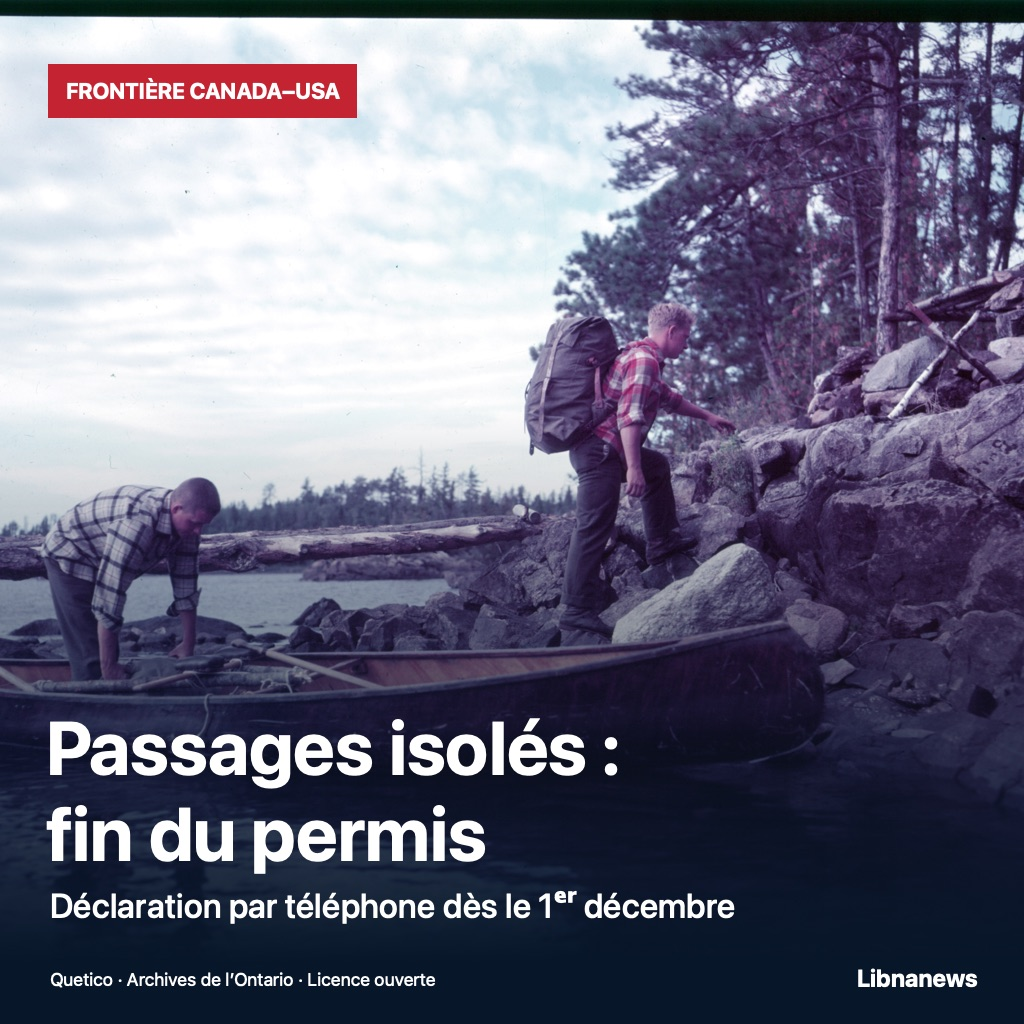
Border permits in remote areas will expire Monday, November 30 at 11:59 p.m. As of December 1, travellers entering Canada through the affected areas will be required to report their arrival at a border crossing or from a designated telephone reporting site.
The Canada Border Services Agency (CBSA) recalled this deadline on November 25. It covers the areas covered so far by the Remote Border Crossing Program (PRSP). The Agency announces that 17 new telephone reporting sites are already in operation in Ontario and Manitoba.
From Quetico to Lake of the Woods, where to declare
In Ontario, Cache Bay and Prairie Portage forest guard stations in Quetico Provincial Park are among the new designated points. On Lake of the Woods, the agency includes the launch ramp of the Kenora Ice Road terminus, as well as the public docks of Morson, Nestor Falls and Sioux Narrows. The Noden Causeway ramp on Rainy Lake is also listed.
On the Canadian shore of Lake Superior, the new points include the Rossport and Silver Islet marinas and the Terrace Bay marine terminal. In Manitoba, the designated point for travellers arriving from the U.S. Northwest Angle region is on Provincial Highway 525. The CBSA anticipates further issues following consultations with local and Aboriginal communities. She will put them in her repertoire as they open.
The permit will no longer replace the arrival declaration
Active PFRE licence holders were granted an extension until November 30. From the next day, they will be required to report their arrival at each entry into Canada, like other travellers. This procedure also applies to persons who cross a private boat. To register by telephone, you must do so from a designated location. A call made from any point on the shore does not replace this approach.
The agent requests information about the trip, vehicle or boat. All persons on board and goods brought into Canada must be reported, including purchases that may qualify for a deductible. The agent may authorize travellers to continue their journey or ask them to report for in-person inspection.
What changes and what remains open
The end of the permit is not a closure of the Canada-U.S. border. Staff entry posts remain an option. For a trip to a remote area, the CBSA recommends that its Directory of Offices and Services check the selected reporting point and its opening hours before leaving.
According to the Agency, the program historically had approximately 11,000 members per year, of which nearly 90% were US nationals. The change relates to the formalities for entering Canada. For the return to the United States, travellers remain subject to American rules.





Comments