

Published in March 2026 at Litwin Books, « Resisting Erasure » puts the history of the Palestinian library in Beirut in the history of endangered collections. Nora Lester Murad and Mary L. Onorato direct this 216-page volume. Journalist Olivia Snaije goes back to the books of the Palestinian Research Centre, seized by Israeli forces in 1982.
The collective combines two topics: the preservation of Palestinian libraries and the place of Palestine in foreign libraries. His subtitle, « Libraries in Palestine and Palestine in Libraries », expresses this dual approach. Emily Drabinski signs the preface.
The Palestinian Library of Colombani Street
Founded by the Palestine Liberation Organization in February 1965, the centre occupies a building on Colombani Street in Beirut. His collection includes books on Jews, Zionism and Israel. In Reading Herzl in Beirut, historian Jonathan Marc Gribetz traces the work of this institution.
His researchers publish books, brochures and journals in Arabic and other languages. Their studies deal with kibbutzim, the Histadrut trade union centre, Israeli parties and relations between State and religion. They provide Palestinian and Arab readers with tools to understand Israeli society.
In mid-September 1982, Israeli soldiers entered the building and took away the library. Gribetz describes a collection essentially restored the following year. On 24 November 1983, the library and archives returned to the PLO as part of an exchange of prisoners.
Book boxes sent to Algeria
The agreement negotiated through the International Committee of the Red Cross includes the return of collections. Gribetz tells of their loading in the cargo bays of Air France aircraft carrying prisoners released to Algeria.
The Palestinian Research Centre confirms the transfer of its archives to Algiers after their recovery in 1983. In his institutional presentation, he indicated that they had remained there for more than forty years. This move extends the Beyruthine history of the collection beyond its seizure and restitution.
Preserving books, maintaining access
In the collective of 2026, Olivia Snaije devotes her chapter to this stolen library. His title evokes a battle with books rather than bullets. This contribution covers a history of Palestinian libraries and archives under Israeli occupation, signed by Anan Hamad.
Local experiences are also important. Abdelfattah Abusrour presents the Alrowwad Library in the Aida camp near Bethlehem in the West Bank. Mosab Abu Toha deals with cultural life in the Gaza Strip. Husam Maarouf is interested in reading Gazans during the war.
In the United States, the issue is moving towards conditions for access to Palestinian stories. The editors describe the pressures on librarians and the challenges to their work. The volume deals in particular with censorship, professional neutrality and cancellation of meetings with authors.
Hannah Mermelstein and Jamilah Thompkins-Bigelow examine a cancelled school visit in a dialogue between librarian and author. Saylín Álvarez Oquendo presents the artisanal edition project Andaleeb Cartonera. The manufacture and circulation of books are related here to conservation issues.
Two meetings accompanied the launch of the collective on 24 March and 2 April 2026. Their recordings remain accessible from Library Juice Connections. The book, published in English, bears ISBN 978-1-63400-186-1.
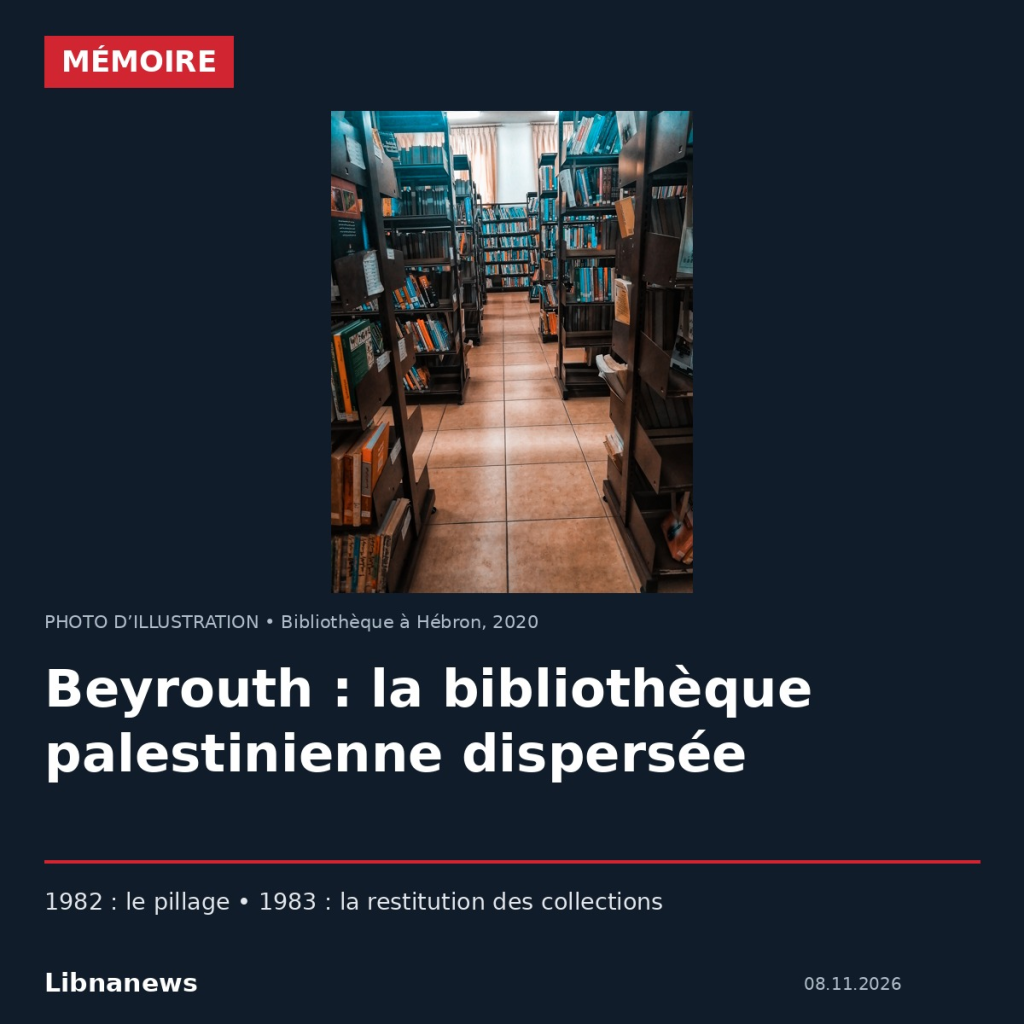
Library of the Polytechnic University of Palestine, Hebron, 22 January 2020. Photo by illustration: This is not the Palestinian Research Centre in Beirut looted in 1982. Whole photo preserved and edited under CC BY-SA 4.0: https://creativecommons.org/licenses/by-sa/4.0/. © Jana Humeedat / Wikimedia Commons, CC BY-SA 4.0





Comments