

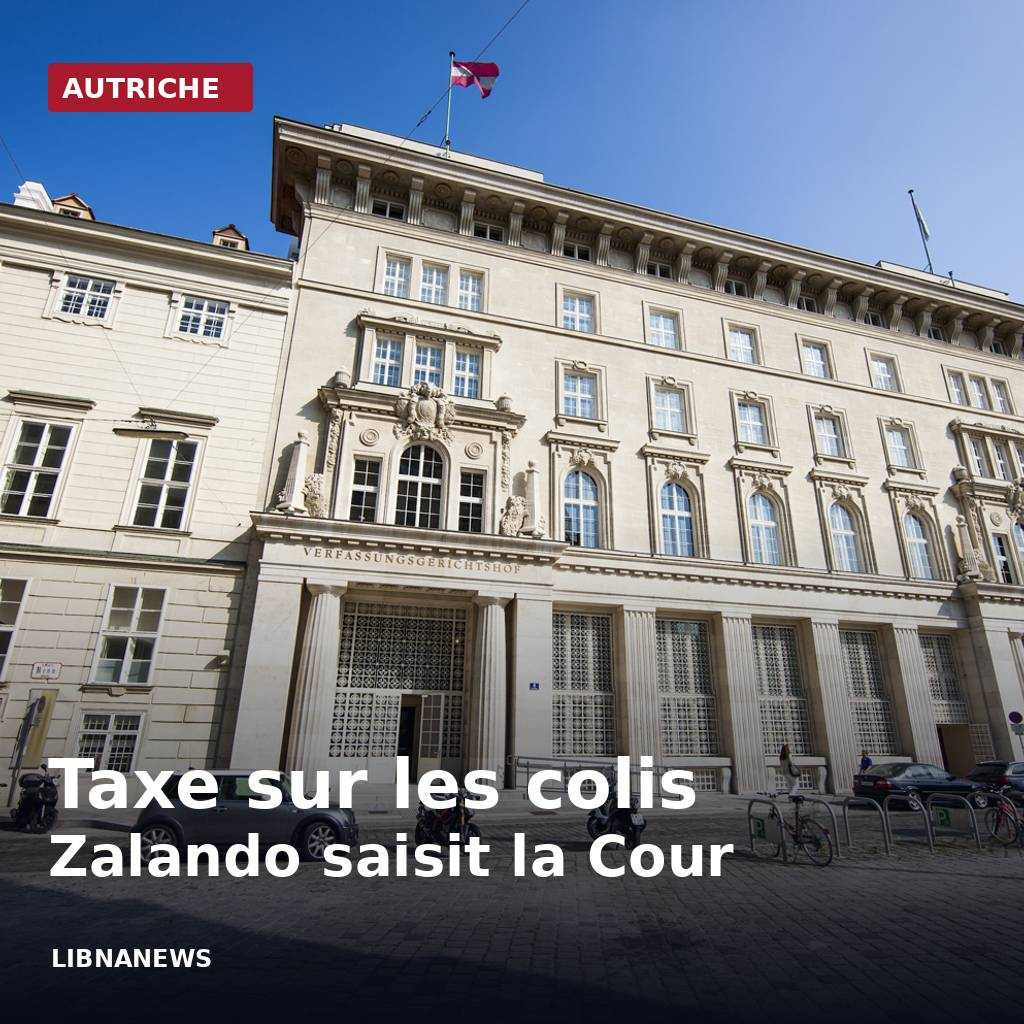
Zalando asks the Austrian Constitutional Court to cancel the two euro tax on parcels covered by the distance sale. In its programme published on 27 November, the Court announced that it would first examine the admissibility of the appeal filed before the law came into force. It did not announce any suspension of the fee or decision on the merits.
Tax applies to sellers over EUR 100 million
Since 1 October 2026, Austria has imposed on its territory deliveries of parcels for distance selling. The threshold is calculated on the turnover in Austria in the distance sales concerned during the previous financial year. It must exceed EUR 100 million. The liability company can calculate the two euros per parcel delivered or choose to declare them per order, provided that this method is kept for the entire reporting quarter.
This choice counts when an order arrives in multiple shipments. In the calculation by parcel, two deliveries under the same order shall be subject to four euros of tax; with the calculation by order, they give rise to two euros. The debtor is the online seller or platform to which the law assigns sales. The law does not create a sum of two euros that each recipient must give to the delivery person.
The action concerns the withdrawal in store and the role of market places
According to the Court’s submission of the case, Zalando contests the difference in treatment between a remote delivery and an in-store order, according to the « click and collect » model. The company is also critical of the allocation of sales by third-party traders to market places when they make their interface available. In particular, it invokes the principle of equality, the right to property and the freedom to engage in economic activity.
The Austrian tax differs from the measures relating to the entry of small parcels into the European Union: its operative event is not the crossing of the EU’s external border. It covers deliveries to Austria which are governed by the law, irrespective of customs formalities. The first question to be decided in case G 197/2026 is whether the individual appeal filed before 1 October can be examined.





Comments