

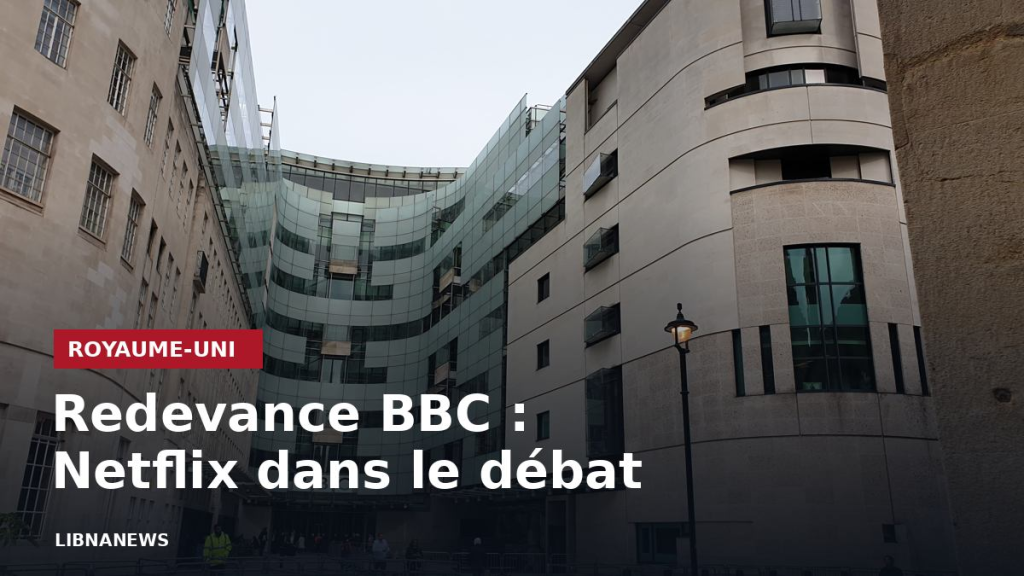
In the United Kingdom, the government examines the financing of the BBC after 2027. Netflix subscribers must not pay the fee if they only watch programs on demand, excluding BBC iPlayer.
In the United Kingdom, a home watching only TV series or films on demand on Netflix does not have to pay the 180 annual books of the television licence. However, if he uses the same subscription to watch a live program, the licence is required. It is this difference between direct and video on demand that London could review under the next BBC charter. No new levy on Netflix’s subscribers was announced by the government.
Direct and deferred do not obey the same rules
The British rule concerns usage, not the possession of a television or the name of the platform. It covers television watched or recorded during its broadcast, by antenna, cable or Internet. For a home that doesn’t have a TV, watching the same direct on a computer doesn’t change anything. Conversely, catalogues at the request of Netflix and Disney+ do not require licensing alone. The exception is the BBC iPlayer service: the licence is mandatory, including for catch-up programs.
Why BBC funding is downgraded
The National Audit Office, the UK’s public expenditure control agency, is 26% lower in real terms between 2016-17 and 2025-2026, or £1.3 billion. The decrease is due to a number of factors: the decline in the number of licences paid, the tariff freeze for two fiscal years and the reform of the 75-year-old exemption. In 2025–26, the fee was still £3.879 billion, or 91% of the revenues of the BBC Public Service Group.
In October, the Parliamentary Committee on Culture and the Media recommended expanding the scope of the licence to take account of current usage. It is a recommendation, neither a scale nor a decision. In its response of 2 November to a petition opposing an extension to streaming, the Ministry of Culture indicated that it was examining several avenues, including an increase in commercial revenues and a fee reform. The petition remains open until 11 December.
What an extension would bring depends on recovery
In a study published on 23 November, Ampere Analysis estimated that an extended licence for on-demand streaming, at the current rate, could bring up to 1.6 billion pounds per year in 2032 compared to its benchmark scenario. This maximum assumes that all taxable households pay. The firm also tested a price of 150 pounds, with the same assumption of full recovery. These two calculations measure the effects of different choices; they do not constitute the amounts of a government project.
The British government plans to present a White Paper by the end of 2026. The current charter expires on 31 December 2027. Until then, no new tariffs or lists of on-demand services have been established.





Comments