

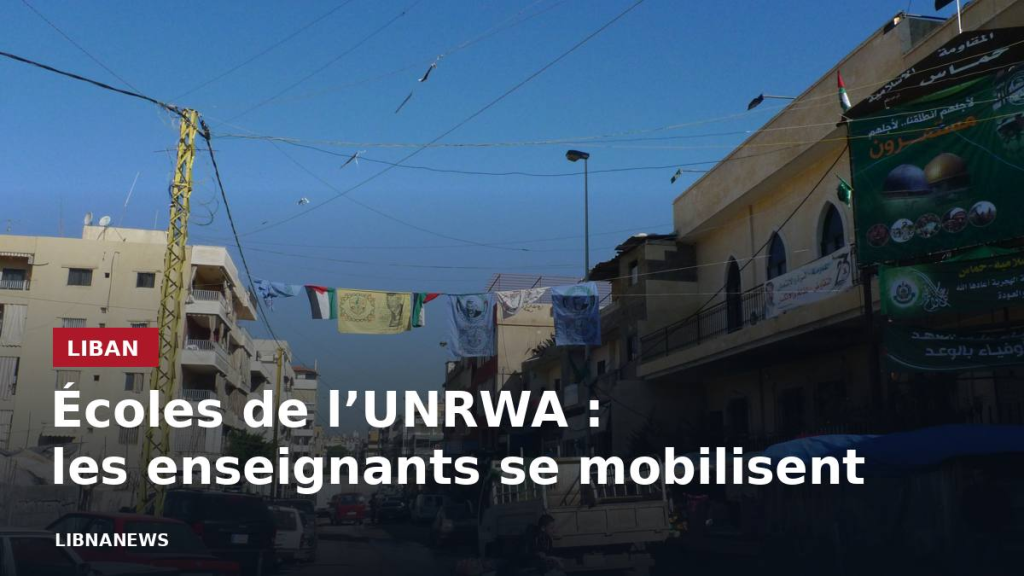
The Palestinian Teachers’ Union called for mobilization on 30 November in UNRWA schools and at both vocational training sites. He asked for students to leave before the last two courses, without an announcement of closure by the agency.
The Palestinian Teachers’ Union in Lebanon announced Saturday, 28 November, a mobilization in UNRWA schools and at its two vocational training sites on Monday, 30 November. The union wants to protest against the consequences of the financial crisis of the United Nations Agency for Palestinian Refugees, including the risk of abolishing posts and regrouping settlements.
An early exit requested, not a general closure
In its statement, the union requested that the students be released during the last two periods. Teachers plan to then gather at their workplace and then leave schools. The call does not set a common exit time. The Agency had not issued a general closure or schedule change at the time of publication of this article. For families, the timetable to be used remains that communicated by their institution.
For the school year 2025-2026, UNRWA reports that 34,541 students were enrolled in 60 schools in Lebanon, from primary to secondary. Its vocational training centre in Siblin also provides courses at two locations in the north and south of the country. These data describe the school network of the Agency, not the number of pupils whose courses will actually be reduced on Monday.
Trade unions want to preserve jobs and services
The union refused to compensate for the deficit at the expense of its employees. It calls for the Agency to maintain jobs and acquired rights, to refrain from reducing or merging services and to seek sustainable funding. However, the press release does not list any schools promised to close and neither does it announce any confirmed job deletion by Monday.
In a separate statement, also issued on 28 November, the National Human Rights Commission in Lebanon called for improved access to education, care, employment and social protection for Palestinian refugees. It called for reforms to be accompanied by public responsibilities and deadlines. The Commission distinguishes these rights from permanent settlement in Lebanon: their exercise, she stresses, does not deprive refugees of their right to return.





Comments