

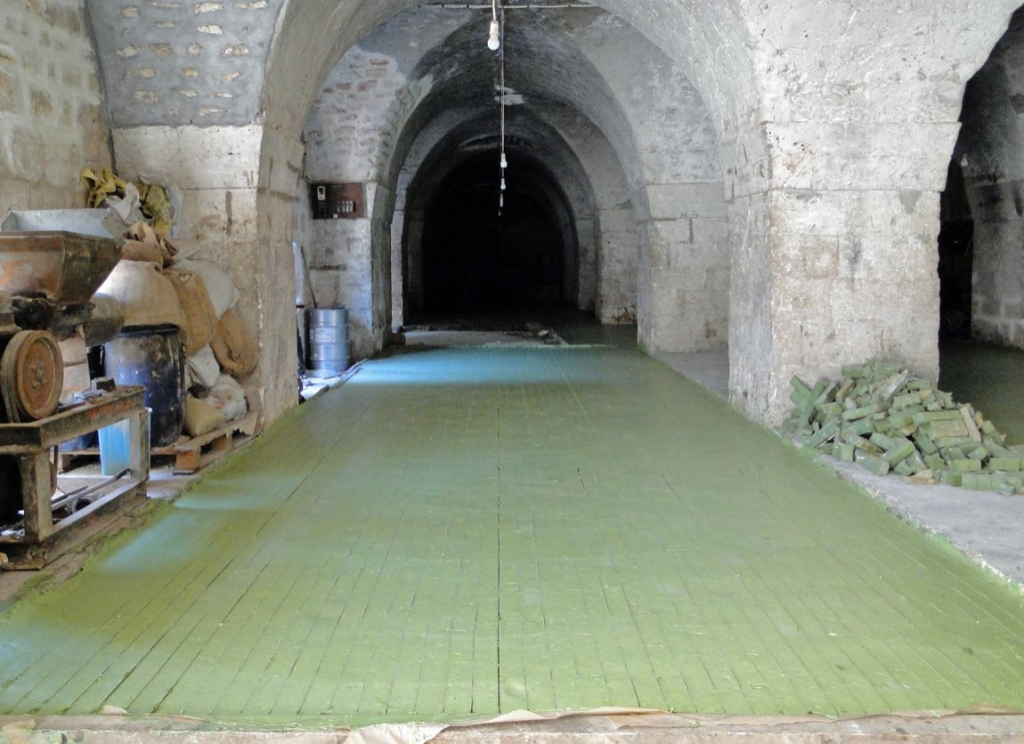
In the old town of Aleppo, laurel soap is sold again in restored markets. The khan al-Harir, which was inaugurated after construction in March 2025, includes soap, embroidery and handicraft shops. In Bab Qinnisrine, the Al-Joubaili family soap factory receives visitors by appointment.
Market returns to traders in stages
In September 2024, four sets of the old souk reopened after rehabilitation: the blacksmiths’ and ropers’ sectors, part of Al-Saqatiyya and the souk Al-Ahmadiya. The Aga Khan Fund for Culture reported in May 2025 that it had handed over 277 shops to their owners in eight sections of the souk since 2018. This figure covers all trades, not only soapmakers. It also does not say how many shops resumed regular activity after the keys were handed over.
The earthquake of February 2023 added damage to those caused by the fighting. The Syrian report submitted to UNESCO documents, among other things, security work at Khan al-Saboun, the soap caravanserail. The report does not mention a commercial reopening of the building. In July 2026, the Old Town leadership was still reporting work in five markets, including Al-Attarin and Al-Sarmatiya.
A trade that does not restart at the pace of construction
Soap ghar combines olive and bay oil. The dough is cut into breads that the manufacturer can mark by name, then the pieces dry for several months. At Al-Joubaili, cooking is done in winter and the refining rooms are visited by appointment, according to the soap factory. UNESCO included this know-how in 2024 on the list of intangible cultural heritage as part of its practice and transmission.
The sites identified provide an indication of which markets have returned premises to traders. Neither the Syrian report to UNESCO nor the balance sheet of the Aga Khan Fund give a total of soap shops returned to the old city, jobs created or volumes of soap produced since these reopenings.





Comments