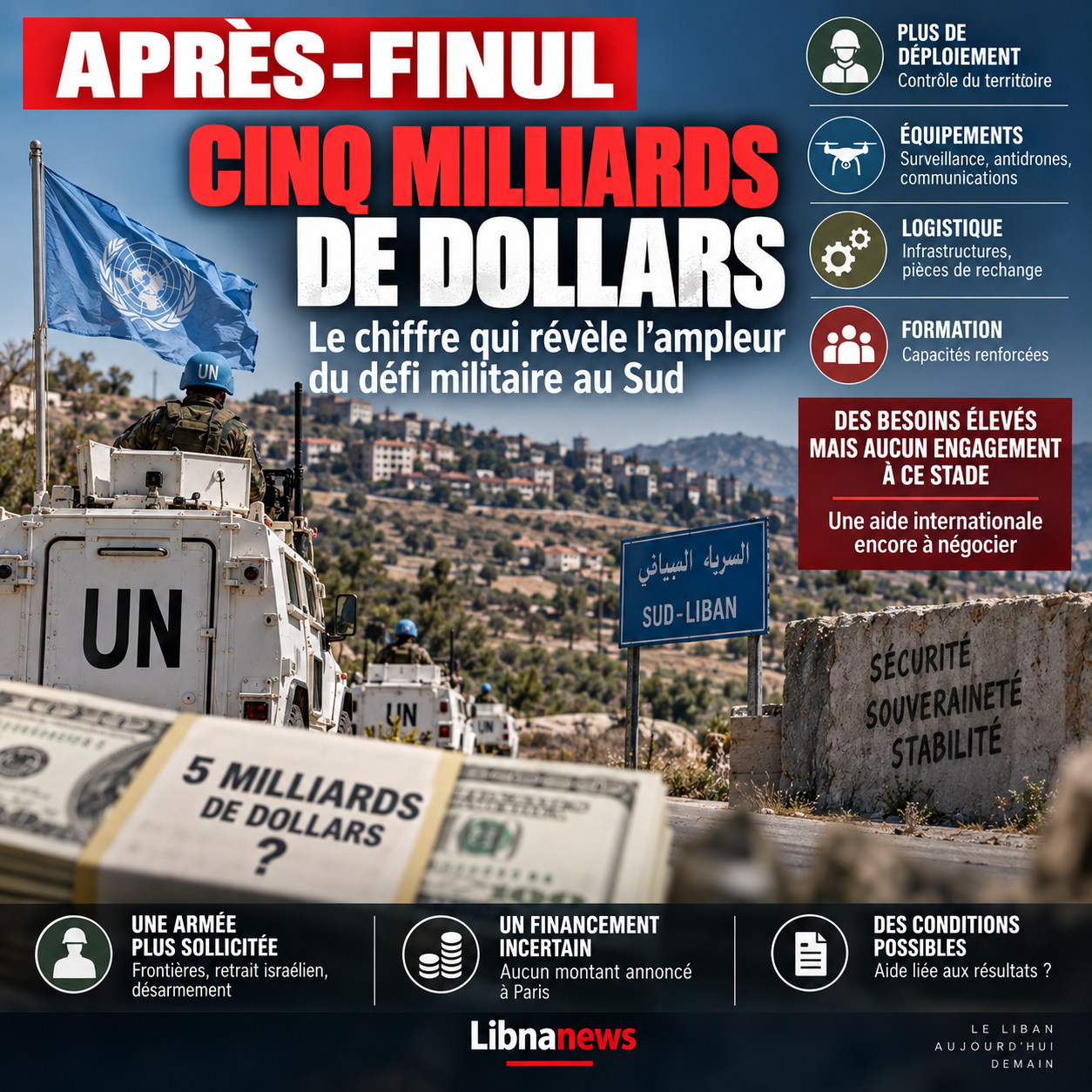






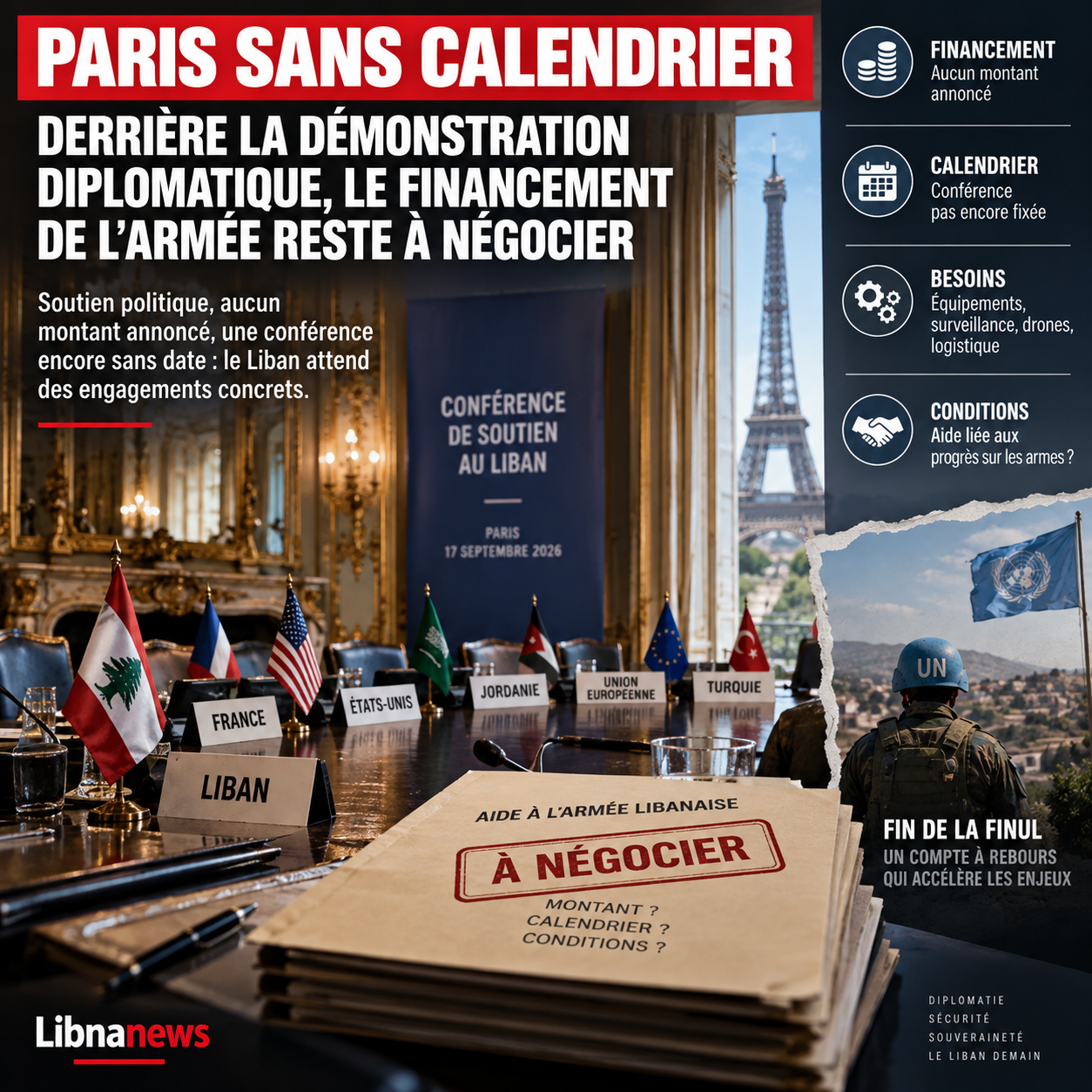
The meeting held in Paris on 17 September was intended to give concrete expression to the international support displayed to the Lebanese Army and the Internal Security Forces. The next day, however, information from diplomatic and political sources described a result much more cautious than the image produced by the meeting. Joseph Aoun, Emmanuel Macron and King Abdullah II of Jordan gave the event an undeniable political weight. Military officials, American, European and Arab representatives heard the needs of Lebanon. The army and the security forces presented their priorities. But no major financial package has been announced, no collective amounts have been committed and, most importantly, the conference that has to turn these discussions into concrete commitments has not yet received a definitive timetable.
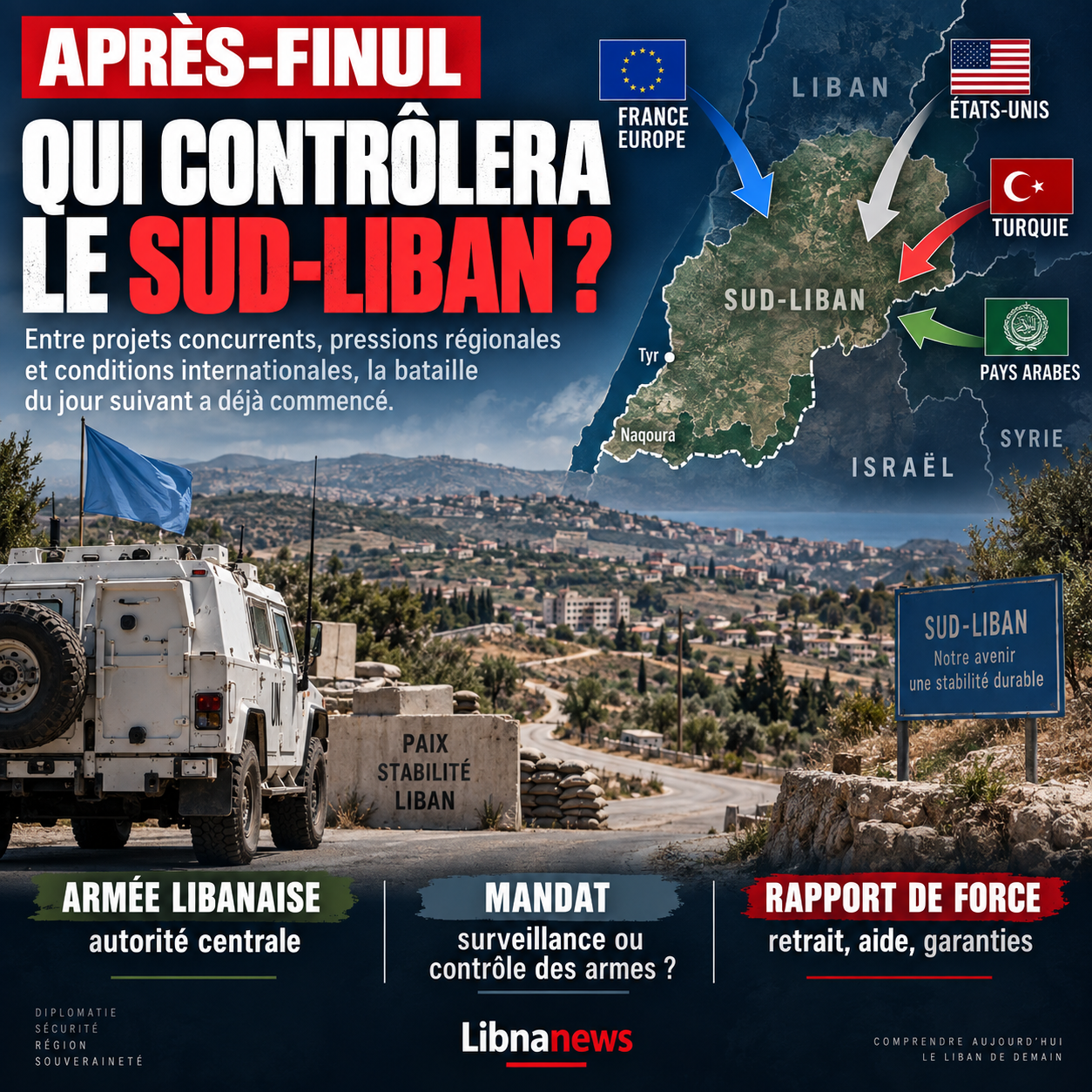
This difference between the political significance of Paris and its financial result is the real subject. Lebanon is no longer in a phase where it is enough to obtain a declaration of support for its army. It is preparing a profound change in its security architecture. UNIFIL must leave the South at the end of the year. The army must considerably increase its presence there. At the same time, it is called upon to implement State decisions on the arms monopoly, while Israeli withdrawal remains incomplete. The question asked of foreign partners is therefore no longer abstract: are they ready to finance this transformation quickly, and under what conditions?
A preparatory meeting that was not yet the donor conference
Part of the misunderstanding around Paris comes from the very nature of the encounter. This was not the big meeting to collect financial contributions, but a preparatory meeting organized within the framework of the Aqaba process. Its objective was to bring partners together, present needs and begin coordinating responses. It is precisely for this reason that Joseph Aoun publicly requested that participants leave Paris with a clear roadmap and timetable for the international support conference.
This request is revealing. Had the timetable already been agreed, the Lebanese president would not have needed to make it one of the objectives of the meeting. Information from diplomatic sources confirms that at the end of the discussions, the real financial meeting remained to be organised. Delegations had heard the Lebanese requests and had to transmit them to their Governments in order to determine what they were prepared to provide.
This operation is classic in a preparatory conference, but the Lebanese context gives it a special urgency. The country does not prepare a military programme for several years in a stable environment. He works against a calendar. UNIFIL’s disappearance requires a deadline, while the army must simultaneously maintain its missions throughout the country. The diplomatic time of donor capitals may thus not correspond to the operational time of the military institution.
King Abdullah II also indicated that a new meeting was to take place before the end of the year to examine what would have been achieved. This is a political milestone, but it does not mean that a funding conference with a list of contributions has been established. Paris has therefore launched a process rather than completed it.
The army did not come with an abstract request
His delegation had not simply requested « more assistance ». The Army and the Internal Security Forces have submitted reports detailing their needs. Public statements identify several of these: surveillance capabilities, border control, drone control, spare parts for existing equipment and strengthening the operational capacity of units.
King Abdullah II was particularly specific on this point. He stressed the need to quickly fill the gaps in airspace monitoring, drones and maintenance of equipment. His intervention shows that the discussions have gone beyond the general principle of support to enter into the question of the capabilities that the army really lacks.
Joseph Aoun, on the other hand, has developed an argument directly for donors: the army is already doing a lot with little resources and could do more if the necessary resources were provided. He also promised that international aid would be combined with mechanisms of transparency and accountability, while saying that the Lebanese State should gradually resume a larger share of the financing of its military and security institutions when its financial capabilities permit.
This is not anomaly. It responds to a question from donors: financing the army cannot mean creating an institution whose growing part of the operation would depend indefinitely on foreign contributions. Beirut therefore calls for massive support to take a step forward, while promising that it will not become a permanent method of financing.
But the Paris meeting showed above all that the partners do not only look at the list of equipment. They look at what these equipments should get.
Behind military demands, the political issue of weapons
It is here that behind-the-scenes information becomes decisive. Diplomatic sources reported by a media source point to an American and Saudi stance that is more demanding than the public support speech might suggest. In their view, substantial military assistance would be linked to the implementation by the State of its decisions on the arms monopoly and, more directly, the treatment of the Hezbollah arsenal.
There is no official document available to state that a formal financial condition has been drawn up in a specific form. It would therefore be excessive to speak of an established financial ultimatum. On the other hand, the political link between the strengthening of the army and the monopoly of arms is evident in the public statements themselves. King Abdullah II called for the army to be given the means and freedom to deal with internal issues and to concentrate weapons in the hands of the state. The French Presidency, too, presented the army as an instrument enabling the state to exercise its full authority and monopoly over weapons.
The difference between positions is therefore less in objective than in method. Paris seems to favour a gradual rise of the army, with the idea that it must first be given sufficient capacity so that the state can extend its authority without causing an uncontrolled rupture. Diplomatic information describes Washington and Riyadh as more committed to the concrete translation of decisions already taken.
This gap can explain why Paris has produced a strong political commitment without immediately producing an equivalent financial commitment. Before pledging large sums, donors want to know exactly what the role of the army will be in the coming months, how the weapons issue will evolve and how this evolution will link with Israeli withdrawal.
The Israeli withdrawal is the lock Beirut puts on the table
Joseph Aoun specifically sought to prevent Paris from turning support for the army into a one-way discussion of Lebanese obligations. His speech put Israeli commitments at the centre of the equation. Lebanon, he argued, began to implement what it had accepted. But the continuation of this process cannot be separated from the end of Israeli attacks, violations and occupation of parts of the territory.
This position allows us to understand why Beirut so insists on the full implementation of the tripartite formula negotiated with Israel. Lebanese reasoning is to refuse a sequence in which the State would be required to produce all the expected security results while Israel would retain the possibility of occupying positions or conducting operations.
Macron publicly joined part of this reasoning. He announced his intention to speak to Donald Trump so that Israel’s commitments would be respected. He also referred to a progressive Israeli withdrawal accompanied simultaneously by the takeover of the land by the Lebanese State.
The important word here is « simultaneously ». It draws a different method of a precondition imposed on a single party. The army is advancing, Israel is withdrawing and state control is progressing. On paper, this sequence allows you to exit the blockage. On the ground, it requires an extremely precise mechanism: which position is evacuated first, which Lebanese unit replaces it, which checks the transition and what happens when a step is not carried out?
This mechanism remains one of the subjects of negotiation.
Paris wants to become a decision centre again on the Lebanese file
The meeting also had a French function. Several evidences show that Paris sought to reaffirm its presence after a period of distance from Beirut. Joseph Aoun has multiplied the signs of rapprochement with Emmanuel Macron, going beyond the military record to evoke the economy, energy and the resumption of oil and gas exploration.
This dimension partly explains the personal investment of the French President. Paris does not want the post-FINUL to be defined exclusively by the United States and Israel. France is working with Italy on a mechanism to avoid the security vacuum and wants to maintain a leadership capacity at a time when the system established in the South is being radically redesigned.
Jordan also plays a complementary role. King Abdullah II has privileged channels with Washington and several Arab capitals. Its involvement in the process allows Paris to avoid its initiative appearing strictly European. It also provides a channel for countries that can financially participate in the strengthening of the army.
The political photograph of Paris therefore had a function: to show that support for Lebanon is not carried by a single capital. But this demonstration also reveals the difficulty of financing. The greater the number of partners, the greater the need to coordinate different interests before converting political support into material commitments.
Why nobody signs a blank check yet
Donors’ hesitations are not confined to Hezbollah. The future of UNIFIL itself remains uncertain in its practical modalities. Partners need to know which missions will be transferred to the army, what functions will remain with an international or European presence and what resources will be required for each. Financing an army that works alongside thousands of peacekeepers is not the same as funding an army that has to assume the bulk of territorial control alone.
Donors must also determine what they can provide. Military assistance does not necessarily take the form of a money transfer. It may include vehicles, communication systems, monitoring capabilities, training or the provision of certain expenses. This fragmentation makes global pledges more difficult, as contributions must be mutually compatible.
Finally, each government has its own constraints. The United States is examining aid in terms of its regional policy and its relationship with Israel. European countries want to avoid engaging their forces in a mission whose mandate is ambiguous. The Arab countries must decide how far they are prepared to finance an institution to play a direct role in the arms issue. Lebanon therefore calls for collective support for partners that do not all give exactly the same meaning to the word « support ».
The success of Paris will be measured after Paris
It would be wrong to conclude that the meeting failed because it did not produce billions immediately. It was not his primary function. It allowed Lebanon to present its needs at the political and military level, to put the Israeli withdrawal back into discussion and to keep the post-FINUL international agenda. It also obtained a clear political commitment from France and Jordan to strengthen the army.
But it would be just as misleading to present Paris as if the financing of the new security architecture were acquired. He’s not here yet. Needs must be converted into contributions. The main conference must be organised. Political conditions must be clarified. The Israeli withdrawal schedule must be articulated with the Lebanese deployment schedule. The role of the future international mechanism must finally be defined.
This is why Joseph Aoun’s request for a roadmap and a calendar is probably more revealing than the statements of support made in front of the cameras. It shows that Beirut knows that the difficult phase is now beginning.
Paris managed to bring together the partners around the table. It remains to be seen who will agree to pay, how much they will provide, in what form and above allwhat they will ask of Lebanon in return for their commitment. Only when these four answers are known can the 17 September meeting be judged for what it has actually produced: the starting point for a lasting strengthening of the State, or a new international conference rich in political support but too slow in the face of the Southern calendar.