





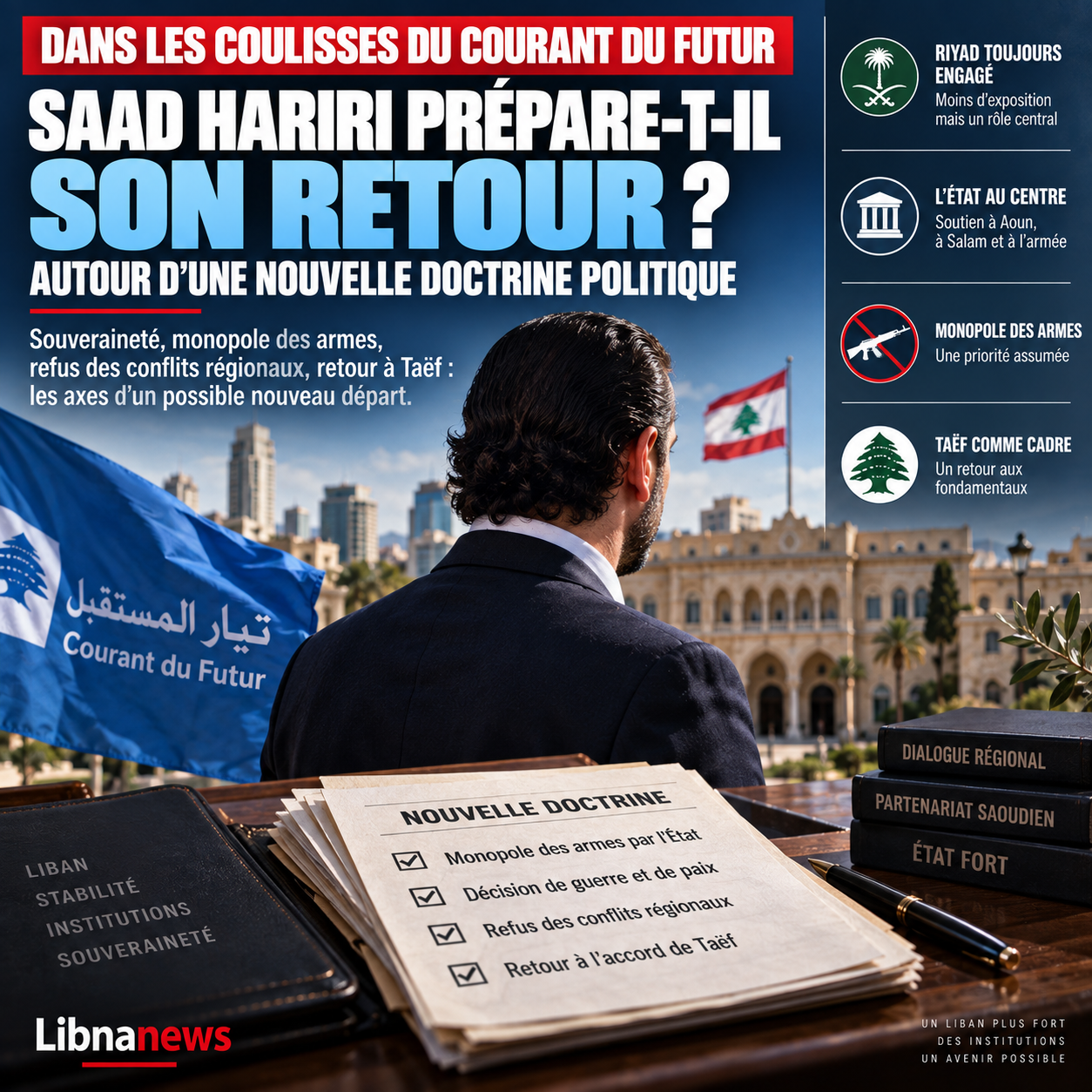
Saad Hariri’s possible return to the Lebanese political game would not be prepared for the moment by the announcement of a candidature or by the spectacular reconstitution of the electoral apparatus of the Current of the Future. The information published by a media source on 18 September 2026 describes a more structured approach: the preparation of a political congress under his supervision to produce a new political declaration and redefine the current trend after several years of withdrawal. The topics under discussion are sufficiently specific to go beyond the personal question of the return of the former Prime Minister. They concern the state monopoly of arms, the decision on war and peace, the refusal to bring Lebanon into regional conflicts and the return to the Taif agreement as a frame of reference.
This information comes from internal sources in the Current of the Future and is not yet the official announcement of an adopted programme. This reserve is essential. But they make it possible to understand what might be in preparation: less a mere return from Saad Hariri than an attempt to reposition the current in a political landscape profoundly different from the one he had left. Hezbollah is under unprecedented military and political pressure, the state claims to want the arms monopoly back, Joseph Aoun and Nawaf Salam put sovereignty at the centre of their discourse, Saudi Arabia remains involved in the Lebanese issue and the South is engaged in a negotiation that could permanently alter the internal balance. The Current of the Future seems to want to build its new doctrine around this transformation.
A congress to produce a line, not just to reorganize a party
According to information from internal sources, preparations for the congress are under the supervision of Saad Hariri. The aim would be to issue a new political declaration. The choice of this formula is significant. A political declaration is not merely a means of reorganizing partisan structures or of distributing internal responsibilities. It sets out a reading of the national situation, identifies priorities and defines the lines around which the current intends to rebuild its identity.
The reported axes are particularly revealing. The first concerns the exclusivity of weapons in the hands of the State. The second concerns the decision on war and peace, which should also be the exclusive responsibility of the institutions. The third is that Lebanon should not be used as a ground for external confrontation. The fourth puts the Taif agreement at the centre of the political project.
Taken separately, none of these themes is new in the Lebanese sovereignist discourse. Their interest comes from their combination and especially from the moment they reappear. For years, the debate on Hezbollah’s weapons was largely blocked by the inner power ratio. The subject existed in political programmes, but institutions had little capacity to translate it into public policy. In September 2026, the situation was different: the arms monopoly was no longer just a demand for opposition. It has become an objective assumed by the State.
The Future Movement could therefore return to an environment where part of its historical discourse is already at the heart of official politics. This situation gives him an opportunity, but it also creates a problem: how can we return politically without simply repeating what the presidency and the government say already?
The answer seems to be sought in a broader doctrine linking arms, Taif and the rejection of regional wars.
The choice of the weapons file is not annoyed
Placing the arms monopoly at the forefront of a future political declaration would allow us to reposition ourselves on the most important issue of the current phase. But this orientation would also redefine its relationship with Hezbollah.
The subject is no longer only that of the existence of an arsenal. It concerns the ability of a non-State actor to participate in a war or to open a front without the decision being taken exclusively by Lebanese institutions. The consequences of recent conflicts have given this issue a much more concrete dimension. The destruction in the South, the displacement of the population, the Israeli occupation of certain areas and Lebanon’s dependence on international mediations have placed the war decision at the centre of the debate.
The future line assigned to the Future would seek precisely to link the two elements: arms and decision. It would not suffice to say that weapons must belong to the State. It should also be established that no one can engage the country in external confrontation outside an institutional decision.
This formulation would enable Saad Hariri to avoid a speech solely directed against Hezbollah. The problem would be presented as a matter of state functioning. The political target would remain identifiable, but the argument would be institutional: a country cannot exercise its sovereignty if several centres have the autonomous capacity to decide on the use of force.
This will be important if the congress is held and if the announced declaration does indeed follow the lines reported. A discourse of community confrontation would risk rebuilding the old lines of fracture. On the contrary, a doctrine centered on institutional authority could seek to put the current in the new consensus that the authorities are trying to build around the army.
» No longer turning Lebanon into the land of the wars of others »
The third axis reported by internal sources is probably the most political: to prevent Lebanon from being re-engaged in external conflicts. Behind this formula is a reading of nearly two decades of Lebanese crises.
The Future Movement could thus seek to make the neutralization of Lebanese territory a structural principle. It would not necessarily be legal neutrality in the strict sense, since the available information does not mention the adoption of a status of neutrality. The line would be more pragmatic: regional conflicts must no longer be able to automatically determine Lebanon’s entry into confrontation.
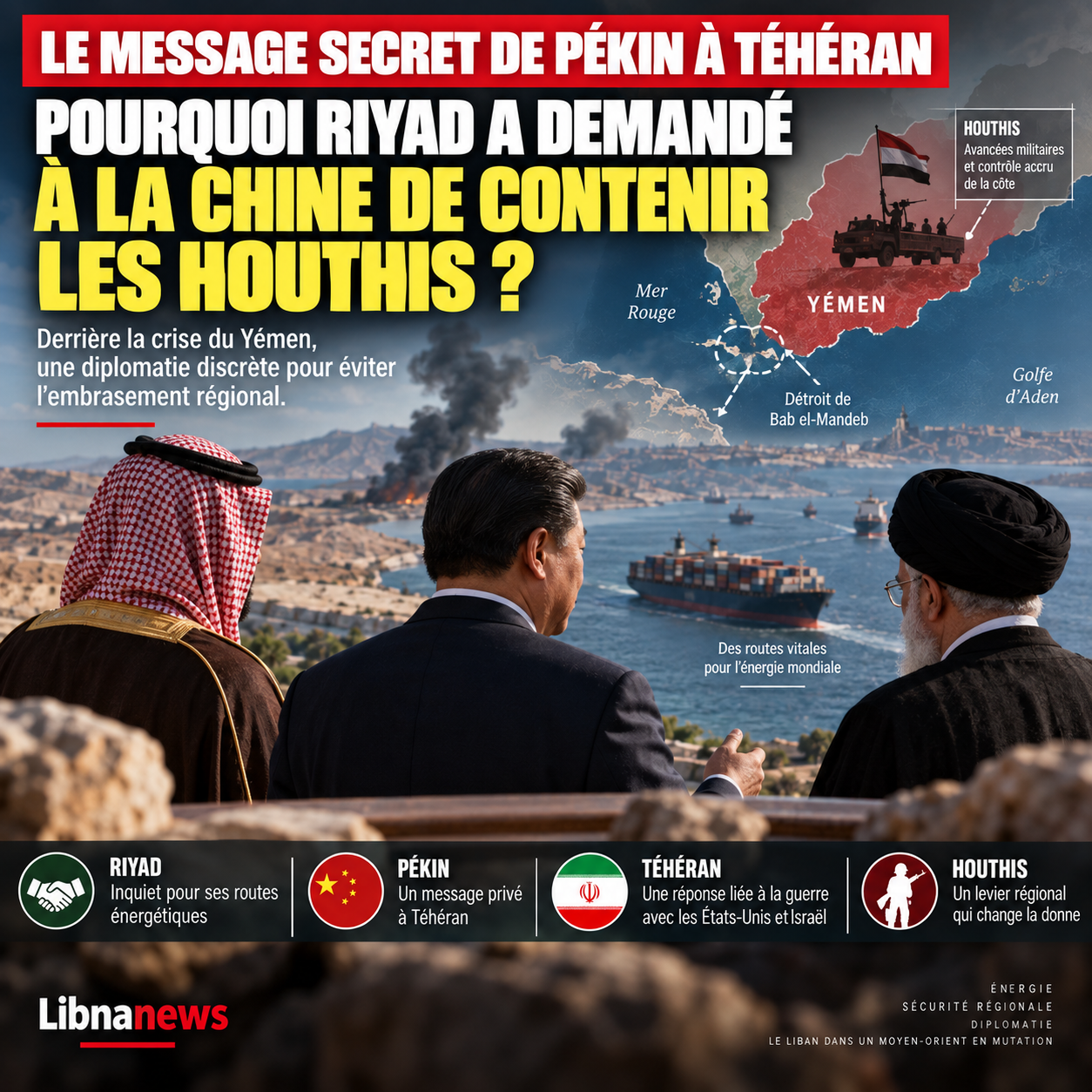
This position is of particular importance in the current context. Tensions between Iran, Israel and the United States structure much of the region. Yemen is once again a major home. The Bab al-Mandeb Strait and the Ormuz Strait are at the heart of a confrontation that directly affects energy and commercial flows. In this context, the aim attributed to the current is to separate Lebanon as far as possible from these clashes.
This doctrine could also be a message to Saudi Arabia. Riyadh has long wanted Lebanon to stop being used as an extension of Iran’s regional power relations. A new line based on sovereignty and the exclusive decision of the State would therefore be compatible with current Saudi priorities.
However, we must avoid going further than the sources. There is no evidence that a political agreement has already been reached between Saad Hariri and Riyadh on his return. Internal sources speak of overcoming past tensions and a desire to rebuild the relationship. This is a signal, not evidence of Saudi sponsorship of the project.
Taëf as a return instrument to the center of the system
The choice to put Taef’s agreement back at the centre of the future declaration is probably the least spectacular and yet one of the most important. For the Courant du Futur, Taëf is both an institutional framework and part of its political heritage. Reaffirmation would help to defend the reconstruction of the State without immediately opening the explosive debate on a complete overhaul of the system.
This strategy would have several advantages. First of all, it would make it possible to respond to calls for changes in institutional balances by recalling that part of the provisions of Taëf are still incomplete. It would then put the Presidency of the Council and the constitutional institutions at the heart of the political functioning without presenting this claim as strictly Sunni.
Finally, Taef offers a common language with Saudi Arabia, which has historically played a major role in the conclusion of the agreement.
The choice of text as a reference could thus perform three simultaneous functions: reconstructing the identity of the current, re-establishing a bridge with Riyadh and opposing the system of armed relations of force a recognized institutional framework.
But there is a difficulty. Reaffirming Taef is politically simple as long as it remains at the level of principles. Its implementation immediately raises much more delicate questions: the functioning of institutions, decentralization, relations between communities, the gradual abolition of political confessionalism and the organization of the executive power. The information available does not yet indicate how far the future congress intends to go on these matters.
This is one of the elements that will make it possible to distinguish a true doctrine from a simple return to historical references of the current.
The connection with Riyadh will be the real test
Internal sources at the Future Current describe past tensions with Saudi Arabia as a parenthesis to be overcome. This formulation is important because Saad Hariri’s withdrawal from political life cannot be understood independently of the deterioration of his relationship with Riyadh.
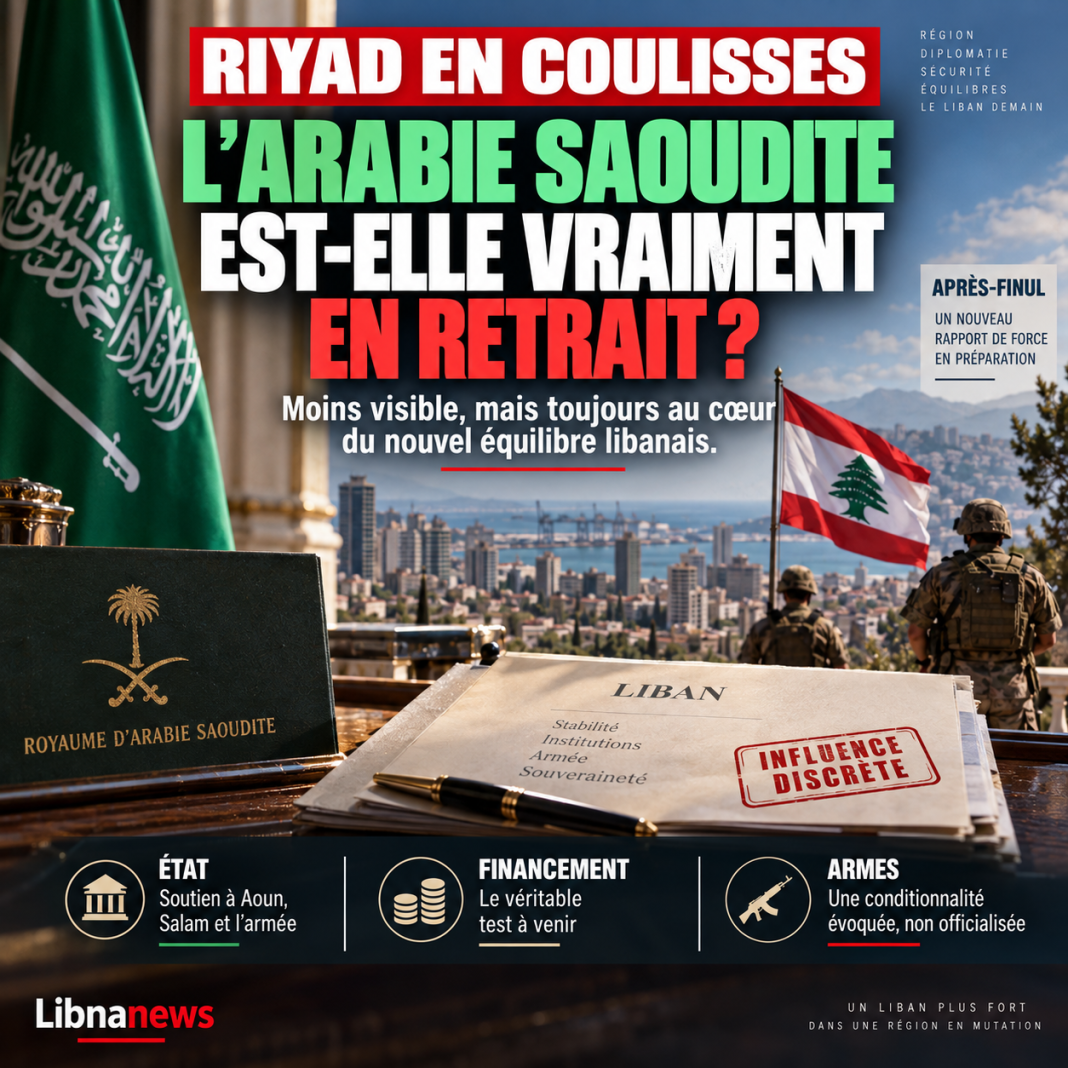
A sustainable return would therefore probably require clarification of this relationship. But the context has changed. Saudi Arabia no longer seems to want to reproduce exactly the model in which a great Sunni leader was his main relay in the Lebanese system. Information from informed sources indicates that Riyadh now favours support for the state, Joseph Aoun, Nawaf Salam and the army.
This development obliges Saad Hariri to adapt his eventual return.
He can no longer simply present himself as the main Lebanese interlocutor in Saudi Arabia. It must demonstrate that its project is part of the consolidation of the institutions that Riyadh already supports. The topics of the congress are precisely in response to this constraint: state, army, arms monopoly, Taif and refusal of regional conflicts.
Convergence is strong enough to be noted. However, it does not yet lead to the conclusion that Riyadh is preparing or financing Hariri’s return. The silence of the sources on an explicit Saudi decision requires that this distinction be maintained.
The real indicator will therefore come from how Riyadh will react when the new political declaration is made public. A visible resumption of contacts, high-level meetings or explicit political support would have an otherwise stronger meaning than current speculation.
The current must also solve its internal problem
Saad Hariri would not find the political Lebanon he left. His absence left a fragmented Sunni space. Members of Parliament, local officials and new figures have developed their own autonomy. Nawaf Salam now holds the Presidency of the Council and has institutional legitimacy independent of the current. Several political forces have also become accustomed to operating without a large Hariri bloc capable of structuring an important part of Parliament.
A political congress must therefore answer a question that Saad Hariri’s only return does not resolve: what has become the Future’s Current as an organization?
A declaration on arms and Taif can define an identity. It does not automatically rebuild a political, electoral and territorial network. The current will have to determine who speaks on its behalf, which structures are reactivated, how the frames that have taken their distance will be treated and what place will be left for a new generation.
The available sources focus mainly on doctrine and give little information on this reorganization. This absence is in itself interesting. She suggests that the current priority could be to rebuild first a political reason to come back before completely rebuilding the machine.
This is a more conservative method than an immediate announcement of returning elections.
Can Hariri come back without competing with Nawaf Salam?
Another novelty is the presence of Nawaf Salam as head of government. The Courant du Futur has long been central to Sunni political representation and access to the Council Presidency. Today, this function is carried out by a person who does not come out of his apparatus and who himself bears some of the themes that the current seems to want to take up: state, reform, sovereignty and monopoly of arms.
A return from Saad Hariri could therefore produce competition. But he could also try to avoid it.
The future political declaration will help to understand the direction chosen. If it attacks government action frontally, the current will position itself as a force seeking to recover its old space. If it supports the broad institutional orientations while proposing its own reading of Taëf and political representation, Hariri could choose a strategy of complementarity before a possible electoral competition.
Current information seems to be more consistent with the second hypothesis, but it is not possible to establish it. There is still no strong enough evidence to describe an agreed strategy for Nawaf Salam.
This point therefore deserves to be monitored rather than filled by assumptions.
A return that prepares first with ideas
The most interesting element of the available information is finally what they do not say. They do not give an official date of return. They do not announce an application. They do not describe a list of electors. They do not agree with Riyadh. They speak of a congress, a declaration and a doctrine.
This indicates that the first issue is political before being elected.
Saad Hariri seems to have to answer a simple but difficult question: what function can the Future Current still fulfil in Lebanon of 2026? Returning only in the name of its history or its Community weight would be insufficient. The landscape has changed, and part of the themes formerly carried by its camp is now taken over by the State itself.
The line in preparation seems to seek the answer in a synthesis: to support the state at the time when it tries to recover the military decision, to place Taif back at the centre of the system, to refuse to engage the territory in regional wars and to gradually rebuild the relationship with Saudi Arabia.
The bet is consistent. He is not without difficulties. The current will have to demonstrate that it does not just come back to occupy a space left vacant. He will also have to explain how the principles announced can be applied without producing a new internal confrontation.
It is at this level that the announced congress will become more important. If he merely repeats the historical references of the current, he will remain an exercise of partisan reorganization. If it specifies how the state must recover the decision of war, the timetable of the arms monopoly, the contemporary reading of Taif and the relationship with the regional powers, it will be the first step towards a genuine political return.
For Saad Hariri, the challenge is perhaps more to knowwhen to returnbut to determinewith which project to return to a country where the focus of the debate has shifted to topics which he was already defending, but which other institutional actors now carry without him.