





Lebanon between sovereignty and regional negotiations
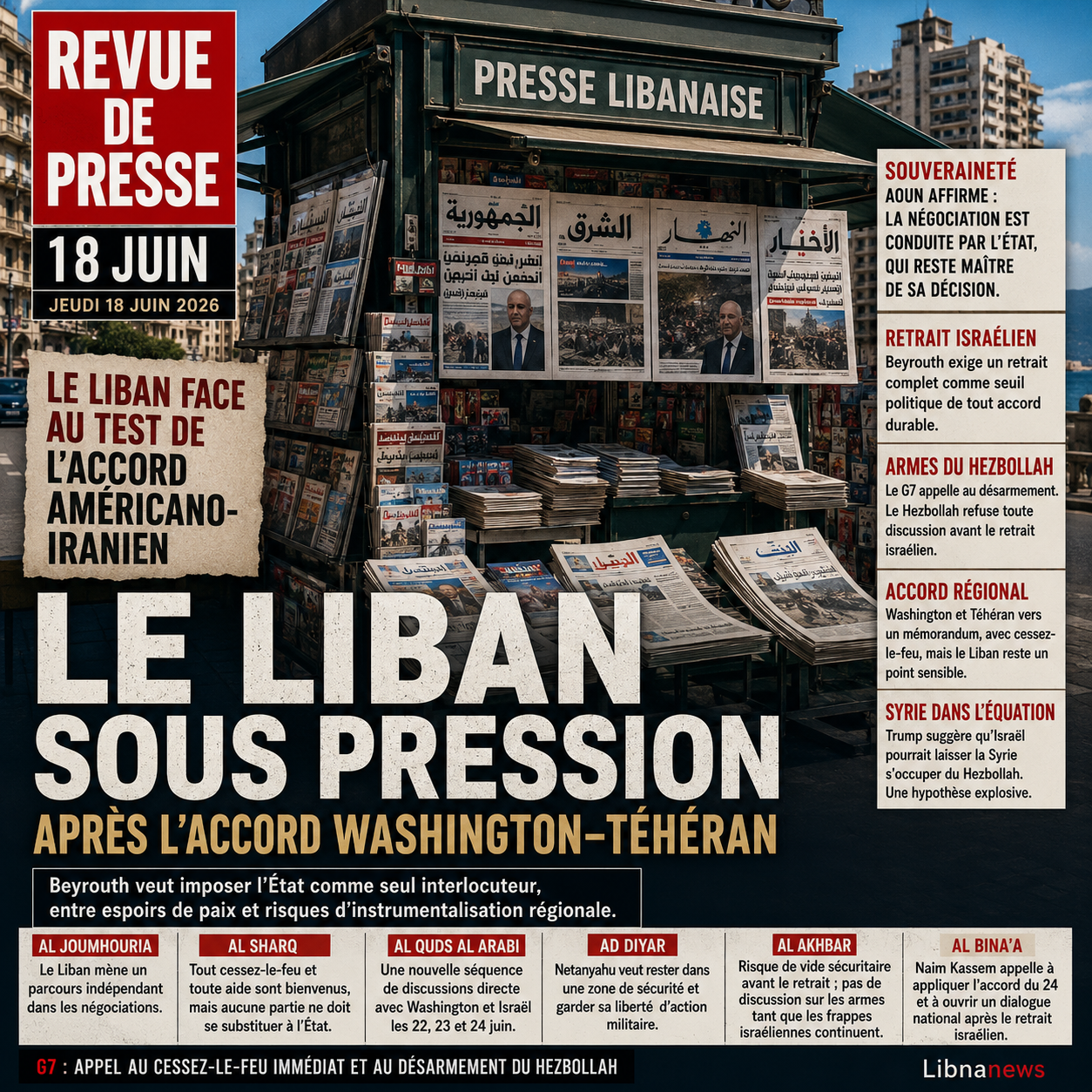
The Lebanese press of 18 June 2026 places Lebanon at the heart of the expected effects of the American-Iranian agreement.Al Jumhouriaindicates that President Joseph Aoun wanted to set the official line by saying that Lebanon is leading an independent path in the negotiations. The newspaper insists on a central idea: negotiation is conducted by the state, which remains in control of its decision. This formula responds to a clear political fear. Beirut wants to take advantage of the climate created by the expected agreement between Washington and Tehran, but refuses to be treated as a mere annex to the regional compromise.
Al Sharqon June 18, 2026, Joseph Aoun reported that he had taken up this line before Maronite bishops of the diaspora. The President said that Lebanon was in favour of any ceasefire and any assistance, including Iran. However, it insists on one point: no party should replace the Lebanese State. He added that any solution should go through Lebanon and not be at its expense. This formula summarizes the issue of the day. The government wants to prevent the Israeli withdrawal, the ceasefire and the issue of arms being decided in a face-to-face between the United States and Iran.
Al Quds Al Arabiwrites on 18 June 2026 that Joseph Aoun and Prime Minister Nawaf Salam want to continue the direct channel opened in Washington with Israel. According to the newspaper, a new sequence of discussions is expected on 22, 23 and 24 June. This information gives practical meaning to the discourse on sovereignty. This is not just a public posture. The aim is to prevent the ceasefire announced in the American-Iranian framework from replacing the Lebanese negotiation on the Israeli withdrawal.
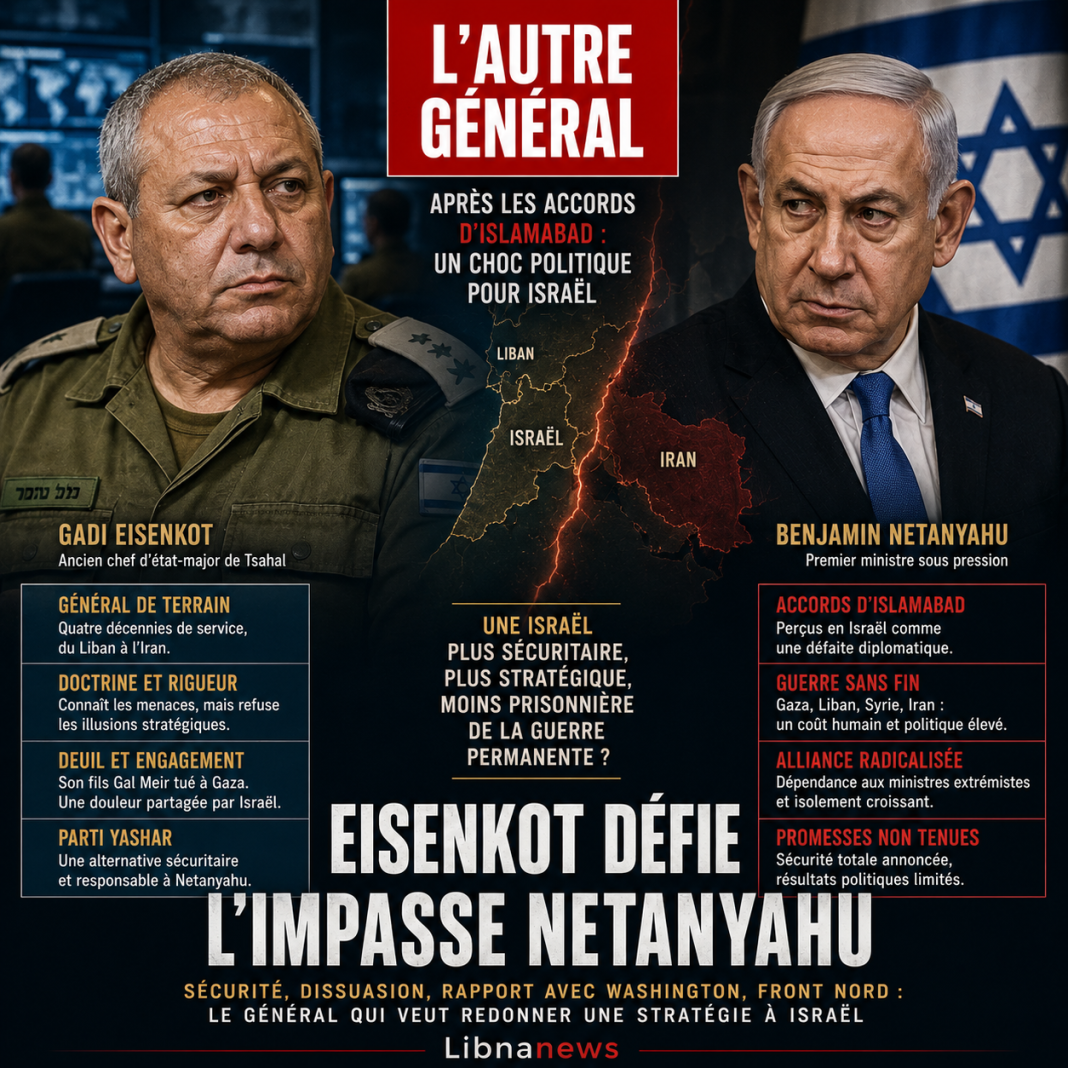
The same newspaper notes that some Iranian contacts with Baabda are interpreted by political sources as a pressure to reverse Beirut. In this reading, Tehran would like to argue that the regional agreement is enough to restore calm to Lebanon. The Presidency and the government defend another reading. They believe that lasting peace requires a proper Lebanese framework, with the State as the only authorized interlocutor on the fate of the country. This divergence illuminates the internal tension of the moment. Lebanon expects a positive impact from the regional compromise. But he fears that the same compromise will reduce his policy space.
Israeli withdrawal as a political threshold
Ad Diyarwrites on 18 June 2026 that the Israeli withdrawal file dominates Beirut calculations. The newspaper reports that the Israeli press itself refers to the fear of a withdrawal imposed by Washington when the memorandum of understanding was signed. But he also quotes Benjamin Netanyahu, who says he wants to stay in a safe area and keep his freedom of military action. This contradiction puts Lebanon before a major uncertainty. On the one hand, the regional agreement can pave the way for US pressure on Israel. On the other hand, Tel Aviv maintains a military logic on the ground.
Al Sharqadds on 18 June 2026 that Israel continues to strike in the South and maintains its drones and aircraft in Lebanese airspace, including over Beirut and its southern suburbs. The same newspaper believes that the prudent reception of the Lebanese authorities to the agreement between Washington and Tehran is mainly due to the hope of a ceasefire that would include Lebanon. However, this hope remains suspended on a simple question: will Israel agree to comply with it under American pressure.
Al Akhbargives, on 18 June 2026, a more critical reading of the Lebanese power. The newspaper believes that the local scene is entering a phase of complications if authority does not learn the lessons of the moment. It highlights the role of the United Nations Interim Force in Lebanon and support for the deployment of the army in the South. However, he stressed the risk of a security vacuum before the Israeli withdrawal. With this in mind, any change in the international framework or any discussion on weapons prior to the complete cessation of Israeli operations would create an imbalance.
Al Binaathis same sequence is included in a regional power ratio. The newspaper presents Hizbullah’s secretary-general, Naim Kassem, as one of the central actors of this phase. In particular, it calls for the implementation of the agreement of 24 and the opening of a national dialogue to strengthen the elements of force. The line is clear: internal discussion is possible, but it must come after the Israeli withdrawal and not under threat. This scoping is opposed to the Western approach, which places the disarmament of Hezbollah at the heart of the settlement.
The Group of Seven places Hezbollah’s weapons at the centre of the settlement
Asharq Al Awsatreported on 18 June 2026 that the leaders of the Group of Seven called for an immediate ceasefire in Lebanon and for the disarmament of Hezbollah. The press release therefore places the Lebanese case in a broader context. It associates the Washington-Theran agreement with regional security, Iran’s nuclear programme and the stabilization of the Lebanese front.
Al Quds Al Arabitakes up the same element and specifies that the leaders of the Group of Seven want both to respond to Iran’s threats and to ensure that it never has a nuclear weapon. Lebanon thus appears in the same diplomatic field as Iranian nuclear power, the Darmuz Strait and the role of Western powers. This series is not neutral. It gives the Lebanese ceasefire an international reach. But it adds a heavy condition: the demand for the disarmament of Hezbollah.
For Beirut, this equation creates a dilemma. The State can rely on international support to demand Israeli withdrawal. But it must also manage external pressure on a very sensitive internal file. The question then becomes that of the calendar. Should we first get the withdrawal and stabilize the South, or should we immediately ask the question of arms as a condition of the settlement?
Al Sharqreported on 18 June 2026 that the same position was taken up in the regional follow-up to the Agreement. The newspaper quotes the Group of Seven’s support for the Lebanese leadership’s efforts to limit weapons to the hands of the State and disarm Hezbollah. He also cites Israeli Minister Eli Cohen, who threatens a response at any point in Lebanon in the event of an attack on Lebanese or Syrian territory.
According toAl SharqandAl Quds Al ArabiThe Israeli leader links Hezbollah’s disarmament to Lebanon’s economic and political future. He claims that the country could regain its regional role if the State fully imposed its authority. This rhetoric places Beirut under double pressure. On the one hand, Israel demands an internal transformation of Lebanon while continuing its operations. On the other hand, Western partners combine ceasefire and arms monopoly. The Lebanese authorities must therefore defend the authority of the State without appearing to be executing an Israeli road map.
Syria returns to the debate through Trump’s voice
Al Araby Al Jadeedreported on 18 June 2026 that the Iranian position made Lebanon part of the global ceasefire. The newspaper quotes Iran’s diplomatic spokesman, Ismail Baghaei, that the ceasefire in Lebanon is part of any final agreement ending the war. He also quoted Iran’s foreign minister, Abbas Araghchi, who said that the war must stop in Iran and Lebanon, or not stop in Iran or Lebanon.
This formulation shows that Tehran refuses to dissociate the fronts. It gives insurance to Hezbollah, but it complicates the Lebanese official line. Joseph Aoun and Nawaf Salam want to separate the Lebanese path from the Iranian negotiation. On the contrary, Iran wants to show that Lebanon is part of the general balance achieved against Washington. This divergence does not necessarily mean a break. But it opens a competition of legitimacy. Who speaks for the ceasefire in Lebanon: the Lebanese State, Iran, the United States or the armed parties on the ground?
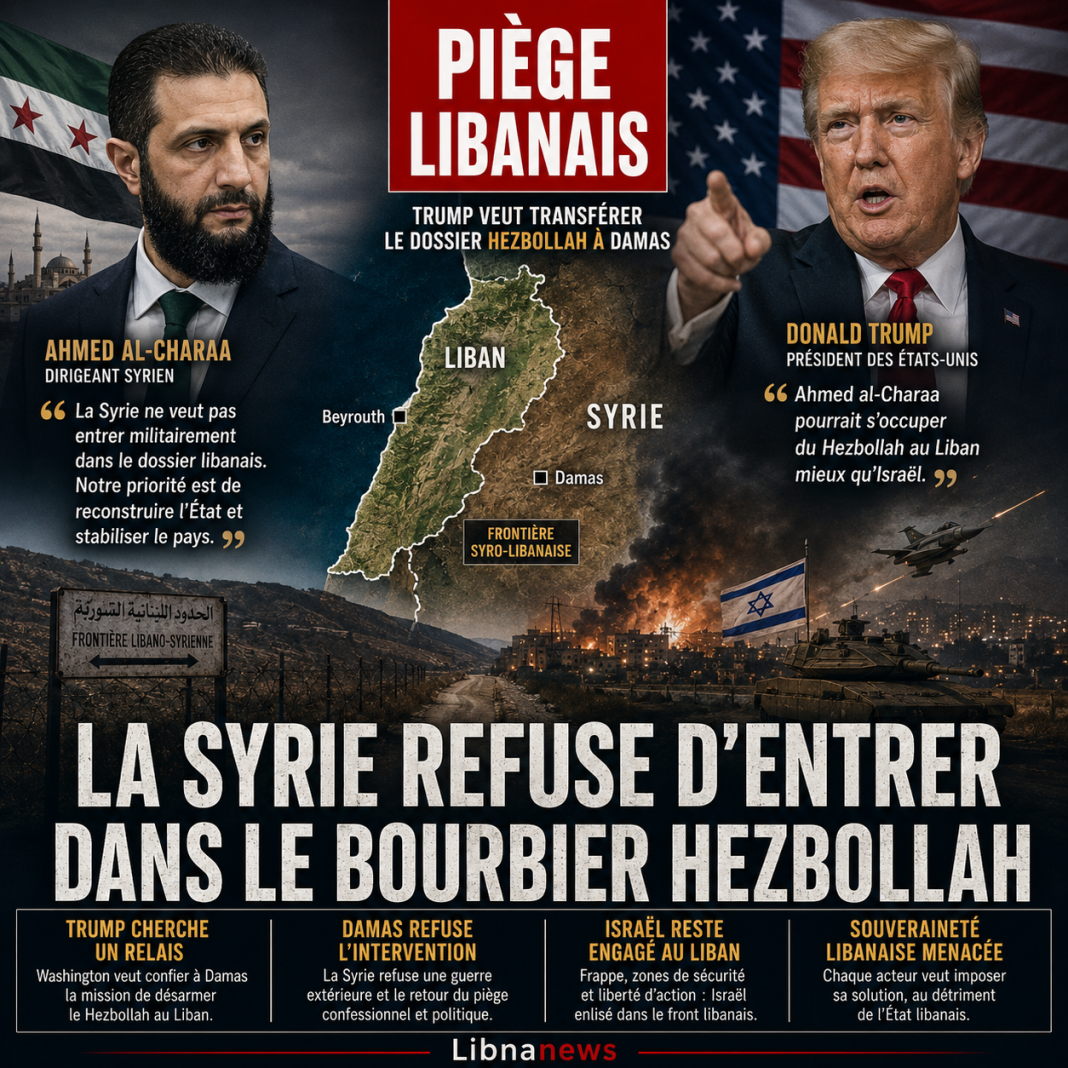
Ad Diyarputs forward, on June 18, 2026, the most explosive element of the sequence: Donald Trump’s suggestion that Israel might let Syria take care of Hezbollah. The newspaper underlines the seriousness of such a hypothesis and questions its consequences for Lebanese sovereignty.Al Liwaaalso refers to the possibility of a visit by Joseph Aoun to Washington, with no official invitation still received by diplomatic channels.
The newspaper states that a diplomatic official in Paris sees the return of peace in Lebanon as a matter closely followed by international, Arab and regional capitals. This combination gives the measure of the moment. Lebanon is sought as a subject of stabilization, but it is also exposed to scenarios that go beyond it. American pressure on Israel could serve Beirut if it produces a withdrawal. But a logic of regional outsourcing, particularly by Syria, would directly threaten internal stability.
A fragile Lebanese margin
Al Quds Al Arabireported on 18 June 2026 that the expected agreement would provide, according to published evidence, for the lifting of sanctions against Iran, the return of frozen assets, the establishment of a development fund, the reopening of the Strait of Hormuz and the extension of the ceasefire in Lebanon. The newspaper adds that Benjamin Netanyahu tried to weaken this dynamic by strikes on the southern suburbs of Beirut and by evacuation warnings in several Lebanese localities.
This reading highlights a key point: Lebanon is both a possible beneficiary of the compromise and a possible ground for sabotage. If the ceasefire applies, the State will be able to demand withdrawal and strengthen the army in the South. If Israel refuses or multiplies exceptions, Lebanon will remain caught in a low-intensity war.
An Naharwrites, on 18 June 2026, that Lebanon may become a zone of manoeuvre if the agreement only mentions a stop to the fire without Israeli withdrawal, without implementing international decisions and without the precise role of the army. This is in line with the main concern of power. Formal calm without withdrawal can freeze the occupation and allow Israel to act freely.
Al Jumhouria,Al Sharq,Al Quds Al ArabiandAd Diyarthus, on June 18, 2026, describe a single scene with different angles. President Joseph Aoun wants to affirm state sovereignty. Nawaf Salam seeks to clarify French support and American intentions. Hezbollah, through the voice of Naim Kassem, refuses to have weapons laid before the Israeli withdrawal. Israel wants to maintain military freedom and turn the disarmament of Hezbollah into a prerequisite. The Group of Seven supported the ceasefire, but associated itself with the limitation of arms at the hands of the State. Finally, Iran wants to see the Lebanese front recognized as part of the comprehensive settlement.
Overall, the Lebanese margin exists, but it remains fragile. It will depend on a concrete fact more than diplomatic formulas: the Israeli withdrawal from occupied territory. Without this withdrawal, the Memorandum of Understanding will remain a useful but incomplete regional text for Beirut. With it, the Lebanese State could open a new phase, focusing on the army, borders and internal dialogue under national authority.
Local policy: the Lebanese State seeks to keep its hands in the face of pressure on withdrawal and weapons
Joseph Aoun defends a negotiated sovereignty line
The press of 18 June 2026 describes a Lebanese political scene dominated by the same tension: how to take advantage of the climate created by the American-Iranian agreement without letting other actors decide instead of the state.Al Jumhouriareports that President Joseph Aoun placed the sovereignty of negotiation at the centre of his speech. In front of a delegation of Maronite bishops from the diaspora, he claims that Lebanon follows an independent path and that the negotiation is led by the state, the master of its decision. This line is intended to address internal concern. Lebanon may be included in a regional ceasefire dynamic, but it refuses to be reduced to a secondary issue between Washington, Tehran and Tel Aviv.
Ad Diyar18 June 2026, insists on the same presidential formula. Joseph Aoun states that any solution must go through Lebanon and not at its expense. The newspaper presents this sentence as an attempt to resume the initiative at a time when several Lebanese officials fear that regional developments will again escape from central power. The Presidency wants to show that the State is not merely a recipient of decisions taken elsewhere. It also seeks to contain the opposite interpretations. For some actors, the American-Iranian agreement could be enough to impose a stop to the fire. For power, it cannot replace either the Lebanese negotiation, the Israeli withdrawal or the role of the army in the South.
In this sequence, Joseph Aoun tries to build a balanced position. He does not refuse foreign aid. It does not close the door to Iran, the United States, France or the Arab countries. But he claims that any contribution must go through Lebanese institutions. This choice also targets the inner front. The President wants to avoid the issue of Hezbollah being treated as a mere effect of the regional balance of power. It seeks to bring the debate back to the state, the army, the border and international decisions. This method allows him to defend a line of sovereignty without entering into direct confrontation with the political forces that support the resistance.
Nawaf Salam activates the French channel and seeks support for the army
Al Araby Al Jadeedon 18 June 2026, Prime Minister Nawaf Salam was to meet French President Emmanuel Macron in Paris. The central issue is support for the Lebanese army and the ceasefire in Lebanon. This visit is part of a clear strategy. The government wants to strengthen its international anchor at a time when the U.S.-Iranian Memorandum of Understanding may impose a new regional framework. Paris remains a major interlocutor for Beirut, especially on the issue of the South, the army and the United Nations Interim Force in Lebanon.
Al LiwaaOn 18 June 2026, Salam was to conduct consultations in Paris with Emmanuel Macron and the emir of Qatar. The newspaper places this diplomatic activity in a context of strong international attention to the return of peace in Lebanon. A diplomatic official quoted in Paris believes that the Lebanese case is followed by international, Arab and regional decision-making capitals. Three subjects are placed in the same chain: Israeli withdrawal, the end of the war and the treatment of the issue of arms. This hierarchy shows that the government cannot isolate files. Support for the army depends on the ceasefire. The ceasefire depends on withdrawal. The withdrawal depends on the pressure exerted on Israel.
Nawaf Salam thus appears as the other pole of the executive in this phase. Joseph Aoun established the principle of sovereignty. Salam seeks to translate it into concrete contacts. The aim is to make the foreign partners understand that Lebanon wants to be supported, but not circumvented. The army occupies a central place here. It is presented as the possible instrument for the stabilization of the South, provided that the Israeli withdrawal is real and international aid is sufficient. On the other hand, the government knows that simply calling for the arms monopoly is not enough. Without withdrawal or guarantees, any internal discussion of weapons may become a crisis factor rather than a factor of unification.
Nabih Berri puts emphasis on the United Nations Interim Force in Lebanon
An NaharOn 18 June 2026, Parliament President Nabih Berri reported on the importance of maintaining the United Nations Interim Force in Lebanon in accordance with Resolution 1701 until its implementation and in support of the deployment of the army at the border. This declaration puts Berri in an institutional line. She recalls that the South issue is not limited to a political agreement. It is also based on an existing international framework that Lebanon can use to demand Israeli withdrawal and support the army.
This position has an important local scope. Berri, a central player in the internal balance and traditional interlocutor on Southern issues, seeks to maintain a link between international legitimacy and the reality of the ground. Resolution 1701 remains one of the few frameworks accepted by many Lebanese political actors. It allows us to talk about both Israeli withdrawal, state sovereignty and support for the army. It also avoids the issue of weapons from the outset in terms that could lead to direct political confrontation.
Berri’s reminder comes at a time when Western statements focus on the disarmament of Hezbollah. For the President of Parliament, the priority seems to be the application of the framework already recognised. It is a question of bringing the debate back to a sequence logic. First, stop the attacks. Then get the Israeli withdrawal. Then strengthen the army and consolidate state authority. This approach reduces the risk of an internal political explosion. She joined Joseph Aoun’s caution in part, even though the two men did not necessarily come from the same political angle.
Hezbollah refuses disarmament as a prerequisite
Al BinaaJune 18, 2026, highlights Naim Kassem’s speech. Hezbollah’s Secretary-General claims that resistance has prevented the project of an expanded Israel and calls for a national dialogue to strengthen the elements of force. The newspaper presents this position as a response to external pressures. Hezbollah does not close the door to dialogue. But he refuses to open it under Israeli threat or Western conditions. For him, the priority remains the cessation of aggression, the withdrawal of the occupied territories and the release of prisoners.
Al Akhbaron 18 June 2026, adopted a close reading. The newspaper considers that the absence of an Israeli withdrawal would constitute a violation of the memorandum of understanding. He highlighted Naim Kassem’s position that the agreement of 24 must be implemented. In this reading, the discussion on weapons cannot precede the fulfilment of the commitments on the ground. Hezbollah considers that any pressure on its arsenal before withdrawal would be tantamount to a political and military advantage for Israel. It therefore seeks to impose another hierarchy: first withdrawal, then national debate.
This position accentuates the executive dilemma. The President and the Prime Minister want to strengthen the state, but they cannot ignore the political and military weight of Hezbollah. The local debate is therefore structured around a question of timetable. Western partners call for arms to be restricted to the state. Hezbollah responds that force remains necessary as long as occupation and attacks persist. Between these two lines, the state tries to preserve its margin. It must avoid appearing weak before Israel, but also avoid causing an internal crisis that it would not have the means to control.
US and Israeli pressure reconfigure internal debate
Al SharqOn June 18, 2026, Donald Trump reported on a possible visit by Joseph Aoun to Washington.Al Liwaathis information indicates that the visit is being considered, but that no date has yet been set and that no official invitation has been received through diplomatic channels. This difference is important. It shows that the Lebanese power has entered the American radar, but the process remains uncertain. A meeting in Washington could strengthen Joseph Aoun’s position, especially if it leads to American pressure on Israel. But she could also put the president under a strong expectation around the weapons issue.
The same climate appears in Israeli statements.Al SharqandAl Quds Al ArabiOn 18 June 2026, Israeli officials quoted the economic and political future of Lebanon in connection with the disarmament of Hezbollah. According to this logic, Lebanon could regain its regional role if the State fully imposed its authority. This rhetoric exerts direct pressure on the Lebanese power. It transforms sovereignty into a requirement addressed from the outside. For Beirut, the risk is clear. If the State adopts this speech without Israeli withdrawal, it will be accused of executing an Israeli road map. If he refuses it completely, he may lose useful international support.
This tension weighs on all local politics. The forces close to power want to present the state monopoly as a path of stabilization. The forces close to Hezbollah want to recall that sovereignty begins with the end of the occupation. In between, several actors are looking for a gradual formula. It would involve Israeli withdrawal, the strengthening of the army, the maintenance of the international framework and an internal dialogue on the defence strategy. But this formula presupposes a prerequisite: that external actors stop treating Lebanon as a mere field of application of their compromises.
Internal debate dominated by timing and legitimacy
The Lebanese local policy of 18 June 2026 is therefore less marked by direct confrontation between institutions than by a battle around the calendar.Al Jumhouria,Ad Diyar,Al Liwaa,Al Akhbar,Al Binaa,Al Sharq,Al Quds Al ArabiandAn Nahardescribe actors who use almost the same words, but not in the same order. All talk about sovereignty, state, army, withdrawal and stability. But everyone places priority in a different place.
Joseph Aoun wants negotiations to go through the state. Nawaf Salam is seeking support in Paris and from Arab partners. Nabih Berri recalls Resolution 1701 and the role of the United Nations Interim Force in Lebanon. Naim Kassem refused to allow disarmament to take place before the withdrawal. Israeli officials want to maintain freedom of military action and make Hezbollah the central problem. The United States wants to transform the ceasefire into a broader regional framework. This diversity of positions does not yet form an open crisis, but it draws a period of great fragility.
The point of blockade remains the same: the Lebanese State wants to embody sovereignty, but it does not have the means to impose it alone. He needs a real Israeli withdrawal to strengthen his authority. He needs international support to consolidate the army. It needs an internal dialogue to prevent the issue of arms from becoming a national divide. Finally, he needs external powers to recognize his role. Otherwise, local politics will remain suspended from decisions taken elsewhere. With this, it could open a new phase, based on a more present State, a more sustained army and a national debate less dominated by military pressure.
Quote and speech by political figures: Israeli sovereignty, withdrawal and battle of the calendar
Joseph Aoun places the state at the centre of any solution
The press of 18 June 2026 gave a central place to President Joseph Aoun’s remarks. His speech serves as a guide to the Lebanese political sequence.Al Jumhouriareports that the Head of State claims that Lebanon follows an independent path in the negotiations. This formula is intended to establish a line of sovereignty. It means that Beirut does not refuse external aid, but that it intends to remain the main actor in any decision related to the ceasefire, the Israeli withdrawal and the security future of the South.
According toAl SharqJoseph Aoun took up this idea before a delegation of Maronite bishops from the diaspora. He said that Lebanon supported any initiative to halt hostilities. It also accepts, in principle, any aid from a third State, including Iran. However, it sets a clear limit. The negotiation must be conducted by the Lebanese State. No one should take his place. This is important because it comes at a time when the American-Iranian agreement is presented as likely to include a ceasefire in Lebanon.
The most political sentence attributed to Joseph Aoun is that any solution must go through Lebanon, not at its expense.Ad Diyarput forward this formula. It reflects an old concern, revived by the regional situation. Lebanon fears that it will be treated as a field of application of a wider agreement. The President therefore sought to reject two scenarios. The first would be an external agreement imposed on Beirut. The second would be a diplomatic vacuum where Israel would continue its operations while allowing Lebanon to deal with the consequences alone.
Joseph Aoun’s speech is therefore institutional. It does not only respond to Israel or Iran. He also speaks to the Lebanese. The President wants to bring the debate back to institutions, the army and official negotiations. It avoids breaking language. It does not close the door to regional aid. But he insists on the notion of a national decision. This position enables it to address several audiences at once: foreign partners, internal political forces and citizens concerned about a new war cycle.
Nawaf Salam seeks to convert speech into diplomatic support
Prime Minister Nawaf Salam appeared in the newspapers of 18 June 2026 as the diplomatic face of this official line.Al Araby Al Jadeedreports that he must meet French President Emmanuel Macron in Paris to discuss support for the Lebanese army and the ceasefire. The movement has a clear scope. The government wants to show that sovereignty is not limited to a declaration. It must be translated into concrete support, especially for the army.
Al Liwaasays Nawaf Salam is also to conduct consultations in Paris with Emmanuel Macron and the emir of Qatar. This activity reflects a desire to increase safeguards. Lebanon is seeking Western but also Arab support. The Prime Minister wants to avoid an exclusive dependence on Washington, especially when Donald Trump talks directly about Syria, Hezbollah and a possible regional role in the Lebanese crisis.
In this sequence, Salam completes Joseph Aoun’s speech. The President sets the principle: nothing must be done without the Lebanese State. The Prime Minister is looking for the levers to make this principle credible. This includes support for the army, coordination with Paris, mobilization of Arab relays and the defence of a ceasefire linked to the Israeli withdrawal. The government discourse remains cautious. He doesn’t promise a quick solution. Rather, he was trying to prepare a Lebanese position that could weigh in future discussions.
Salam’s caution is also due to the sensitivity of the weapons issue. The government knows that international pressure is increasing on Hezbollah. But he also knows that too direct a focus on this issue, without Israeli withdrawal, could open an internal crisis. Nawaf Salam’s language is therefore that of supporting the state and the army. It avoids turning the issue of weapons into immediate confrontation. This method is based on a simple idea: the State can extend its authority only if military and diplomatic conditions allow it to do so.
Nabih Berri recalls Resolution 1701 and the role of the United Nations Interim Force in Lebanon
The President of the Parliament Nabih Berri intervenes in this sequence with a formula adopted byAn Nahar18 June 2026. It stresses the importance of maintaining the United Nations Interim Force in Lebanon in accordance with Resolution 1701 until it is fully implemented and in support of the deployment of the Lebanese Army at the border. This position places the debate within an already existing legal and international framework.
Berri’s statement is brief, but it is politically dense. It recalls that Lebanon does not need to start from scratch. There is already a recognized base for treating the southern front. This base includes the cessation of hostilities, support for the army, the role of the international force and the need to enforce Lebanese sovereignty. By recalling this framework, Berri seeks to prevent the American-Iranian agreement from becoming the only benchmark of discussion.
His speech is also a way of responding to pressure on Hezbollah’s disarmament. Rather than placing weapons at the beginning of the process, it brings the debate back to the implementation of resolution 1701. This sequence allows first the imposition of obligations related to Israeli withdrawal and territorial control. It reduces the risk of direct political confrontation. It also allows Berri to remain in an institutional position, while keeping a sensitivity close to the priorities of the South.
This reminder is of particular importance at a time when the Group of Seven calls for an immediate ceasefire in Lebanon and for the disarmament of Hezbollah. Berri does not reject the State authority. On the contrary, he talks about the deployment of the army. But it insists on the international framework and the duration of its implementation. His position can be read as defending the calendar. For him, the return of the state to the South requires steps, not an immediate injunction.
Naim Kassem refuses to treat weapons before withdrawal
The speech of Naim Kassem occupies an important place inAl BinaaandAl Akhbar. The Secretary General of Hezbollah is presented as one of the major actors in the sequence opened by the American-Iranian agreement.Al Binaareports that he claims that the resistance ended the project of an expanded Israel. It also calls for a national dialogue to strengthen the elements of force. This formula seeks to place Hezbollah in a defensive and national position, not in a blocking posture.
Naim Kassem’s message is based on a clear hierarchy. The Israeli withdrawal must precede any substantive debate on weapons.Al Akhbaradopted its formula according to which the agreement of 24 must be applied and kept to that point. The political sense is clear. For Hezbollah, stopping aggression, withdrawing from the occupied territories and ending Israeli violations are prerequisites. As long as these elements are not filled in, the question of weapons is, according to this reading, to move the problem of occupation towards the internal Lebanese debate.
Naim Kassem does not close the door to dialogue. But it seeks to set the conditions for this dialogue. He refuses a discussion under US, Israeli or Western pressure. He wanted the debate to be national and to take account of power relations. This position is addressed to both Lebanese power, Hezbollah supporters and foreign actors. She says the party won’t be locked in a sequence where it should give up an asset before the terrain changes.
The speech of Naim Kassem reinforces the dilemma of the state. Joseph Aoun and Nawaf Salam want to affirm the primacy of institutions. Hezbollah responds that this primacy cannot be built while Israel occupies, strikes or threatens. The divergence does not only concern the principle of the State. It concerns the moment when the state can take over the whole hand. Hezbollah states that withdrawal must open the debate. Western partners want the arms debate to open up withdrawal. It is the heart of disagreement.
Donald Trump alternates threat, promise and regional pressure
Donald Trump’s comments occupy a prominent place in the press of 18 June 2026.Al Quds Al Arabi,Al Araby Al Jadeed,Al SharqandAl Liwaareport several statements from the US President. It threatens Iran to resume shelling if it fails to meet its commitments. He also states that the memorandum of understanding is not yet a final agreement. This rhetoric maintains strong pressure on Tehran on the eve of the expected signature in Switzerland.
Trump nevertheless presents the agreement as a path to regional peace. According to the newspapers, his entourage evokes a text that would include the Gulf countries, Israel and Lebanon. This extension of the scope of the agreement explains Lebanese attention. If the ceasefire in Lebanon is included in the American sequence, Beirut can see it as a chance. But Trump’s same words also create concerns. He talks about Hezbollah, Syria and the possibility of a Damascus role in the processing of the Lebanese case.
Ad Diyarputs forward this hypothesis with concern. Trump would have suggested that Israel could let Syria take care of Hezbollah. This sentence opens up a series of sensitive questions. It affects Lebanese sovereignty, Syria’s role, internal equilibrium and the risk of regionalisation of the conflict. For Lebanese officials, this type of declaration is difficult to manage. It can be interpreted as a pressure on Hezbollah, but also as a threat of Lebanon becoming a space for external intervention.
Trump’s speech is ambivalent. It can serve Lebanon if it results in real pressure on Israel to respect a ceasefire and withdraw. But it can also weaken Beirut if it bypasses the state in favour of regional arrangements. That’s why Joseph Aoun’s comments on sovereignty take on special importance. They respond directly to this American uncertainty.
Israeli officials link Lebanon’s stability to Hezbollah disarmament
The press of 18 June 2026 also reported statements by Israeli officials.Al SharqandAl Quds Al Arabithese include statements linking Lebanon’s economic and political future to the disarmament of Hezbollah. This Israeli line presents the party as the main obstacle to Lebanon’s return to its regional role. It claims that the Lebanese State could regain its authority and place if arms were limited to official institutions.
This rhetoric puts direct pressure on Beirut. It uses a vocabulary that some Western partners also use, but it places it within an Israeli framework. This complicates the task of the Lebanese executive. If Joseph Aoun insists on the state monopoly, he must avoid this position appearing to be in line with Tel Aviv’s demands. If the government postpones any discussion, it may lose some of the international support.
Israeli Minister Eli Cohen, quoted byAl Sharq, also threatens a response at any point in Lebanon in the event of an attack from Lebanese or Syrian territory. This threat confirms that Tel Aviv wants to maintain freedom of military action, even when a regional ceasefire is discussed. It reduces confidence in the application of an agreement. It also reinforces Hezbollah’s argument that weapons cannot be discussed until the actual cessation of violations.
The Israeli word therefore acts as a factor of internal tension. It pushes the Lebanese debate towards the issue of arms, but it does so from a hostile position. This makes discussion more difficult. For the state, the least risky path remains that of a graduated calendar: withdrawal, stabilisation, strengthening of the army, and then national dialogue.
A confrontation of words around the same issue: who decides for Lebanon
Citations and speeches reported byAl Jumhouria,Al Sharq,Ad Diyar,Al Liwaa,Al Akhbar,Al Binaa,Al Quds Al Arabi,Al Araby Al JadeedandAn Naharshow that the day of 18 June 2026 is dominated by a battle of legitimacy. All actors speak of peace, stability and sovereignty. But everyone gives these words a different meaning.
Joseph Aoun states that the state must lead the negotiations. Nawaf Salam is seeking support to translate this line into diplomatic guarantees. Nabih Berri recalls Resolution 1701 and the United Nations Interim Force in Lebanon. Naim Kassem places the Israeli withdrawal before the arms debate. Donald Trump alternates promise of regional peace and military threat. Israeli officials demand the disarmament of Hezbollah while maintaining freedom of action.
This accumulation of speeches shows that Lebanon is at a turning point. Political speech not only describes the facts. It prepares negotiating positions. Each formula seeks to set the schedule. Each quote tries to define the prerequisite. The public debate thus becomes part of the balance of power.
At the centre of this battle is a simple question: who decides for Lebanon. The President replied: The State. Hezbollah responds: the national dialogue after the withdrawal. Western partners respond: state, but with disarmament. Israel responds: the Lebanese state, provided it neutralizes Hezbollah. Iran replied: the Lebanese front is part of the regional balance. This plurality of responses explains the fragility of the moment. It also shows why Israeli withdrawal remains the main threshold. Without withdrawal, speeches will remain in conflict. With a verifiable withdrawal, the State could resume part of the initiative and open an internal debate less dominated by military pressure.
Diplomacy: Beirut between Paris, Washington and the shadow of the American-Iranian agreement
Lebanese diplomacy under regional restraint
The press of 18 June 2026 describes a Lebanese diplomacy in an area of heavy coercion. Lebanon is seeking to transform the American-Iranian agreement expected in Switzerland as an opportunity for stabilization. But he does not want this dynamic to happen without him.Al Jumhouriareports that President Joseph Aoun has claimed that Lebanon follows an independent path in the negotiations. The Head of State states that the negotiation is conducted by the Lebanese State, which remains in control of its decision. This is not just a message of domestic politics. It also constitutes a diplomatic position. Beirut told the capitals concerned that its territory could not be treated as a mere annex to the compromise between Washington and Tehran.
Al Sharqon June 18, 2026, Joseph Aoun returned to this line before a delegation of Maronite bishops from the diaspora. The President said that he was in favour of any aid allowing a cessation of hostilities, including if it came from Iran. But he adds that no party should take the place of the Lebanese State. This nuance gives the tone of the diplomacy of the moment. Beirut does not want to cut off regional channels. She even wants to take advantage of it. However, it requires that any solution be through its institutions.
This is a direct concern. Several Arab and Lebanese newspapers claim that the United States-Iran memorandum of understanding could include a ceasefire in Lebanon. Such inclusion can serve Beirut if it results in a real halt to Israeli attacks and withdrawal from occupied territory. But it can also weaken the State if the ceasefire is decided without a timetable for withdrawal, without a clear role for the army and without a Lebanese follow-up mechanism. Lebanese diplomacy is therefore seeking to occupy a place in an agreement far beyond its means.
Paris as a diplomatic and security relay
Al Araby Al Jadeedon 18 June 2026, Prime Minister Nawaf Salam was to meet French President Emmanuel Macron in Paris. The central issue is support for the Lebanese army and the ceasefire. This visit reflects a clear priority. Lebanon wants France to remain an active link in the South. Paris retains a special role because of its involvement in the monitoring of Lebanese stability, its ties with the army and its weight in international discussions around the United Nations Interim Force in Lebanon.
Al Liwaawrote on 18 June 2026 that Salam should conduct consultations in Paris with Emmanuel Macron and the emir of Qatar. The newspaper places this displacement in a broader diplomatic sequence, marked by the interest of international, Arab and regional capitals for the return of peace to Lebanon. This formulation shows that Beirut seeks to avoid an exclusive face-to-face with Washington. The government wants to involve France, Qatar and other partners in order to obtain broader guarantees.
Qatar’s presence in this equation is not secondary. Doha is often seen as an actor capable of dialogue with several camps. Its role can help build bridges where direct channels are difficult. For Nawaf Salam, the challenge is to turn these supports into concrete means. It is not enough to obtain statements in favour of the ceasefire. There is a need to strengthen the army, support its deployment, ensure the maintenance of the international force and secure effective pressure on Israel.
Lebanese diplomacy is therefore built around a practical axis. She wants to link political speech to the field. The cease-fire is of value only if it is verified. Support for the army only has an effect if it is accompanied by means. The Israeli withdrawal is credible only if it is included in a timetable. Paris is sought as a relay capable of translating these requests to Washington, Europeans and Arab partners.
Washington, indispensable channel but source of uncertainty
The press of 18 June 2026 shows that Washington remains the centre of gravity of the case.Al Quds Al Arabireports that Joseph Aoun and Nawaf Salam want to continue the direct channel opened in Washington with Israel. According to the newspaper, a new sequence of discussions is expected on 22, 23 and 24 June. This information gives Lebanese diplomacy a clear timetable. It shows that Beirut does not want to be content with the American-Iranian agreement. The government wants to maintain a clean channel to discuss Israeli withdrawal and security assurances.
Al Liwaaon 18 June 2026, Joseph Aoun was invited to visit Washington. But the newspaper states that no date has yet been set and that no official invitation has been received through diplomatic channels. This shade is important. It shows that the Lebanese case has gained visibility with the US administration, but that the process remains moving. A presidential visit could strengthen Beirut’s position. It could also expose him to direct pressure on the Hezbollah weapons file.
So the relationship with Washington is double-edged. On the one hand, the United States is the only one able to exert real pressure on Israel. If Donald Trump decides to link the deal with Iran to a halt to operations in Lebanon, Beirut can achieve a significant gain. On the other hand, Washington seems to want to integrate Lebanon into a broader regional framework, where the disarmament of Hezbollah would be a central element. This approach may place the Lebanese State in the face of a requirement that is difficult to implement without Israel’s previous withdrawal.
Al Sharqreports that Donald Trump referred to Lebanon in his statements on the agreement with Iran. The US President presented the Memorandum of Understanding as a step towards regional peace. But his remarks remain marked by the threat. He said that the bombing could resume if Iran failed to meet its commitments. This pressure diplomacy produces uncertainty. It can speed up an agreement. But it can also weaken actors who rely on sustainable stabilization.
Iran wants to include Lebanon in the global ceasefire
Al Araby Al Jadeedreported on 18 June 2026 that the spokesman for Iranian diplomacy, Ismail Baghaei, claimed that the ceasefire in Lebanon was part of any final agreement ending the war. The newspaper also quotes Iran’s foreign minister, Abbas Araghchi, according to which the war must stop in Iran and Lebanon, or not stop in Iran or Lebanon. This position is central. It shows that Tehran refuses to dissociate the fronts. For Iran, Lebanon is not a separate case. It is part of a wider regional balance.
This approach gives Hezbollah a form of political coverage. It means that Iran considers the Lebanese front as an element of negotiation. But it also puts the Lebanese state in a delicate position. Joseph Aoun claims that Lebanon follows an independent path. Tehran says that the Lebanese ceasefire is part of the general settlement. Both positions are not necessarily incompatible with the desired outcome, since they are both aimed at ending hostilities. But they differ on the legitimacy of the process.
Lebanese diplomacy must therefore manage Iran without breaking with it. She can’t ignore her influence. Nor can it accept that the Lebanese decision is confused with the Iranian strategy. That is why Joseph Aoun insists on the possible help of any State, including Iran, while recalling that the negotiation is in Lebanon. This formula seeks to avoid verbal escalation. It also allows Beirut to keep an open door, while defending its status as a sovereign actor.
This relationship with Iran also weighs on discussions with Western and Arab countries. The more Tehran affirms its role in the Lebanese ceasefire, the more Washington and the Group of Seven insist on the disarmament of Hezbollah. Lebanon thus finds itself at the crossroads of two opposite readings. One sees weapons as an element of resistance and balance of power. The other presents them as an obstacle to stability. Lebanese diplomacy is trying to move the debate towards Israeli withdrawal, as it is the only point capable of creating a minimum of internal consensus.
The Group of Seven imposes a heavy diplomatic framework
Asharq Al Awsatreported on 18 June 2026 that the leaders of the Group of Seven called for an immediate ceasefire in Lebanon and for the disarmament of Hezbollah. This international position supports the idea of stabilizing the Lebanese front. But it also places a politically heavy condition at the heart of the case. Lebanon is thus mentioned in a context where Iran’s nuclear programme, regional security and military balances in the Middle East intersect.
Al Quds Al Arabistresses that the Group of Seven wants to respond to the threats attributed to Iran and to ensure that it never has a nuclear weapon. In the same context, the leaders call for a ceasefire in Lebanon and for the disarmament of Hezbollah. This linkage has direct effects on Beirut. It strengthens international support for calm, but it also transforms the arms issue into an external condition. This issue remains one of the most sensitive of Lebanese policy.
For Lebanese diplomacy, the challenge is not to reject this support while refusing an impossible timetable. Power can take over the idea of a State holding the decision of war and peace alone. But it must not be perceived as imposed by the Group of Seven or by Israel. The risk would be to delegitimize the State as it seeks to strengthen its role. That is why the diplomatic sequence is also a battle of language. The words « sovereignty », « armed », « removal » and « disarmament » do not have the same meaning depending on whether they come from Beirut, Washington, Tehran or Tel Aviv.
However, the position of the Group of Seven can provide a useful basis if it is accompanied by pressure on Israel. Lebanon needs an international framework to demand the cessation of violations and withdrawal. But it cannot assume alone the internal translation of an external demand on weapons. He needs an order of steps. This is where diplomacy joins domestic politics.
Israel remains the decisive factor for success or failure
The press on 18 June 2026 insists that Israeli behaviour will determine the real scope of the ongoing diplomacy.Ad Diyarwrites that the Israeli press refers to the fear of a withdrawal imposed by Washington. But the newspaper also reports that Benjamin Netanyahu wants to maintain a safe area and maintain his freedom of military action. This contradiction limits confidence in the expected agreement. A cease-fire without withdrawal would leave Lebanon in an unstable position.
Al Sharqreports that Israel continues its strikes in the South and maintains its drones and aircraft in Lebanese airspace. This reality on the ground weakens diplomatic promises. It shows that the discussions have not yet produced any concrete change. It also gives weight to the arguments of those who refuse to open the debate on weapons before the complete cessation of violations.
Israeli officials cited byAl SharqandAl Quds Al Arabilink Lebanon’s economic and political future to the disarmament of Hezbollah. They present the Lebanese State as capable of regaining its role if the weapons are under its sole control. But this rhetoric remains accompanied by military threats. It therefore exerts paradoxical pressure. It calls on the Lebanese State to impose its authority while maintaining an external constraint that weakens that same authority.
For Beirut, therefore, the diplomatic objective is to obtain a verifiable sequence. It should begin with the cessation of attacks, continue with an Israeli withdrawal and be accompanied by support for the army. Without these elements, any diplomatic formula will remain fragile. It can reduce tension a few days, but it will not change the background balance.
Survival diplomacy more than initiative diplomacy
Lebanese diplomacy of 18 June 2026 appears to be an organized survival diplomacy. It does not control the major regional parameters. The agreement is being negotiated between Washington and Tehran. Israel maintains its military calculations. The Group of Seven establishes a political framework. France and Qatar offer relays. Iran wants to include Lebanon in the global ceasefire. In this environment, Beirut seeks to save a margin.
This margin is based on three axes. The first is institutional. Joseph Aoun repeats that the state must negotiate. The second is safe. Nawaf Salam is seeking military support. The third is diplomatic. Lebanon tries to multiply the channels so as not to depend on one actor. These three axes are consistent, but they remain fragile until Israeli withdrawal is achieved.
Lebanese diplomacy must also manage time. Excessive pressure on the weapons file can cause an internal crisis. Too long a wait can allow Israel to consolidate a de facto presence. Excessive dependence on the American-Iranian agreement can weaken Lebanese sovereignty. A total rejection of this dynamic can isolate Beirut. The challenge is therefore to take what the regional agreement can offer, without losing the ability to decide.
The newspapers of 18 June 2026 thus show a Lebanon caught between several capitals. Paris offers a support route. Washington holds the key to pressure on Israel. Tehran seeks to link the Lebanese front to its own agreement. The Group of Seven requires a safe reading. Israel is testing the ceasefire by its operations. Faced with this mosaic, Beirut is looking for a simple line: any solution must go through the Lebanese state. This line will be judged not on its clarity, but on its ability to produce a withdrawal, lasting calm and a strengthened role for the army.
International policy: Iran, Gaza, Libya and global divide lines
Washington and Tehran suspended from a fragile memorandum of understanding
The press of 18 June 2026 places the American-Iranian agreement at the centre of international news.Al Quds Al Arabireports that Donald Trump threatens to resume bombings against Iran if Tehran fails to meet its commitments. The US President insists that the text expected in Switzerland is not yet a final agreement, but a memorandum of understanding. This shade is important. It allows Washington to present the sequence as a diplomatic advance, while maintaining maximum military pressure.
Al Sharqwrites on 18 June 2026 that Trump claims to have prevented Iran from obtaining a nuclear weapon. It also states that the Strait of Hormuz must reopen rapidly and that the prospect of an agreement has already had a positive impact on markets. The newspaper insists on the fall in oil prices and the resumption of stock market indices after American announcements. This reading shows that negotiations are not limited to nuclear. It directly affects world trade, energy security and economic balances.
Al Binaagives a very different reading of the same sequence. The newspaper believes that the United States now recognizes Iranian interests that they previously challenged. In particular, he cited Iran’s frozen assets and Tehran’s role in managing the Darmuz Strait. In this perspective, the agreement would not only be an Iranian concession. It would also mark an American recognition of Iran’s regional weight. The newspaper sees this as a sign of a strategic shift, especially if Iran is involved with Oman and the Gulf countries in lasting arrangements around navigation.
This discrepancy between newspapers reveals the ambiguity of the moment. For Washington, the deal must prove that military pressure worked. For Tehran and its allies, it must show that Iran has not been isolated. Between the two, the markets, the Gulf countries and regional actors are waiting for guarantees. The memorandum of understanding may open a phase of de-escalation. But it remains fragile. It will depend on compliance with commitments, Israel’s reaction, internal debates in the United States and Iran’s ability to present the text as a victory rather than a retreat.
Group of Seven Posts Unit on Ukraine, Iran and Digital
Asharq Al Awsatreported on 18 June 2026 that the leaders of the Group of Seven meeting in Evian showed a unit recovered after several months of divergence. French President Emmanuel Macron welcomes this convergence, notably on Ukraine, artificial intelligence and the protection of minors in the digital space. The summit is therefore not limited to the Iranian crisis. It also serves to reaffirm a Western line on several fronts.
On Ukraine, the leaders of the Group of Seven promise to increase pressure on the Russian war economy. They are also committed to increasing the delivery of air defence systems, interceptor missiles and long-range capabilities.Asharq Al Awsatspecifies that certain productions may be licensed on Ukrainian territory. This decision indicates a change in pace. Kiev’s allies want to reduce dependence on external deliveries and build local production capacity.
The summit also addresses the regulation of artificial intelligence.Asharq Al Awsatindicates that the leaders discussed the digital protection of minors and the prohibition of social networks for children under 15 or 16 years of age. This question shows that Western states are seeking to respond to growing social pressure. Platform risks are no longer treated as a mere market subject. They become an issue of public health, education and digital sovereignty.
In this context, Iran occupies a central but not exclusive position. The Group of Seven calls on Tehran to prevent the possession of a nuclear weapon. It also calls for an immediate ceasefire in Lebanon and the disarmament of Hezbollah. This position creates a link between several issues: Iran’s nuclear power, regional war, Israel’s security, Lebanon’s stability and energy circulation. The Evian summit thus appears as a Western coordination space in the face of interlinked crises, even if each case retains its own logic.
Israel at the Heart of Western Unease
The press of 18 June 2026 also shows a growing malaise around the Israeli position.Al Quds Al Arabiquotes Western analyses that Donald Trump’s agreement with Iran could be a major setback for Benjamin Netanyahu. The newspaper includes the idea that the Israeli Prime Minister could emerge from the war without clear strategic gain. The Islamic Republic remains in place, while the United States is talking directly with Tehran.
This reading is reinforced by criticism attributed to Israeli or Western officials. According toAl Quds Al ArabiIsrael would have been kept out of the details of the negotiations. The newspaper points out that Israeli and American objectives are no longer fully aligned. Netanyahu wanted a war capable of changing the regional power ratio. Trump now wants an agreement allowing him to display diplomatic and economic success. This divergence creates a political shock.
The Palestinian question remains also present.Al Araby Al Jadeedreveals on 18 June 2026 that an American-Palestinian exchange took place in Athens in April around compensation funds, security and elections. According to the newspaper, the United States has proposed that the sum of $1 billion, derived from Palestinian funds held by Israel, be transferred to a Peace Council to spend half in Gaza and half in the West Bank. The Palestinian leadership is said to have accepted only conditionally for Gaza, asking for real Palestinian Authority expertise on the ground, while refusing that the West Bank share should go through the Council.
This file shows the depth of the current recomposition. Washington is seeking to build post-war management mechanisms in Gaza. But the Palestinian Authority fears being placed under guardianship. It refuses that its own resources should be used by an external structure without real political control. The question of elections adds another tension.Al Araby Al Jadeedwrites that American officials reject the elections to the Palestinian National Council planned by Mahmoud Abbas, and want to recognize only legislative and presidential elections. The Palestinian scene therefore remains between reconstruction, financial control, legitimacy crisis and American pressure.
Libya faces a new US initiative
Al Araby Al Jadeedon 18 June 2026, Libya was also given an important place. The newspaper writes that Washington, through Massad Boulos, Donald Trump’s advisor for the Middle East and Africa, is putting forward a plan to unify Libyan institutions. This initiative is based on economic incentives, contracts and investments. The American logic seems clear. The aim is to overcome the institutional blockages in Libya by linking political unification with material advantages.
This approach highlights the return of the United States to a dossier long dominated by regional and European actors. Libya remains divided between rival institutions, militias and competing interests. By proposing a method based on investments and economic arrangements, Washington tries to speak the language of local actors. But there are also risks to this method. It can encourage a transaction logic without rebuilding real institutions. It can also strengthen groups capable of negotiating benefits, to the detriment of a national project.
The newspaper links this file to an unstable internal situation. The demonstrations against militia fighting in Tripoli recall that security remains the central problem. No economic plan can succeed if the state does not control the armed force. Libya thus illustrates a dilemma similar to that observed elsewhere in the region. Foreign powers are seeking stabilization formulas. But local societies remain marked by armed actors, weak institutions and deep rivalries.
Libya’s place in today’s press also shows that Washington wants to link its regional actions. The agreement with Iran, the management of Gaza, the pressure on Lebanon and the Libyan initiative belong to the same will of reorganization. Donald Trump seeks to produce agreements that are visible, fast and linked to economic gains. This method can create openings. But it can also produce fragile arrangements if substantive political causes are not addressed.
Sudan and the invisible war against women
Asharq Al Awsatpublished on 18 June 2026 a dossier on sexual violence related to the war in Sudan. The newspaper reports testimonies of survivors and describes the use of rape, abduction and social fear as weapons in a conflict in its fourth year. The treatment of the case insists on the continuity of suffering after the aggression. Victims face trauma, stigma, lack of care, poverty and fear.
The newspaper points out that the Sudanese health system is very weakened. Psychological support is limited. Justice mechanisms are almost absent. In these circumstances, sexual violence is not only crimes committed in the context of fighting. They become a long-term social crisis. They destroy families, isolate survivors and reinforce silence around crimes.Asharq Al Awsatindicates having collected testimony while hiding the names and details to identify women, in order to preserve their safety.
This dossier gives a human dimension to a war often described by its military lines. He recalls that civilians pay the heaviest price. It also shows that impunity is at the heart of the crisis. Until those responsible for these crimes are prosecuted, violence can be repeated. The Sudanese war then became a political, humanitarian and moral catastrophe.
The contrast with today’s diplomatic issues is strong. In Evian, leaders of the Group of Seven discuss Ukraine, Iran, artificial intelligence and strategic balances. In Sudan, women simply seek security, care and recognition. This difference shows the limits of the international agenda. Some crises occupy the forefront. Others remain in a form of silence, despite their seriousness.
Migration, US military command and peripheral tensions
Asharq Al Awsatalso on 18 June 2026, Europe approved the principle of return centres outside its borders to expel migrants. This approach confirms the tightening of European migration policy. European States are seeking to move part of the management of evictions to third countries. This method is presented as a response to migratory pressure. However, it raises questions about the rights of the persons concerned, legal control and reception conditions in these centres.
Al Araby Al Jadeedon the same day, Washington decided to return to the former name of its military command in the Pacific, removing the reference to the Indian Ocean. This change may seem technical. But it reflects a strategic evolution. How to appoint a military command often indicates geopolitical priorities. By refocusing the name on the Pacific, Washington sends a signal to its attention zones, in a context marked by rivalry with China and tensions in East Asia.
The press also mentions more ad hoc tensions.Asharq Al Awsatreports that a drone was reportedly shot down by the Mexican army as he was monitoring South Korea team training before a World Cup match. The information belongs to the sports and security registry, but it shows the extension of surveillance issues to non-military areas. Even a global sporting event becomes a place of control, suspicion and risk management.
These peripheral topics complement the international picture. They show a world where states seek to control borders, data, human flows, maritime routes, digital spaces and even sporting events. The international policy of 18 June 2026 is therefore not dominated by a single crisis. It is crossed by the same extended security logic.
A world structured by fragile agreements and long crises
The press of 18 June 2026 gives the image of a world in recomposition, but without clear stability. The American-Iranian agreement can reduce tension, but it is based on a fragile understanding note. The Group of Seven displays its unit, but must manage multiple crises. Israel enters an area of disagreement with Washington. The Palestinian question remains suspended from funding and political control mechanisms. Libya is the subject of a new US initiative, but remains mined by militias. Sudan reveals the horror of a war that destroys civilians in relative indifference.
In this sequence, the great powers mainly seek to produce frames. Washington wants a memorandum of understanding with Iran, a mechanism for Gaza, a plan for Libya and pressure on its allies. The Group of Seven wants to coordinate assistance to Ukraine, mentor artificial intelligence and establish security lines. Europe wants to strengthen its migration policy. But the terrain remains unstable. Texts are not enough to change the balance of power. Ceasefires are not enough if armed actors retain their objectives. Funds are not enough if local authorities are bypassed.
18 June 2026 thus appears to be a day dominated by incomplete compromises. The agreement with Iran is not yet a peace. The plan for Gaza does not address the Palestinian question. The Libyan initiative has not yet rebuilt a state. The Group of Seven announcements do not end the war in Ukraine. The Sudanese file recalls that some tragedies remain outside the immediate priorities. International politics is therefore played out between two movements: the search for rapid arrangements and the persistence of long crises.
Economy: Lebanese industry seeks recovery between Saudi opening and regional shock
The announced return to the Saudi market
The Economic Section of the press of 18 June 2026 first highlights a news expected by the Lebanese productive sector: the resumption of industrial export to Saudi Arabia.Ad Diyardevotes a file to this perspective and presents the subject as an important test for industrialists. The newspaper recalls that the absence of Lebanese product from the Saudi market lasted five years. This period left space for competitors, including Turkish and Chinese. It has also changed market conditions. Return is therefore not a simple automatic restoration of an old trade circuit. It requires a new feasibility study, a new reading of demand, a logistical adaptation and a regain of confidence.
Ad Diyarreported on 18 June 2026 by the Minister of Economy and Trade, Amer Bisat. The Committee believes that this opportunity requires the preservation of the highest standards of quality and control. He indicated that his Ministry would work with other relevant ministries to improve export quality and facilitate trade. The aim is to protect the reputation of the Lebanese product and to strengthen its presence in Arab markets. This statement summarizes the state’s challenge. It is not enough to announce the resumption of exports. It is important to ensure that products meet standards, that controls are credible and that procedures are fluid.
The case concerns a sensitive point in the Lebanese economy. Since the financial crisis, the country has sought sources of foreign exchange, external markets and sectors capable of producing real value. However, industry, often weakened by energy costs, political instability, lack of financing and weak infrastructure, remains one of the few sectors capable of providing exportable goods. The Saudi market has a special value. It is large, solvent and linked to consumption habits that have long favoured certain Lebanese products. But the competition has become tougher. The Lebanese return must therefore be achieved through quality, distribution networks, the seriousness of controls and the ability to deliver on time.
Industrialists ask for incentives, not aid
Ad Diyarpublished an interview on 18 June 2026 with Salim Al Zeeni, President of the Lebanese Industrialists Association. He claims that the industrialists began preparing for the return to the Saudi market after the decision allowing the resumption of exports. He referred to contacts with former agents, visa procedures, the study of the Saudi market after five years of absence and the consideration of entry procedures. It welcomes Saudi controls, including those on quality and standards. His message is clear: industrialists want to build a relationship based on trust and product quality.
Salim Al Zeeni also believes that the Lebanese product has not lost its full place on the Saudi market. According toAd Diyarhe put forward several reasons. Saudi consumers still appreciate Lebanese products. These retain an attraction capacity. Despite wars and crises, some Lebanese products continue to impose their presence in important markets. Finally, the Lebanese industrialist retains the ability to adapt and manage, allowing him to leave. This confidence must not mask difficulties. But it points to a desire for recovery that still exists in the productive private sector.
The figure quoted by the President of the Industrial Association gives a measure of the issue.Ad Diyarreports that it hopes to see industrial exports to Saudi Arabia return to their pre-ban level of about $250 million. This amount is not sufficient to transform the Lebanese economy alone. But it represents a source of currency, a possible revival for factories and a signal of commercial normalization with a central Gulf market. If this recovery continues, it could also encourage other Arab markets to strengthen their trade with Lebanon.
The same interview insists on a request to the State. Salim Al Zeeni does not demand conventional aid. He called for incentives for producers who had remained in Lebanon and who continued to work despite the difficulties. According to him, the priority should not only be to attract a new foreign investor. Under current economic conditions, few actors will come spontaneously. We must first support those who are already producing. This distinction is important. It shifts the debate from assistance to competitiveness. Industrialists want measures that reduce costs, improve procedures, facilitate export and make local production viable.
Saudi, Turkish and Chinese competition changes rules
The return to the Saudi market will not be in the same environment as before.Ad Diyarnotes on 18 June 2026 that Turkish and Chinese products benefited from the Lebanese absence. The newspaper adds that Saudi production itself has become more present. The kingdom no longer depends solely on oil. It develops its own industrial capabilities and enjoys popular and governmental support. This changes the place of the Lebanese product. It returns to a more structured, competitive and standards-sensitive market.
This competition must be read in the context of the economic transformations in the Gulf. Saudi Arabia invests in diversification, industry, logistics, services and local consumption. For a Lebanese exporter, it is no longer enough to rely on cultural proximity or the historical image of the product. A strong value for money must be offered. Local partners must also be able to distribute and defend the product. The return to the Saudi market therefore requires a commercial strategy, not a mere nostalgia for past trade.
The Lebanese product retains advantages. It still enjoys an image in the agri-food industry, certain consumer goods, processed products and sectors linked to specific know-how. But it suffers from high costs. Energy, transport, finance, formalities and exchange rate instability are affecting prices. Industrialists will therefore have to compensate for quality, specialization and seriousness. They will also have to convince Saudi distributors that Lebanon can deliver regularly, despite political and security crises.
In this perspective, the role of the State becomes decisive. Quality checks must not only be a response to Saudi requirements. They must become a tool of reputation. Each non-compliant product can weaken the entire industry. Conversely, a strong control chain can become a commercial argument. The return to the Saudi market therefore obliges Lebanon to treat export as a public policy, not just as a private initiative.
The cost of production remains the core of the recovery
The question of production costs goes through the whole economic issue.Ad Diyarreports that Salim Al Zeeni describes this topic as a major pain for industrialists. He referred to the way the State treated producers who had remained in the country. He believes that conferences and stimulus initiatives should provide incentives for investors already present in Lebanon, and not just seek new entrants. This point is central. The Lebanese economy cannot rebuild a productive base if those still producing are left alone in the face of costs.
Energy costs remain one of the major problems. Although the file does not detail all the figures, the Lebanese industrial reality is based on a known constraint: insufficient public electricity and the costly use of private solutions. This cost reduces the competitiveness of exported products. It also affects delays, maintenance, the ability to increase production and the confidence of foreign customers. To this are added transport costs, bank charges, insurance difficulties and the low availability of credits.
Funding is another obstacle. After the banking collapse, industrialists lost much of normal access to credit. Investments in machinery, stocks, raw materials and modernization are becoming more difficult. The return to the Saudi market may require rapid adjustments. Companies will have to meet standards, pack, certify, transport and sometimes negotiate new payment deadlines. Without funding, some plants will not be able to benefit from the opening.
Therefore, the demand for incentives must be broadly understood. It may include targeted tax facilities, guarantee mechanisms, certification support, logistical arrangements, faster customs procedures and diplomatic support to exporters. It may also include a clear policy of promoting the Lebanese product. Returning to the Gulf does not depend solely on industrialists. It depends on a complete ecosystem.
The US-Iranian agreement influences markets and energy
The regional dimension also dominates economic pages.Al Quds Al Arabireports, on 18 June 2026, that an American official claims that the United States will allow Iran to resume immediately the sale of oil and fuel after the signing of the Memorandum of Understanding. According to the newspaper, this measure would include banking, transport and insurance services to facilitate sales, subject to compliance with Iranian commitments. An expert on sanctions quoted by the newspaper describes this as a multi-billion dollar concession to Iran.
This information has direct implications for markets. If Iranian oil returns more widely to the world market, prices can relax.Al Sharqon June 18, 2026, Donald Trump already associated the agreed note with a fall in oil and fuel prices, as well as an increase in stock indices. He also states that the Darmuz Strait must reopen quickly. This economic reading serves Trump’s political discourse. It presents the agreement as a market stabilization tool, not just as a nuclear or military arrangement.
The Darmuz Strait remains a central point.Ad Diyarreported that discussions between Washington, Tehran and the mediators focused on the possibility of advancing the electronic signature of the memorandum of understanding to reopen the Strait. The newspaper states that the meeting of the American and Iranian delegations in Switzerland would remain planned even in the event of an advanced signature. The economic objective is clear: to restore energy circulation and reduce price pressure. For Lebanon, this development has an indirect but real interest. A fall or stabilization in oil prices can reduce the energy bill, contain part of the cost of production and ease inflationary pressures.
Asharq Al Awsatalso reports that Arab leaders invited to the Group of Seven discussions welcomed the agreement and the idea of seeking alternatives to oil and gas export routes through Hormuz. This discussion shows that the countries of the region want to avoid global energy security being dependent on a single crossing point. It also gives the agreement an infrastructure and logistics dimension. The question is not just whether Iran will sell its oil. It is also about how energy roads will be secured in the long term.
Financial promises to Iran remain contested
Al Araby Al Jadeedpublished on 18 June 2026 a cautious analysis of US incentives to Iran. The newspaper points out that until the agreement memorandum is signed, the financial benefits remain assumptions. This caution contrasts with the more positive readings on lifting sanctions or releasing assets. It recalls that the final text, its annexes and its implementation mechanism will be decisive.
The issue of frozen Iranian assets occupies an important place in the daily press.Al Binaathe United States recognizes the Iranian character of these funds and paves the way for the release of significant assets. The newspaper sees this as an acknowledgement of Iranian weight.Al Quds Al ArabiFor its part, reports that the oil and export-related services could provide Tehran with a quick economic breath. The two readings converge on one point: the agreement has a major financial component.
But this aspect remains politically sensitive to the United States. Some Republican elected officials ask to consult the text and to receive explanations from the administration. American conservatives can present concessions as a gift to Iran. Trump, on the other hand, seeks to show that the deal prevents nuclear weapons, stabilizes markets and avoids a long war. This narrative battle will affect the economic application of the memorandum of understanding. If internal oppositions become stronger, banking or insurance mechanisms may remain hesitant.
For markets, uncertainty counts as much as the announcement. Oil operators, insurers, banks and carriers need clear rules. Political authorization is not sufficient if the risk of secondary sanctions remains unclear. The real economic effect will therefore depend on the level of legal certainty given to businesses. This issue first concerns Iran, but it also affects importing countries, transport operators and energy-sensitive economies, including Lebanon.
Gaza, the West Bank and the battle around Palestinian funds
The regional economy is not limited to energy.Al Araby Al Jadeedreveals on 18 June 2026 that a US-Palestinian meeting was held in Athens in April around compensation funds, security and elections. According to the newspaper, the United States has proposed that Israel transfer one billion dollars from the Palestinian funds it holds to a Peace Council to spend half in Gaza and the other half in the West Bank.
This proposal shows an American attempt to create a parallel financial mechanism. The stated objective would be to finance Gaza and the West Bank. But the Palestinian leadership is concerned that this mechanism may place the Palestinian Authority under guardianship.Al Araby Al Jadeedreports that the Palestinian side would have agreed, on condition, that the Gaza-related share should be discussed if the Authority obtained real skills on the spot and a look at spending. On the other hand, it reportedly refused to allow $500 million for the West Bank to go through the Council.
The stakes are both political and economic. Compensation funds are Palestinian resources. Transferring them to an external structure would reduce the Palestinian Authority’s ability to manage its own finances. In a context of reconstruction, humanitarian crisis and Israeli pressure, money control becomes an instrument of power. Who distributes the funds can set priorities, control local networks and shape future governance.
This case illustrates a wider trend. Economic arrangements become tools of political recomposition. In Iran, sanctions and oil sales structure negotiations. In Gaza, the funds selected and the expenditure mechanisms set out the institutional future. In Lebanon, exports to Saudi Arabia and support to the army depend on a diplomatic climate. Economy is therefore not a separate domain. It is one of the main areas of regional power relations.
Technology and debt: artificial intelligence between massive investment and financial risk
Al Quds Al Arabireports on 18 June 2026 the expert estimates of JP Morgan Bank on the financing needs of large artificial intelligence companies. The newspaper reports that these needs could reach $5.5 trillion by 2030, $400 billion more than the November previous estimates. It also states that approximately $4.1 trillion could be covered by corporate debt.
This economic data is important. It shows that the artificial intelligence race is not just technological. It is based on expensive infrastructure, including data centres, energy, chips, networks and computing capabilities.Al Quds Al Arabinotes that issues of artificial intelligence and data centre bonds have already exceeded $300 billion since the bank’s previous estimates. Bond markets thus become a driving force for technological competition.
This dynamic involves a risk. If companies massively finance their infrastructure through debt, they will have to generate high and sustainable incomes to justify these investments. The technology sector can create growth, but it can also produce bubbles if expectations exceed real incomes. The financing of artificial intelligence thus becomes an issue of financial stability. Large companies can raise funds. But their weight in markets makes their choices important for the global economy as a whole.
For Lebanon, this subject seems distant. Yet it reminds us of a useful lesson. Future competitiveness will depend on access to digital infrastructure, reliable energy and skills. A country that wants to develop its exports, services and businesses will also have to follow this transformation. Traditional industry and the digital economy are not separated. Plants will need data, smart logistics, digital certifications and market access. In a fragile country, this transition remains difficult, but cannot be ignored.
A Lebanese economy still dependent on the political context
The economic press of 18 June 2026 shows that the Lebanese economy remains highly dependent on political and regional factors. Returning to the Saudi market can provide a breath for industrialists. But this opportunity requires standards, incentives, reliable logistics and lower costs. The US-Iranian agreement can stabilize energy prices. But it remains fragile and depends on the decisions of Washington, Tehran and Israel. Discussions around the Darmuz Strait can calm markets. But they do not address Lebanon’s internal weaknesses.
The country therefore faces a dual need. It must take advantage of external openings, particularly to Saudi Arabia and Arab markets. But it must also build an internal economic policy. Industrialists are asking for incentives. The Minister of Economy talks about quality and control. These two requests must be joined. Quality without support can remain expensive. Uncontrolled support can damage reputation. Recovery involves both.
The Saudi case provides a concrete example. A political decision can reopen a door. But only companies, standards, procedures and trust can keep this door open. If Lebanon wants to turn this recovery into a sustainable dynamic, it will have to treat industry as a national pillar. This involves supporting existing producers, reducing costs, strengthening controls and promoting the Lebanese product in Arab markets.
The economy of 18 June 2026 therefore reads on two levels. At the regional level, energy, sanctions, Hormuz and Palestinian funds show that money is at the heart of the recompositions. At the Lebanese level, industry is looking for a way back through export. The window exists. It remains narrow. It will depend on the ability of the state to move from rhetoric to economic policy, and on the ability of industrialists to regain a market that has become harder than before.
Society: civilians returning to the South, separated families and social fragility
The return of the people of the South to a landscape of destruction
The press of 18 June 2026 shows that the social issue is first and foremost marked by the direct effects of the war on civilians.Al Quds Al Arabireports that residents of southern localities began to return to their villages after the announcement of the US-Iranian understanding note and the relative decline in Israeli strikes. The newspaper refers to a locality south of Lake Qaraoun in western Bekaa, heavily affected by Israeli bombings during the wars of 2024 and 2026. According to the published account, about 1500 houses were destroyed there. Despite this, almost 70 per cent of the population is said to have returned by Monday morning.
This return reflects less normalisation than a need for presence. Families seek to see the damage, to protect what remains of their property and to return to a territory from which they have been driven by violence. So the movement does not erase the crisis. He exposes it. The roads are filled with families, cars, saved business, memories and concerns. Returning to a destroyed or partially uninhabitable house does not mean an end to displacement. It opens a new social phase, with waiting, slow reconstruction and dependence on public or private aid.
Ad Diyarwrites on 18 June 2026 that tens of thousands of cars transported people from the South from places of displacement to their villages and localities. However, the newspaper points out that the Israeli attacks have not stopped. He cites strikes on Kfar Tebnit, Mayfadoun and Choukine, as well as artillery fire around Ali Al Taher Hill. It also refers to the overflight of drones at low altitude and the firing of missiles. These elements prevent people from moving freely in areas close to Israeli army positions. Return is therefore under surveillance, fear and uncertainty.
This situation creates a civil emergency.Ad Diyarconsiders that the people of the South are facing a real disaster and calls for a rapid response by the State. The newspaper mentions the need to declare a civil emergency, to contact friendly countries, international organizations and Lebanese expatriates in order to provide the necessary assistance. He also stressed the need for temporary housing for victims, as reconstruction of homes and infrastructure could take several months. The social issue here becomes a test of public capacity. People are not just calling for a ceasefire. They need shelter, safe roads, water, electricity, schools, care and a real return to daily life calendar.
Lebanese social cohesion tested
Ad Diyarannounced on 18 June 2026 a dossier on social cohesion in Lebanon. Even when the content available remains limited, the theme makes sense in the rest of the edition. The country is going through a period when fracture lines can be strengthened. The displaced people from the South are returning to destroyed villages. The political debates on Hezbollah weapons divide public space. Regional tensions affect institutions. In this context, social cohesion is not an abstract notion. It deals with how families, municipalities, associations, parties, religious communities and public services respond to a prolonged crisis.
Social cohesion is first and foremost a matter of community solidarity. Families returning to the South will need local networks to assess damage, clear up, find housing and resume activity. Municipalities, often with limited capacity, will be on the front line. Schools will have to absorb the delays. Care centres will be required to monitor physical injuries and stress disorders. Associations will have to close the loopholes in the state. Such assistance can strengthen the social fabric. But it can also reveal strong inequalities between families with incomes, relatives abroad or political support, and those without reserves.
Cohesion is also played out in political language. When officials speak of withdrawal, sovereignty, resistance or disarmament, their words have social effects. They can gather around the idea of national protection. They can also oppose people according to their reading of war. The South cannot be reduced to a military zone. It is a inhabited space, with farmers, traders, students, elderly people and families returning despite fear. Any stabilization policy that ignores this dimension risks producing a peace of facade.
In this perspective, the social response should precede the major discourses of reconstruction. People need concrete measures. We must identify destruction, compensate, secure roads, restore networks, open reception centres and support income. Without this, return can become a second test. The displacement will have ended in statistics, but it will continue in practice, in the form of insecurity, debt, trauma and waiting.
Students and the psychological pressure of war
Al Akhbaron 18 June 2026, 82 per cent of the students interviewed attributed their poor preparation for psychological pressure. This is reflected in a context of war, displacement, Israeli violations and instability in the school schedule. It gives an important social indicator. War not only reaches homes and roads. It also reaches the students’ ability to concentrate, learn and project.
Psychological pressure can take several forms. Some students have experienced displacement. Others have lost a relative, house or school. Still others live in areas where drones and explosions interrupt daily life. Under these conditions, school preparation becomes difficult. Fear reduces attention. Lack of sleep makes children tired. Family tensions worsen when parents lose their income or housing. Examinations, instead of being a normal step, become an additional burden.
This situation puts the education system at the forefront of an emergency. It is not enough to organise courses and examinations. Provision should be made for psychological support, accommodation, remedial measures and special attention to displaced students. Teachers themselves are exposed to the same pressures as their students. They can be moved, bereaved or exhausted. The Ministry of Education, private schools, public institutions and associations must therefore treat the school as an area of social stabilization.
The issue goes beyond the school year. A generation that learns under bombs and in fear may bear the effects of this period for a long time. School difficulties can turn into dropping out. Dropout can reduce job opportunities. War thus produces long social effects, even when fighting declines in intensity. The data cited byAl Akhbarmust therefore be read as a warning. The reconstruction of the South will not only be made of concrete. It should also include children, schools and mental health.
Palestinian families in Gaza prisoners of closed borders
Al Araby Al Jadeedon 18 June 2026, dedicated a file to wives who were blocked in Gaza and deprived of family reunification. The newspaper explains that the Israeli blockade imposed since 2007 has pushed thousands of young Palestinians to work in Arab or European countries. Many left their wives and children in Gaza pending the end of family reunification procedures. The war interrupted these steps. Women find themselves blocked with their children, without being able to join their spouses.
According toAl Araby Al JadeedLocal estimates show some 950 married women stranded in the Gaza Strip, including mothers with about 1500 children. These figures give a human measure of the closure of passages. The subject is not only administrative. It concerns the right to live with the family, the protection of children, the mental health of mothers and the ability to leave a war zone. The newspaper reports that several women held rallies to request that their case be treated as a humanitarian issue, along with the cases of the sick and injured who have to travel to receive care.
The testimony reported byAl Araby Al Jadeedshows the psychological fatigue of these women. One girl explains that her daughters want to join their father, but that travel is impossible. They try to talk to him via the Internet, despite the difficulty of communications. She adds that after obtaining family reunification approval, an interview at the embassy remains necessary. If six months pass without the opportunity to conduct this interview, the procedures must start from the beginning. The financial and psychological weight then becomes very heavy.
This situation illustrates a form of administrative violence. Families are not only separated by war. They are trapped by deadlines, closures, outdated documents and impossible to complete. Children grow up away from a parent. Mothers alone bear daily responsibility in a destroyed space. Fathers, settled elsewhere, remain powerless. Family reunification thus becomes a major social and humanitarian issue. It shows that war also continues in offices, borders and procedures.
Mental health and drug risks
An Naharpublished, on 18 June 2026, a subject of health after the death of Turkish actress Ece Ertem, about the risks associated with the association between alcohol, antidepressants and tranquilizers. The newspaper points out that several medicines should not be consumed with alcohol. He cites antidepressants and calming drugs in particular because of the risks to life. This issue is part of a broader social context, where anxiety and depression can increase as a result of economic, family and security crises.
According toAn Nahar, unframed use of these substances can be very dangerous. The newspaper reports that taking antidepressants with large amounts of alcohol can cause inflammation of the liver and, in some cases, lead to death. He also points out that the association between tranquilizers and alcohol is even more risky, as it can affect the respiratory system, liver and brain. The paper’s expert also mentions the possibility of suicidal ideas when these substances combine with excessive alcohol consumption.
The subject highlights a weakness in prevention. Many people do not know the interactions between drugs and alcohol. Others minimize the amount consumed.An Naharnotes that the persons concerned do not always measure the actual size of the alcohol doses they take. They often report less than actual quantities. This underestimation makes the danger more difficult to prevent. It also complicates the work of doctors, who need accurate information to advise their patients.
In a country like Lebanon, marked by an economic crisis, a war in the South and strong social pressure, this issue deserves special attention. Psychiatric disorders may be underdiagnosed. Medicines can be taken without regular follow-up. Alcohol can be used as an escape. The danger arises from the addition of several fragility. Prevention should involve doctors, pharmacists, the media, families and schools. She should recall that mental health treatments are not ordinary products and require follow-up.
Deaf people in Turkey and the issue of autonomy
Al Araby Al Jadeedpublished on 18 June 2026 a topic on a system to reduce the isolation of deaf people in Turkey. The newspaper recalls that Turkish sign language has its own rules and has been recognized since 2005 under the Law on Persons with Disabilities. Since then, the authorities have been working on the development of unified official dictionaries to limit language differences between provinces.
The newspaper explains that the new system gives deaf people more privacy and autonomy. It allows them to undertake certain steps without the constant use of an interpreter. This evolution is important in hospitals, where a person may not want to disclose his illness to a third party. It is also used in banks, administrations or property processes. The issue is not limited to communication. It concerns dignity, privacy and the ability to act alone.
According to the researcher cited byAl Araby Al JadeedThis system reduces travel difficulties, interpreter dependence and misunderstandings. It also helps deaf people get out of isolation. It offers a means of communication in urgent or sensitive times. The topic calls for thinking about the integration of deaf people into the world of work, since the system allows them to express their needs more clearly.
This experience goes beyond the Turkish case. It raises a general social question: how do societies treat people whose communication does not go through the dominant language. Inclusion is not limited to access to buildings or services. It requires tools, rights, linguistic recognition and organization of services. The subject published byAl Araby Al Jadeedshows that technology and public policy can reduce an old form of exclusion.
Civil solidarity around Gaza and moral fatigue of Arab societies
Al Quds Al Arabion 18 June 2026, Moroccan human rights organisations and parties continue to express their solidarity with the Palestinians and their condemnation of the war in Gaza. The newspaper cites, among other things, support for participants in a land caravan and a fleet to break the territory’s siege. He also refers to reports of alleged acts of piracy, abduction and ill-treatment against these activists.
This type of mobilization shows that the war in Gaza continues to produce social effects in Arab societies beyond Palestinian territory. Gatherings, statements by organizations, calls for convoys and solidarity campaigns maintain a presence of the Palestinian cause in public space. They also reflect moral fatigue. Societies observe destruction, hunger, family separation and diplomatic impotence. Solidarity then becomes a form of civil response to a sense of international failure.
This dynamic joins the case of the wives blocked in Gaza published byAl Araby Al Jadeed. In both cases, the Palestinian question appears by civilians. These are not just negotiations, borders or armed groups. These are women separated from their husbands, children deprived of stability, families waiting for an opening of the way, activists trying to break a siege and societies seeking a way to act. The social dimension of Gaza therefore remains central.
On 18 June 2026, the society section of the Arab and Lebanese press drew several circles of vulnerability. In Lebanon, the people of the South return to destroyed areas. Students carry the psychological pressure of war. In Gaza, families remain cut off by borders. In Turkey, deaf people are seeking more autonomy. In Lebanon, again, issues of mental health and drug use recall the risks of silence and lack of prevention. These subjects do not have the same place or intensity. But they all say the same thing: political and military crises become daily life crises.
Culture: Lebanese memory, Arab creations and museums on the move
Amin Rihani, figure of a Lebanese intellectual open to the world
The cultural press of 18 June 2026 highlights a strong Lebanese memory, through the figure of Amin Rihani.An Nahardevotes a subject to the author on the occasion of the 150 years of his birth and presents him as a universal intellectual figure. This editorial choice gives Lebanese culture a historical depth. Rihani is not only recalled as a writer. It is repositioned in an intellectual tradition that transcends national boundaries and combines literature, thought, dialogue between cultures and a critical look at the world.
The interest in Amin Rihani takes on a particular meaning in the context of today’s press review. Lebanon is dominated by debates on sovereignty, war, Israeli withdrawal and regional pressure. In this climate, culture recalls another form of Lebanese presence. She’s not military. It is not just diplomatic. It involves ideas, books, translations, travels and the ability to speak to many worlds. Rihani embodies this possibility. It is associated with a thought capable of circulating between East and West, between Arab heritage and modernity, between local roots and world horizon.
This memory is also used to reread the idea of intellectual.An Naharplace Rihani under the sign of the « cosmopolitan thinker ». This expression refers to a role that has become rare in contemporary public space. The intellectual is not just a commentator. He’s a smuggler. It links languages, conflicts, stories and sensitivities. In a Lebanon weakened by the crisis and cleavages, this reminder can be read as an invitation to leave narrow frameworks. Culture becomes a place where society regains its ability to project.
The choice to celebrate Amin Rihani can also be understood as a gesture of continuity. He recalled that Lebanon had produced figures capable of thinking beyond its immediate crises. This continuity is important at a time when the country seems often reduced to its political tensions. It recalls that Lebanese identity was also built by literature, thought, emigration, printing, the press and public debate. Through Rihani,An Naharputs culture at the heart of a long history, far from the urgency of the present alone.
Zaki Nassif and the musical memory of the country
An Naharannounces, on June 18, 2026, a musical evening dedicated to Zaki Nassif, on the occasion of the 110th anniversary of his birth. The newspaper reports that the Philokalia Institute, in cooperation with the Zaki Nassif Music Programme of the American University of Beirut, is preparing an evening entitled « Zaki Nassif, the voice of the beautiful country » on the Zouk Mikael amphitheatre. The event will bring together the choir and orchestra of Philokalia under the direction of Sister Marana Saad, with the participation of Rafqa Farès, the Barja group for the Lebanese dabke and the writer Zeina Saleh Kayali, who has just published a book on Zaki Nassif in French.
This announcement gives the cultural section a Lebanese agenda dimension. It shows that, despite the crises, musical and academic institutions continue to organize events around heritage. Zaki Nassif occupies a special place in Lebanese musical memory. His work has often associated popular song, attachment to the village, celebration of the country and accessible musical writing. By dedicating an evening to him, the organizers not only offer a concert. They reactivate a collective memory linked to the voice, dance, choral singing and representation of a possible Lebanon.
An Nahardetails the planned musical program. It includes titles such as Mahma Yetjarrah Baladna, Layletna Men Layali Al Omr, Talli Talli Qbalna, A Daroub Al Hawa, Bnadilak Ya Habibi, Baladi Habibi, Sahartna Al Basamat, Ya Aashikat Al Ward, Hawak, Ramshet Aynak, Ya Bou Al Mijana, Tallo Hbabna Tallo, Ishtaqna Ktir Ya Habayeb, Halla Ya Rim Al Falla and Ishtaqna Aa Libnan. This list shows the extent of a repertoire based on tenderness, country, love, nostalgia and popular rhythms.
The event takes on social significance. Zaki Nassif’s song works as a common memory. It can be heard by several generations. It evokes a rural, sentimental and collective Lebanon, but not limited to nostalgia. In the current context, where the South returns to titles through destruction and displacement, music recalls another way of naming the country. She says the link to the territory without going through war. It also brings together an audience around a shared heritage. This cultural function is essential. It helps a society to remain connected to itself when politics and security fragment it.
Arab literature in the face of humans transformed into a tool
Al Quds Al Arabipublished on 18 June 2026 a review of Sumar Shehadeh’s novel « Hikayat Al Sayyed Al Barghi », published by Dar Al Adab in 2026. The text reads the novel from a strong reference to Amal Donkol and his poem « Kalimat Spartacus Al Akhira ». This entry gives the novel an existential and political dimension. Critics associate the work with the question of the human who turns into an instrument, a piece, an element subject to a force that exceeds it.
The very title of the novel, centered on the image of a screw, opens a symbolic reading. The screw is a small, useful, replaceable and often invisible object. She has a structure, but nobody looks at her. By choosing this image, the novel seems to question the place of the individual in social, economic or political systems that use it without recognizing it.Al Quds Al Arabiinsists on this tension between human dignity and reducing being to a function. The reference to Spartacus adds a question of revolt. What remains of a human being when he is raised to obedience, curvature and silence.
This criticism is part of a tradition of Arab reading where literature remains linked to the wounds of society. The novel is not only presented as an aesthetic object. It becomes a mirror of the relations of domination. Criticism starts from a poem known to question defeat, dignity and transmission. He recalls that literature can ask political questions without becoming a tract. It does so through images, characters, language and metaphors.
In the context of June 18, 2026, this reading resonates with the other pages of the newspaper. Arab societies are described as caught between wars, power agreements, displacement, economic crises and international pressures. Soumar Shehadeh’s novel, as presented byAl Quds Al Arabi, allows to move this experience to a literary form. He’s not just talking about an individual case. He’s questioning a condition. The human being can remain subject when everything tends to reduce it to a piece of a mechanism.
Popular cinema as a social dream space
Al Quds Al Arabion June 18, 2026, he also devoted an article to the film « Min Ajl Ziko ». Critic Kamal Al Qadi sees it as a work built around the dreams of modest families. The film tells, according to the newspaper, a story related to the aspirations of simple people looking for an exit to daily difficulties. In a life marked by pressure, material crises and obstacles, the dream becomes an energy of survival.
The article insists on a social dimension of cinema. The film isn’t just about entertainment. It gives shape to the desires of popular categories. It shows how families can cling to a chance, even thin, to change their condition. The narrative is based on hope, mobility, unforeseen and comic or emotional situations. This type of cinema speaks to a wide audience because it turns social difficulty into a shared narrative.
Al Quds Al Arabistresses that the characters of the film find a form of consolation in the awakened dreams and in the positive energy they produce. This reading may seem simple. Yet it recalls an ancient function of popular Arabic cinema. It has often offered spectators a space where the poor can win, where humble people can be seen, where children can become the centre of a story and where the family can overcome failure by humor, tenderness or luck.
In today’s press, this subject brings a breath. The political pages describe wars and agreements. The cinema reminds families of their daily lives. It shows that culture not only deals with great symbols. She is also interested in how ordinary people cope with the pressure of life. The film « Min Ajl Ziko », as read byAl Quds Al Arabi, presents a society where the dream remains necessary because reality is hard. This function of cinema is an important cultural fact. It explains the strength of popular narratives in societies that are affected by crises.
The Prado Museum questions its own time
Al Araby Al Jadeedpublished on 18 June 2026 a topic on the exhibition « Del Prado. Al Qarn Al Hadi Wa Al Ishrun ». The paper describes this exhibition as a living document about transformations of a quarter of a century. She’s not just showing works. It also tells the evolution of an institution that has chosen to transform, reread and broaden its horizons. The museum itself becomes an exhibition object.
The paper explains that the exhibition starts in 2003 to trace a cultural and administrative trajectory. She is interested in acquisitions, donations, changes in museum space and how the public participates in the construction of a collection. This approach is important. It shows that a museum is not just a place of conservation. It is also a living institution, traversed by choices, financing, debates and visions of society.
Al Araby Al Jadeedamong the works highlighted « Nabidh Eid Al Qiddis Martin », acquired in 2010 thanks to a special grant from the Ministry of Culture and the financing of the Prado Museum itself. The newspaper also mentions baroque works such as « Qiyamat Lazar » by José de Ribera, « Al Qiddis Francis Fi Al Salat » by Francisco de Zurbarán and a portrait of Fernando Brandani by Diego Velázquez. These examples give a specific dimension to the subject. They show how the exhibition links masterpieces to the history of their acquisition.
The most interesting point is the question asked by the institution to its visitors: how do you want the Prado to be. This question turns the audience into a symbolic actor. It joins contemporary debates on museums. These can no longer be limited to showing a frozen heritage. They must explain their choices, open their archives, question their stories, integrate the public and reflect on their social role. The Prado thus appears as an international case of a changing museum. In a review dominated by political crises, this topic recalls that cultural institutions are also places where societies negotiate their relationship to the past.
Gaza in literature and memory of the last moments
Al Araby Al Jadeedannounces, on 18 June 2026, a cultural topic around « Al Layla Al Akhira Fi Ghazza » by Yousri Al Ghoul. The title alone already carries a strong symbolic burden. It evokes a last night, thus a threshold between life and death, departure and disappearance, memory and erasure. In the context of Gaza, this type of narrative cannot be separated from war, siege, loss and civilian experience.
Even when the daily press does not develop all the content in the available excerpts, the place given to this title in the cultural page shows a clear orientation. Palestinian literature continues to bear the voice of besieged spaces. It is not limited to gross testimony. It turns fear, expectation and destruction into narrative form. It gives language to what is often described by numbers or images of ruins.
The title of Yousri Al Ghoul is part of a tradition where Gaza becomes a literary place as much as a political place. The writers discuss home, night, sea, border, childhood, absence and death. They often write against erasure. The literature then serves to preserve singular lives in a context where violence tends to reduce victims to numbers. She gives back faces, voices and details.
In the context of the press of 18 June 2026, this topic dialogues with the social pages on separated families in Gaza. Both dimensions complement each other. Journalism describes procedures, blockages, numbers and testimonies. Literature can show the intimate depth of this experience. She can say what a dispatch cannot always grasp: the duration of a night, the fear of a child, the smell of a house, the weight of silence. This is where culture retains an essential function.
Lebanese cultural agenda: between musical heritage and intellectual memory
The Lebanese cultural agenda identified in the press of 18 June 2026 is mainly based on two poles. The first is musical, with the evening dedicated to Zaki Nassif in Zuk Mikael. The second is intellectual, with the reminder of 150 years of the birth of Amin Rihani.An Naharthis gives us a Lebanese culture that works on his memory. She celebrates the voices, ideas, songs and figures that shaped an image of the country.
This agenda remains limited in the corpus of the day, but it is significant. It shows that cultural events do not disappear under the pressure of crises. They often remain as anchor points. Musical institutions, universities, associations and the media continue to make appointments. These meetings give the public spaces that are not political in the strict sense, but have a public effect. They allow to share a heritage, to name a belonging and to preserve a common memory.
The Zaki Nassif evening is particularly important because it brings together several forms: choral singing, orchestra, solo voice, Lebanese dabke and literary intervention. It therefore combines scholarly music, popular tradition and written reflection. This mix corresponds to the spirit of Nassif’s work, often located between rooting and elaborate writing. It also allows to transmit this repertoire to a younger audience.
The reminder of Amin Rihani opens another field. He invites us to reread Lebanon as a country of thought, exile, languages and dialogue. So these two dates are a double gesture. The first comes back to song and emotional memory. The second comes back to the idea and intellectual memory. Together, they give a wider picture of Lebanese culture. It is not limited to entertainment or nostalgia. It serves to maintain continuity in a period of rupture.
A culture as a reserve of meaning in the face of crises
The cultural section of 18 June 2026 shows a fertile tension. On the one hand, Lebanese culture goes back to its great figures, like Amin Rihani and Zaki Nassif. On the other hand, the Arab press follows contemporary works that speak of domination, poverty, museum, Gaza and memory.An Nahar,Al Quds Al ArabiandAl Araby Al Jadeedthus give to see a culture that is not cut off from the present. She looks at him in other ways.
The literature questions the human reduced to a tool in « Hikayat Al Sayyed Al Barghi ». Popular cinema features the dreams of poor families in « Min Ajl Ziko ». The Prado Museum tells how an institution can transform and ask its audience what it should become. Gaza appears as a last night place, therefore as a space where literature resists erasure. Lebanon, for its part, remembers Rihani and Nassif to recall that he produced voices capable of going beyond the immediate crisis.
This diversity shows that culture works as a reserve of meaning. It does not replace politics. She doesn’t fix the destroyed houses. It does not end wars. But it allows us to think what is happening, to pass on what is likely to disappear and to connect individuals to a broader memory. In a day dominated by agreements, threats and military calculations, culture offers another rhythm. It recalls that societies do not only live by security. They also live by stories, songs, museums, novels and names they choose to keep.
Sport: World Cup 2026 dominates the news, between Arab disillusionment and triumph of great stars
Arab selections without victory after the first day
The press of 18 June 2026 places the 2026 World Cup at the centre of sports news.Asharq Al Awsatreports that the Arab selections finished the first day of the group phase without any victory, despite a record presence of eight teams. The newspaper points out that this expanded representation has not yet produced a strong result. The balance sheet is marked by draw matches for some teams, but also by several heavy or frustrating losses. This situation gives a clear first reading of sport: Arab participation is historic by number, but it remains fragile on the ground.
The paper first discusses the points obtained by Morocco, Qatar, Egypt and Saudi Arabia. These results avoid a completely negative picture. However, they are not enough to create a dynamic of success. The draws can keep a team alive in a band, but they do not replace a win. In such a short competition, each point counts. The Arab teams must quickly turn their presence into offensive effectiveness, as the second day can already become decisive.
Asharq Al Awsatthen insists on the successive defeats of Tunisia, Iraq, Algeria and Jordan. Tunisia suffers a heavy loss. Iraq falls against Norway. Algeria is inclined against Argentina. Jordan loses its first historic World Cup match against Austria, despite a goal from Ali Olwan. This last element gives a symbolic dimension to the Jordanian match. The defeat is real, but Jordan’s first goal in a World Cup enters the history of the country’s football.
This first day therefore draws a contrasting image. Arab teams are more numerous than ever, but they still face a gap in level, pace and experience. The World Cup not only rewards qualifying. It requires an ability to manage pressure, to hold on physically, to mark in strong moments and to limit errors. Arab selections still have the opportunity to react. But their entry into the tournament shows that the enlargement of the performance is not enough. It must be accompanied by deeper work on competitiveness.
Jordan discovers the World between pride and learning
Asharq Al Awsatparticular attention is paid to Jordan, which is fighting its first World Cup. The newspaper reports the defeat of the Nashama against Austria on the score of 3 to 1. Despite this loss, Ali Olwan’s goal gives the game a historic value. He became the first Jordanian goal in the competition. This type of moment counts for a novice selection. It allows to record a trace in the national sporting history, even when the result does not follow.
The challenge for Jordan was twofold. The first was to deal with the emotion of initial participation. It was then necessary to face a more experienced European team, more accustomed to the speed and intensity of the major competitions. The defeat recalls the gap to be filled. But it must not erase the importance of the event. A first participation also serves to learn. It reveals the needs for preparation, in depth, mental management and tactical adaptation.
Jordan can learn several lessons from this game. The first concerns defensive concentration. Novice teams often pay dearly for investment errors or floating periods. The second concerns the ability to exist offensively. Ali Olwan’s goal shows that the team can create a strong moment. But this one-time capacity must be transformed into regular pressure. The third concerns post-match management. A first defeat can break a dynamic or, on the contrary, serve as a point of support.
In the Arab space, Jordan’s entry into the World Cup has a wider reach. It shows that selections less accustomed to the world stage can reach the highest level. But it also recalls that the transition from qualification to competition itself is difficult. The tournament requires another density. Infrastructure, local championships, training, physical preparation and international experience are becoming decisive factors. Jordan has taken a step forward. It must now turn this presence into a useful experience.
Messi, Mbappé and Haaland impose the law of the great stars
The evening from Tuesday to Wednesday, according toAsharq Al Awsat, was also marked by the brilliance of the world’s great stars. Lionel Messi scored a triple against Algeria. This trip allows him to match Miroslav Klose’s historical record with 16 World Cup goals. The information naturally dominates the sport reading of the day. Messi continues to extend his status in a competition that has already shaped his legend. Each goal adds a layer to his world story.
The newspaper also reports the doubling of Kylian Mbappé against Senegal. French forward brings his total to 14 World Cup goals. This progression confirms his status as a direct heir to the great figures of the tournament. Mbappé is not only a decisive player for France. It is already part of the historical rankings. His ability to score in major competitions places him in a rare category. It combines speed, efficiency and a sense of match at stake.
Erling Haaland also scored twice against Iraq. Its double confirms Norway’s offensive power. For a team that is not part of the world’s last square, having such a scorer changes the projection. Haaland gives Norway a knock-on force capable of rocking a game at any time. It also places constant physical pressure on the opposing defences. In the face of Iraq, this superiority weighed heavily.
Asharq Al Awsatfinally mentions Kai Havertz, author of a double with Germany against Curaçao on the fourth day of the competition. This combination of doubles and triples shows that the big names are already on the list. In an expanded World Cup, individual differences can become more visible in the first games. Big selections take advantage of their stars to impose their rhythm and secure their debut. This reality reinforces the gap between teams able to rely on world-class players and those who rely primarily on the collective.
Algeria versus Argentina
Algeria’s defeat against Argentina is one of the strengths of sports coverage.Asharq Al Awsatreports that Lionel Messi scored three goals against the Algerians. The result places Algeria in a delicate situation from the beginning of the tournament. Facing Argentina remains one of the most difficult challenges for an Arab selection. But the magnitude of Messi’s impact gives this defeat a particular dimension. Algeria not only lost against a solid team. She was struck by a historic performance.
This meeting raises a question about how to confront the very large teams. Contain Messi requires collective discipline, permanent coverage and capacity to reduce the space between lines. Even when this plan exists, it can collapse in the face of individual talent. Big stars force opponents to defend on several levels. They attract defenders, open spaces and punish the slightest mistake. Algeria therefore had to face an opponent who combines individual quality and collective experience.
The Arab sports press always follows Algeria with special attention. Expectations around the Greens are often high.Al Quds Al Arabimoreover, in its edition of June 18, 2026, mentioned a question by Hafid Derradji about the optimism of Algerian supporters. The topic highlights one important point. Popular enthusiasm can carry a team, but it can also create a pressure difficult to manage. In a World, the differences between dream and reality quickly appear.
Algeria must therefore bounce back. A first defeat does not necessarily condemn a team. But it reduces the margin of error. The second game becomes essential. It will be necessary to restore stability, correct mistakes and prevent the shock suffered against Argentina from weighing mentally. The challenge is both psychological and tactical. A selection accustomed to a strong popular passion must learn to turn disappointment into reaction.
Iraq defeated by Norway carried by Haaland
Asharq Al Awsatreports that Iraq has inclined to Norway. The match was mainly marked by the double of Erling Haaland. For Iraq, this defeat is a reminder of the difficulty of a European team with a global attacker. Haaland turns every exploitable balloon into a threat. It forces defences to retreat, tighten and live in fear of a deep call or an aerial duel.
Iraq had to strike a balance between prudence and ambition. Too backward against Norway allows the opponent to install his game. Too much exposure to Haaland’s calls and rapid transitions. This equation is difficult for a team looking to settle in the tournament. The defeat does not mean that Iraq has no resources. But it shows that the World Cup requirement is immediate.
The game can also be read as a revealing of modern football. Teams with a dominant front centre benefit from a constant solution. They can get out of a game closed by direct action. They can punish a mistake. They can weigh on the opposite morale. Iraq, like many teams, had to manage this threat without being able to neutralize it.
The Iraqi response will be decisive. As with other beaten Arab selections, the continuation will depend on the ability to recover mentally. A World Cup imposes a tight pace. Staff must correct without breaking trust. Players must accept defeat without resignation. Iraq will have to show that it can remain competitive beyond this first shock.
Tunisia faces difficult entry
Asharq Al Awsatevokes a heavy Tunisian defeat on this first day. Even when the details of the match are not developed in the available excerpts, the information is enough to place Tunisia in a fragile position. A heavy loss at the beginning of the tournament still weighs on the ranking, but also on the difference of goals. In tight groups, this element can become decisive.
Tunisia has often been perceived as a disciplined Arab selection, capable of hindering stronger opponents by its organization. A heavy defeat therefore questions the preparation, the management of the weak times and the ability to resist when the game goes wrong. At this level, a team must not only start well, but also know how to limit damage when the opponent takes advantage. It is an essential skill in group competitions.
This difficult entry also raises the question of offensive realism. Arab selections often suffer from a lack of efficiency in large competitions. They can produce solid sequences, hold the ball or create half-opportunities, but they struggle to score at the decisive moment. On the other hand, the big teams are transforming their highlights faster. Tunisia will have to correct this imbalance if it wants to retain a chance in the competition.
The Tunisian public, accustomed to a selection regularly present on the African and world stage, awaits a reaction. The World Cup doesn’t leave much time. The staff will have to find quick adjustments, especially on the mental level. After a heavy defeat, the first task is to restore confidence. The second is to clarify the game plan. The third is to make the group believe that a qualification is still possible.
Qatar, Morocco, Egypt and Saudi Arabia save points without creating momentum
Asharq Al Awsatmentioned that Morocco, Qatar, Egypt and Saudi Arabia took points on the first day. These results are less negative than the losses suffered by other Arab selections. But they do not yet create a strong dynamic. In a global tournament, the draw can be useful if it is part of a strategy. It becomes insufficient if the team then fails to win.
Morocco has a very high level of recent experience. His career in previous competitions raised expectations. A draw can be judged differently depending on the opponent and content. If the team has resisted a great nation, the point can be valuable. If she missed an opportunity against a more affordable opponent, it can be experienced as a lost opportunity. Today’s press does not detail this match, but Morocco’s status makes every result scrutinized.
Qatar and Saudi Arabia also play with strong expectations, driven by their means and their growing presence in global football. Qatar seeks to confirm its development after hosting the 2022 World Cup. Saudi Arabia wants to translate its investments in football into selection results. The points obtained avoid a missed start. But they must be prolonged by victories.
Egypt, for its part, remains marked by a great African and Arab football history. Taking a point can be a basis. But the team will have to show more to hope for progress. The draws of these four selections hold hope. They also show that the Arab day was not only negative. However, the lack of overall victory gives an impression of a ceiling. The Arab teams are present, they sometimes resist, but they still have to cross the course that turns participation into ambition.
A World Cup also marked by security and surveillance
Asharq Al Awsatreports an incident that occurred off the ground. A drone was shot down by the Mexican army as he monitored South Korea’s training in Zapopan city, before his match against Mexico. The newspaper reports that the South Korean Federation reported the incident to the International Football Federation. This case shows that the World Cup is not just a sporting event. It is also an area of security, surveillance and risk management.
The use of drones around training raises several questions. It may be sporting espionage, media curiosity, attempts to disrupt or a wider security risk. In all cases, teams must protect their closed sessions, tactical plans and players. The organisers must ensure a safe environment. A World Cup attracts millions of spectators, delegations, media and massive security devices. The slightest incident takes on an international dimension.
The case also recalls that surveillance technologies become easily accessible. A drone can cross a physical barrier, film a session and transmit images quickly. The federations must therefore adapt their protocols. They must protect training grounds as they protect stadiums. Sports security is entering a new phase, where the threat is not always violent, but can be informational.
In the context of the tournament, the incident adds an element of tension around the match between South Korea and Mexico. It can increase the concentration of the team concerned or, on the contrary, create a distraction. He recalls above all that the world show is surrounded by invisible issues. The World Cup is played on the lawn, but also behind the scenes, hotels, training centres and safety features.
A first Arab day that calls for a rapid reaction
The sporting record of 18 June 2026 is clear. The big stars have already scored the tournament. Messi, Mbappé, Haaland and Havertz impose their presence. Arab selections are still seeking victory.Asharq Al Awsatsum up this situation by stressing the lack of success despite eight Arab participations. This contrast gives the tone of the first phase. World names are moving fast. The Arab teams have yet to find their pace.
The rest will depend on the reaction. Morocco, Qatar, Egypt and Saudi Arabia still have an accounting basis. They must transform their points into dynamics. Tunisia, Iraq, Algeria and Jordan must correct after a defeat. For some teams, the second game will already be a survival game. Staffs will have to decide whether to change the plan, change the team or maintain continuity in order not to create panic.
The tournament also recalls the importance of training and experience. Arab selections have increased in number and visibility. But the World Cup demands more. It requires players who are used to the very high level, solid benches, flexible tactical plans and a ability to score in rare moments. Teams that do not have stars like Messi, Mbappé or Haaland must compensate with a perfect organization. Any mistake becomes costly.
The day of June 18 therefore leaves a mixed feeling. The pride of seeing eight Arab teams in the tournament exists. But it runs counter to the realism of results. The history of the World Cup, however, shows that the first days do not say everything. Some teams wake up after a bad start. Others collapse after a good start. For Arab selections, the message is simple: presence is acquired, but sports credibility will be played in the reaction.
Technology: artificial intelligence, media and surveillance at the heart of new power relations
Artificial intelligence between economic promise and massive debt
The press of 18 June 2026 puts artificial intelligence at the crossroads of technology, economy and global finance.Al Quds Al Arabireports that JP Morgan bank experts estimate the financing needs of large artificial intelligence companies at $5.5 trillion by 2030. The newspaper notes that this estimate exceeds the November forecast by $400 billion. This review shows the speed at which the sector changes in scale. Artificial intelligence is no longer just a field of software innovation. It is becoming a heavy industry based on data centres, chips, energy, networks and computing capabilities.
According toAl Quds Al ArabiA major part of this funding could come from corporate debt. The newspaper reports that approximately $4.1 trillion could be covered by the debt. This data gives another picture of the digital revolution. It shows that the technological race is based on very important financial bets. Large companies need to invest quickly in order not to lose their rank. But then they will have to generate enough income to bear this debt. The sector is therefore advancing in an area where innovation and financial risk are linked.
The newspaper adds that bond issues related to artificial intelligence and data centres have already exceeded $300 billion since the last estimates. This figure confirms that financial markets accompany the sector’s rise in power. Investors bet on strong future demand. They rely on the use of artificial intelligence in business, administration, health, education, safety, media and services. But this confidence can also become a fragility. If income does not follow, some of these debts may become difficult to absorb.
This dynamic is global in scope. States and companies that control computing infrastructures will have a decisive advantage. Countries that lack energy, strong networks and capital may remain dependent. For a fragile economy like Lebanon, this is a strategic issue. The country will not be able to compete with data centre giants. But it can invest in skills, uses, training, digital services and small specialized businesses. Artificial intelligence should therefore not only be seen as a distant technology. It will change trades, services exports, media, banking, education and administration.
The Group of Seven seeks to frame artificial intelligence
Asharq Al Awsatreports, on 18 June 2026, that the leaders of the Group of Seven meeting in Evian posted an agreement on the regulation of artificial intelligence and the digital protection of minors. The newspaper presents this topic as one of the convergence points of the summit, alongside Ukraine and Iran. This place in the agenda of the major powers confirms that artificial intelligence is no longer a theme reserved for technological companies. It becomes a matter of sovereignty, security, law and society.
Regulation addresses several concerns. Governments are concerned about misuse of data, misinformation, handling of minors, harmful content, uncontrolled monitoring and effects on employment. They also want to avoid a few large companies imposing the rules of the game alone. The Group of Seven therefore sought to define common principles. But this ambition remains difficult. The United States, Europe and Japan do not always have the same approach. American companies dominate the sector. Europeans are putting more emphasis on protecting rights and data. Other countries seek not to be excluded from competition.
Asharq Al Awsatalso indicates that the leaders discussed the ban on social networks for children under 15 or 16 years of age. Even if this subject exceeds artificial intelligence in the strict sense, it belongs to the same area of concern. Governments want to limit children’s exposure to platforms that use algorithms to capture attention. These algorithms can promote dependency, social comparison, disinformation or exposure to violent content. The debate therefore focuses on child protection in a digital environment that has become very difficult to control.
This will to regulate shows a change of era. For a long time, large platforms were presented as spaces of freedom and innovation. Now they are also seen as actors of power. They influence opinions, consumption habits, youth behaviour and democratic balances. Artificial intelligence accelerates this mutation, as it enables content to be produced, messages to be customized, data masses to be processed and more powerful persuasion tools to be created. Governments therefore seek to regain control, even if their delay in dealing with businesses remains significant.
Traditional media lose the battle of attention
Al Araby Al Jadeedon 18 June 2026, devoted a subject to the decline of traditional media in the face of new forms of information. The newspaper claims that these media are not just losing their audience. They also fail to train new generations of readers, listeners or viewers. This idea summarizes a deep crisis. Press, radio and television are no longer the only gateway to news. Young generations are informed by social networks, short videos, platforms, private messages and content creators.
This transformation changes the relationship to time. The classical media work according to cycles: publishing, television news, home page, file, analysis. Platforms impose a permanent flow. The information comes in fragments. It is often mixed with opinion, entertainment, advertising and emotional reactions. The reader becomes a user. He’s not always looking for a specific source. He gets what the algorithm shows him. This logic weakens traditional writings as it reduces their ability to prioritize information.
The crisis also affects the economic model. Traditional media still depend on advertising, subscriptions or sales. However, advertising has shifted to digital platforms. Readers are less willing to pay for information they can see free of charge elsewhere. The editorials are therefore in a paradoxical situation. They must produce verified, costly and structured information, but they must broadcast it in a space where speed and freeness dominate.
The subject published byAl Araby Al Jadeedjoins the debate on artificial intelligence. Artificial intelligence tools can produce texts, summarize content, create images and generate videos. They can help the editors, but also compete with them. They can improve productivity, but also increase the amount of unverified content. Traditional media therefore have to face double pressure: platform and automation. Their future will depend on their ability to regain a clear value. This value can be verification, investigation, local expertise, analysis or trust.
The Grok affair and the technological war
Al Araby Al Jadeedon 18 June 2026, it was reported that the Grok programme, linked to platform X, contributed to the bombing of Iran. This information gives a military dimension to the technological debate. It shows that digital tools and artificial intelligence systems can be integrated into war contexts. They can be used to process data, identify targets, analyze communications, guide decisions, or accelerate business cycles.
Even when technical details are not fully exposed, the idea is enough to pose a major problem. Technologies designed for analysis, assistance or conversation can be linked to safe uses. The boundaries between civilian and military are becoming more blurred. A platform used by millions of people can also become a data, influence or intelligence space. These developments reinforce concerns about companies that have both social networks, artificial intelligence tools, data infrastructures and links with states.
The case illustrates a new form of power. Modern wars no longer rely solely on aircraft, missiles and tanks. They are also based on data, rapid analysis, surveillance, satellite images, drones, software and calculation models. Artificial intelligence can reduce the time between observation and strike. It can help to cross sources. It can also produce errors if the data is bad or if humans validate its results too quickly.
This type of use raises a question of responsibility. A response to a military decision assisted by an artificial intelligence system. The strike state. The company that provides the tool. Engineers who designed it. The analysts who use it. The decision chain becomes more complex. International rules remain late. The press of 18 June 2026 shows that technology is no longer simply an economic sector. She becomes an actor in conflicts, power relations and decisions of life or death.
Drones and surveillance enter the sport
Asharq Al Awsaton 18 June 2026, reports that a drone was shot down by the Mexican army while he was monitoring the South Korea team training in Zapopan city, before a World Cup match against Mexico. The incident was reported to the International Football Federation. This information belongs to the sports pages, but it also reveals a wider technological evolution. Drones make surveillance easier, more mobile and more difficult to prevent.
In a global event like the World Cup, security is no longer limited to stadiums. It covers training grounds, hotels, travel and communications. A drone can film a tactical session, observe a defensive organization or capture images that the team wants to keep secret. It may also pose a physical risk if its use is beyond control. The Mexican authorities therefore treated the incident as a matter of security, not a mere curiosity.
This case illustrates the trivialization of surveillance technologies. Drones have become accessible. They can be used by media, supporters, sports spies, private companies or malicious actors. Their low cost changes the rules. Devices that used to be State-owned can be used by individuals or small structures. The organizers of major events must therefore review their protocols.
Technology creates a paradox here. It helps secure events through cameras, sensors and control systems. But it also creates new risks. The same tool can be used to protect or monitor illegally. The case of the drone around South Korea shows that the boundaries between sport, security, information and technology are increasingly porous. It also shows that international institutions will need to integrate these issues more rigorously into future events.
Deaf people and technology as a tool of autonomy
Al Araby Al Jadeedpublished on 18 June 2026 a topic on a system to help deaf people in Turkey. The newspaper explains that this system reduces the dependency on an interpreter and improves confidentiality in several ways. It can be useful in hospitals, banks, administrations and situations where the person does not wish to disclose private information to a third party. This use of technology shows another face of digital. This is not about domination, war or surveillance, but about autonomy.
The newspaper recalls that Turkish sign language has been recognized since 2005 under the Law on Persons with Disabilities. The authorities then worked on the development of unified official dictionaries to reduce regional differences. This is important. Technology cannot function properly without linguistic recognition and public framework. A digital communication aid tool must respect the language, uses and needs of the persons concerned.
The researcher cited byAl Araby Al Jadeedconsiders that this system reduces the isolation of deaf people. It gives them more independence and facilitates their participation in the world of work. This social dimension is essential. Inclusion is not just about creating an application. It involves providing access to services, protecting privacy, asserting rights and communicating without humiliation or permanent dependence.
This example recalls that technology does not have a single meaning. It can concentrate power in the hands of large companies. It can be used for war. It can weaken the media. But it can also give more autonomy to long marginalized groups. It all depends on how it is designed, framed and delivered to human needs. The technological issue is therefore also a political and social issue.
Social networks under pressure to protect minors
The discussion by the Group of Seven on restrictions on access to social networks for children under 15 or 16 years of age, reported byAsharq Al Awsathighlights global concern. Digital platforms now structure much of the social life of adolescents. They influence relationships, self-image, information, leisure and sometimes mental health. States are beginning to wonder whether stricter age limits and stronger control mechanisms should be imposed.
The subject is sensitive because it affects the freedom, responsibility of parents, the role of schools and the power of businesses. Prohibiting or limiting access is not enough if the controls are easy to circumvent. But doing nothing is like letting the platforms decide the conditions for children’s exposure alone. The algorithms are not neutral. They often promote content that attracts attention, even when it causes anxiety, anger or social comparison. Minors are particularly vulnerable to these mechanisms.
Artificial intelligence reinforces this concern. The content generated becomes more realistic. Images can be manipulated. Automated conversations may seem human. Young people may be exposed to personalized messages, false content or amplified forms of harassment. The protection of minors can no longer be limited to preventive messages. It requires technical rules, obligations for platforms and stronger digital education.
This issue also concerns the Arab world and Lebanon. Young people use social networks massively, often in a context of economic crisis, uncertainty and poor school supervision. Platforms become escape spaces, but also pressure. Families and schools do not always have the tools to support these uses. The discussion in the Group of Seven can therefore serve as a starting point for a broader debate: how to protect minors without isolation from the digital world.
Digital as a new area of sovereignty
The technological subjects of the press of 18 June 2026 draw the same landscape. Artificial intelligence requires massive funding. The great powers want to regulate it. The traditional media lose the battle of attention. Tools like Grok are cited in military contexts. Drones cross the limits of sport. Systems to help deaf people show the social potential of digital technology. Social networks are becoming a protection issue for minors. All these files show that technology has become a sovereignty ground.
Digital sovereignty is not just about powerful states. It also concerns fragile societies. A country that does not control its data, infrastructure, skills and rules depends on others. He uses tools without understanding them. He undergoes algorithms without being able to discuss them. He exposes his citizens to risks that he cannot measure. For Lebanon, this issue is urgent, although it is often overshadowed by the political and economic crisis.
The country has an educated youth, an active diaspora and skills in digital services. But it suffers from weak infrastructure, unstable energy, lack of public vision and lack of funding. In the emerging world, these weaknesses can become costly. Artificial intelligence, digital media, cybersecurity, e-education and technology services can offer opportunities. But they require clear policy, legal protection and appropriate training.
Today’s press finally shows that technology is never neutral. It can end businesses, strengthen states, weaken the media, protect people with disabilities, monitor sports teams or help target in a war. Its meaning depends on usages and rules. That is why the technological debate must come out of the specialized pages. It now belongs to politics, the economy, society, education and security.