





An American diplomat became a direct player in the negotiations
Michel Issa is no longer content with Beirut’s political fairs. In a few weeks, the US Ambassador to Lebanon visited Israel, met with Lebanese officials of opposing sensitivities, became involved in the detainees’ case and travelled through South Lebanon to examine the first experimental areas of the agreement negotiated between Beirut and Israel. This unusual activity now feeds a question in Lebanese political circles: does the ambassador simply apply a road map drawn up in Washington or does he enjoy sufficient latitude to shape a part of the mediation himself?
Ad Diyar of 17 September 2026 brings the most sensitive elements to this question. Sources presented as close to Michel Issa describe an ambassador with a particularly wide margin of movement. It would not systematically request detailed instructions from the State Department before each of its initiatives. This method would even have caused, according to the daily, questions and objections in Washington.
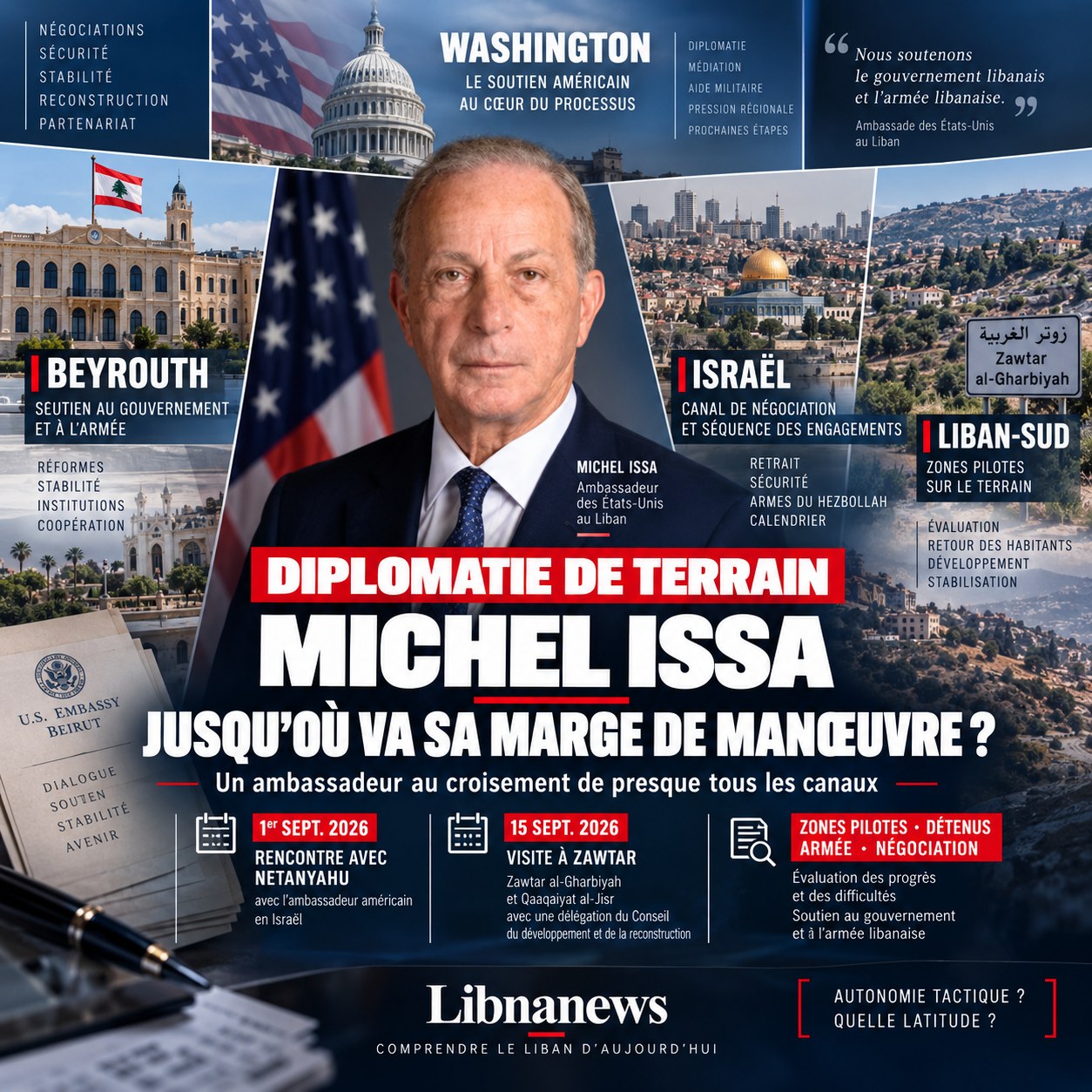
The succession of movements gives relief to this information. Michel Issa visited Israel in early September and met with Prime Minister Benjamin Netanyahu. On 15 September, he was in Zawtar al-Gharbiyah, one of the pilot areas where Washington wants to measure the results of the framework agreement. In between, he increased political and religious contacts in Lebanon.
His role no longer resembles that of an ambassador responsible for explaining American policy in Beirut. It acts as a meeting point between the Lebanese presidency, the government, the army, Israel and the various political actors in the country.
From Tel Aviv to South Lebanon, a field diplomacy
The displacement of Michel Issa to Zawtar al-Gharbiyah is indicative of this method.
The US Embassy explained that the visit should allow it to observe directly the progress and difficulties encountered in the experimental areas. The objective was also to assess the living conditions of populations and the obstacles to their return.
The Ambassador was accompanied by a delegation from the Council for Development and Reconstruction. He visited the Annunciation Church before going to the Qaaqaiyat al-Jisr bridge. This presence of the Council for Development and Reconstruction gives an additional dimension to the tour. Washington is not just looking at military deployment. Reconstruction, infrastructure and the return of the population are now part of the process evaluation.
However, Ad Diyar of 17 September 2026 attributed the visit to a more important political function. According to the daily news, Michel Issa wanted to examine the practical functioning of the framework agreement and the difficulties encountered in the first experiment.
Zawtar has become a laboratory. The army has more responsibility. The inhabitants have returned. Washington wants to determine whether this method can be replicated in other locations.
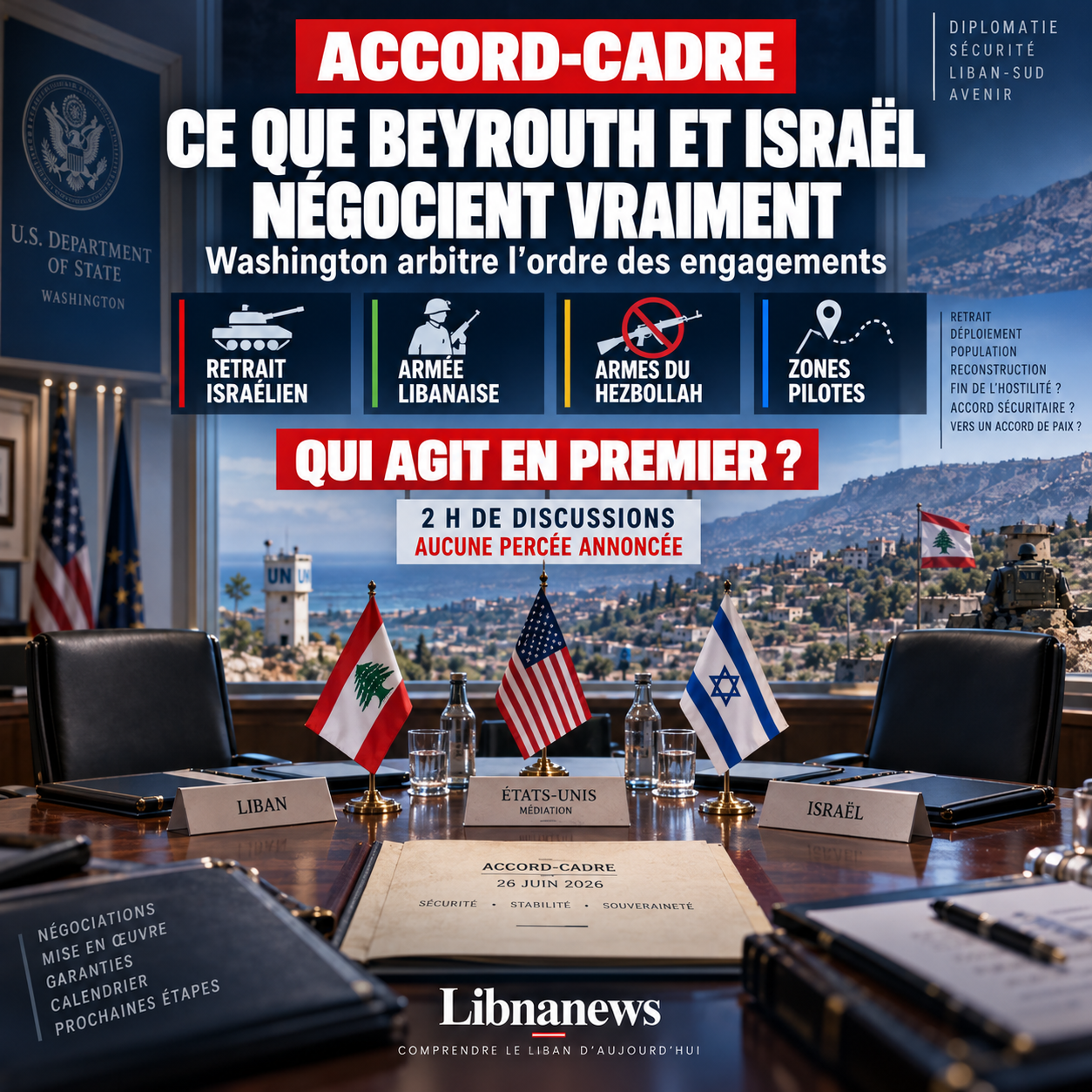
The American approach is therefore to bring negotiations closer to the ground. Instead of waiting for a great deal to resolve all the problems in the South simultaneously, the United States is trying to produce limited results and then extend them.
Michel Issa becomes one of the main instruments of this strategy.
A Canal to Israel Beyond Beirut
His travel to Israel is another break with the classical diplomacy of an American embassy in Lebanon.
Michel Issa met Benjamin Netanyahu on 1 September, alongside the American ambassador to Israel. The meeting took place at a time when negotiations between Beirut and Tel Aviv were going through a period of deadlock.
The role of the ambassador then becomes very special. He represents Washington in Beirut, but travels to Israel to discuss directly with Israeli officials a case whose effects he also monitors with the Lebanese authorities.
This configuration allows it to circulate positions quickly.
Lebanese officials may forward their requests on withdrawal, military operations, detainees or pilot areas. He can then discuss these issues with Israeli officials before returning to Beirut. The state department obviously retains the political direction of the US mediation, but the ambassador has a permanent local presence that Washington-based officials do not have.
Michel Issa’s personality and knowledge of Lebanon further reinforce this function.
Ad Diyar of 17 September 2026 presents precisely this proximity as one of the factors explaining the latitude it would have. According to sources quoted by the newspaper, Donald Trump gave him significant political confidence.
The daily thus describes a diplomat less locked in the usual procedures and more encouraged to seek openings himself.
Initiatives that would create reservations in Washington
However, this autonomy would have its limits.
Ad Diyar of 17 September 2026 reports that some initiatives by Michel Issa have raised questions in the US administration. The newspaper refers in particular to a way of acting that would not always involve detailed prior coordination with all levels of the State Department.
This is not necessarily a conflict between the ambassador and Washington. An administration can leave an important tactical margin to its representative while maintaining control over strategic decisions. But this distinction becomes particularly sensitive when an ambassador intervenes on issues directly affecting Israel, Hezbollah and Lebanese internal balances.
The stakes go beyond ordinary bilateral relations.
Michel Issa intervenes in a negotiation where each formulation can have consequences. A statement on Hezbollah is interpreted in Beirut, Tel Aviv and Washington. A visit to the South can be read as a message to the army, the Shiite party or Israel. A meeting with a religious leader can become a political signal.
The more the ambassador has room for manoeuvre, the greater its initiatives.
This also explains the unusual attention paid to each of his movements.
Hezbollah, an indirect but unavoidable interlocutor
Michel Issa also opened a delicate diplomatic space around Hezbollah.
In early September, after a meeting with Shiite Islamic High Council Vice-President Sheikh Ali al-Khatib, he indicated that Washington was willing to negotiate with Hezbollah, but through the Lebanese State. This formulation follows a fundamental line: it is the government that negotiates on behalf of Lebanon.
However, it implicitly recognizes a reality. No lasting settlement of the arms file can be achieved without a form of dialogue reaching Hezbollah.
The shade is important. Washington does not transform the party into an official interlocutor in negotiations with Israel. On the contrary, the State must remain the channel. But the internal dialogue needed to implement a possible agreement requires that Hezbollah’s positions be known and discussed.
Michel Issa therefore finds himself again in an intermediate role.
He talks to state institutions. He meets people close to the political environment of Hezbollah. It transmits American positions. At the same time, he followed the negotiations with Israel.
This movement between political universes that communicate with each other is mechanically increasing its influence.
It also creates a risk of the ambassador becoming the required point of entry for an increasing number of Lebanese cases.
Inmates, other personal intervention
The case of the Lebanese detained by Israel also shows the expansion of its role.
After the release of several people captured in South Lebanon, Michel Issa promised to continue his efforts for the other detainees. The subject is not just humanitarian diplomacy. It is one of Beirut’s important demands in discussions with Israel.
For Joseph Aoun, as for Nawaf Salam, the return of prisoners is one of the results that negotiation must produce. The government is also using this issue to defend the diplomatic path against parliamentary criticism.
When Michel Issa intervenes personally on this issue, he therefore contributes directly to Washington’s ability to demonstrate the usefulness of the process.
A release can be presented as a concrete result. It strengthens the position of those who defend the negotiations. Conversely, the lack of progress is fuelling criticism of the framework agreement.
The ambassador is working on issues that can change the internal political relationship around the strategy chosen by the state.
Zawtar reveals the Issa method
The visit to Zawtar makes it possible to understand this diplomacy better than any statement.
The ambassador was not content to receive reports on the experimental area. He moved to observe the situation directly. He saw the infrastructure, met local officials and discussed the conditions for the return of the population.
The US embassy then insisted on four objectives: strengthening state authority, supporting the army, protecting civilians and restoring the services needed for stability.
These priorities show that Washington is trying to link security and reconstruction.
The method is to transform abstract negotiation into a succession of local experiences. Michel Issa then becomes the one who checks the results on the spot and can report the difficulties directly to the American and Israeli officials.
Ad Diyar of 17 September 2026 links precisely this visit to the disagreements over Zawtar. Israel reportedly considered that Hezbollah was indirectly returning to the locality after the return of the inhabitants. The objections allegedly concerned, inter alia, social structures close to the party and some persons considered to be its supporters.
Michel Issa’s visit allowed him to examine the reality behind the contradictory assessments transmitted to Washington.
It is an important diplomatic power: to produce its own reading of the ground rather than to depend entirely on Lebanese or Israeli relations.
Between Israeli critics and the defense of the army
The ambassador is also at the centre of another battle: the one concerning the Lebanese army.
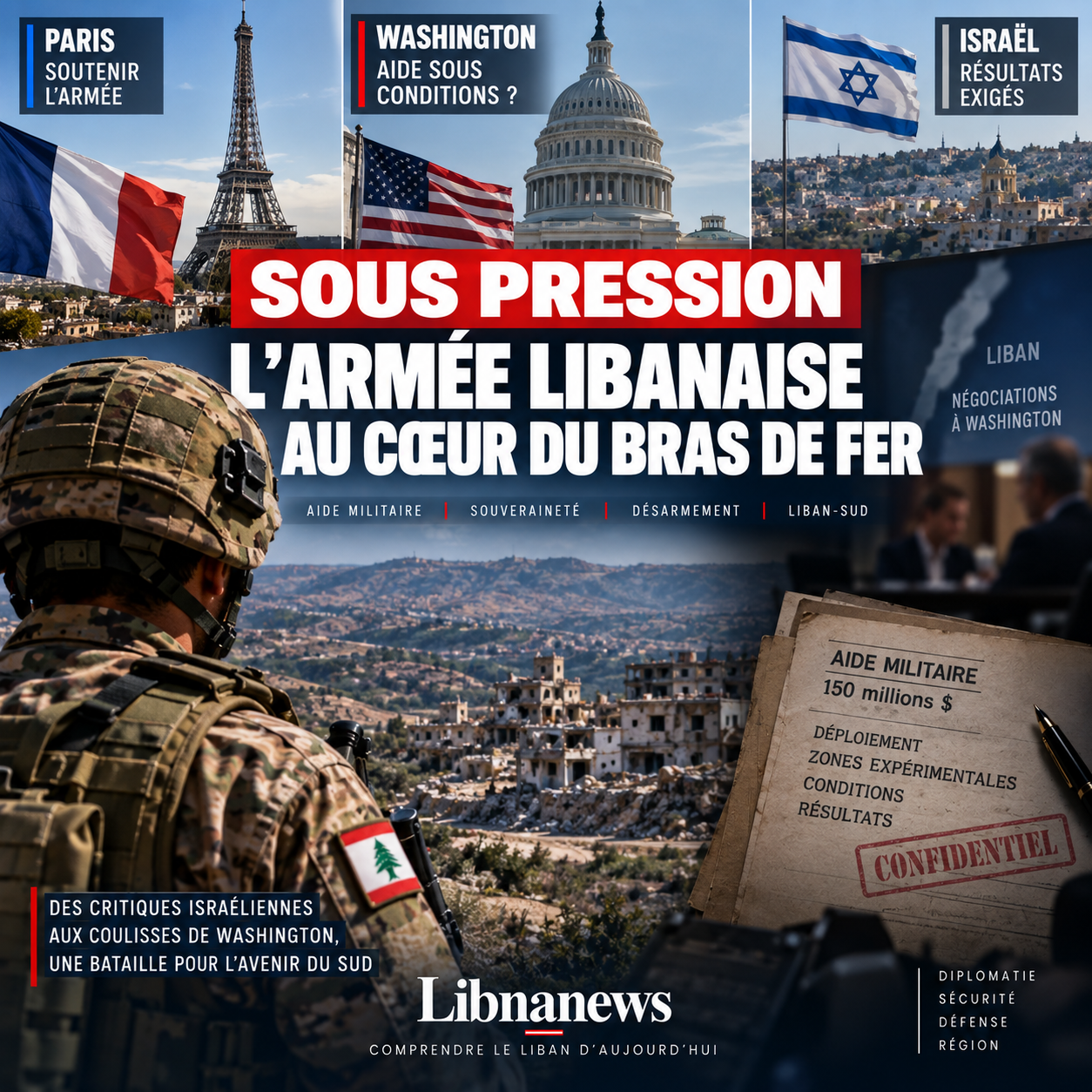
Israel is increasing its criticism of its ability to disarm Hezbollah. Ad Diyar of 17 September 2026 refers to Israeli reports transmitted to Washington concerning the conduct of the military institution. The newspaper even reports the existence of pressure against his command.
At the same time, the US public position continues to portray the army as a central partner in strengthening state authority.
Michel Issa’s visit to the South illustrates this duality. The U.S. embassy explicitly reaffirmed U.S. support for the government and army. At the same time, Washington evaluates the results obtained in experimental areas, precisely where Israel expresses its criticism.
The ambassador must therefore arbitrate between several narratives on the ground.
The army claims to carry out the tasks entrusted to it. Israel considers the results insufficient. The Lebanese authorities are asking for more resources. Washington conditions part of its support for measurable progress.
Michel Issa occupies a privileged position to influence the American assessment of these various claims.
His report on what he sees in the South can thus have far greater consequences than a simple protocol visit.
Personal diplomacy under Washington
The high visibility of Michel Issa does not mean that American policy in Lebanon would have become one man.
Negotiations with Israel remain conducted within a broader American framework. The State Department participates directly in the meetings. Decisions on military aid are also the responsibility of Washington and Congress. Relations with Israel involve several levels of government.
But the ambassador has a considerable advantage: he is present daily on the ground and can act quickly between several interlocutors.
Ad Diyar of 17 September 2026 describes precisely this latitude as one of the characteristics of his mandate. The ambassador would be allowed to take initiatives as long as they remain compatible with the general objectives of the Trump administration.
This method also corresponds to an extremely moving negotiation.
Military incidents can change the situation within hours. An experimental area may encounter an unforeseen problem. A release of detainees may open a diplomatic window. An Israeli statement can provoke a political crisis in Beirut.
Systematicly waiting for a long chain of instructions would reduce American response capacity.
The ambassador’s tactical autonomy can therefore be a tool. It becomes problematic only if it begins to produce differences with other American decision-making centres.
It is precisely on this border that the questions reported by Ad Diyar are concentrated.
A role to become even more important
The next few months should reinforce rather than reduce Michel Issa’s importance.
Negotiations between Lebanon and Israel must continue. The experimental areas are expected to expand if the method produces results. The prisoners’ file remains open. The army awaits decisions on its international support. The Finul must leave Lebanon at the end of 2026 and its replacement is still not settled.
Each of these files involves Washington.
The American ambassador will therefore simultaneously face Joseph Aoun’s demands, Nawaf Salam’s choices, Israeli demands and Hezbollah’s positions relayed by Lebanese actors.
Its margin of manoeuvre can then be measured not by the number of its movements but by the results it achieves.
A further Israeli withdrawal would demonstrate its ability to move the negotiations forward. The extension of pilot areas would strengthen its role in the gradual method. Further release of prisoners would give a tangible result to his mediation. Conversely, a tightening of American conditions towards the army would reveal the weight of Israeli criticism in Washington.
Michel Issa is thus in a singular position. He is neither the Lebanese negotiator nor the representative of Israel. Nor is he the only American decision maker. But it is at the intersection of almost all channels currently open.
It is this position, even more than his personal style, that makes him one of the most influential actors in the sequence. Behind the question of how far Washington allows it to go is now a more important question: how far do the US want to use this field diplomacy to gradually transform the balance of power in South Lebanon and drive Beirut and Israel towards a much broader arrangement than just border control?