After the Israeli strikes on Beirut, JD Vance’s message to Israel moved the diplomatic centre of gravity. The American vice president did not announce a break with the Hebrew state. Nor did he marry Iranian or Lebanese vocabulary. But he set a political limit that Washington often avoided saying so clearly: American and Israeli interests are not always confused. In the context of the memorandum negotiated with Tehran, this sentence changes the atmosphere. It means that Lebanon is no longer just a military front between Israel and Hezbollah. It becomes a test of American authority over its own ally, and Washington’s ability to hold a regional agreement under tension.
The formula attributed to Vance, according to which the United States would have « all cards » in hand, must be read accurately. First, it aims at the balance of power with Iran in nuclear and regional negotiations. It alone is not a direct threat to Israel. Yet his echo is immediate in Jerusalem. Recalling that Washington could choose its own line, the Vice-President pointed out that the US administration did not intend to allow operations in Lebanon to fail a diplomatic sequence which it already presented as its headquarters.
JD Vance and Israel: a reminder to the calculated order
The tone used by JD Vance marks an inflection. The US Vice-President recalled that Benjamin Netanyahu is a strong advocate for his country. This formula cleans Israel. It recognizes the security logic claimed by the Israeli government. But it immediately opens a heavier distinction. When Israel’s interests diverge from those of the United States, Washington must choose American interests. In the mouth of an official also identified on the America First line, the message is not diplomatic. He’s tracking a hierarchy.
This hierarchy comes at the wrong time for the Israeli Prime Minister. The attacks on Beirut raised US concern as Washington sought to finalize a memorandum with Iran. American officials fear that a dramatic attack on the Lebanese capital will give Tehran a reason to tighten its position or delay further discussions. Lebanon thus becomes a credibility factor for American diplomacy.
The White House is not just asking Israel to avoid burning. In fact, it calls for Israeli operations to remain compatible with the American calendar. This slip is important. For months, Israel presented the Lebanese front as a matter of national security. Washington has often used this argument, while calling for restraint. Detention is no longer just humanitarian or tactical. It becomes a condition for the success of the agreement with Iran.
This does not mean that the United States recognizes Hezbollah’s arguments. Vance has already indicated that Washington had not promised that the ceasefire with Iran would automatically include Lebanon. He mentioned a misunderstanding on the Iranian side. But the diplomatic reality has changed. Although Lebanon was not covered by all the original clauses, Israeli strikes became sensitive enough to threaten the entire process.
Beirut, weak point of the agreement with Tehran
Beirut concentrates the contradictions of the moment. For Israel, the Lebanese capital is home to Hezbollah-related infrastructure and frameworks, particularly in the southern suburbs. For Lebanon, any strike on Beirut constitutes a direct attack on national sovereignty and a signal of extreme vulnerability. For Iran, these attacks prove that the Lebanese front must be included in any serious regional de-escalation. For Washington, they complicate an already fragile negotiation.
The memorandum with Tehran opens a window for longer discussions. It aims to prevent a resumption of direct war, to regulate Iran’s nuclear programme, to reopen maritime flows and to put the issue of sanctions on the table. But it leaves several ambiguities. The role of Hezbollah, the Israeli withdrawal from southern Lebanon, the security guarantees for Israel and Lebanese sovereignty do not have the same meaning in the capitals. Each seeks to include its own reading in the text.
Hezbollah claims that Iran cannot accept a lasting agreement if Israel continues its operations in Lebanon. Iranian officials hold close language. Israel replied that it was not bound by an arrangement between Washington and Tehran. The United States is trying to maintain an intermediate line: not to abandon Israel, but to prevent Israeli strikes from sabotaging their own initiative.
In this mechanics Beirut becomes the weak point of the agreement. Too visible a strike, a high civilian record or an operation in a densely populated area can produce a disproportionate political effect. Tehran can accuse Washington of duplicity. Hezbollah can resume fire. Israel can reply stronger. Mediators can lose their hand. The signed or announced text then becomes secondary to the images of destruction.
Netanyahu under US and Israeli pressure
Benjamin Netanyahu cannot ignore this change of tone. The relationship with the United States remains the foundation of Israeli security. It guarantees military assistance, intelligence cooperation, diplomatic coverage and irreplaceable strategic depth. Even when Israel challenges an American orientation, it must measure the cost of an open confrontation with Washington.
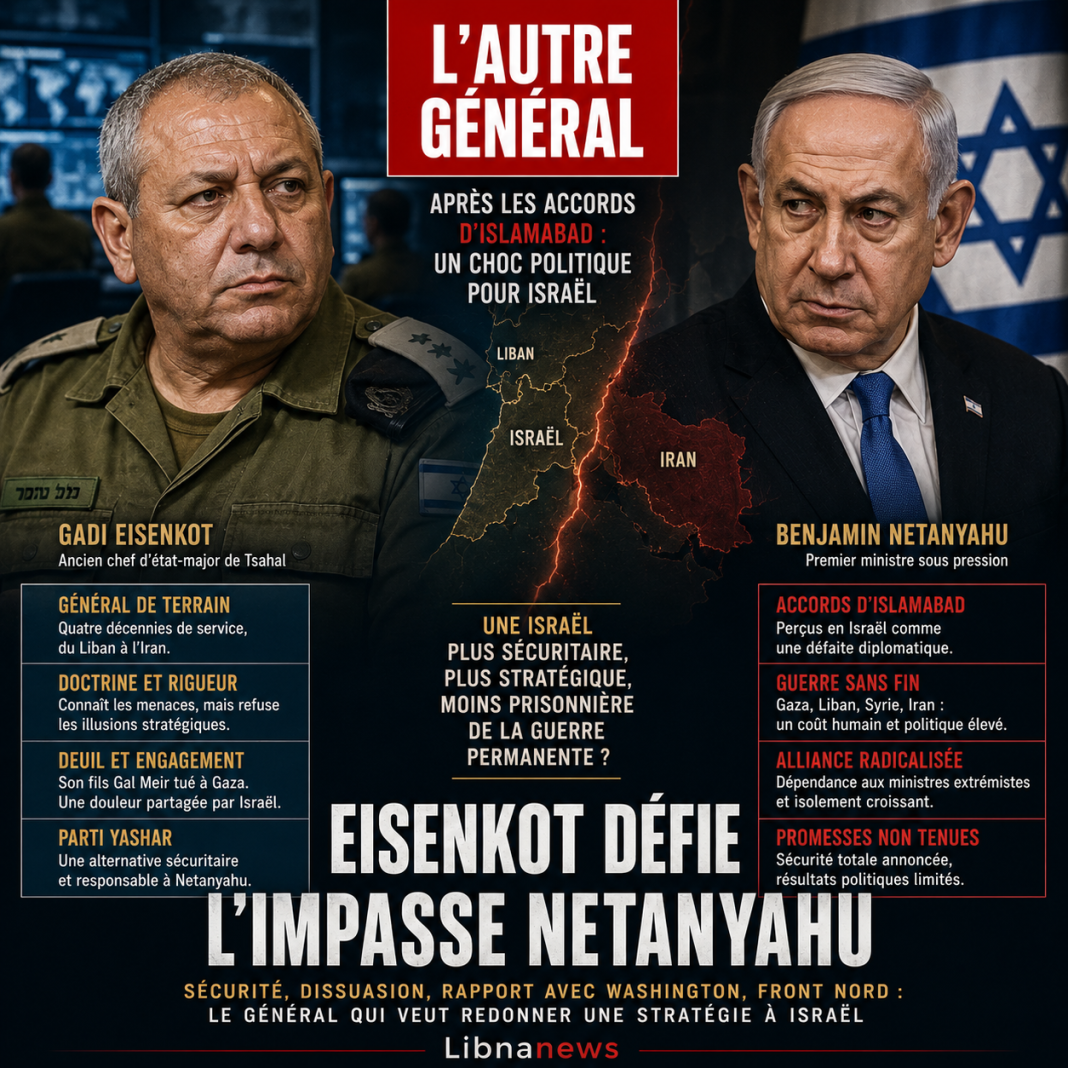
The Israeli Prime Minister, however, faces inverse pressure within his coalition. The most radical ministers reject any limitation of military action in Lebanon. Itamar Ben Gvir and Bezall Smotrich consider that an agreement with Iran should not compel Israel. Their line is based on a simple idea: Israeli security must be decided in Jerusalem, not in a negotiation between Americans and Iranians.
This position speaks to a part of Israeli opinion, especially in areas exposed to Hezbollah fire. The people of northern Israel want guarantees of return and protection. The government promises that Hezbollah will be pushed back, that its infrastructure will be destroyed and that the army will retain the ability to strike. In this context, any American request for restraint can be presented by the Israeli right as a dangerous concession.
Netanyahu must therefore arbitrate between two dependencies. It depends on Washington for Israel’s external security. It depends on its coalition for its political survival. If he follows Vance and Trump too visibly, he may be accused of weakness. If he too openly challenges the White House, he exposes Israel to a crisis with his most important ally. Lebanon is becoming a fracture line between these two imperatives.
Ben Gvir, Smotrich and the pursuit logic
The statements of Itamar Ben Gvir and Bezalel Smotrich reflect a logic of continuation of the war. They are not limited to a communication posture. They express a doctrine: Israel must maintain freedom to act against Hezbollah, regardless of regional arrangements. For these officials, American diplomacy with Iran creates a danger if it indirectly protects Tehran’s allies.
Ben Gvir defends a tough answer. He pleads for the destruction of the infrastructure attributed to Hezbollah, the elimination of its fighters and the maximum pressure on the areas where the movement is located. His rhetoric leaves little room for a graduated approach. It is based on the premise that Israeli deterrence is based on strength and ability to strike beyond the line of contact.
Smotrich adds a strategic and ideological dimension. He sees the compromise with Iran as a major mistake. According to this reading, any relief of pressure on Tehran gives financial and political oxygen to the Iranian regional axis. Lebanon therefore becomes a theatre where Israel must demonstrate that American-Iranian détente does not neutralize its military power.
The Minister of Defence, Israel Katz, is part of a similar security approach when he refers to the maintenance of the Israeli army in so-called security zones, including Lebanon. This perspective contradicts Lebanese expectations of withdrawal and return to full sovereignty over the South. It also feeds the Iranian argument that the agreement should include a clear Lebanese component. The longer Israel talks about prolonged retention, the more Lebanon becomes impossible to separate from regional negotiations.
Washington no longer wants to pay the political price of the strikes
Vance’s message reveals a broader American concern. Washington no longer wants to pay the political cost of each Israeli operation alone. Since the beginning of the regional war, the United States has supported Israel, but it has also absorbed a share of international criticism. In the Security Council, in Arab capitals, in European partners and in American opinion, strikes in Lebanon are creating increasing pressure.
This pressure weighs all the more as the Trump administration wants to sell the deal with Iran as a victory. She wants to show that she got concessions without being dragged into an endless war. It refers to energy security, ending the blockade, nuclear control and regional peace. The images of Beirut bombarded this story. They recall that the war continues on a front that Tehran considers essential.
Vance embodies here the most clearly nationalist line of administration. His message is not pro-Lebanese in the classical sense. He’s American first. He states that the United States should not be led by the priorities of an ally when they compromise a higher objective. This logic can hit Israel. It can also reassure part of the American electorate that military commitments in the Middle East have been exhausted.
The Vice-President therefore does not break with Israel. It redefines the terms of support. American help is not a blank check. The alliance does not resolve differences. The Israeli government can defend its interests, but Washington reserves the right to defend its own. It is this sentence, more than the formula on « maps », that is the real political signal.
Lebanon between diplomatic protection and risk of instrumentalization
For Lebanon, this evolution opens a window. The Lebanese authorities can rely on tensions between Washington and Jerusalem to call for a halt to strikes, respect for national sovereignty and a more robust monitoring mechanism. They may recall that Lebanese civilians should not be used as an adjustment variable in negotiations between foreign powers. They may also require that any international resolution clearly mention Israeli withdrawal and the end of violations.
This window remains fragile. Lebanon is not yet master of the game. It is mentioned in the discussions, but it does not always fix the terms. Iran speaks of Lebanon on behalf of its regional strategy. Israel speaks of Lebanon through Hezbollah. The United States speaks of Lebanon through the agreement with Tehran. The Lebanese State must therefore impose its own formulation: sovereignty, the security of the people, the institutional monopoly of the decision on war and peace, the return of the displaced, the role of the army and UNIFIL.
The difficulty is that these objectives are not achieved by a single American declaration. They require a sustainable mechanism. We need a verifiable halt to the strikes. A procedure for reporting violations is required. Coordination between the Lebanese army and international forces is needed. There must also be an internal debate on weapons outside the State. Without these elements, Vance’s pressure on Israel can remain a media episode.
The risk of instrumentalisation is real. Hezbollah can portray American-Israeli tension as a victory for its strategy. Israel can respond by stepping up operations to show that it does not allow itself to dictate its conduct. The United States can use Lebanon as a lever for discussion with Iran, without addressing the root causes of instability. Beirut must therefore avoid confusing international attention with effective guarantee.
American alliance with Israel entering a grey zone
The sequence reveals a grey zone in the alliance between Washington and Israel. Both countries remain closely linked. There is no serious evidence to speak of a breakup. The United States continues to regard Israel’s security as a major interest. But regional war has created more visible disagreements over tempo, targets, political cost and ultimate goals.
This grey area can be seen in public contradictions. US officials say that Lebanon was not automatically included in the ceasefire with Iran. Others stress the need for Israel to exercise restraint. Israeli officials claim that they are not bound by the agreement. Iranian officials argue that the end of the war in Lebanon is a condition of credibility. Everyone seeks to exploit the margins of the text.
The Vance sentence on non-identical interests between Israel and the United States gives a political form to this grey zone. She says the alliance is not a merger. She also said that American diplomacy in the Middle East could not be reduced to the Israeli prism. This development does not come from a traditionally critical camp in Israel. It comes from a republican, nationalist administration, very attentive to its pro-Israeli electorate, but determined to claim its autonomy.
For Netanyahu, the danger is double. In Washington, he may appear as the man who complicates Trump’s diplomatic victory. In Israel, he may appear as a man who accepts American boundaries without obtaining full security in the north. This contradiction weakens its margin. She explains the virulence of the reactions in her camp.
The next incident may decide the schedule
The continuation will depend on the terrain. If the Israeli strikes actually decrease, Vance can present his message as proof of effectiveness. Washington will say that it has protected the agreement with Iran while preserving Israel’s security. Beirut may attempt to obtain an international formalization of this lull. Tehran will be able to continue discussions without losing face.
If the attacks resume in Beirut or southern Lebanon, the scenario will change. Iran can say that Washington does not control its ally. Hezbollah can resume the military initiative. The toughest Israeli ministers can say that restraint is useless. The agreement with Tehran would then enter into a phase of immediate vulnerability.
Lebanon is therefore suspended on a two-fold question. The first concerns Israel: will the Netanyahu government agree to limit its operations so as not to hit Washington? The second concerns the United States: is the Trump administration ready to turn Vance’s words into concrete pressure if strikes continue? Between these two responses, the villages of the South, the suburbs of Beirut and the Lebanese displaced remain exposed to the next military decision.