

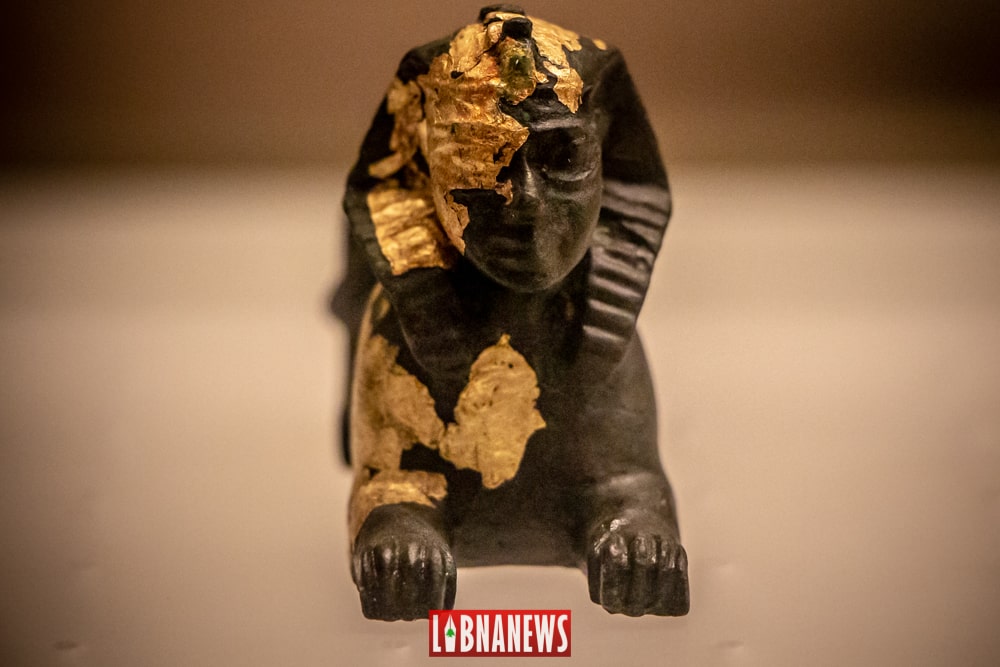
In the Egyptian myth of Osiris, Byblos occupies an unexpected place: the chest containing the body of the murdered god would have drifted to the Lebanese coast, before being locked in a tree become royal column. A story of mourning, sea, sacred wood and ancient ties between Egypt and Phoenicia.
Byblos is not only one of the oldest cities in Lebanon. It is also one of the places where the myths of the Mediterranean have crossed. It speaks of Adonis, the red river of Nahr Ibrahim, the rites of mourning and rebirth. But another account, coming from Egypt, also places the Phoenician city at the centre of a story of death and resurrection: that of Isis in search of Osiris.
The story is narrated by PlutarchIsis and Osiris. It is not a historical chronicle. It’s a myth. But Byblos’ choice is not annoyance. For millennia, the city had had commercial, religious and symbolic relations with Egypt. UNESCO recalls that Byblos has been inhabited since Neolithic, that it bears witness to the beginnings of Phoenician civilization and that it is directly related to the history of the diffusion of the Phoenician alphabet.
In this story, Byblos becomes more than a port. It becomes the place where the sea sets a dead god.
Osiris, the murdered king
The myth begins in Egypt. Osiris is presented as a civilizing king. He teaches agriculture, establishes laws, organizes worship of the gods. His brother Seth, called Typhon by Greek authors, jealous of his power, prepares for his loss. He made a chest with the exact dimensions of the body of Osiris, then organized a banquet. The safe will be offered to the one who enters it perfectly. The guests are trying. None is right. Osiris lengthens. The trap is closing. The lid is nailed, sealed with lead, then thrown into the Nile before being taken to the sea.
The Fitzwilliam Museum of Cambridge University summarizes the same version: Seth draws Osiris into a safe, locks him in, and then the safe drifts out of Egypt to Byblos, on the coast of today’s Lebanon.
The heart of the story is therefore maritime. The Nile doesn’t keep the body. He delivers it to the Mediterranean. The Egyptian god leaves his country, crosses the waters, and fails in Phoenicia.
The trunk arrived in Byblos
According to Plutarch, the safe containing Osiris is discarded by the sea near Byblos. The waves gently place it in the middle of a shrub or grove. The plant grows quickly, becomes a large trunk, wraps the trunk and hides it in its wood. The king of the country, amazed by the size of the tree, has him cut and used as a column to support the roof of his palace.
This image is one of the strongest in the myth. The body of the dead god disappears in a tree. The tree becomes a column. The column enters the palace. The body of Osiris thus finds itself at the heart of Byblos’ royal power, invisible but present.
We must avoid confusion here. Plutarch’s account does not explicitly refer to a cedar from Lebanon. Translations often evoke a heather, shrub or sometimes a tamarisk according to reading traditions. But for a Lebanese reader, the association with sacred wood, prestige wood and the links between Byblos and Egypt is obvious. Byblos was precisely one of the major ports through which Egypt obtained resources from the Levant, including timber. The links between Byblos and Egypt are attested by archaeology, trade and religious influences.
The myth thus transforms an ancient reality — the sea route between Egypt and Byblos — into a sacred narrative.
Isis arrives on the Phoenician coast
Isis, wife and sister of Osiris, goes looking for the body. She wanders, questions, cries. She finally learns that the safe is in Byblos. Plutarch tells that she arrives in the city, sits near a source, shot down and silent. She hardly talks to anyone except the queen’s maids. It weaves their hair, perfumes them with a divine smell, and thus attracts the attention of the palate.
The queen wants to know this mysterious stranger. Isis is called to her. She earns her trust and becomes a child’s nurse. Plutarch gave several names for the queen: Astarté, Saosis or Nemanus, which the Greeks would have returned by Athenai. The king is named Malcander.
The details of the name of Astarté are important. He brought the great Phoenician goddess into an Egyptian account. Even if the text is Greek and late, it shows a world where the gods circulate, translate and merge. Isis arrives in Byblos, but she meets a queen whose names one of the possible ones refers to the local pantheon.
The goddess, the child and the immortality missed
The next scene is strange, almost brutal. Isis nourishes the royal child not in the breast, but by giving him his finger to suck. At night, she tries to burn the mortal parts of her body to make him immortal. Meanwhile, it turns into a swallow and revolves around the column that contains Osiris, pushing lamentations. The queen surprises the scene, sees her child in the fire, shouts. By this cry, she interrupts the rite and deprives the child of immortality.
The motive is known in several mythologies: a divinity tries to transform a human child into immortal, but the frightened intervention of a parent breaks the process. Here, this scene has a precise function. It reveals the true identity of Isis. The goddess ceases to be a silent stranger. She shows up, asks the column, and recovers what she had come for.
The pain of Isis is therefore not passive. She’s crying, but she’s acting. She entered the palace, discovered the pillar, obtained the wood, released the trunk and took over the body of Osiris.
The sacred wood of Byblos
Plutarch reports that Isis removes the column with ease, removes the wood that surrounded the chest, wraps it in linen, perfumes it and entrusts it to the kings of Byblos. He adds that, in his day, the inhabitants of Byblos still worshipped this wood in a shrine in Isis.
This passage is crucial. He’s not just saying that Osiris’ body went through Byblos. He claims that the city kept a relic of the story: the wood that had contained the dead god.
You have to be careful. Today we do not have this relic identified, preserved and scientifically linked to the account of Plutarch. But the text shows that, at the Greco-Roman time, Byblos was seen as a place of Isis, or at least as a place where the Egyptian myth could root.
This tradition is not absurd in its context. The religious ties between Byblos and Egypt are ancient. The great local goddess, Baalat Gebal, « Lady of Byblos » was brought together by the Egyptians of Hathor, and later Isis in some interpretations. Studies on relations between Byblos and Egypt show that the shrine of the Lady of Byblos played an important role in these religious and diplomatic exchanges.
Byblos, wearing gods and precious materials
What makes the myth symbolically credible is the historic square of Byblos. The city was an essential port of the Levant. It linked the Phoenician coast, Egypt, the eastern Mediterranean and the hinterland of Lebanon.
Egypt needed the wood of the Levant. The cedars of Lebanon, but also other resources, entered the circuits of construction, prestige and worship. The relations between Egypt and Byblos are not a mere literary setting. They are a major fact in the history of the ancient Eastern Mediterranean. An article in the journalSyria, dedicated to the relations between Byblos, Egypt and Mesopotamia at the end of the third millennium BC, recalls the density of these contacts through objects, inscriptions and deposits found on the site.
In this context, the Isis account at Byblos works as a mythological translation of very real relationships. The ships are moving. The woods are moving. The gods are moving. Names circulate. What goes from Egypt can happen to Byblos. What is sacred in Byblos can be understood in Egypt. Religions are not closed within national boundaries that do not yet exist.
Byblos is therefore the perfect place for this type of narrative: close enough to belong to the enlarged Egyptian world, foreign enough to become a place of exile, of search and revelation.
The mourning of Isis and the return of Osiris
After recovering the trunk, Isis throws himself at him and makes a cry of pain. Plutarch insists on the power of this lamentation. The scene is violent. The body is found, but death is not erased. Isis takes Osiris back, but it does not immediately bring the order back. The god remains a body to cry, to protect, to rebuild.
The continuation of the myth takes place again in Egypt. Seth finds the body, cuts it into pieces and disperses them. Isis goes back looking for fragments. It assembles them, reconstitutes Osiris, and then allows the birth or affirmation of Horus, who will become Seth’s rival and guarantor of Egyptian royalty. The Fitzwilliam Museum recalls that these accounts are central to Egyptian thought of royalty and rebirth: the living king is associated with Horus, while the dead king is associated with Osiris.
Byblos is therefore a step, but a decisive step. That’s where the body was first found. That’s where Isis turns his quest into a material recovery. That’s where the sea makes what it had taken.
An Egyptian legend, but a Lebanese memory
It would be wrong to present Osiris’ myth as a legend born in Lebanon. It’s an Egyptian story. Its main actors are Egyptians. Its stakes affect the kingdom, death, rebirth and cosmic order of ancient Egypt.
But it would be just as reducing to erase Byblos from the story. Plutarch gives the Phoenician city a central role. Osiris’ trunk doesn’t fail anywhere. He’s coming to Byblos. It’s wrapped in a tree. He becomes a column in a palace. Isis is on the spot. The wood is then venerated in the city.
In this series of ancient legends related to Lebanon, Byblos appears twice as a city of mourning and return. With Adonis, she mourns a young god associated with vegetation, the red river and seasonal rites. With Osiris, she receives the body of a divine king from Egypt, locked in a tree, then recovered by a grieving goddess.
The rehearsal is striking. Byblos is not only a city of commerce and alphabet. It is also, in the ancient imagination, a city where the dead gods arrive, where divine women weep, where wood and water mediate between disappearance and rebirth.
Wood, sea and memory
The story of Isis in Byblos rests on three elements: sea, wood and mourning.
The sea carries the trunk. It connects Egypt and Phoenicia. She doesn’t destroy the body, she moves it. The wood hides Osiris. He licks, wraps, turns it into a column. He moved the god from the tomb to architecture. The mourning of Isis gives the narrative its human tension: a divine woman seeks the loved body, crosses countries, silent, weeps, cunning, and then recovers what remains.
It is a story of great strength because it speaks of both love, politics and matter. Osiris is a murdered king. Isis is a widow and a magician. Byblos is a port and palace. The tree is a tomb and a column. Nothing is merely symbolic. Everything’s double.
A Heritage Issue
Today, the visitor of Byblos sees above all the walls, temples, Roman remains, the cross castle, the ancient port, the successive strata of a city inhabited for millennia. He doesn’t see the Osiris pillar. He does not see the shrine of Isis described by Plutarch. He cannot identify the source where the goddess sat in silence.
But the strength of a myth does not always depend on a preserved stone. It also depends on how a place was conceived by the Ancients.
Byblos was important enough to enter into the great Egyptian account of Osiris’ death. That says a lot. An ordinary city would not have received this role. There was a well-known port, ancient, connected to Egypt, loaded with wood, worship and prestige. A city capable of being understood as a sacred extension of the Egyptian world was needed.
Byblos, a city where the gods return
In Nahr al-Kalb, a dog reportedly warned the inhabitants that the invaders had arrived. In Afqa, the blood of Adonis would have blushed the river. In Tyre, Melqart’s dog would have discovered purple. In Sidon, Eshmoun was cured by sacred water. In Beirut, Beroe gave the city a nymph face. With Isis and Osiris, Byblos adds another layer to this mythological Lebanon: that of the divine body from the sea.
This story does not make Byblos an Egyptian city. On the contrary, it shows its power as a crossroads. The Phoenician city could receive a foreign god without losing its identity. It could integrate Isis, Osiris, Astarté, Baalat Gebal, Hathor and Adonis into the same landscape of wood, water, sea and shrines.
Maybe that’s the real message of the myth. Byblos was not only a port through which goods passed. It was also a place through which the gods passed.
The Osiris trunk probably never physically drifted to the Lebanese shore. But the story did accomodate Byblos. And it remained there, as another proof of this often forgotten evidence: ancient Lebanon did not only give alphabets, ships and stones. It also served as a stage for the great myths of the Mediterranean.




