

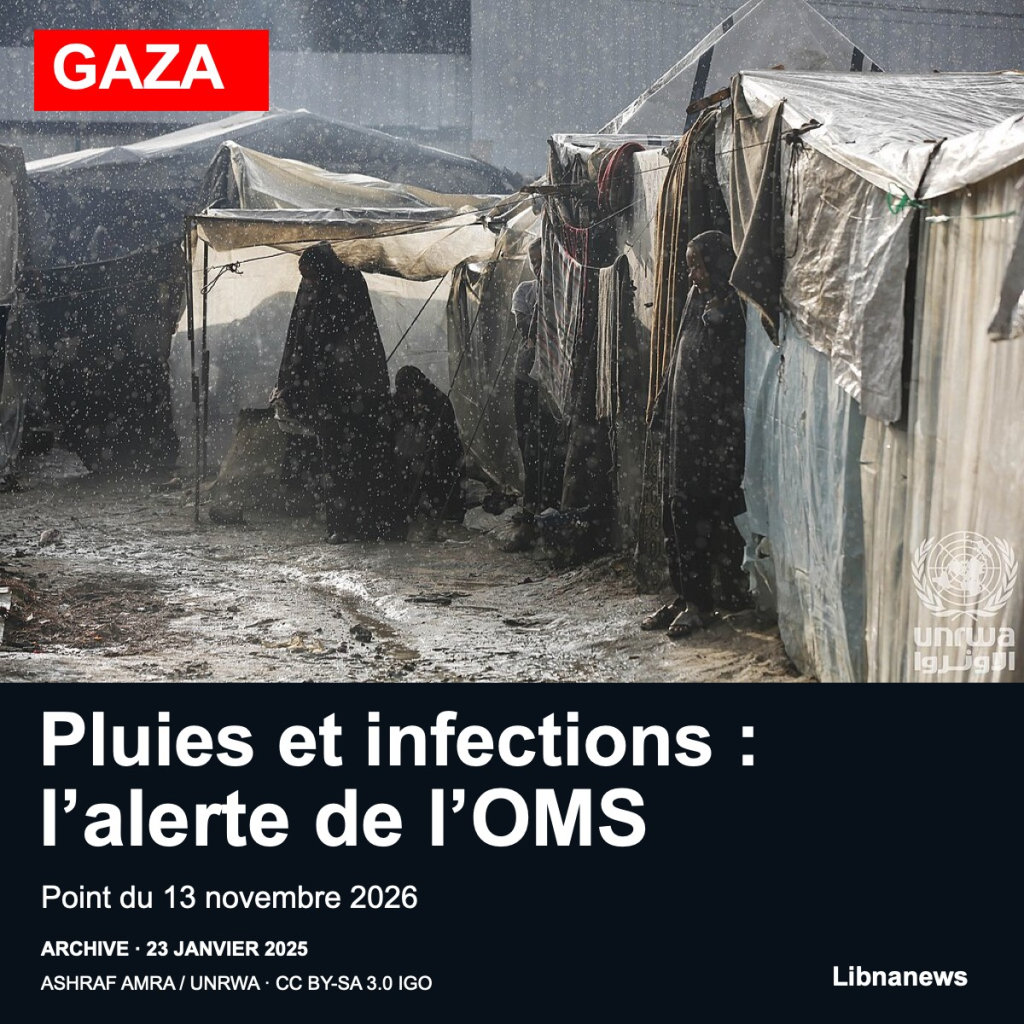
On Friday 13 November 2026, the World Health Organization launched a new alert on respiratory infections in Gaza. The first heavy rains of the season aggravate a health crisis already fuelled by promiscuity, precarious shelters and damaged sanitation networks. This alert comes as humanitarian partners demand the accelerated entry of equipment before winter continues.
An increase in infections, not a balance of rains alone
At the UN press briefing in Geneva, WHO reported that acute respiratory infections were 33 000 more than the level observed in the same period of the previous year. They now account for more than 10 per cent of consultations. This comparison does not mean that 33,000 people have been infected since the onset of the weather.
The organization describes a combination of factors: humidity, cold, poor ventilation and family rapprochement in overcrowded spaces. Children, the elderly and the chronically ill are particularly at risk. In particular, it requires laboratory supplies to quickly detect infectious agents and adapt the response, in addition to medicines and vaccines.
Damage still temporary, but already disturbed care
The OCHA report, published on 13 November, provides a broader picture of the consequences of the rains that began on 6 November. As at 9 November, approximately 473 alerts raised concerns that more than 46,000 households had been affected. More than 40,000 shelters were reported as damaged, including more than 9,000 irreparable. This damage remained to be confirmed: it is neither a completed census nor a balance sheet drawn up on 13 November.
Nine sanitary facilities are among the damaged facilities. Degraded roads complicate the movement of patients and staff. OCHA also reports that the operational paediatric hospital capacity in Gaza and the north of the territory is only about 90 beds, compared to some 350 before the escalation, according to the Ministry of Health.
This updated photograph extends Libnanews’ first review on 9 November, which reported more than 6,000 shelters destroyed and 17,400 others damaged. The two surveys should not be added together: they concern the same rain event, with a gradual increase in reports.
Defiled water threatens places of life
UNICEF, in its communiqué of 9 November, described a particularly fragile situation around the Sheikh Radwan detention area in Gaza. Only two out of six pumps then worked. Rainwater mixes with wastewater, while no sewage treatment plant in the territory was operational according to the agency.
This lack of evacuation turns the weather into a health threat to neighbouring settlements. UNICEF is seeking the entry of pumps, generators and spare parts to restore networks, including the Sheikh Radwan Basin and the Sheikh Ejleen treatment plant. The protection of children therefore depends not only on the distribution of blankets, but also on the removal of contaminated water from the places where families live.
Concrete relief beyond tent replacement
In a statement of November 10, CARE describes families who have been busy for several days evacuating water from their shelters and recovering their property. A flooded tent can also result in the loss of clothing, bedding, medicines and documents. The organisation reports distributing tents, winter clothing, hygiene products and emergency financial assistance with its partners.
CARE also plans to clear the pipes and empty the overflowing pits. These interventions directly link housing to health: replacing a web is not enough if wastewater continues to accumulate around families.
A common call to speed up entries
On 13 November, the humanitarian country team, which brings together United Nations agencies and international and Palestinian NGOs, called on the Israeli authorities to allow the necessary supplies to enter daily through all available crossing points. It includes tents, drainage equipment, generators, spare parts, oxygen concentrators and infection control products.
According to the team, more than 150,000 tents purchased by partners and states are outside Gaza, ready to leave. It accuses Israeli restrictions, authorization procedures and unpredictable delivery windows of delaying relief. Lack of funding also limits the response. The team requires access to less exposed land and more sustainable accommodation solutions.
The Israeli authorities, for their part, have defended in recent days the entry of winter equipment. This disagreement over aid had already been followed up by Libnanews on 11 November. However, a cumulation of goods authorized or entered does not alone measure supplies still available after distribution and destruction of shelters.
The new issue documented by the November 13 alert is health: exposure to water and cold adds to an increase in infections, while care remains difficult to access. For humanitarian organisations, the delivery of supplies, the repair of sanitation and the protection of accommodation are now the different components of the same winter response.





Comments