

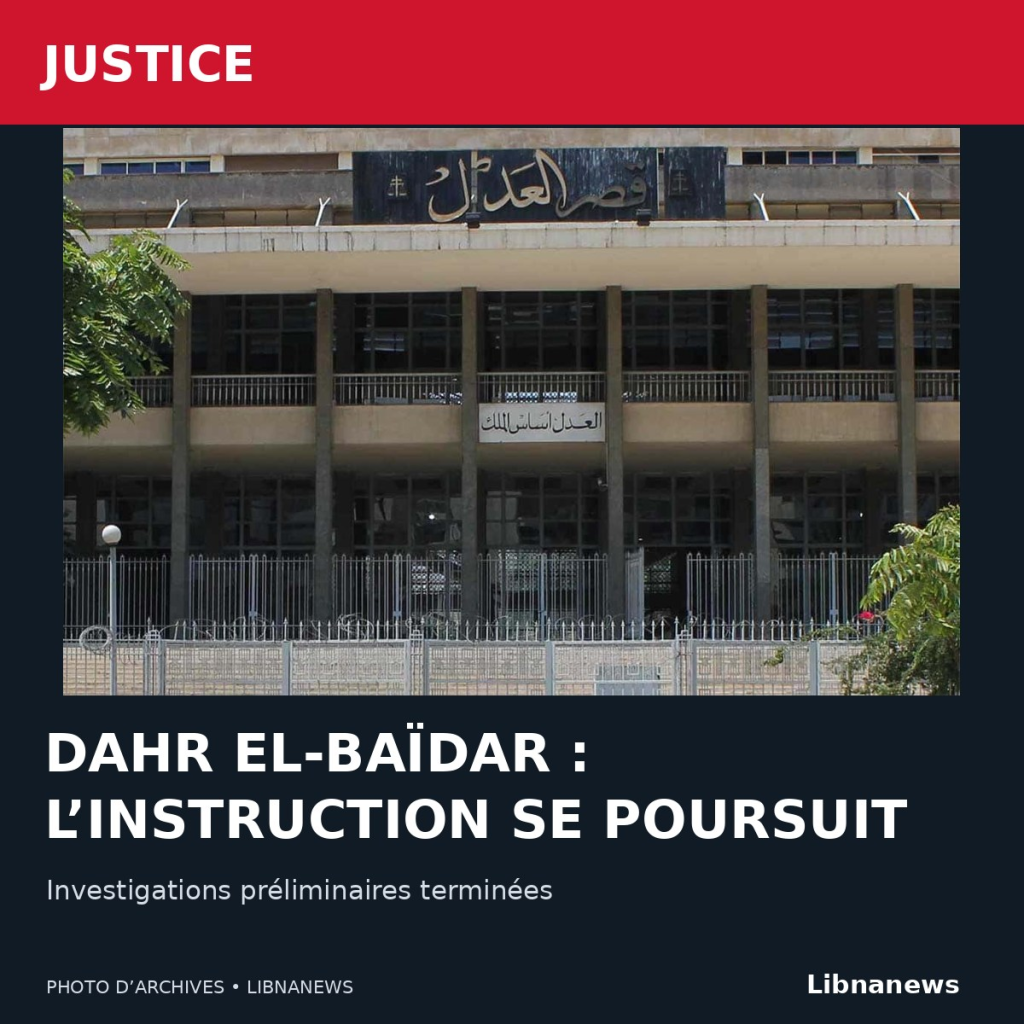
Preliminary investigations by the Internal Security Forces into the Dahr al-Baydar explosives case have been completed. The technical minutes must complete the file of the military prosecutor ‘ s office. The truck driver and his attendant must be interviewed on Thursday, November 5.
The case is entering a new procedural stage. The elements transmitted include surveillance images and data extracted from telephones belonging to three persons prosecuted. Their surrender to the government commissioner at the military court, Claude Ghanem, complements the proceedings already initiated.
This transmission does not mean that justice has finished its work. It ends a phase of investigation conducted by the ISP intelligence branch. The investigation must still examine the evidence gathered, hear the persons concerned and determine their scope.
Dahr el-Baidar: hearings announced on 5 November
The first military investigating judge, Ghada Bou Alwan, scheduled Thursday, 5 November, the interrogation of the two detained men: the truck driver and his attendant. At this stage, this is a scheduled hearing. Its progress and the decisions that might follow are not yet known.
The distinction is important in a highly politically exposed case. Programming an interrogation does not announce release or conviction. Nor does it prejudge the answers of the people heard.
What technical parts can establish
Monitoring images and telephone content are among the materials to be examined. Their presence on the file alone does not reveal what they demonstrate. Their origin, integrity, context and relationship to the facts are still to be assessed.
A telephone exchange may require context setting. An image must be close to a place, schedule and other elements. It would therefore be misleading to present the existence of expertise as sufficient evidence of all charges.
Technical details made public remain limited. There is no complete transcription of the communications or full analysis of the images here to reconstruct the responsibilities. The judicial treatment of the case must retain this distinction between evidence collected and facts finally established.
The debate on the Justice Council continues
The case remains at the centre of a political conflict over its possible referral to the Justice Council. The Lebanese Forces continue to defend this referral. The disagreement affected the participation of their ministers in government meetings.
The transmission of the minutes to the military prosecutor ‘ s office does not itself resolve this institutional conflict. It describes the progress of the case in the judicial system in which it is located. No referral to the Justice Council can be inferred from this new stage.
The political debate focuses on the jurisdiction and authority of the State. The investigation must establish individual acts and responsibilities. The positions of the parties do not replace the reasoned decisions of the judges.
Next step remains judicial
The persons prosecuted remain presumed innocent. Differences between previously published suspect counts also prevent a total from being recovered without specifying its scope. The new elements available concern mainly technical transmission and the two hearings announced.
The meeting on 5 November will follow the investigation. It will then be necessary to check which hearings have actually taken place and which decisions have been taken, rather than anticipating their outcome from the conclusion of the preliminary investigations alone.





Comments