

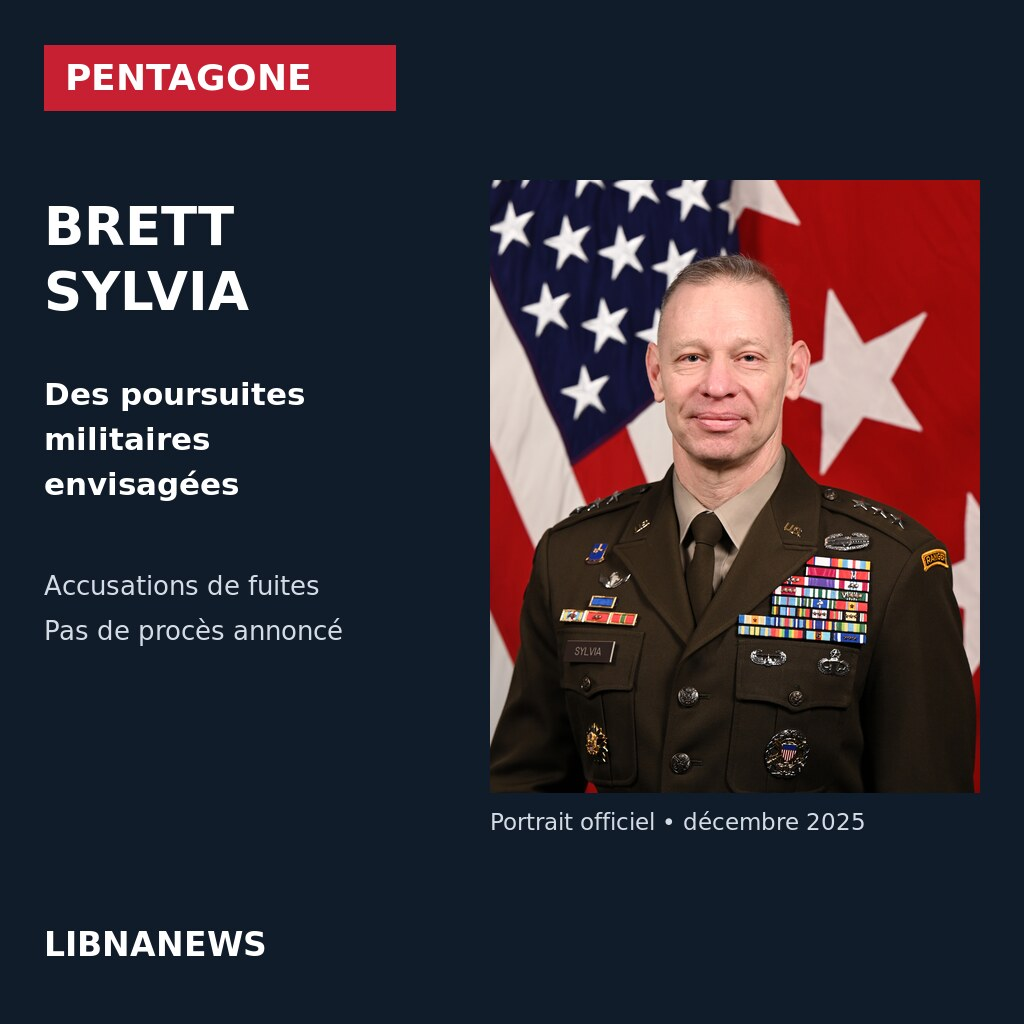
The Pentagon would examine the possibility of military prosecutions against Brett Sylvia, according to press reports published on 15 November. This Lieutenant-General, dismissed from his duties at the end of October, is subject to charges of disclosure of classified information. No public trial or indictment is established in the material consulted as at 17 November.
The case was reportedly assigned to Adam Tel, Acting Secretary to the Army, to determine the action to be taken. This does not mean that a court martial has been seized. It concerns the examination of a military route, after the report already announced to the Department of Justice.
Brett Sylvia: Military Prosecutions
The new information remains attributed to persons informed of the file. The internal report against the General was not made public. It is therefore necessary to distinguish three stages: his eviction, the charges against him and a possible judicial decision. None of these steps is guilty.
Solicited by the American press, Sylvia had not answered. However, relatives report that he denied having disclosed classified information.
An eviction followed by a report to the Justice Department
The removal of the General by Defense Secretary Pete Hegseth became public on 28 October. The following day, Sean Parnell, spokesman for the Pentagon, announced the transmission of a case to the Department of Justice. He invoked an investigation by the Special Investigation Service of the Air Force and the protection of sensitive information.
The charges reported by a news agency concern unauthorized communications with journalists. A Pentagon official, speaking anonymously, presented them as serious enough to justify an immediate action. This presentation constitutes the accusing position of the administration, not an independent judicial conclusion.
Sylvia led the strategy, plan and policy structure within the J5 Joint Staff. He advised the chairman of this staff, General Dan Caine. He had previously commanded the 101st Airborne Division. The case thus concerns an officer located at the heart of the American military preparation.
A court martial involves other decisions
United States military law provides for separate steps before a trial. Section 32 of the Uniform Code of Military Justice requires in principle a preliminary hearing before referral to a general court martial. A written waiver by the person concerned may prevent it from being kept in accordance with the conditions laid down in the text.
In particular, the hearing must consider whether the alleged facts constitute an offence and whether there are sufficient grounds to believe that the accused committed the offence. It shall also verify the jurisdiction of the court. An impartial officer leads her and provides recommendations on follow-up.
The accused may have access to counsel, examine witnesses who testify and present relevant evidence. These guarantees explain why the announcement of a prosecution review does not allow for the presentation of a trial as a matter of fact.
Article 37 also governs the influence of the hierarchy on military justice. It prohibits certain pressures on decisions and protects the participation of witnesses. This general rule does not demonstrate that interference took place in the Sylvia case. Such a question should be assessed on the basis of specific acts.
The next decisive steps remain a possible formal formulation of charges and the decision of the competent military authority. In their absence, talking about a conviction or a trial already initiated would exceed the facts available.





Comments