





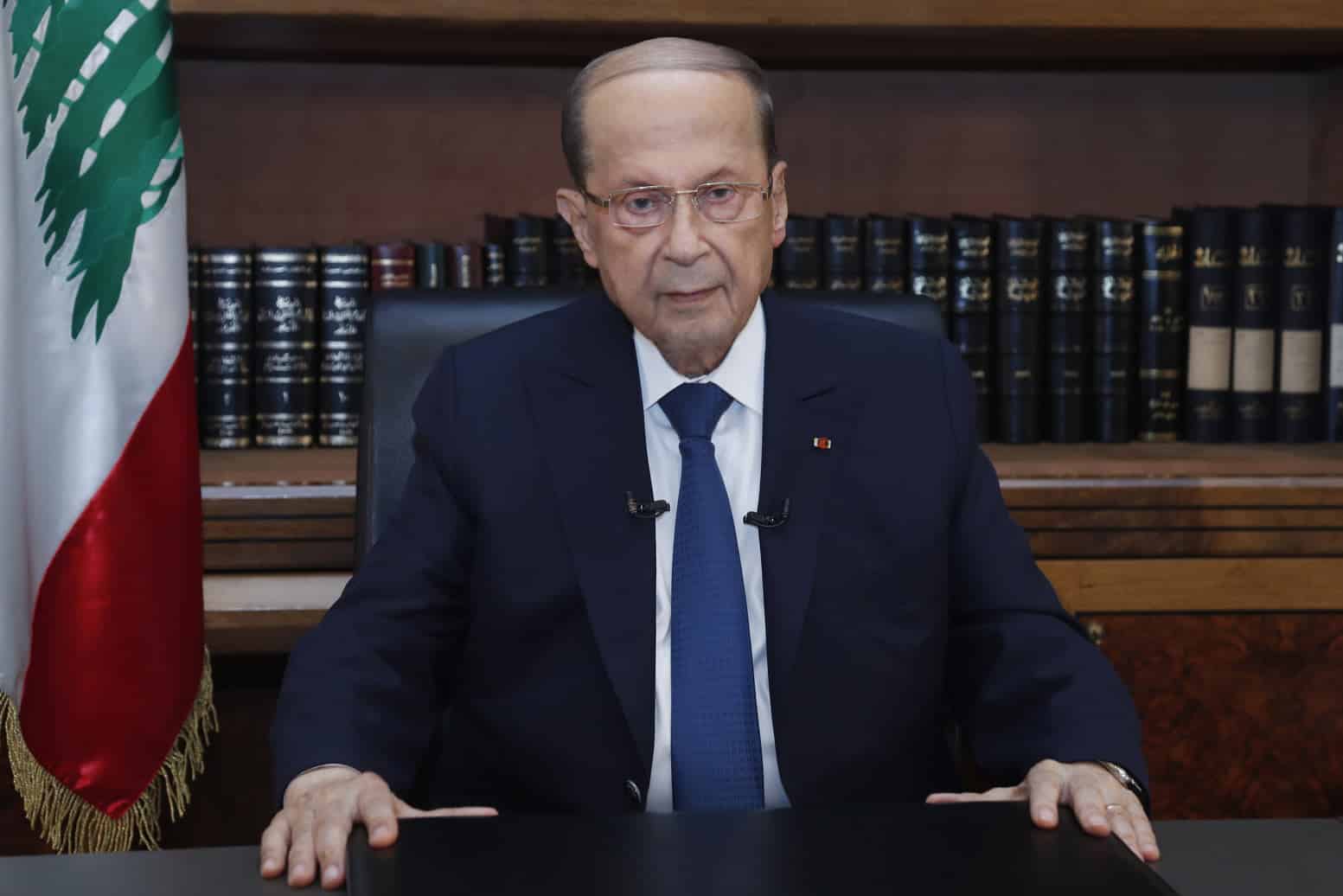
The Lebanese prosecutor’s office reportedly asked Judge Tarek Bitar to prosecute former President Michel Aoun in the investigation into the explosion of the port of Beirut, according to anonymous judicial sources quoted by several media on Tuesday, 15 September 2026. According to these sources, the Public Prosecutor’s Office considers that the former Head of State was aware before 4 August 2020 of the presence of ammonium nitrate and the danger it posed, without having taken the necessary measures. The detailed content of the requisition was not officially made public.
The surveyexplosion of Beirut portsix years after the disaster. According to anonymous judicial sources, the Lebanese prosecutor’s office has reportedly requested prosecution of Michel Aoun, President of the Republic at the time of the explosion of 4 August 2020.
This information was reported on Tuesday by several media citing judicial sources that required anonymity. They intervene at the time when Judge Mohammad Saab transmitted to the investigating judge Tarek Bitar the request of the prosecutor concerning the merits of the case.
According to these sources, the prosecution considers that Michel Aoun had been informed before the explosion of the presence of ammonium nitrate in the port and the danger associated with that stock. He would accuse him of failing to take the necessary steps and of failing to refer the matter to the Supreme Defence Council.
However, these elements must be distinguished from facts officially published by the judicial authority. Since the full text of the requisition has not been made public, its precise content at this stage is based on information provided by anonymous judicial sources.
It is now up to Tarek Bitar to examine the position of the prosecution before finalizing his indictment. The investigating judge is not obliged to take over all requests made by the Public Prosecutor’s Office. His decision will determine whether Michel Aoun will indeed be prosecuted in the next phase of the proceedings.
Michel Aoun targeted for his knowledge of danger
The central point of the requisition is therefore what Michel Aoun knew before the disaster and what action he should have taken after being informed.
This question has accompanied the investigation since its early years.
Michel Aoun had himself acknowledged after the explosion that he had been informed of the presence of ammonium nitrate in port before 4 August 2020. The legal issue therefore concerns the nature of the information provided to him, the level of danger he was aware of and the powers he had to act.
The Prosecutor ‘ s Office now considers that these elements justify prosecution.
According to the judicial source cited by a press agency, the requisition sent to Tarek Bitar refers to prior knowledge of the presence of the product and its dangerous character. It also questions the lack of sufficient measures to address the threat.
One of the issues is the Supreme Defence Council, which is responsible for examining major national security issues.
The Prosecutor ‘ s Office considers that the case should have been brought before this body.
However, it will be up to Tarek Bitar to decide whether this analysis is legally valid and whether the evidence gathered during the course of his investigation does indeed hold criminal responsibility against the former President.
A requisition of several hundred pages
The request for Michel Aoun is part of a much larger requisition for the entire investigation.
Mohammad Saab handed over his work on Tuesday to Judge Tarek Bitar. From a Lebanese media source, the document is approximately 270 pages long and sets out the prosecutor’s requests for the various persons involved in the case.
It thus examines individual responsibilities in the light of the interviews, testimonies, administrative documents, expertise and other documents gathered since the beginning of the investigation.
The file itself concerns several dozen people.
Political leaders, magistrates, administrative officials and security officers were heard or summoned during the investigations.
The surrender of this requisition is an important procedural step. Tarek Bitar closed his investigation and forwarded the case to the prosecution in order to obtain his observations before preparing his final indictment.
The case has now returned to his hands.
Tarek Bitar keeps the last word on the charge
The summons against Michel Aoun should not be confused with the indictment to be issued by the investigating judge.
The Public Prosecutor ‘ s Office makes requests. Tarek Bitar examines them, but is not obliged to repeat all of its findings automatically.
The magistrate may follow the analysis of the Public Prosecutor ‘ s Office, modify it or rule out certain applications based on his or her assessment of the facts and evidence collected.
This distinction will be decisive in the case of Michel Aoun.
The former president is therefore not, on the sole basis of the requisition announced on Tuesday, convicted of the charges against him. The presumption of innocence remains applicable.
The indictment will determine whether Tarek Bitar actually decides to prosecute him and, if so, under what legal qualifications.
Several judicial information published in recent days indicates that the magistrate wishes to return this document before the end of 2026.
However, no official date was announced.
Six years after the explosion of 4 August 2020
The requisition comes more than six years after one of the most deadly disasters in Lebanon’s contemporary history.
On 4 August 2020, a huge explosion had ravaged the port of Beirut and part of the capital. More than 220 people were killed and more than 6,500 injured.
Whole neighbourhoods of Beirut had been devastated.
The disaster was caused by the explosion of a large amount of ammonium nitrate stored in a port warehouse for several years.
In particular, the investigation seeks to determine why this dangerous cargo remained in place despite the information and warnings that had circulated within different administrations.
It is precisely this knowledge chain that lies at the heart of the file.
The investigations sought to identify those responsible who knew the stock existed, the date on which they were informed, the accuracy of the warnings received and the decisions taken or not taken after the alerts.
The possible liability is therefore not limited to those officers who worked directly at the port. It may concern, according to future judicial conclusions, different levels of administration, security, justice and political power.
An investigation paralyzed for several years
The current acceleration of the file contrasts with the long periods of paralysis that followed the disaster.
Tarek Bitar had resumed the investigation after the divestiture of his predecessor, Judge Fadi Sawan. His investigations quickly encountered a series of appeals filed by politicians and former officials involved in the proceedings.
The challenges resulted in several interruptions.
The confrontation then won the judiciary itself, causing an exceptional situation in which the investigation into a national disaster remained virtually blocked for a long time.
Judge Bitar nevertheless resumed his investigations and heard new people before closing this phase of the case.
On 30 March 2026, he had completed his investigation and forwarded the case file to the Public Prosecutor ‘ s Office in order to present his request on the merits.
Mohammad Saab then examined thousands of pages of exhibits, hearings, reports and documents before presenting his findings on Tuesday.
This transmission now brings the case back to the indictment that has been overdue for years.
A sensitive step for the former President
The request for prosecution of Michel Aoun gives particular political significance to this new judicial stage.
Founder of the Free Patriotic Current and President of the Republic from 31 October 2016 to 30 October 2022, Michel Aoun was head of state when the explosion struck Beirut.
The survey does not, however, concern general political responsibility in the management of the country. The judicial question is more specific: it is to determine what the former president knew about ammonium nitrate, when he was informed of it and whether his absence from intervention could constitute criminal liability.
The Prosecutor’s Office has just taken a position on this issue by calling for prosecution.
Tarek Bitar must now confront this request with the evidence gathered during his investigation.
The indictment will be the next decisive step. It will specify the persons who the judge considers should be referred to the competent court and the facts against each of them.
For the victims’ relatives, this document has been expected for more than six years. No person in charge has yet been finally tried for the disaster and no person prosecuted in the case is currently detained.
The transmission of the prosecutor’s requisition now changes the judicial sequence: the examination of this piece is in the hands of Tarek Bitar. His decision will state whether the request for prosecution of Michel Aoun will be included in the indictment expected before the end of the year.