






The Baabda Palace has placed the Lebanese-Israeli negotiation in the centre of the state. Joseph Aoun chaired a meeting with the army commander, General Rodolphe Haykal, the head of the Lebanese delegation, former Ambassador Simon Karam, the officers of the military negotiating team and the advisers accompanying the process. The objective was clear: to assess the latest developments in Lebanon and the region, including the signing of the memorandum of understanding between the United States and Iran, and to prepare for the next round of Lebanese-American-Israeli talks in Washington, D.C., on 23, 24 and 25 June. For Beirut, this sequence is decisive. It must transform regional de-escalation into concrete results: a final ceasefire, Israeli withdrawal, the deployment of the Lebanese army at international borders, the return of prisoners and the launching of reconstruction.
Crisis meeting at the Presidential Palace
The Baabda meeting is not just a technical follow-up session. It is taking place at a time when Lebanon is likely to be drawn from regional negotiations that concern it directly but do not have full control over the parameters. The agreement between Washington and Tehran included the Lebanese front in the de-escalation, but Israel is not a signatory, nor is Hezbollah. Lebanon must therefore transform a regional clause into an operational commitment on its territory.
The presence of the army commander gives this meeting special significance. Rodolphe Haykal is not only associated with the case as a military leader. It represents the institution that will have to occupy the space left by any Israeli withdrawal, secure the southern localities, coordinate with international force and prevent the vacuum from being filled by armed groups or by a new buffer zone logic. The negotiation is therefore not just about sentences. It focuses on the real capacity of the State to return to the field.
Simon Karam, at the head of the negotiating delegation, played the role of diplomatic relay. It must bring to Washington a stable, understandable and defensible Lebanese position before the Americans and Israeli representatives. According to information published prior to the meeting, Lebanon had already prepared new rounds of direct discussions in Washington, D.C., after several meetings in the US State Department and the US Department of Defense. A QNA dispatch indicated that an assessment meeting had already taken place in Baabda with Aoun, Haykal, Karam and members of the military team after the May 29, June 2 and June 3 sessions.
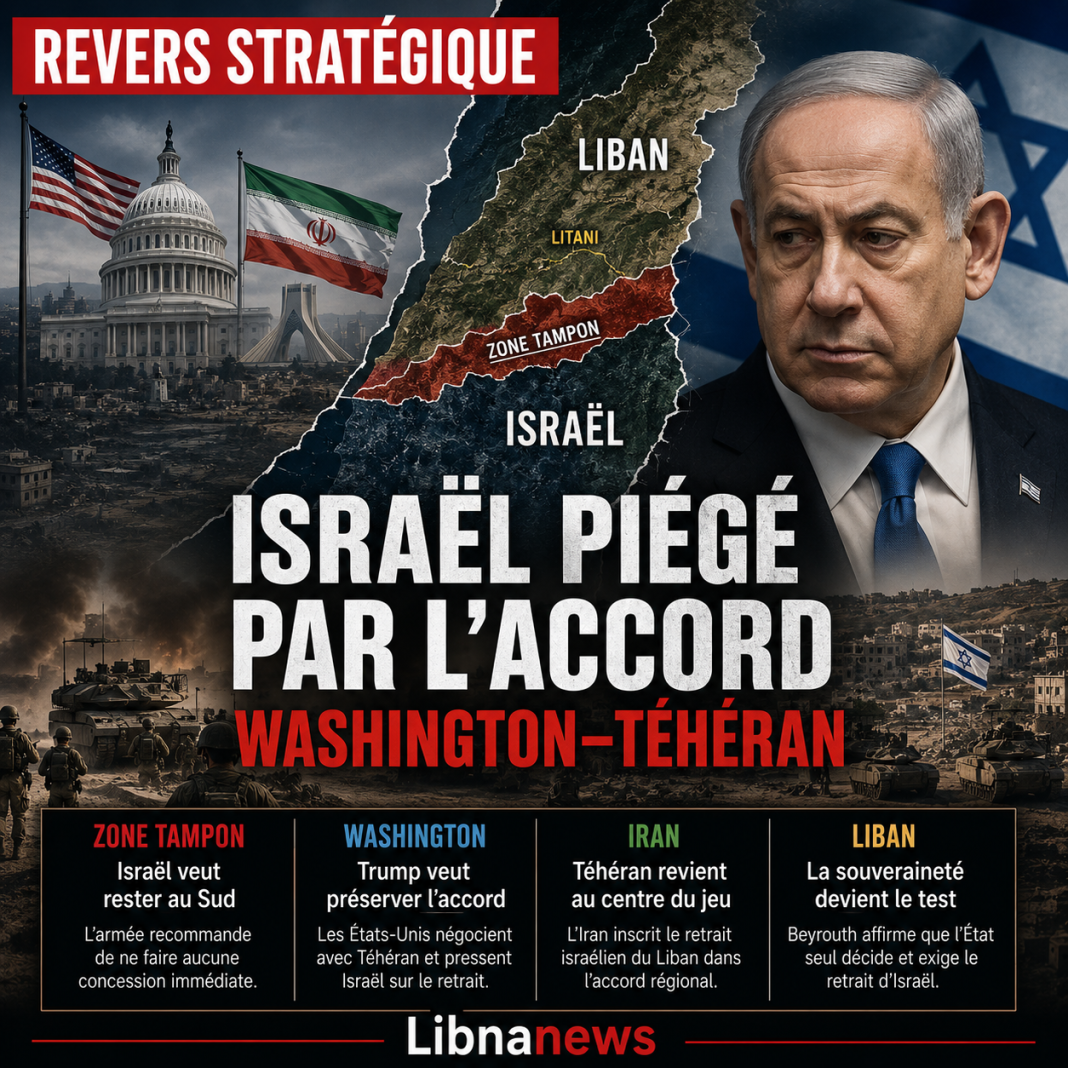
The current meeting thus marks a continuity. She’s not starting from scratch. It is part of a process that has already produced several rounds, proposals, answers and red lines. But it comes after a major change: the Washington-Téhéran agreement. This text changes the balance of power. It creates new pressure on Israel. It also gives Iran an indirect guarantor or sponsor role in Lebanon’s de-escalation, which Beirut is seeking to carefully frame.
Joseph Aoun’s Guidelines
Joseph Aoun gave the delegation a roadmap focusing on five priorities. The first is the stability of the Lebanese position on the final ceasefire. Lebanon does not want a vague truce, reversible and interpreted differently by each actor. It wants a clear, verifiable cessation of hostilities with a mechanism to document violations and to prevent the recurrence of war by successive incidents.
The second priority is the withdrawal of Israeli forces from the occupied territories. This is the most sensitive point. Israel seeks to maintain a presence in southern Lebanon, or at least positions considered strategic, in the name of its security. Lebanon sees this as a direct violation of its sovereignty. Reuters reported that Israel was conducting discussions with the United States in order to maintain its deployment in the South, despite the American-Iranian agreement that affirms Lebanese territorial integrity.
The third priority is the deployment of the Lebanese army at international borders. This formulation is central. It means that Beirut does not only want Israel to leave. He wants to replace a state presence. Without the deployment of the army, withdrawal could be presented by Israel as a risk, by Hezbollah as a victory of resistance and by Western partners as an incomplete transition. The army must therefore become the instrument for the return of the State.
The fourth priority is the return of Lebanese prisoners. This case has a strong political and human burden. It affects families, the memory of previous conflicts and the State’s ability to defend its citizens in an official setting. To be included among the presidential directives is to remind that negotiations are not limited to military lines. It also concerns the rights of persons and the unsolved traces of war.
The fifth priority is the launch of reconstruction. Again, the sequence is important. The return to the South cannot wait indefinitely. Villages were destroyed, roads damaged, schools weakened and essential services interrupted. The cease-fire will be of value to the inhabitants only if it opens a phase of reparation. Reuters reported that the war had displaced nearly 1.2 million people and caused massive destruction of housing and infrastructure.
Washington, next test ground in Lebanon
The negotiations scheduled for June 23, 24 and 25 in Washington will be more than a new diplomatic round. They will be the first test of the Lebanese position after the signing of the memorandum between the United States and Iran. Lebanon will have to defend its decision-making autonomy there, while using the new regional power ratio to achieve concrete progress.
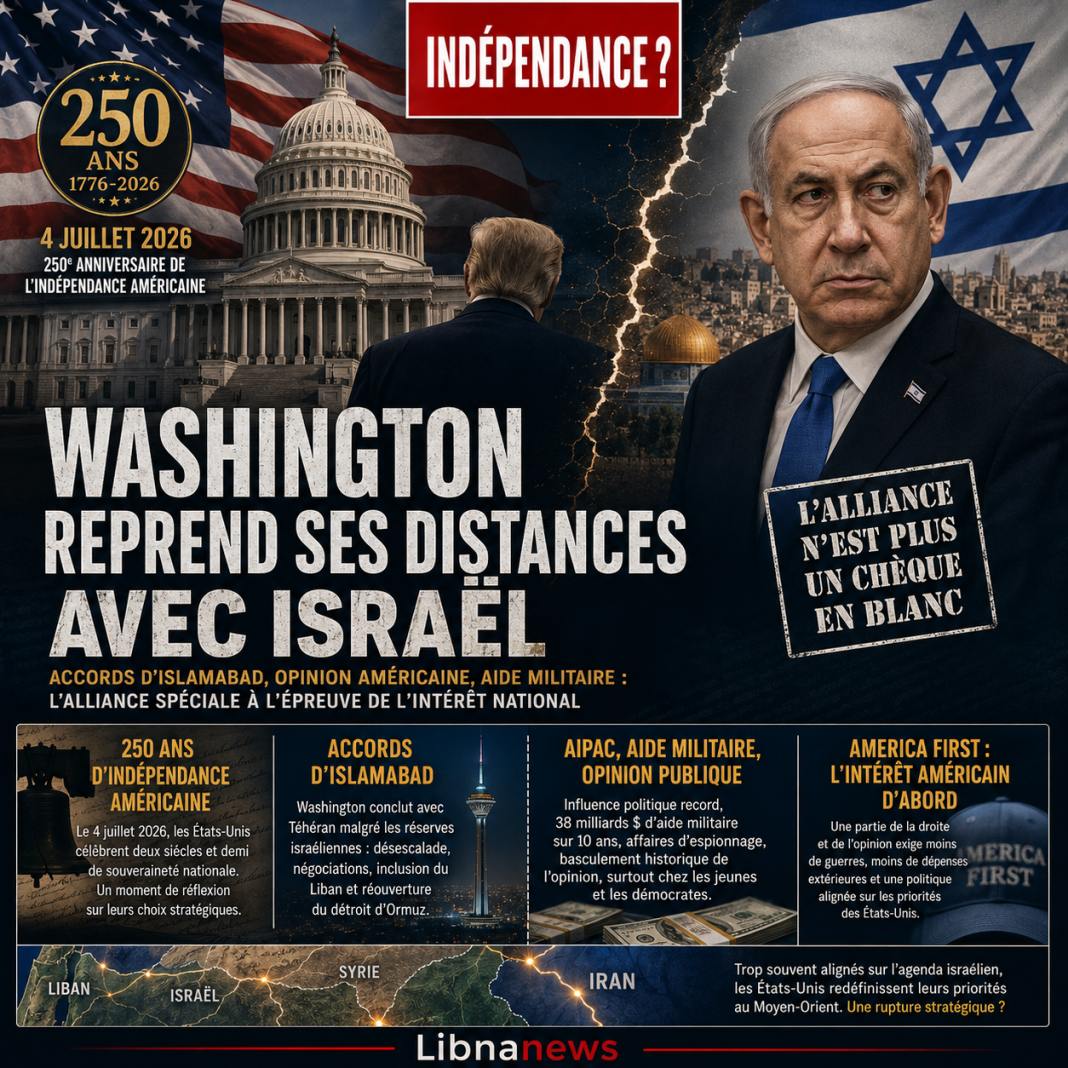
The framework is delicate. The United States is both mediators, sponsors of the process with Israel and signatories of the regional agreement with Iran. They have the main leverage over the Israeli government. But they also have their own priorities: preserving the agreement with Tehran, avoiding a resumption of war, securing the Strait of Hormuz, reducing pressure on energy markets and containing Hezbollah.
Lebanon must therefore speak in Washington with clarity. He must recall that the Israeli withdrawal is not a concession to Iran, nor a reward to Hezbollah. It is the application of the principle of sovereignty. It must also stress that the Lebanese army is ready to play its part, but needs resources, a timetable for withdrawal and international support. Without this articulation, Israel will continue to present its presence as a security necessity.
The timetable gives these discussions a special urgency. According to several media reports, Tehran considers that the Israeli withdrawal from Lebanon must be part of the finalization of the agreement with Washington in the 60-day window. Reuters also reported that Hezbollah was confident that any agreement between the United States and Iran would include Lebanon, Iran having insisted that the end of hostilities on the Lebanese front be integrated into regional de-escalation.
Beirut must avoid a trap. If Iran appears as the actor who gets the Israeli withdrawal, the Lebanese state will be weakened symbolically. If Washington and Israel negotiate an extended presence without the Beirut agreement, Lebanese sovereignty will be politically weakened. The delegation should therefore recall that Lebanon was the subject of negotiations, not its object.
Washington-Téhéran memorandum changes balance of power
The American-Iranian memorandum has profoundly changed the regional climate. It provides for de-escalation on several fronts and opens a negotiating period to produce a final agreement. According to information reported by the international press, it includes elements related to Iran’s nuclear power, sanctions, the Darmuz Strait, oil and the cessation of military operations, including in Lebanon.
For Lebanon, this text creates an opportunity. For the first time since the beginning of this war, the Lebanese front is integrated into a regional arrangement led by the United States. This gives Beirut an argument. Israeli withdrawal can be presented not only as a Lebanese claim, but also as a condition for the coherence of the regional agreement. If the agreement promises the end of hostilities, the Israeli military presence in the south becomes difficult to justify.
But the memorandum also creates a constraint. It formalizes Iran’s role as a key player on the Lebanese issue. Tehran can say that it has placed Lebanon in the deal. Hezbollah can affirm that its sacrifices forced the powers to integrate the Lebanese front. Israel may refuse to consider itself bound by a text to which it is not a party. Lebanon therefore finds itself between several competing narratives.
This is precisely what Joseph Aoun is trying to control. His recent statements emphasize the independence of the Lebanese decision. The President affirmed that Lebanon is following its own path in the negotiations and that no one can negotiate in its place. This position is clearly intended to frame Iranian influence, without refusing any external contribution to de-escalation.
The Baabda meeting therefore serves to harmonize positions before Washington. It is not enough for the President to express a line. The delegation, the army and the advisers must carry the same message. In such a sensitive negotiation, any ambiguity can be exploited by Israel, Washington, Iran or Lebanese internal actors.
The Lebanese Armed Forces as Pivot
The deployment of the Lebanese army at international borders is the keystone of the Baabda position. It meets several simultaneous requirements. He reassures Western partners who want the return of the monopoly of force to the state. He replied to Israel, which said that it feared a return of Hezbollah near the border. It gives the people of the South a national interlocutor. Finally, it allows the President to say that Lebanese sovereignty does not remain a formula.
But this ambition requires means. The Lebanese army must be able to deploy, patrol, communicate, document violations, coordinate with UNIFIL, support municipalities and avoid escalation in the event of an incident. It must do so in a country where public finances remain fragile and where the soldiers themselves have suffered the consequences of the economic crisis.
The role of General Rodolphe Haykal in the meeting is therefore essential. It is not just a question of preparing a diplomatic argument. It must also be said what the army can do, in what time frame, with what means and under what conditions. An unrealistic military commitment would weaken Lebanon. Too vague a commitment would give Israel an excuse to stay. The delegation must therefore present a credible position in Washington: the army can deploy, but it must be supported and the Israeli withdrawal must be complete.
This issue joins the debate on UNIFIL. The international force can accompany the transition, but it cannot replace the Lebanese army. It can observe, coordinate, document and reassure. She cannot become the surrogate in the South. The Lebanese position must therefore combine Israeli withdrawal, national deployment and international support presence.
Prisoners and reconstruction, two sovereignty issues
The return of Lebanese prisoners and the launching of reconstruction are not humanitarian annexes. They share the same logic of sovereignty. A State negotiating the withdrawal of foreign forces must also defend its detained citizens and repair destroyed areas. The war does not end on the day the weapons are silent. It continues in families waiting for prisoners, in villages without electricity, in collapsed houses and in closed schools.
The prisoner file allows Beirut to recall that a security negotiation must have a human dimension. It can also serve as a symbolic pressure point. Israel may mean buffer zone, Hezbollah and military safeguards. Lebanon must respond by territory, sovereignty, detention, return of inhabitants and reconstruction.
Reconstruction, on the other hand, makes it possible to get negotiations out of the military one-on-one. South Lebanon is not an empty space to secure. It is a inhabited, agricultural, municipal, family and economic region. Residents returning need homes, roads, care, water, schools and security. His delegation must therefore defend the idea that any agreement without a reconstruction mechanism would remain incomplete.
This dimension can also involve international partners. France, Qatar, the United States, the European Union and the United Nations can contribute to reconstruction, but provided that the ceasefire is maintained and the Lebanese army can deploy. The Israeli withdrawal thus becomes the first stone of a civil chain.
The risk of an agreement on Lebanon without Lebanon
The main threat to Beirut is the possibility of an agreement on Lebanon without Lebanon. The Washington-Tehran memorandum contains a reference to the Lebanese front. Israel is discussing with Washington the continuation of its positions. Iran claims to defend the Israeli withdrawal. Hezbollah says that disarmament will only be discussed after the end of the occupation. In this configuration, the Lebanese state may be surrounded by more powerful sponsors than it is.
The Baabda meeting is a response to this risk. By bringing together the president, the army commander, the head of the delegation and the advisers, Lebanon seeks to produce a single national line. This institutional unity is indispensable. If the Lebanese messages contradict each other, the other actors will sink into the loopholes.
The presidential position is based on a difficult balance. Accept the useful effects of the regional agreement, but refuse Iran to speak on behalf of Lebanon. Use US pressure on Israel, but refuse an externally dictated timetable on Hezbollah weapons. Call for Israeli withdrawal, but prepare for army deployment to address security concerns. Claim reconstruction, but avoid international aid bypassing the state.
This line is demanding. It assumes that the Lebanese delegation can convince Washington that Beirut is not merely a beneficiary of the American-Iranian agreement. Lebanon has its own demands, its own institutions and its own timetable. He wants the final ceasefire, withdrawal, prisoners, the border army and reconstruction.
An Israeli Coerced Negotiation
Israel arrives at this stage with a harsh stance. His army wanted to preserve its freedom of action in Lebanon, maintain a buffer zone and obtain a complete demilitarization of the South. Israeli officials described the Washington-Tehran agreement as very disappointing, considering that it does not meet Israel’s strategic objectives. The Israeli press also reported growing confusion in the army after the change in the rules of fire opening and uncertainty about the mission in Lebanon.
That position placed the Lebanese delegation in a difficult position. Israel can request guarantees before withdrawal. Lebanon must respond that the first guarantee is the presence of the Lebanese army and the application of international law. It must also refuse to allow Israeli security to justify an indefinite presence on its territory.
The American role will be decisive. If Washington chooses to push Israel towards withdrawal, Lebanese negotiations can produce results. If Washington accepts an extended Israeli buffer zone, Lebanon will find it harder to assert its priorities. The Baabda meeting is therefore also intended to prepare an argument to convince the US administration that regional stability requires respect for Lebanese sovereignty.
Donald Trump has already criticized some Israeli methods in Lebanon, believing that Benjamin Netanyahu could adopt a more measured approach. This American pressure opens a margin. But it does not guarantee withdrawal. Lebanon must turn this margin into a written commitment.
The June 23, 24 and 25 test
The dates of June 23, 24 and 25 become a turning point. His delegation would have to defend a compact position without dispersion. The final ceasefire must be presented as the front door. Israeli withdrawal must be formulated as a condition of sovereignty. The deployment of the army must be presented as a national response to security requirements. Prisoners and reconstruction must recall that war affects human beings and territories, not just military maps.
Lebanon must not go to Washington as an isolated applicant. It must be based on the regional context. The Washington-Tehran deal talks about de-escalation. The G7 talks about Lebanese sovereignty and a state monopoly on arms. The United Nations can provide a framework. France supports the army and UNIFIL. Qatar can help rebuild. All these elements must be used to strengthen an autonomous Lebanese position.
But autonomy will also be proven by internal coherence. Lebanese political forces should avoid turning negotiations into a partisan battlefield. Hezbollah should not appear to be the only beneficiary of a withdrawal obtained by Iran. Hezbollah’s opponents must not present Washington as a lever to impose an explosive internal calendar. The state must keep the line: the territory first, the army then, the reconstruction immediately, the national dialogue within a Lebanese framework.
The Baabda meeting announces this method. She places the President at the centre of the decision. She associates the army with diplomacy. She gave the delegation a compass. It recalls that sovereignty is played in words, but also in preparation.
Baabda tries to take over the initiative
Lebanon arrives in Washington in a fragile position, but not without maps. It can rely on the regional agreement to request Israeli withdrawal. He can lean on his army to propose an alternative to the buffer zone. It can build on reconstruction to mobilize partners. It can rely on sovereignty to refuse Iran, Israel or the United States to speak in its place.
The meeting chaired by Joseph Aoun shows that Baabda wants to take over the initiative. The President is not content to observe the agreement between Washington and Tehran. He is preparing a Lebanese response. It sets priorities. It seeks to avoid the country being reduced to a clause in a regional memorandum.
The task remains heavy. Israel does not want to leave without guarantees. Hezbollah does not want to discuss its weapons before withdrawal. Iran wants to include Lebanon in its agreement with the United States. Washington wants to preserve its own diplomatic success. Lebanon must navigate between these constraints without losing the heart of its position: no lasting stabilization will be possible if the territory remains occupied, if the Lebanese army does not deploy, if the prisoners remain forgotten and if reconstruction does not begin.
On 23, 24 and 25 June, it will be said whether the Baabda meeting has transformed a presidential line into a diplomatic force. The next round of Washington will not only be a ceasefire negotiation. He would say whether the Lebanese State could still impose its priorities in a region where the great powers often spoke louder than the countries concerned.