






The announced departure of the Finul already opens a diplomatic battle on the security architecture that will have to succeed it in the South Lebanon. Behind the official statements on support for the Lebanese army, several scenarios are beginning to appear in the press on 16 September 2026. They don’t describe an agreement yet. Rather, they reveal an ongoing negotiation, with several competing formulae. Pakistan appears to be a possible candidate for a future multinational force. An American military presence is also mentioned in an analysis. At the same time, Western capitals are discussing the post-Final era and the place to be occupied by the Lebanese army.
Ad Diyar of 16 September 2026 brings the most precise elements on the Pakistani track. According to « informed political sources » quoted by the newspaper, Islamabad would like to extend in Lebanon the diplomatic role acquired in the negotiations between Washington and Tehran. The formal cooperation between Lebanon and Pakistan would thus only be part of a much wider rapprochement.
Pakistan moves beyond mediation
The first stage of this rapprochement is already visible. Ad Diyar recalls the recent visit to Pakistan by Interior Minister Ahmad Hajjar. In particular, it resulted in an agreement on the exchange of prisoners and security cooperation against narcotics and computer crime. Islamabad also reaffirmed its support for Lebanese sovereignty and condemned Israeli attacks.
But the sources cited by Ad Diyar describe a different ambition. Discussions have reportedly taken place in UN corridors and in meetings between regional officials on a possible Pakistani military role in Lebanon. According to these sources, Islamabad is prepared in principle to participate in the « alternative force », whatever the form, which could take over from the Finul after the end of its mission.
This perspective is part of a broader transformation of Pakistani diplomacy. Islamabad had hosted and sponsored several stages of discussions between the United States and Iran since April 2026. That process had led to the signing of the June memorandum, before the negotiations moved to Geneva and Doha. Despite the difficulties encountered since then, Pakistan would continue to consider itself a potential intermediary between Washington and Tehran.
This position is of direct interest to Beirut. The sources of Ad Diyar believe that Lebanese officials see Pakistan as a State that can speak simultaneously to Americans and Iranians. Its military weight and relations with both sides could make it an acceptable player in an environment where the composition of the future force is as much a political issue as a military one.
President Joseph Aoun has already indicated that Lebanon welcomes any assistance that could help to end the war. According to Ad Diyar, the latest Lebanese-Pakistan contacts have reinforced the idea that Pakistan could also serve as a channel for Iran to facilitate the implementation of possible international agreements.
A future multinational force still without definitive form
The scenario reported by Ad Diyar does not necessarily consist of simply replacing Pakistani peacekeepers with current peacekeepers. Rather, the paper refers to the possibility of a new multinational mechanism.
Pakistan could be one of its cores. It is currently not one of 46 countries participating in the Final, with Ad Diyar accounting for 7,462 troops. On the other hand, Islamabad has long experience in United Nations peacekeeping operations. For everyday sources, this experience would give his army both technical skills and a form of international legitimacy to participate in a new mission created to avoid a security vacuum in the South.
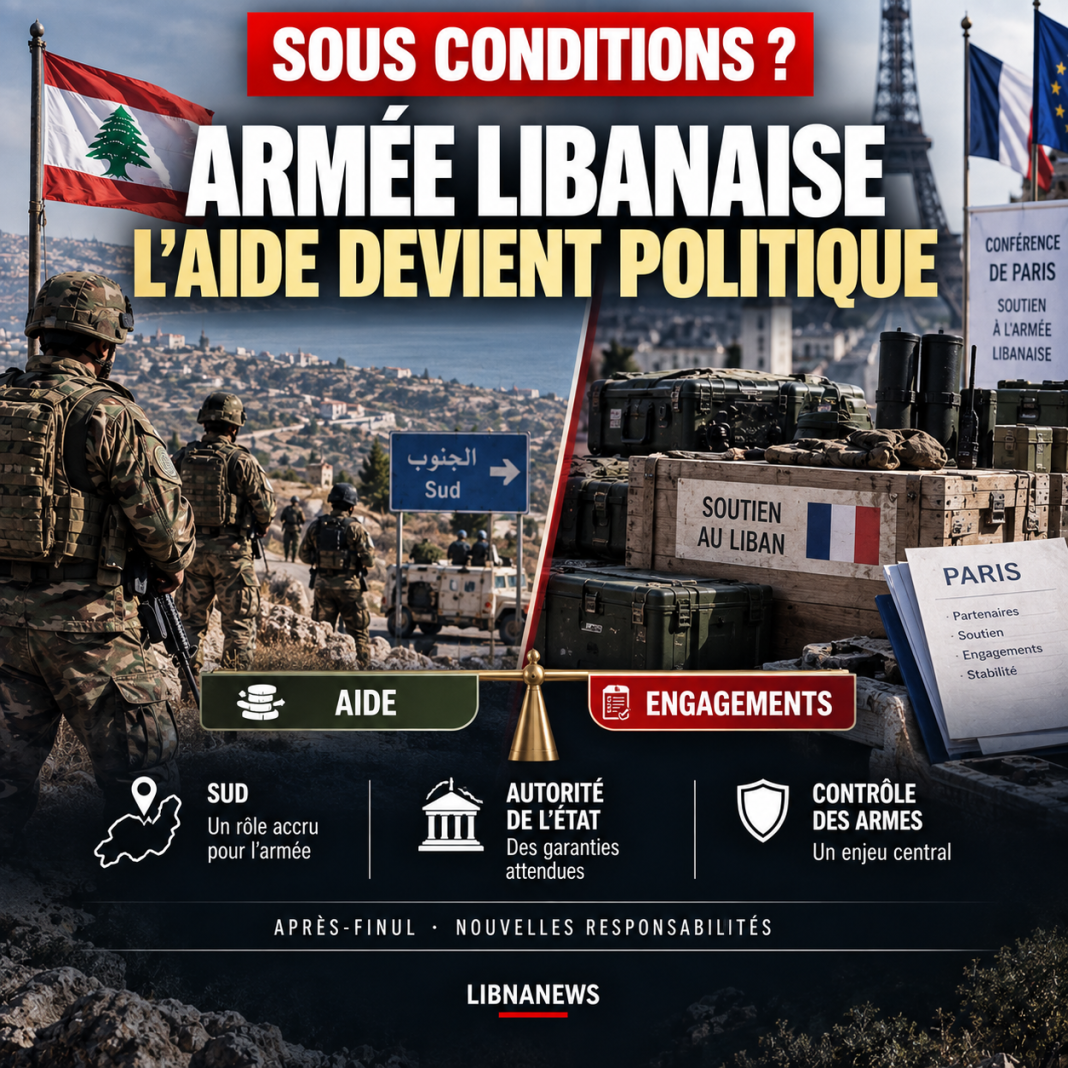
Pakistan’s participation in the Paris preparatory meeting dedicated to support for the army therefore takes on additional significance. Officially, this meeting should identify the needs of the army and the security forces. In the reading proposed by the sources of Ad Diyar, it can also be used to measure the willingness of States to get involved in the next step.
The daily adds another element: Lebanese officials would look for a regionally acceptable formula, while an essentially European military alliance in the South would, according to its sources, run into Israeli opposition and American reluctance. Pakistan would therefore present a different profile.
However, an essential distinction must be maintained. Ad Diyar reports here the assessments of anonymous sources. There is no evidence in the corpus that an international agreement has already been reached to entrust Pakistan with such a role.
Finland confirms that post-Final is already a topic for discussion
An official element, however, gives more consistency to the existence of discussions on the future mechanism.
Ad Diyar of 16 September reports the visit to Beirut of the Finnish Defence Minister Antti Häkkänen. Finland has long participated in Finul. His Minister met with Joseph Aoun and Lebanese Defense Minister Michel Menassa.
Häkkänen said that his country looked favourably at what Lebanon would like for the period following the end of the Finul mandate. He also stressed Finland’s willingness to strengthen its military cooperation with Beirut. Lebanon, for its part, seeks to maintain international involvement in the South after the end of the current mission.
This signal is important. It does not confirm the Pakistani scenario or that of an American presence. It confirms, however, that the question ofafter Finul is now treated as a concrete dossierbetween Beirut and some international partners.
The debate is therefore no longer limited to maintaining or leaving the existing mission. He starts to look at what will come after her.
Washington, Paris and Rome at the heart of the search for a formula
Al Joumhouria places this reflection in a broader negotiation. The daily reports that preparations for the Paris conference on the army are being conducted in parallel with discussions on the Lebanese-Israeli negotiations, the extension of state authority and the modalities for the deployment of the army in the South.
According to diplomatic information reported by the newspaper, the central issue becomes the ability to move from a general political framework to executable mechanisms. Previous negotiations would have allowed some technical advances on « experimental zones » and the deployment of the army. But the most difficult issues remain open: Israeli withdrawal, verification mechanism, security arrangements and Hezbollah weapons.
The issue of the future international presence must therefore be read through this framework. A new force could not be conceived independently of the mission entrusted to the Lebanese army, the modalities of the Israeli withdrawal and the guarantees that would be sought from the various parties.
Washington maintains a central position in this device. Al Jumhouria points out that the replacement of the Rome meeting by an appointment between the Lebanese and Israeli ambassadors in Washington confirms the American will to retain control of the diplomatic channel. The newspaper sees it as a signal that Washington does not want the process to be blocked despite the postponement of the new meeting in Rome.
Annahar of 16 September 2026 makes a close reading on this point. The daily believes that the United States organization of a meeting between the Lebanese and Israeli ambassadors aims to keep the process alive, even without immediate decisive progress. Support for the army follows the same logic: to preserve a minimum framework until the regional situation allows for further progress.
The most sensitive hypothesis: American forces in the South
It is in this context that the most spectacular scenario appears. Ad Diyar of 16 September published an analysis entitled « American Forces in the South? ».
The text refers to an anticipation attributed to the American diplomat Aaron David Miller. According to the wording reported by the newspaper, a settlement between Beirut and Tel Aviv could eventually lead, with the agreement of Tehran, to the parking of American rather than European forces in South Lebanon.
The scope of this information must be strictly defined. Ad Diyar does not report here a decision of the US government. The daily does not produce a formal deployment project. This is a scenario attributed to an American diplomat in an analysis.
The difference is fundamental.
But the hypothesis becomes interesting when it is close to other information. Pakistan is presented as a possible element of a multinational force. Finland officially discusses with Beirut the stage following the Final. Washington retains control over mediation between Lebanon and Israel. Paris prepares with Beirut support for the army. And discussions already focus on the concrete conditions for a future security mechanism.
Thus, there is no converging evidence in favour of an American force. These are converging signs thatthe vacuum left by the Finul is already the subject of a competition between several possible architectures.
A three-tiered equation: Lebanese Armed Forces, International Force and Regional Guarantees
The first architecture would focus on the Lebanese army. It would become the main force deployed in the field, with increased international support and an external verification and assistance mechanism.
The second would add a multinational force to this national presence. Pakistan could then play a significant role because of its military experience and ability to maintain relations with antagonistic actors. This is essentially the scenario described by the sources of Ad Diyar.
The third would be much more directly American. It would involve a United States presence on the ground and would profoundly change the nature of security guarantees in South Lebanon. At the moment, the sources provided do not allow us to go beyond the hypothesis reported by Ad Diyar.
Yet the Iranian factor is going through all three scenarios. Pakistan’s role lies precisely in its ability to engage with Tehran. The American hypothesis reported by Ad Diyar itself assumes Iranian consent. And the security arrangements envisaged in the South cannot be separated from the fate of Hezbollah weapons.
It is here that the post-Final dossier directly joins that of the regional negotiations.
South becomes a piece of regional regulation
The timetable helps speed up discussions. Negotiations with Israel must define the conditions for withdrawal and security arrangements. The Paris appointment must determine the additional capabilities needed for the army. Contacts with countries likely to participate in the future arrangements are also beginning to take shape.
Pakistan has a special advantage in this equation. Its possible presence could respond simultaneously to several constraints: bringing an experienced military force, avoiding an exclusively Western composition and maintaining a political channel with Iran.
But this is not a solution. Similarly, no source of the corpus confirms that an American force has been approved by Washington, Beirut or Tehran. Newspapers describe intersecting assumptions, consultations and interests. They don’t describe an agreement yet.
That is precisely what makes the file important. The question is no longer just to knowwhen Finul leaves the South, but what security architecture will be acceptable enough to prevent its departure from creating a vacuum.
Behind Pakistan, Finland, Paris, Rome and Washington, there are several conceptions of the post-Final era. Their commonality remains with the Lebanese army. Their main difference concerns the identity, mandate and power of the international presence that would accompany it.
For the time being, Pakistan is the most detailed track reported by a press source. The American option remains the most sensitive and the least established. In between, Western consultations show that the search for an alternative has already begun.