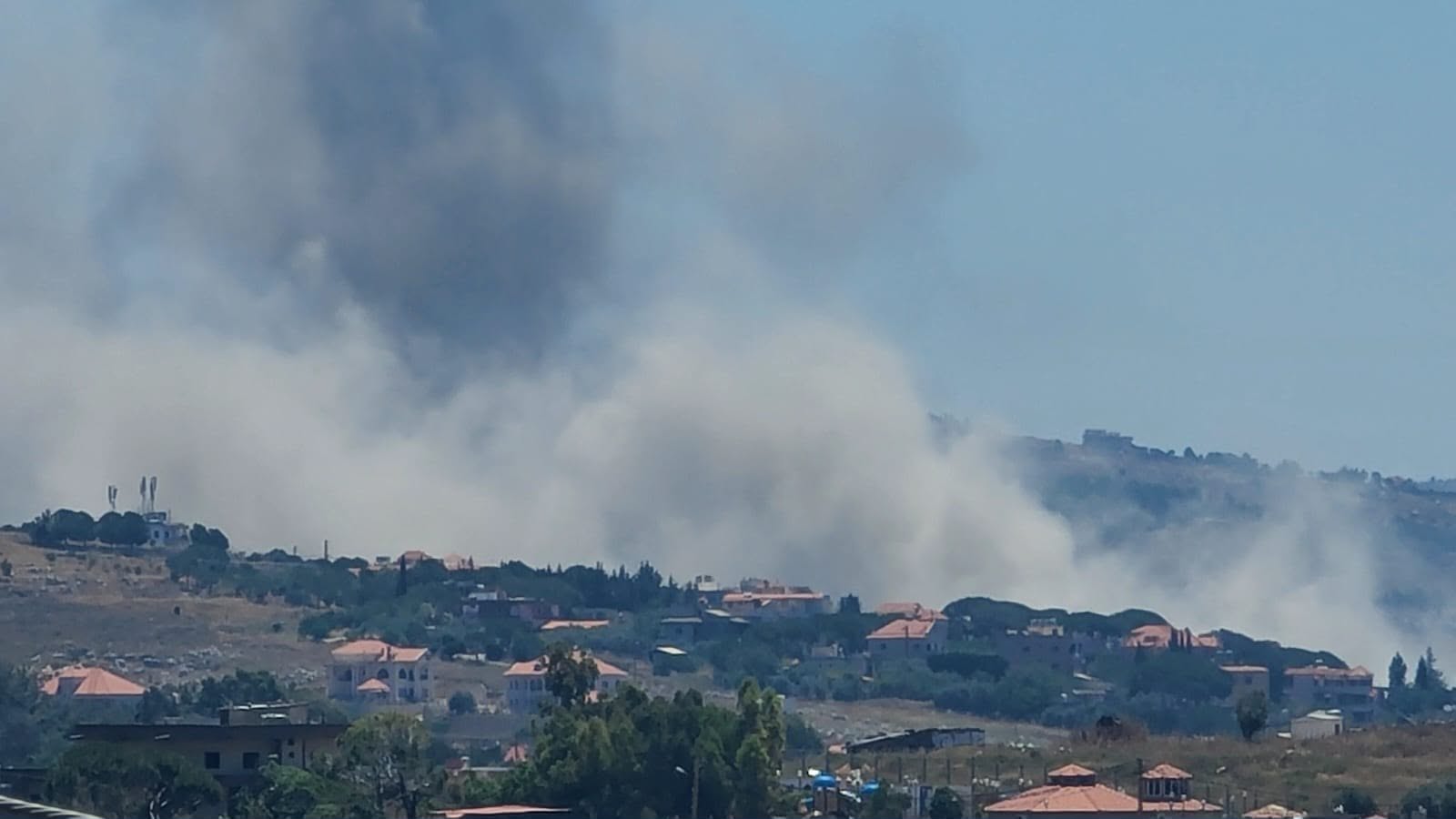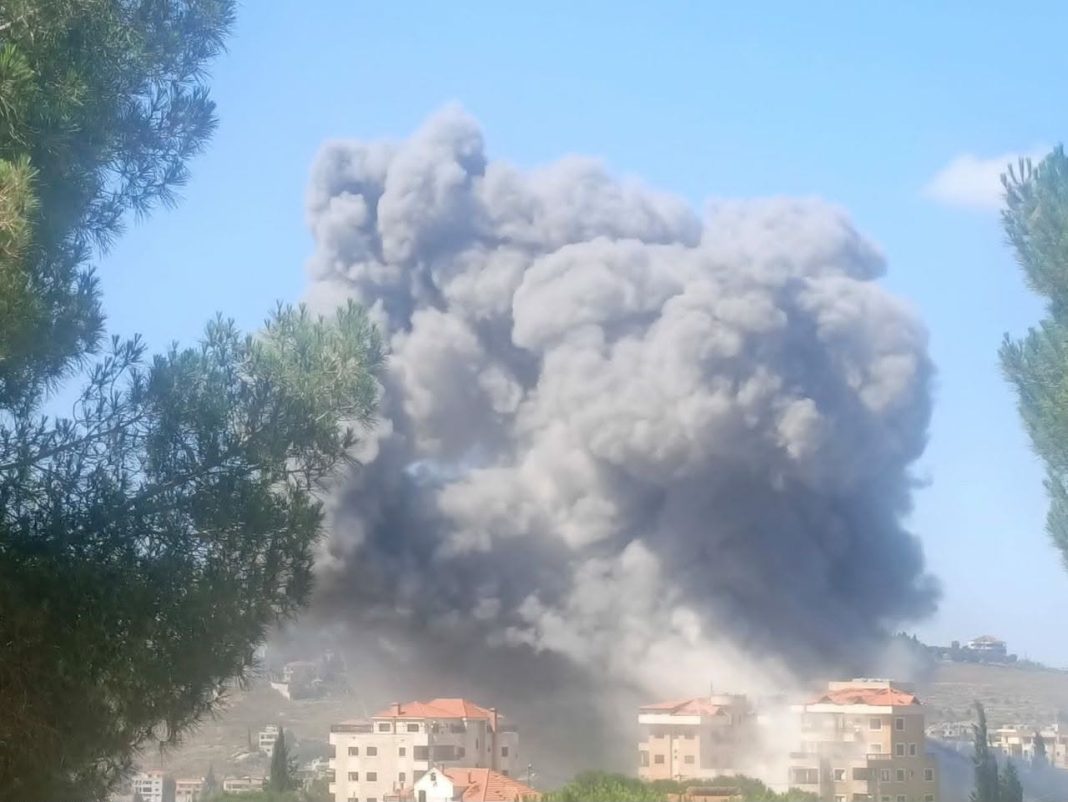






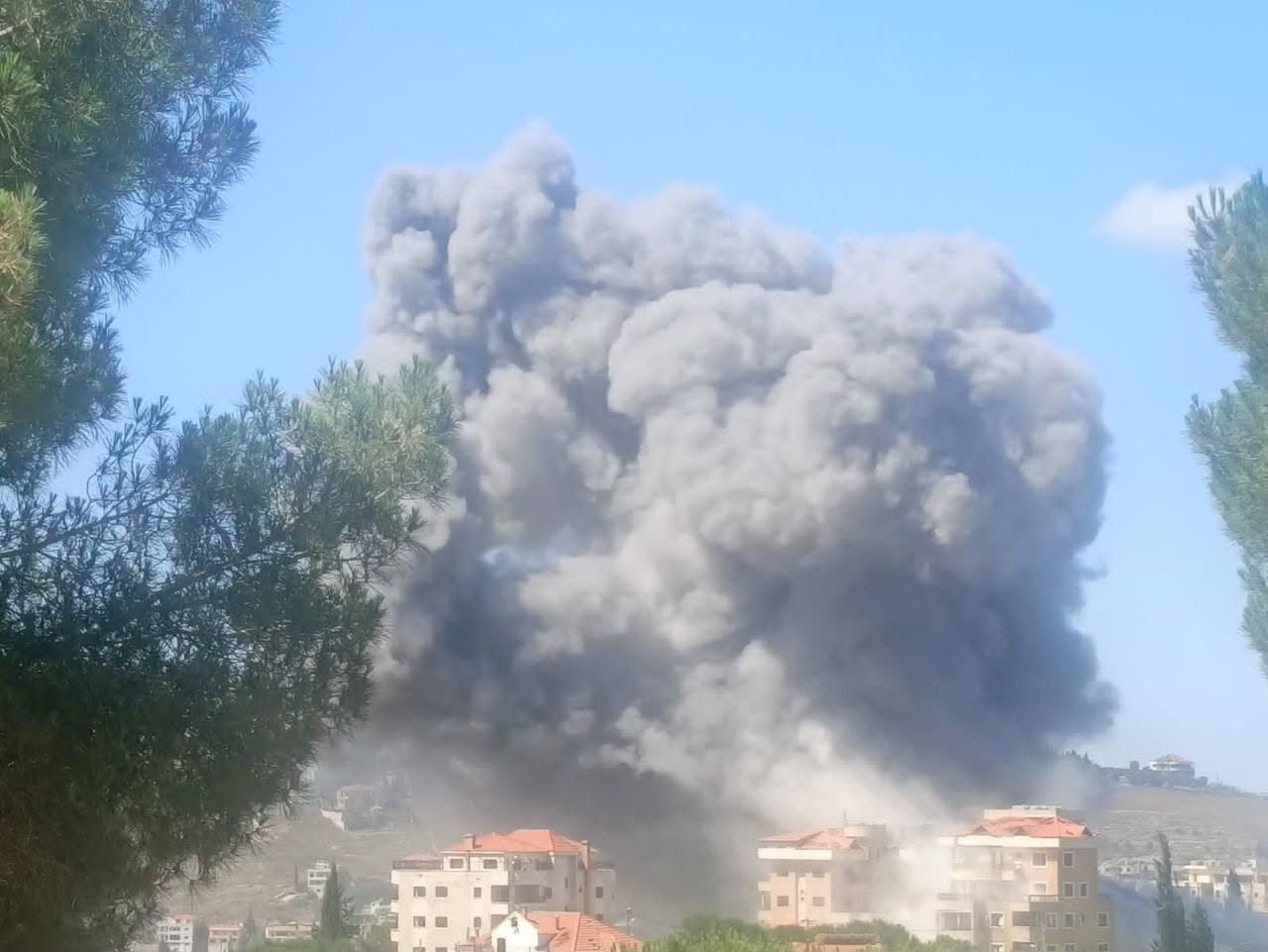
Israel and Hezbollah agreed to a ceasefire to enter into force on Friday at 4 p.m., according to Reuters, which quotes a senior American official. The announcement comes after a day of massive Israeli bombings in southern Lebanon, a total of 30 Lebanese deaths and the death of four Israeli soldiers near Kfar Tebnit.
The announcement ended with a particularly deadly day in South Lebanon. Israel and Hezbollah agreed to a ceasefire to enter into force on Friday at 4 p.m. local time, according to an international news agency citing a senior American official. The agreement would have been reached with the involvement of US and Qatari negotiators and with Iran’s help. In Beirut, this announcement is welcomed with caution. It comes after massive Israeli bombings, a heavy Lebanese record and Israeli statements that revived the fear of a lasting occupation of the South.
The cease-fire announced at 4 p.m. cannot therefore be read as a mere technical break. It is an immediate test for the regional agreement negotiated between Washington and Tehran. This should include the cessation of hostilities on all fronts, including the Lebanese front. However, a few hours before the announcement, South Lebanon has suffered one of the strongest waves of strikes in recent days. The Israeli army claimed to have targeted more than 80 Hezbollah-related targets in the Nabatiyah area, in other southern areas, and two Bekaa command centres.
Nabatiyah and the South hit before the announcement
According to the latest reports, the Lebanese death rate has increased to 30 deaths. The wounded are numerous. The relief workers worked under difficult conditions, sometimes delayed by continued strikes and fear of further fire. Nabatiyeh and his area were at the centre of the bombings. Strikes were reported in Kfar Tebnit, Harouf, al-Doueir, al-Sharqiyah, Kfar Sir, Jibchit, Adchit, Toul, al-Qsaybeh, Kfar Dajjal, Kfarjuz, Kfar Rummane, Zibdine, Nabatiyah al-Fawqa, Habbush, Sajd and on the heights of the Rihan.
In affected villages, the announcement of a fixed-time ceasefire is not enough to reassure. The inhabitants will judge the agreement on concrete elements: the cessation of strikes, the silence of drones, the access of ambulances, the possibility of recovering the bodies and the gradual return of displaced families. For several weeks, the ceasefires announced or negotiated have often been followed by mutual accusations of violations. This brief explains Lebanese prudence.
Kfar Tebnit’s ambush in the background
Friday’s escalation was triggered by an ambush claimed by Hezbollah near Kfar Tebnit, in the area of Ali al-Taher hill. The Israeli army acknowledged the death of four soldiers, including Dor Gedalia Ben Simhon, commander of the 52nd battalion of the 401th Armoured Brigade. Hezbollah claims to have attacked an Israeli force advancing in the area, destroyed three Merkava tanks with guided missiles, and then targeted a force to evacuate the killed or injured soldiers.
Israel presents its response as a response to repeated violations of the ceasefire by Hezbollah. In its communiqués, the Israeli army claims to have struck command centres, launching positions, fighters and military infrastructure. It also states that it is continuing to dismantle underground infrastructure in the Beaufort area. This military version insists on the threat of Hezbollah. On the Lebanese side, it does not make the other reality disappear: the strikes have affected sovereign territory, inhabited areas and localities already exhausted by displacement.
Netanyahu, Ben Gvir and Smotrich harden the climate
The announcement of the ceasefire also comes after Israeli political statements of rare harshness. Benjamin Netanyahu claimed that Israel would remain in Lebanon « as long as necessary » and would charge Hezbollah « a very heavy price. » The Minister of National Security, Itamar Ben Gvir, said « all Lebanon must burn. » Finance Minister Bezall Smotrich called for « talking with fire » and « open the gates of hell. » In Beirut, these statements are perceived as a threat to an entire country, not as a mere rhetoric of war against Hezbollah.
This overbidding is part of a tense Israeli political context. Netanyahu depends on his far right allies and must respond to a public opinion marked by military losses. Ben Gvir and Smotrich seek to appear as guarantors of a hard line. Lebanon thus became a political demonstration ground, while the American-Iranian agreement had to impose a logic of de-escalation. In Beirut, this contradiction is fuelling the idea that the Israeli escalation can weaken or even undermine the regional settlement.
A truce linked to the Iran-USA case
The role of Washington, Doha and Tehran in announcing the ceasefire gives this truce a regional dimension. The US senior official quoted by the news agency claims that the agreement was reached with the participation of US and Qatari negotiators and with the help of Iran. This is important. It means that the Lebanese front is no longer only treated as a bilateral issue between Israel and Hezbollah. It has become one of the main tests of the wider agreement between the United States and Iran.
For Lebanon, the immediate challenge is twofold. It must first be verified that the cease-fire actually enters into force at 4 p.m. and that it lasts beyond the first hours. Then we need to know whether it opens the way for an Israeli withdrawal, or whether it limits itself to freezing the current lines. This distinction is decisive. A cease-fire without withdrawal, access to villages and the return of internally displaced persons could be seen as a stabilization of occupation rather than an exit from crisis.
The focus is on Maroun al-Ras, Kfar Tebnit, the Beaufort area and areas where Israeli positions are reported. Any military consolidation in those areas would weaken the scope of the truce. It would give Hezbollah an argument to maintain pressure. It would also place the inhabitants in indefinite expectation, unable to return to their villages or resume normal life.
So at 4 p.m., the question will not only be whether the weapons are silent for a few hours. It will be about whether South Lebanon is actually entering a phase of de-escalation, or whether the truce becomes a new fragile episode in a war that continues intermittently. In the localities of Nabatiyah, in the Bekaa and on the border heights, the response will depend on the forthcoming Israeli army movements, the reaction of Hezbollah and the ability of mediators to transform an announcement into reality on the ground.