

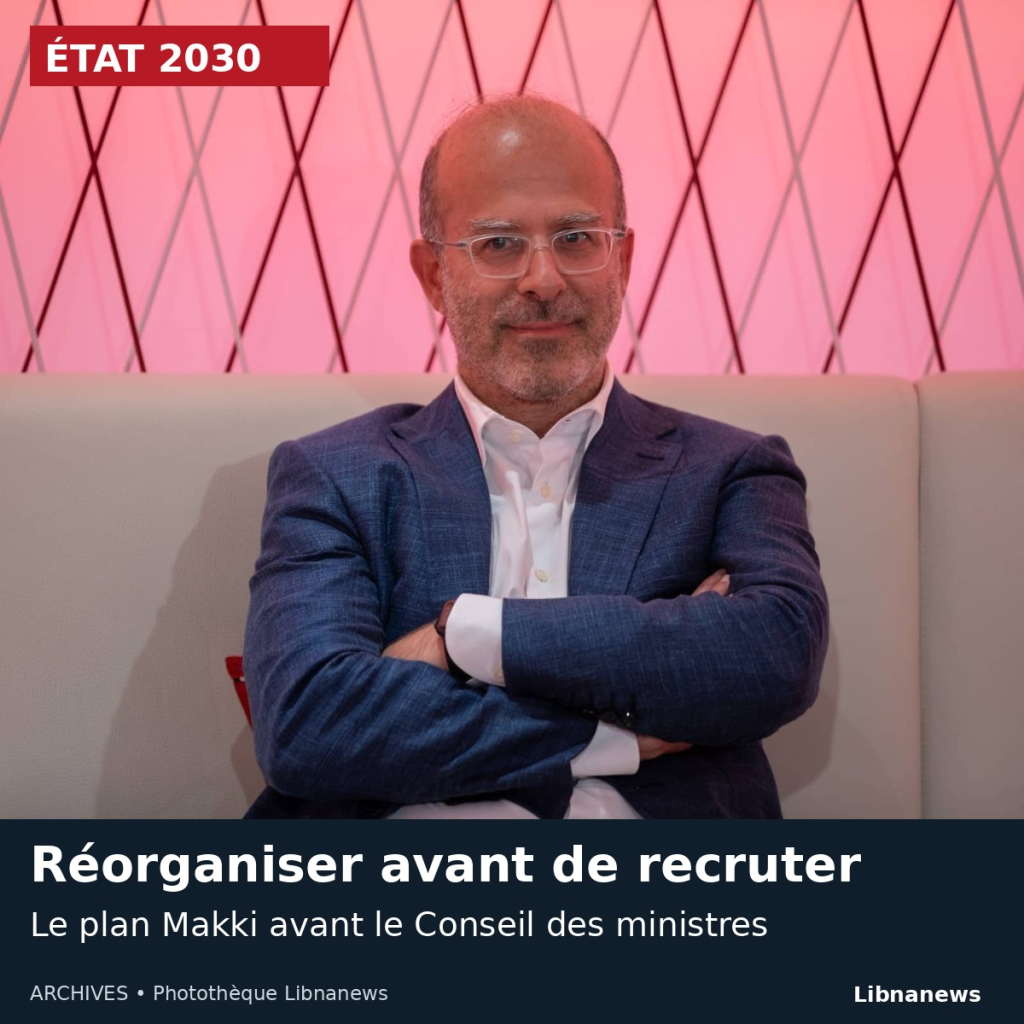
The 2030 state plan is taking a new step, without having yet to reorganize administrations. On 12 November, Fadi Makki presented Joseph Aoun with the completion of his master plan. The Minister of Administrative Development announces recommendations for the next meeting of the Council of Ministers. The day before, in Parliament, Farid Boustany had defended an order of priority: to review structures before filling vacancies.
A Master Plan Ready for Government
According to Fadi Makki, the project to reorganize public administrations and institutions was launched about a year earlier. The Minister states that he first consulted citizens and administrations. The recommendations resulting from this work concern the organization of institutions, their human capacities and the quality of services.
The Baabda meeting marks the announced completion of this preparatory work. It is not worth adopting all measures by the government. The Minister has yet to submit his main recommendations to the Council of Ministers.
Makki also announced that a citizen’s charter was ready. Based on the expectations gathered during the consultations, it must specify the rights of users in their relationship with the administration and the obligations of the administration to them.
Reorganize before recruiting
The Parliamentary Committee on the Economy devoted its meeting on 11 November to the effect of administrative reform on economic growth and stability. Fadi Makki presented his approach at the invitation of the chairman of the commission, Farid Boustany.
At the end of this session, Boustany asked to review the structure of the public sector before increasing staff or filling vacancies. For the MP, reorganization must precede recruitment to improve efficiency and productivity. This is the position expressed by the chairman of the committee, not the announcement of a new competition.
Boustany also paid tribute to the officers who continue to deal with the process despite the low wages and resources. He called for fair treatment and not reducing the functioning of the public sector to the percentage of active administrations. Its position therefore combines the restructuring of services with the situation of staff.
More than 200 initiatives announced
In an intervention at the Lebanese-American University, reported on November 12, Makki described a program of over 200 initiatives. The merger of certain establishments and the abolition of others are some of the avenues presented. The Minister seeks a more coherent administrative, legislative and digital framework.
He cited the citizen’s charter, the construction of the anti-corruption strategy 2027–32 and an annual indicator to measure user satisfaction and confidence in administration. These instruments have different functions: defining commitments, preventing irregular practices and measuring service rendered.
On the digital level, Makki reported on more than 26,000 steps taken through 32 departments of the Ministry of Labour. He presented the electronic criminal record and digitization of CNSS hospital clearances as next steps. These announcements do not mean that all these services are already open.
The Minister also set at the end of 2027 the goal of a unified digital identity, designed to link approximately 2,700 public services. This deadline remains a goal. For State 2030, the next expected decision is now the consideration of the recommendations by the Council of Ministers, before the specific actions of each administration.





Comments